Understanding measurement units Worksheets for Ages 4-5
3 filtered results
-
From - To
Explore our "Understanding Measurement Units Worksheets for Ages 4-5," designed to introduce young learners to basic measurement concepts in a fun and engaging way. These worksheets cover essential skills such as identifying common units of measurement, comparing lengths, and understanding concepts like weight and volume. Through vibrant visuals and interactive activities, children will grasp fundamental concepts, setting the stage for future math success. Ideal for parents and teachers, these resources promote early math skills while fostering a love for learning. Help your little ones build confidence in measurement with our playful and effective worksheets today!
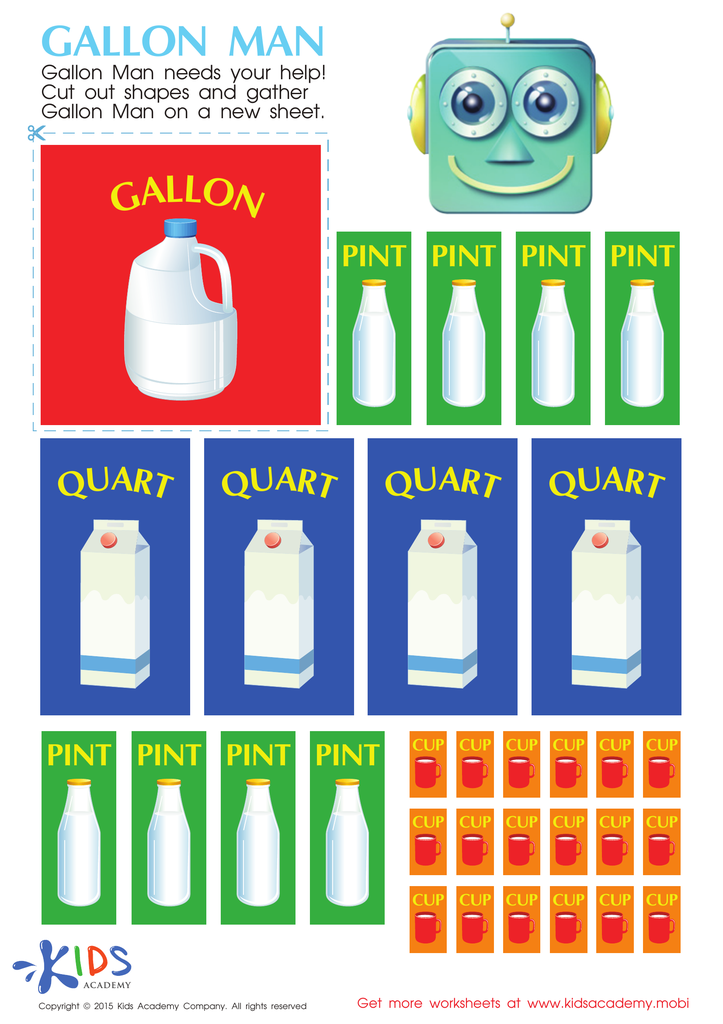
Cups, Pints and Quarts With Gallon Man Worksheet
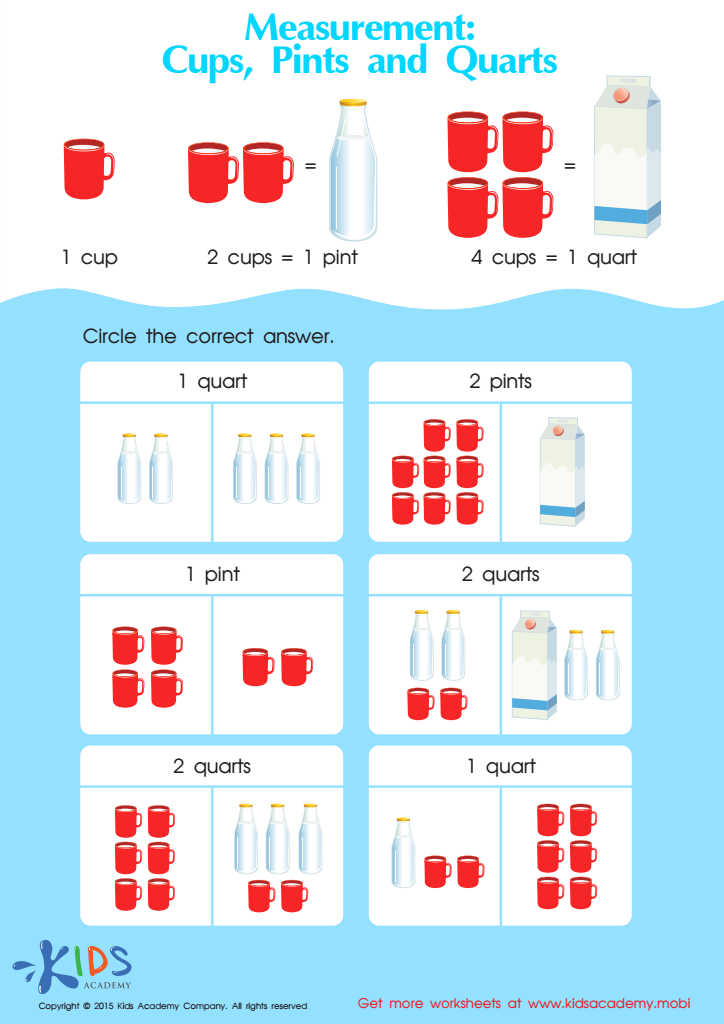
Cups, Pints and Quarts Worksheet
 Assign to My Students
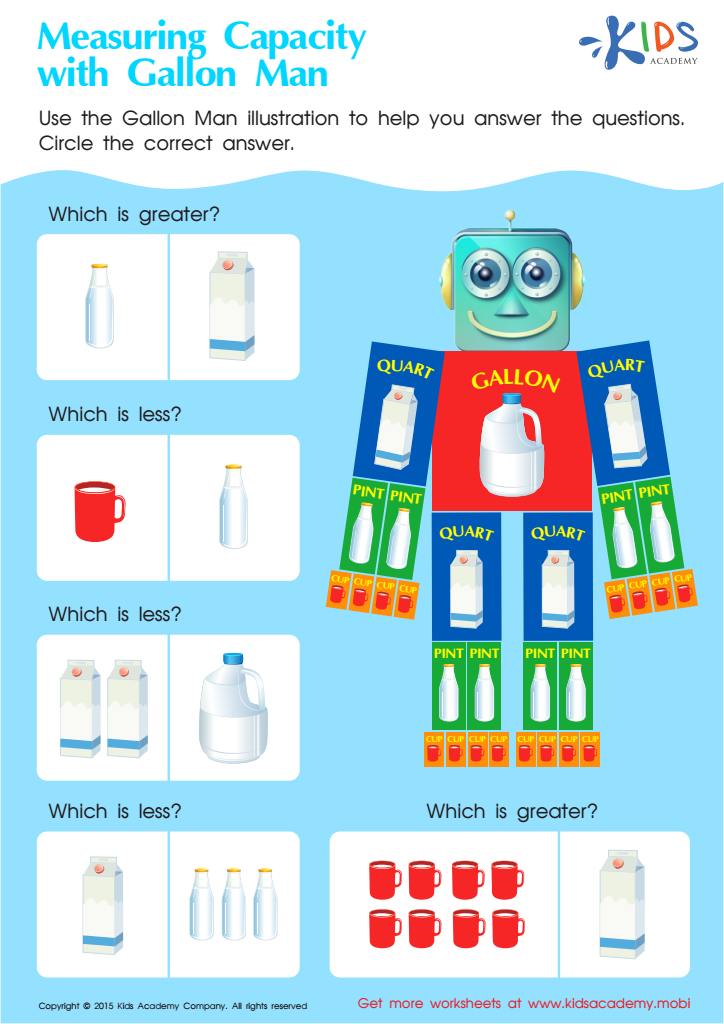
Measurement: Measuring Capacity with Gallon Man Worksheet



Understanding measurement units for ages 4-5 is crucial for several reasons. At this stage, children are naturally curious, exploring their environment and developing foundational skills. Familiarity with measurement units like length, weight, volume, and time helps them make sense of the world around them. When parents and teachers prioritize measurement education, they lay the groundwork for critical thinking and problem-solving skills.
Engaging in simple measurement activities, such as comparing the length of objects or weighing ingredients when cooking, helps children understand concepts of size, volume, and weight. This hands-on experience encourages them to use language associated with measurements—terms like longer, heavier, and bigger—thus enriching their vocabulary.
Additionally, early measurement skills foster mathematical proficiency. Understanding units prepares children for future math concepts, making transitions to more complex ideas smoother. Furthermore, teaching measurement promotes social skills, as collaborative activities nurtured in group settings can instill teamwork and communication.
By caring about measurement education, parents and teachers create an enriching learning environment, supporting overall cognitive development and helping children become confident problem-solvers for life. Ultimately, instilling an appreciation of measurement early on encourages exploration, inquiry, and a positive attitude towards learning.








