
Understanding number sequences Worksheets for Ages 4-5
3 filtered results
Difficulty Level
Grade
Age
-
From - To
Subject
Activity
Standards
Explore our engaging "Understanding Number Sequences Worksheets" designed specifically for children aged 4-5! These worksheets introduce young learners to essential basic math concepts through fun and interactive activities. Your child will benefit from colorful illustrations and Q&As that promote visual recognition and help them grasp the idea of numerical order seamlessly. Our worksheets are tailored to enhance counting skills and encourage logical thinking. Perfect for homeschooling or supplementary classroom activities, these resources provide a joyful learning experience that prepares your little one for future mathematical success. Discover the magic of numbers while nurturing curiosity and confidence in young minds today!
Favorites
With answer key
Interactive
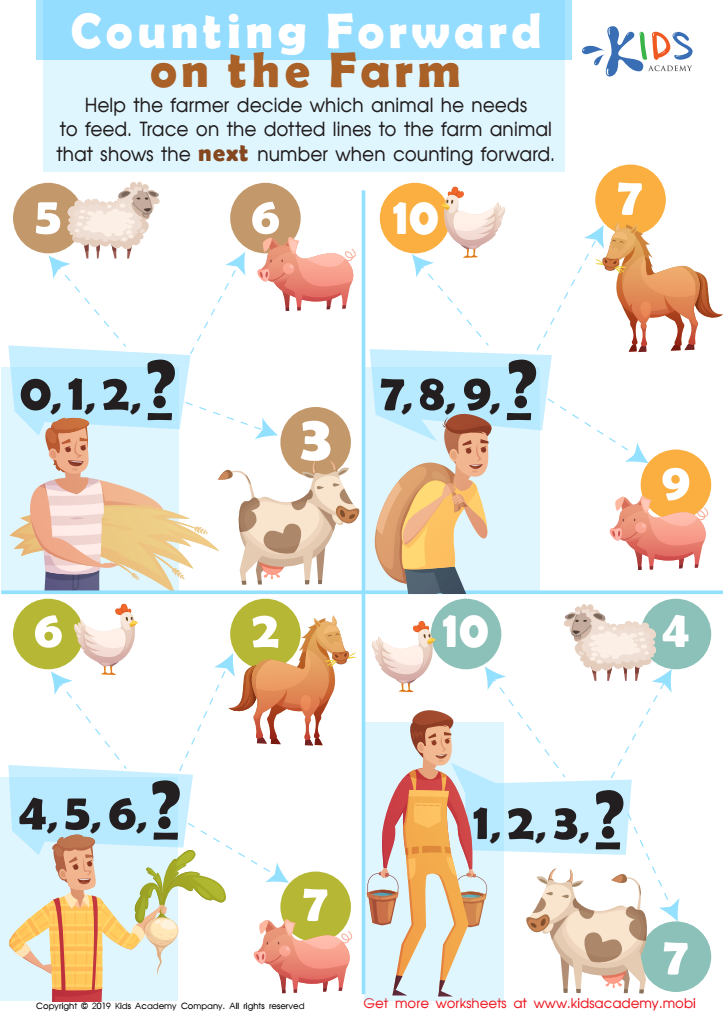
Counting Forward On the Farm Worksheet
Help your child practice counting with this fun worksheet. Have them help a farmer feed the right animal by counting on from a starting point. This activity will help them build number line thinking and refine fine motor skills.
 Assign to My Students
Counting Forward On the Farm Worksheet
Worksheet
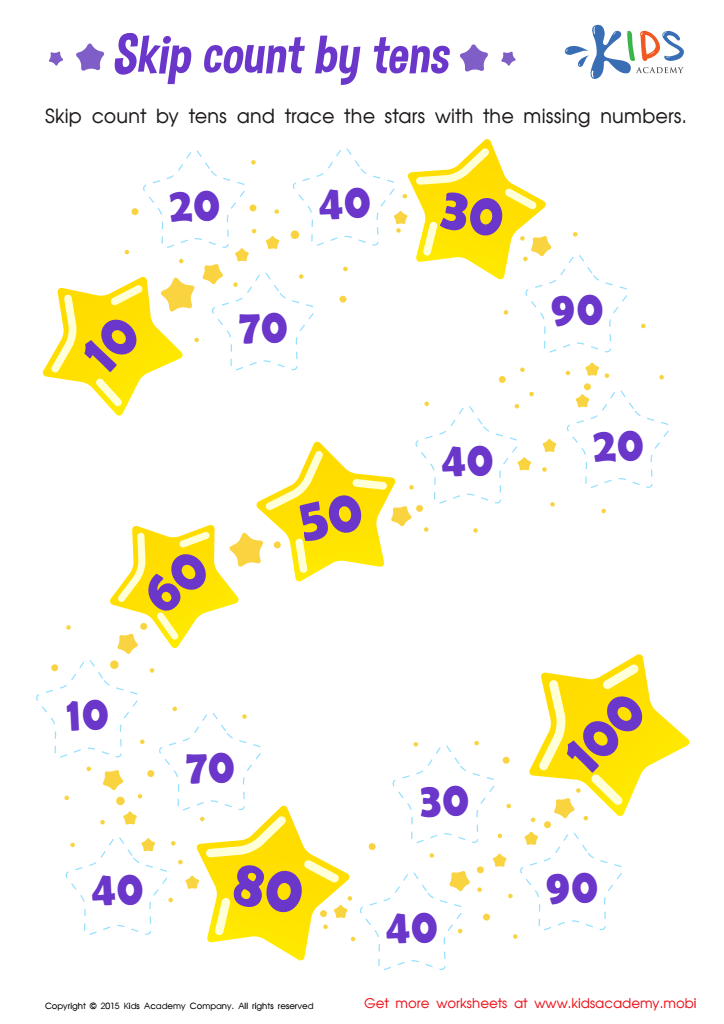
Learn dozens: Skip Count by Tens Printable
Follow a shooting star on an adventure of skip counting by 10s. Strengthen math skills with this fun and colorful worksheet. Kids will solve a puzzle, exercise logical reasoning and problem-solving skills. Get them ready for multiplication and division through increased skip counting abilities. Print this worksheet and take your star to the next level!
Learn dozens: Skip Count by Tens Printable
Worksheet
Join Kids Academy for Free
Who is primarily going to use this learning content?







Understanding number sequences is crucial for children aged 4-5 as it lays the foundational skills necessary for future mathematical learning. At this developmental stage, young learners begin to recognize patterns in numbers, which enhances their ability to recognize and relate mathematical concepts. Familiarity with number sequences helps children develop critical skills such as counting, estimating, and basic problem-solving.
Parents and teachers should care about this foundational skill because early mastery of number sequences promotes confidence in young learners. As students encounter more complex math in later grades, a solid grasp of sequencing fosters smoother transitions, enabling them to tackle addition, subtraction, and early algebra with greater ease.
Furthermore, understanding number sequences cultivates logical thinking and reasoning abilities. This skill set aids children beyond mathematics, impacting their cognitive development in various subjects, fostering resilience in tackling challenges.
Engaging young learners in activities revolving around counting and number patterns, such as rhymes, games, and interactive learning experiences, can make these concepts enjoyable and accessible. Encouraging curiosity and exploration in numbers builds a strong mathematical identity early on, equipping children for future academic success and everyday problem-solving in life.








