Basic Arithmetic Adding Up to 5 Worksheets for Ages 4-5 - Page 2
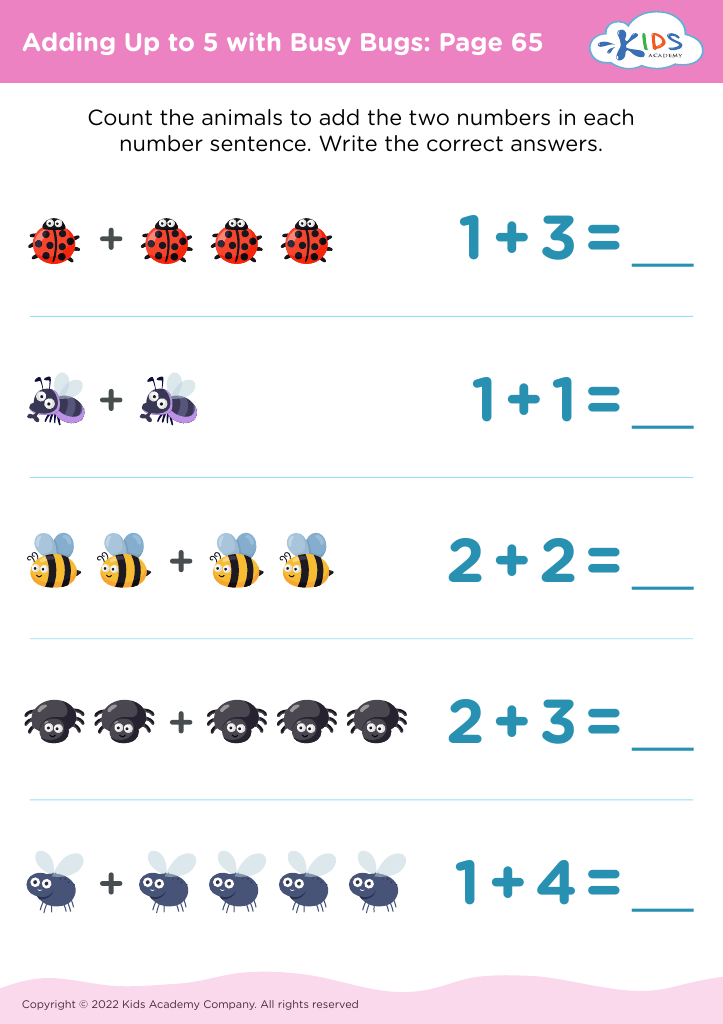
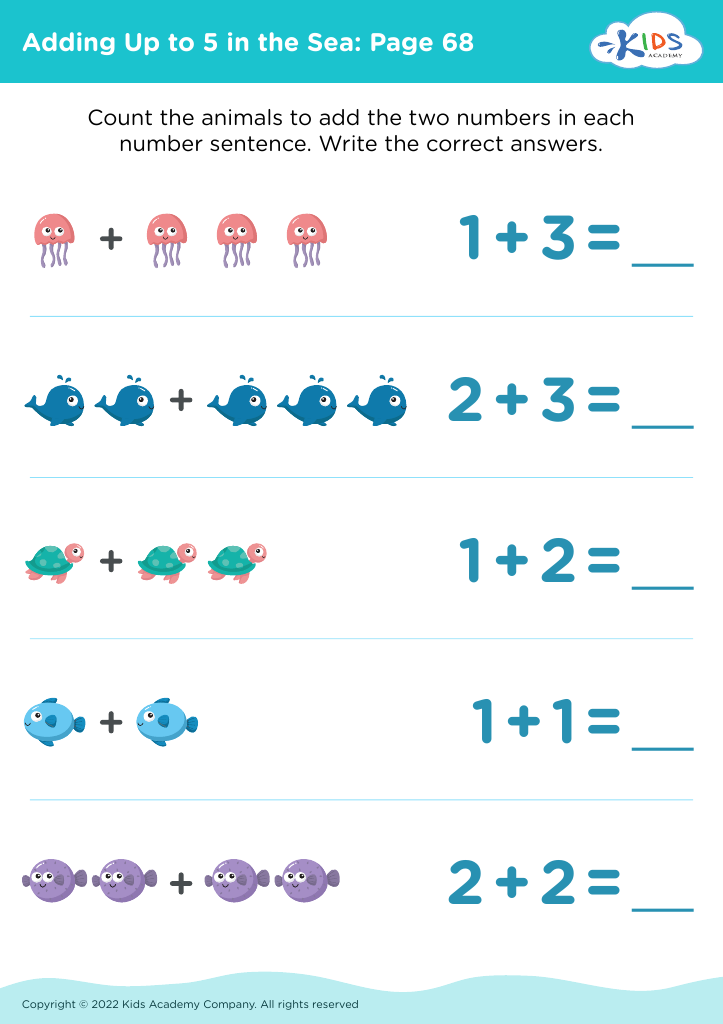
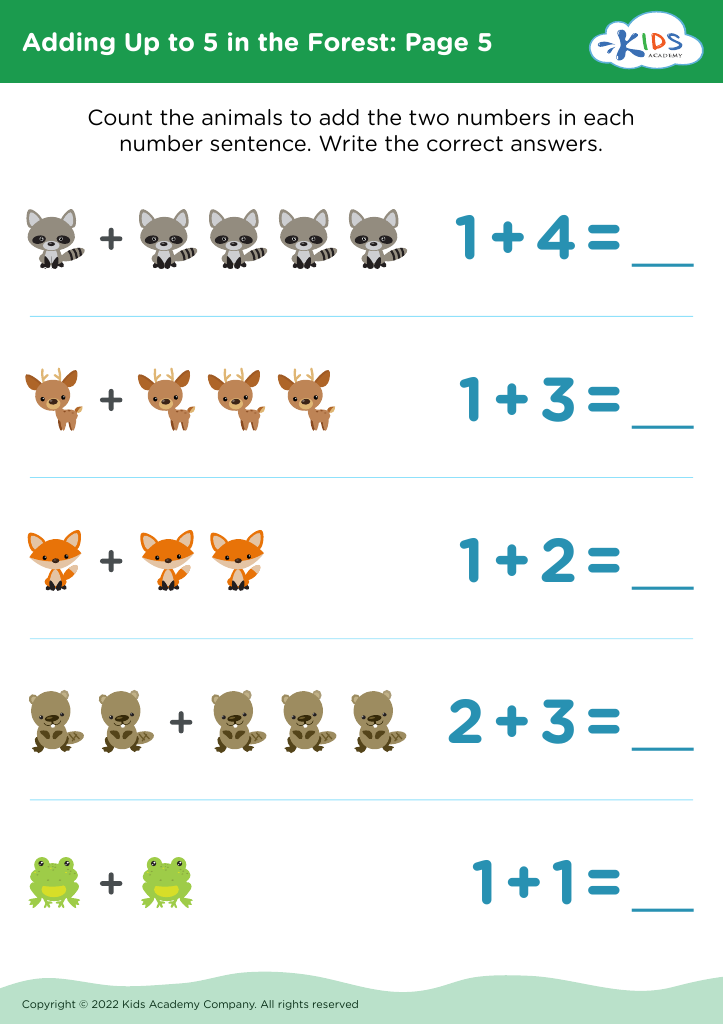
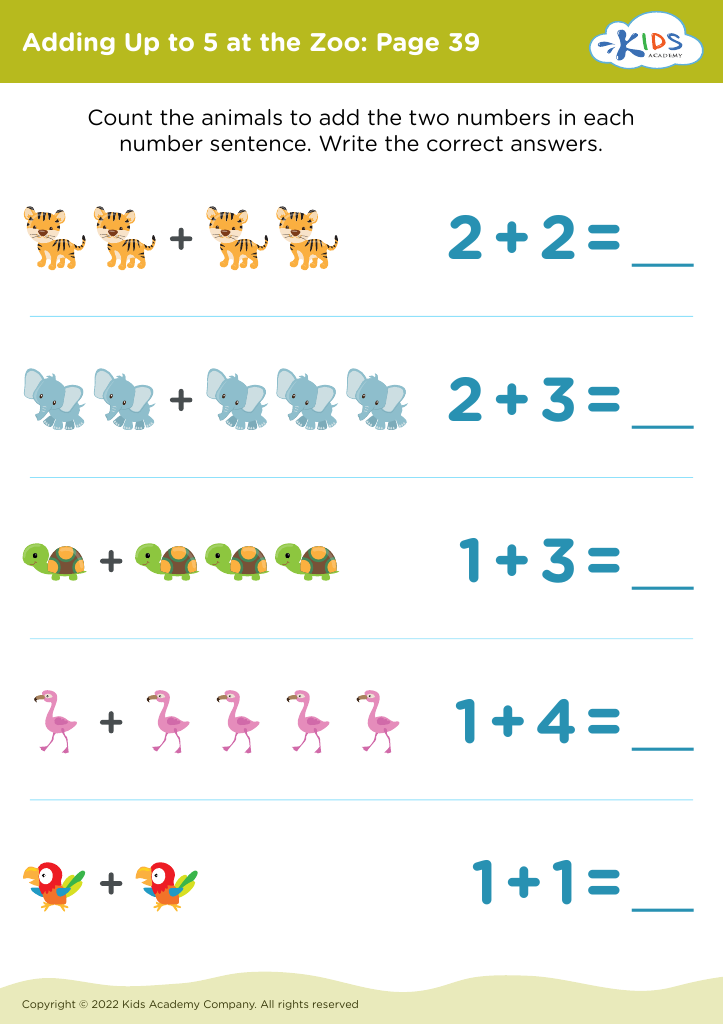



%20(1).jpg)




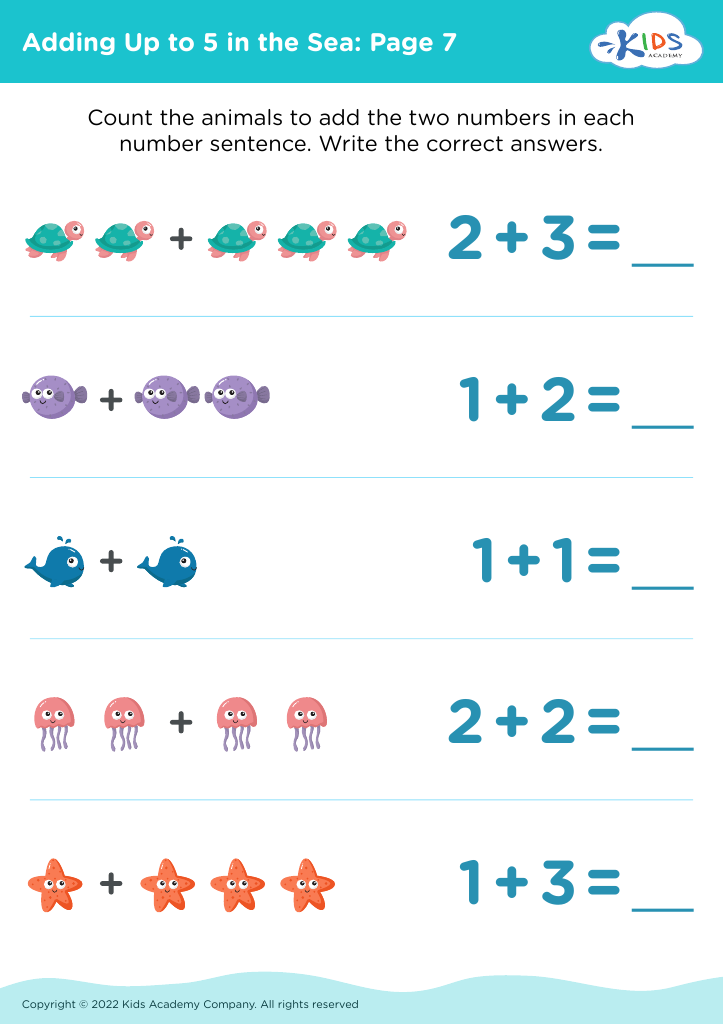
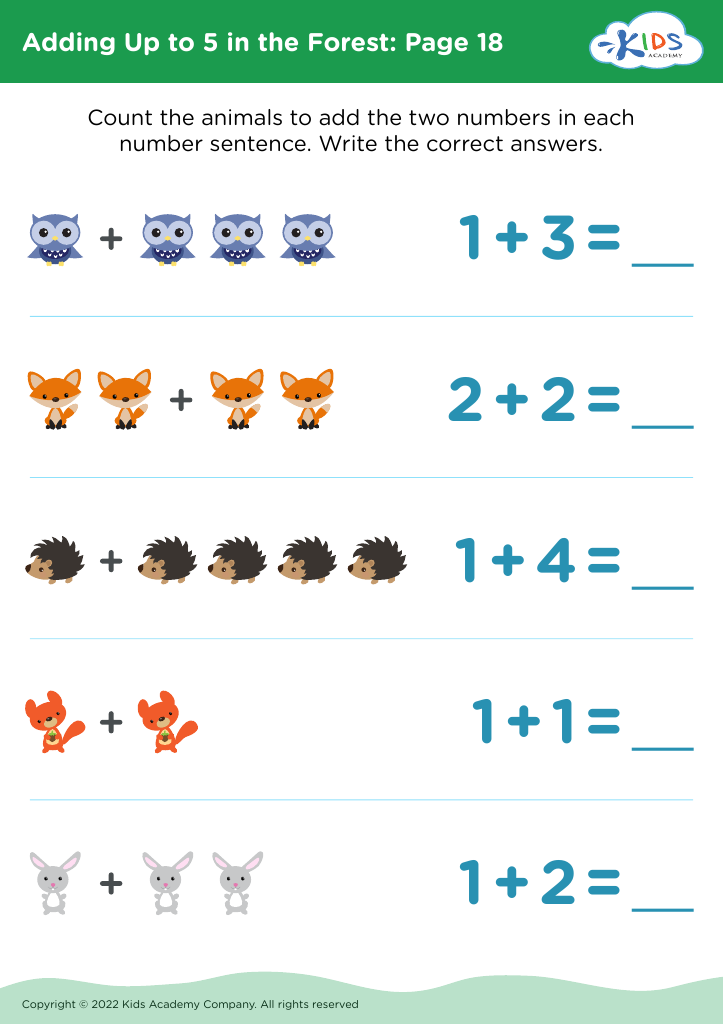
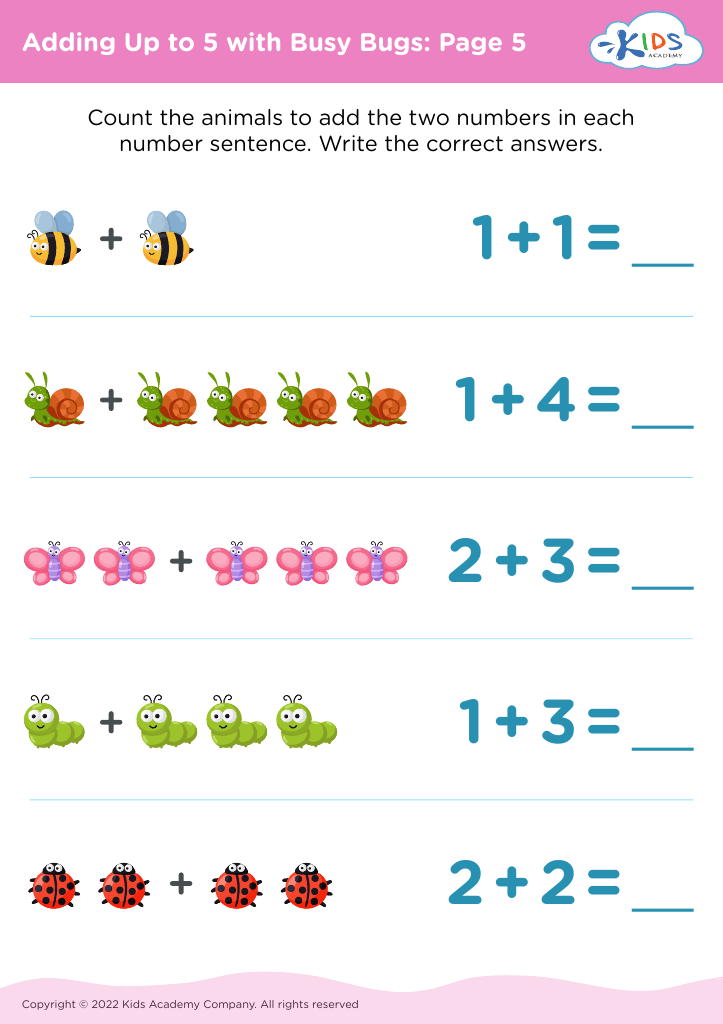
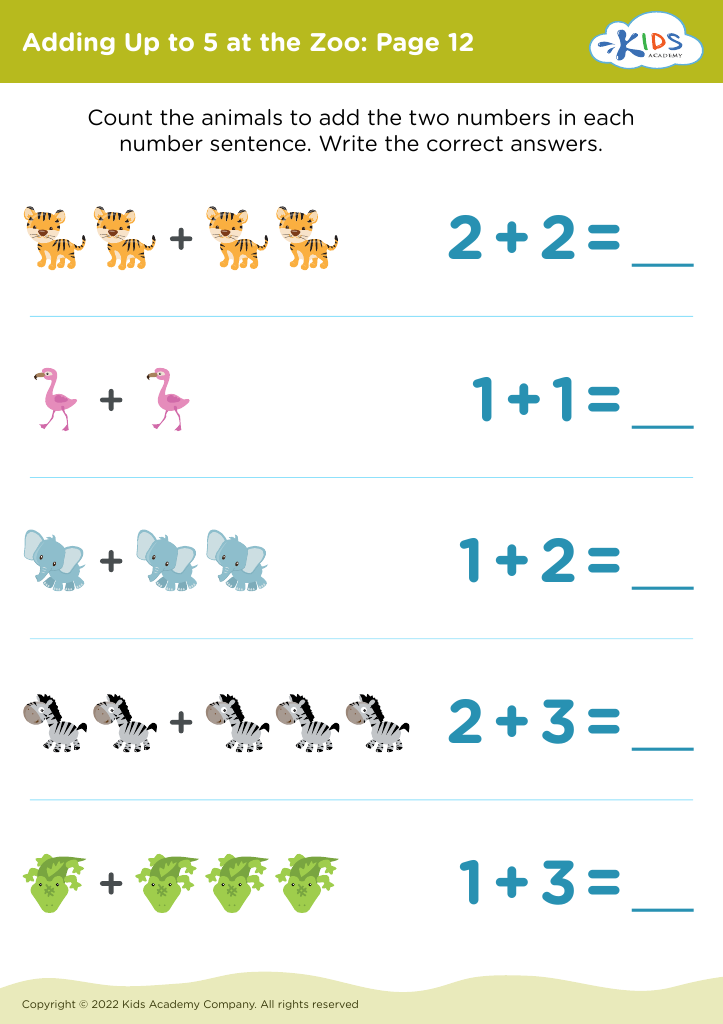
Parents and teachers should care about basic arithmetic, particularly adding numbers up to 5, in children ages 4-5 because this foundational skill is crucial for early cognitive development and future academic success. Understanding small number addition promotes number sense, an essential aspect of math literacy, where children grasp the concepts of quantity, order, and relationships between numbers. This foundational knowledge not only builds essential problem-solving and reasoning skills but also supports more complex mathematical operations encountered later on.
Introducing arithmetic at an early age lays the groundwork for a positive attitude toward math. When children succeed in small arithmetic tasks, they gain confidence and exhibit a growing interest in the subject. Additionally, early proficiency in basic math helps identify potential learning difficulties sooner, allowing for timely interventions which can prevent future academic challenges.
Practicing simple addition up to 5 also nurtures other areas of development, such as fine motor skills through counting with tangible objects, comprehension through visual aids, and social skills during collaborative learning activities. Overall, early engagement with arithmetic prepares children for a smoother transition into formal education, creating a solid platform for future learning and everyday problem solving skills. Therefore, dedicating attention to basic arithmetic at this formative age is an investment in a child's holistic development and academic journey.








