Counting proficiency Adding Up to 5 Worksheets for Ages 4-5
9 filtered results
-
From - To
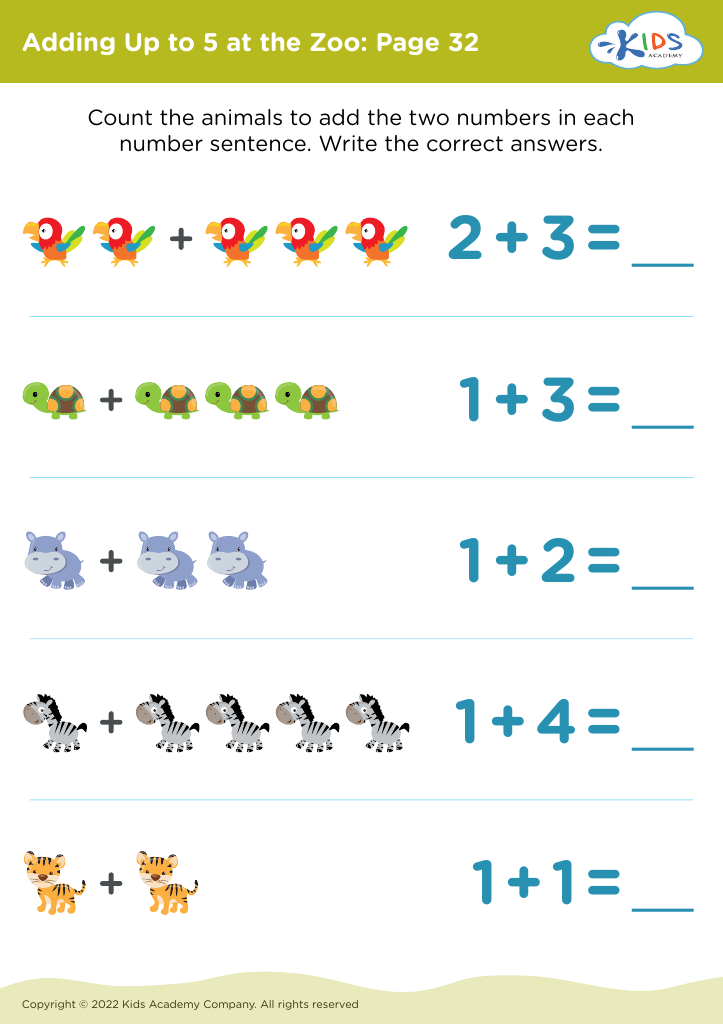
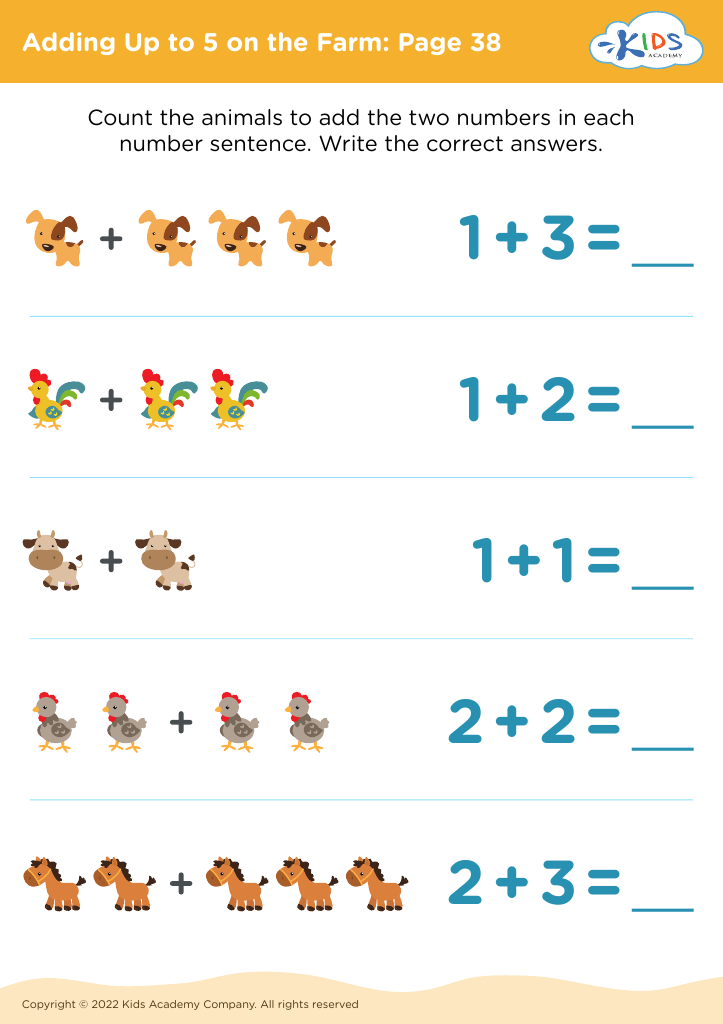
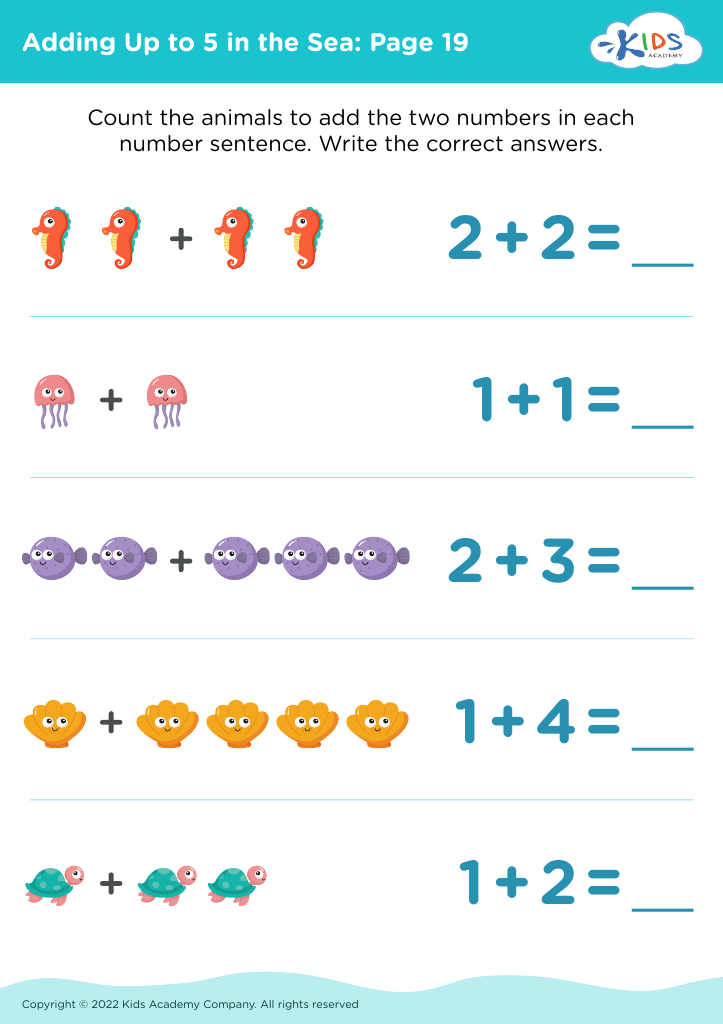
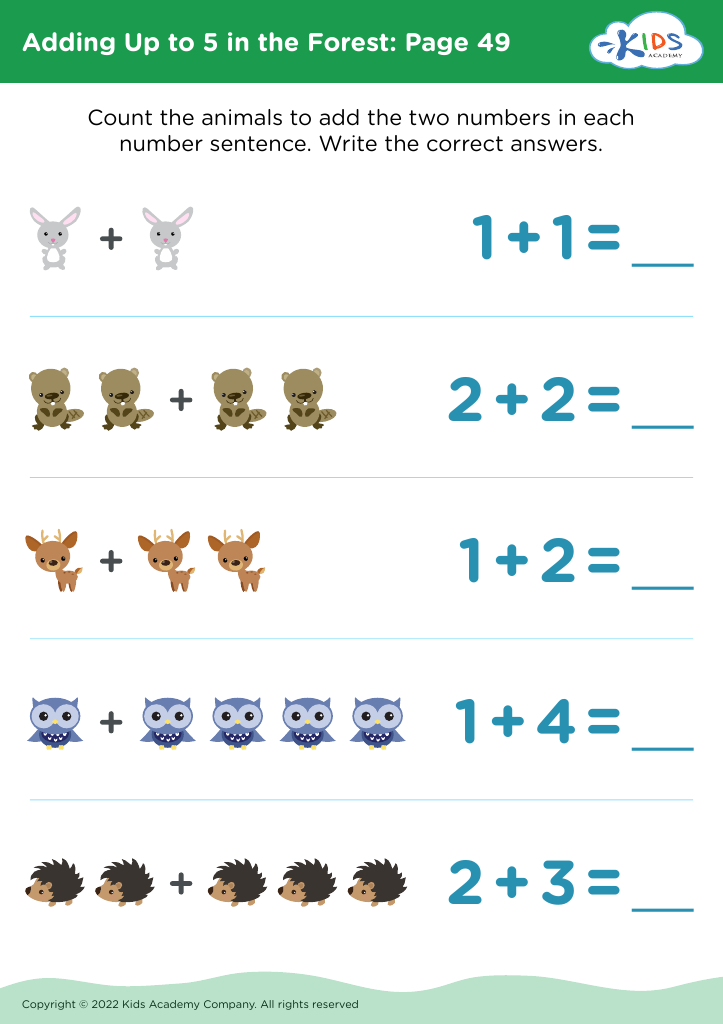
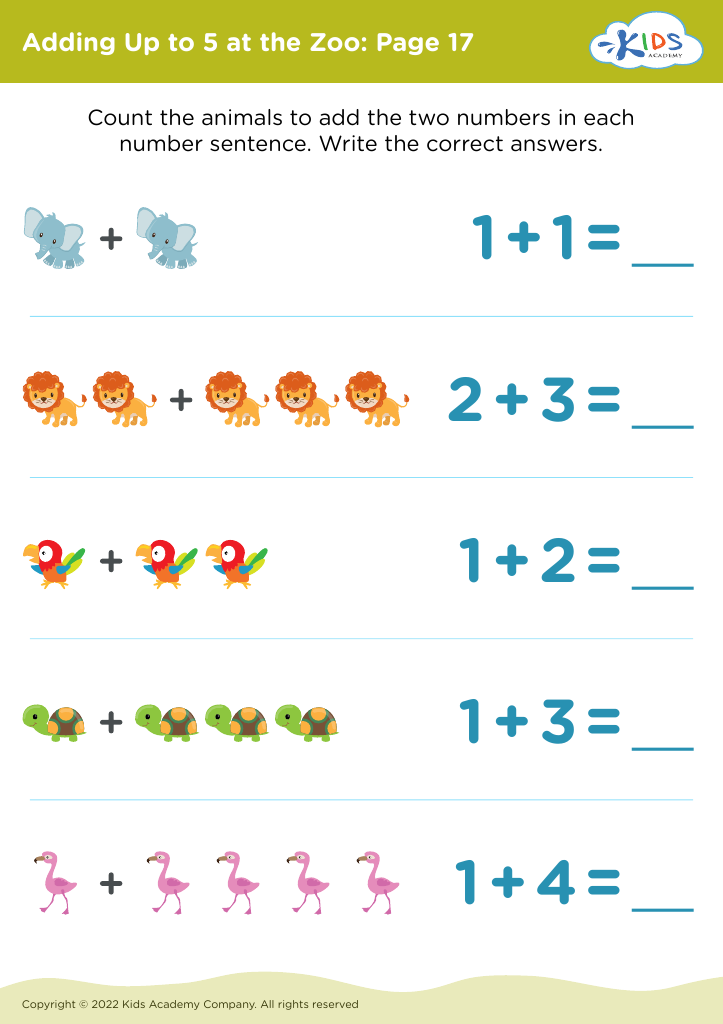
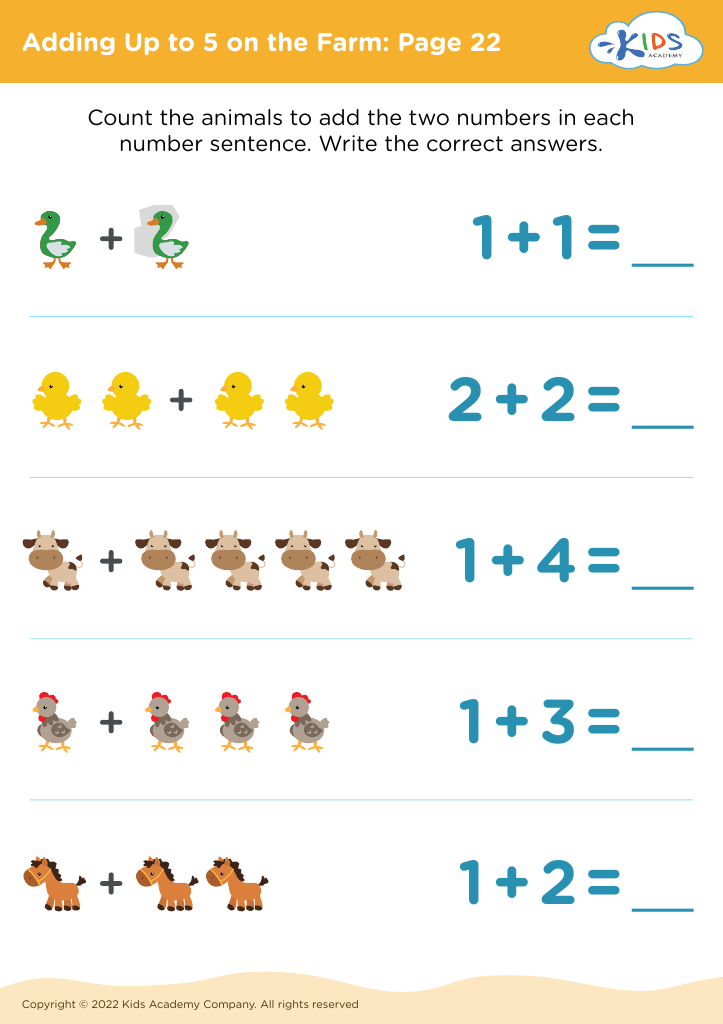
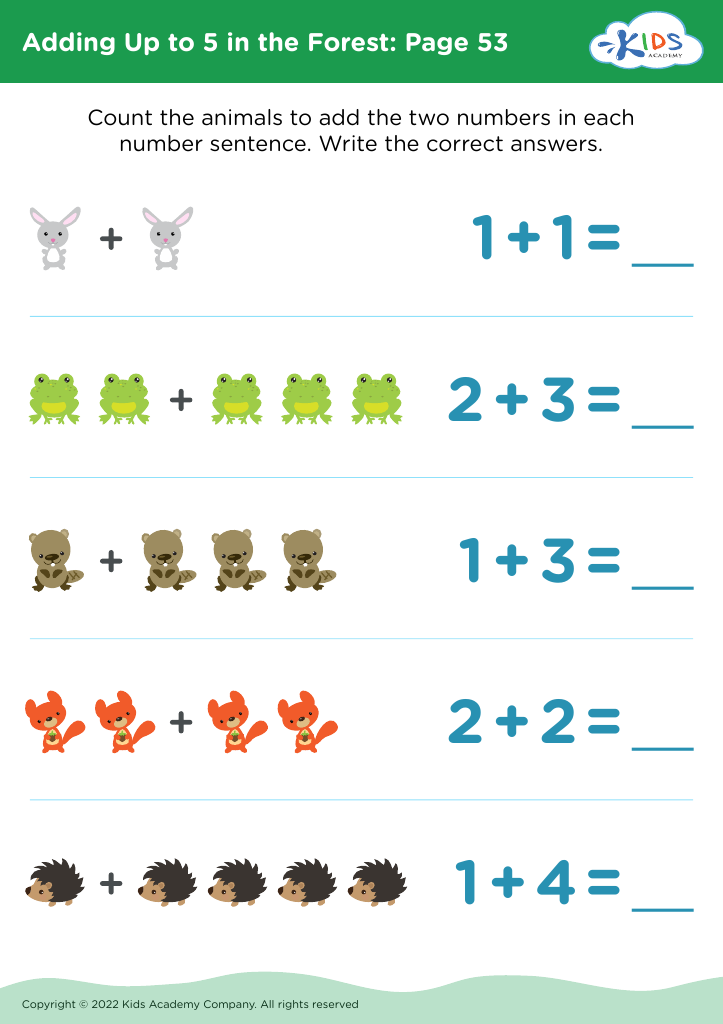
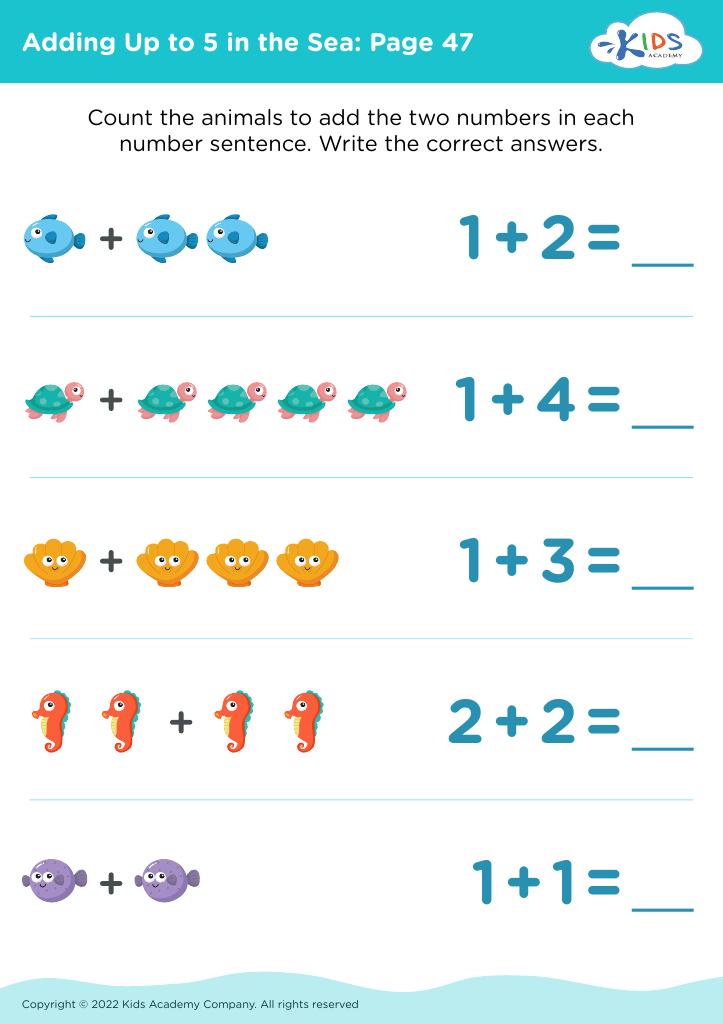
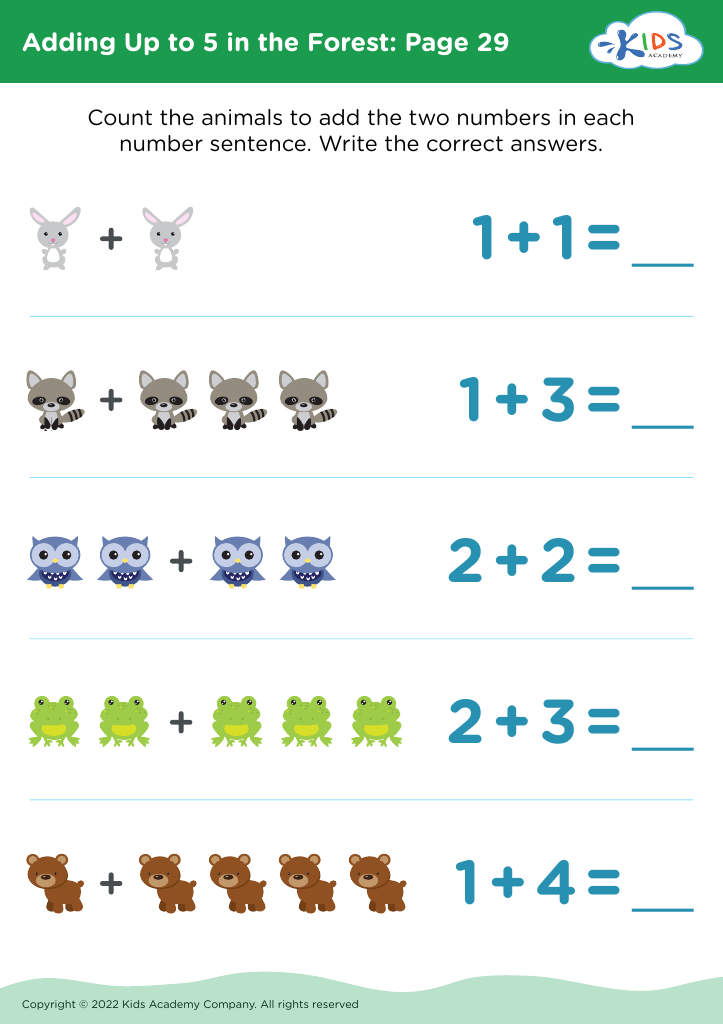
Introduce your little ones to the exciting world of addition with our “Counting Proficiency: Adding Up to 5” worksheets, specially designed for ages 4-5. These engaging printables help children develop vital mathematical skills through fun and interactive activities. Perfect for enhancing counting abilities, these worksheets offer a variety of exercises that reinforce the concept of adding up to 5. They support early learning by using visual aids, simple equations, and creative illustrations to keep young minds interested and eager to learn. Ideal for classroom use or at-home practice, start building a solid mathematical foundation for your child today!


%20(1).jpg)





Counting proficiency, especially the ability to add up to 5, is foundational for young children aged 4-5. At this stage, children are naturally curious and ready to grasp basic mathematical concepts. Understanding numbers and basic addition serves as a critical building block for more complex mathematical operations they'll encounter later.
Firstly, mastering counting and simple addition boosts cognitive development. It improves memory and problem-solving skills. Children who can add numbers up to 5 are often better at organizing, sequencing, and recognizing patterns. This, in turn, enhances their ability to solve puzzles and engage in logical thinking.
Secondly, early proficiency in counting fosters confidence and encourages a positive attitude towards math. When children feel competent in their mathematical skills, they are more likely to enjoy learning and persist in the face of challenges.
Additionally, many everyday activities—like sharing toys, splitting snacks, or understanding time—rely on basic math skills. Proficiency in counting helps children function independently and seamlessly participate in group activities.
Lastly, an early grasp of counting and addition sets the stage for academic success. Research consistently shows that early math skills are strong predictors of later success in both math and literacy. By nurturing counting proficiency up to 5, parents and teachers provide children with a solid foundation for lifelong learning and critical thinking.








