Animal recognition Addition and Subtraction Word Problems Worksheets for Ages 4-5
4 filtered results
-
From - To
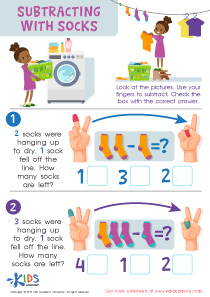
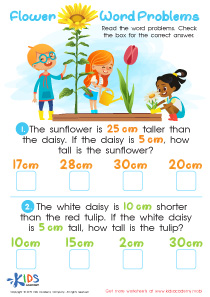
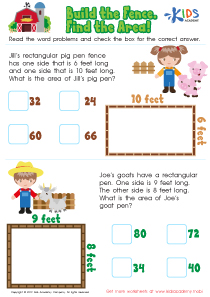
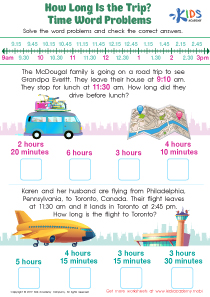
Discover our engaging Animal Recognition Addition and Subtraction Word Problems Worksheets designed for children aged 4-5! These fun and interactive worksheets combine basic math skills with adorable animal themes, making learning enjoyable for young minds. Each activity encourages children to solve simple word problems using addition and subtraction while recognizing different animals. Perfect for preschool or kindergarten settings, these worksheets promote critical thinking, improve problem-solving abilities, and enhance early mathematical understanding. Help your child cultivate a love for math through playful learning experiences with our vibrant, educational resources tailored specifically for early learners! Visit our site to explore the full collection.
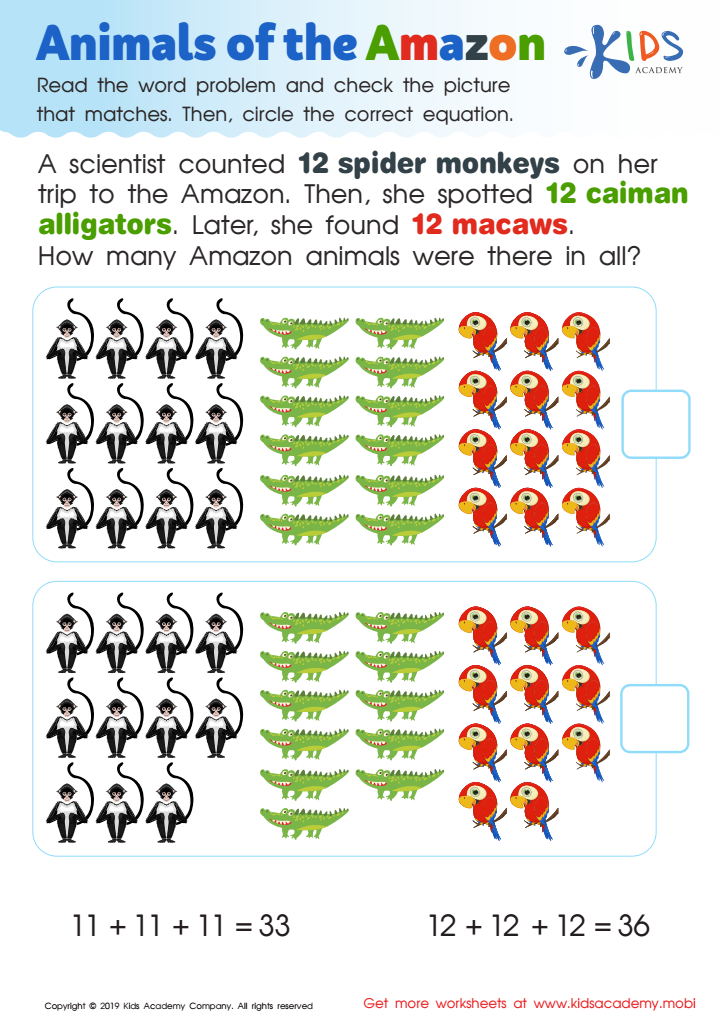
Animals of Amazon Worksheet
 Assign to My Students
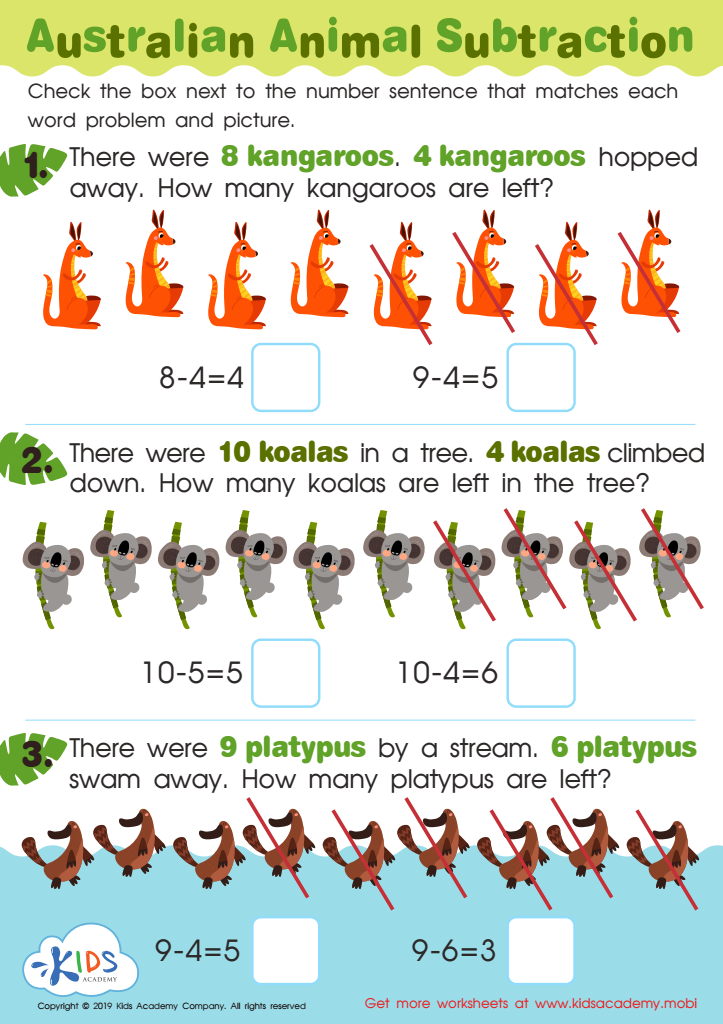
Australian Animal Subtraction Worksheet
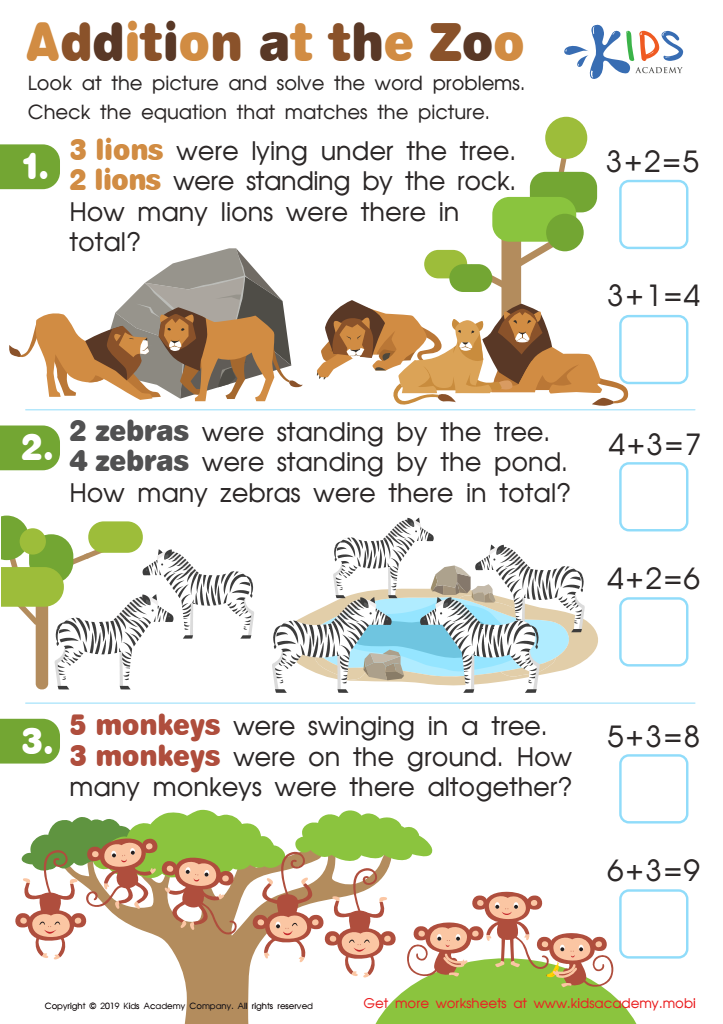
Addition at the Zoo Worksheet
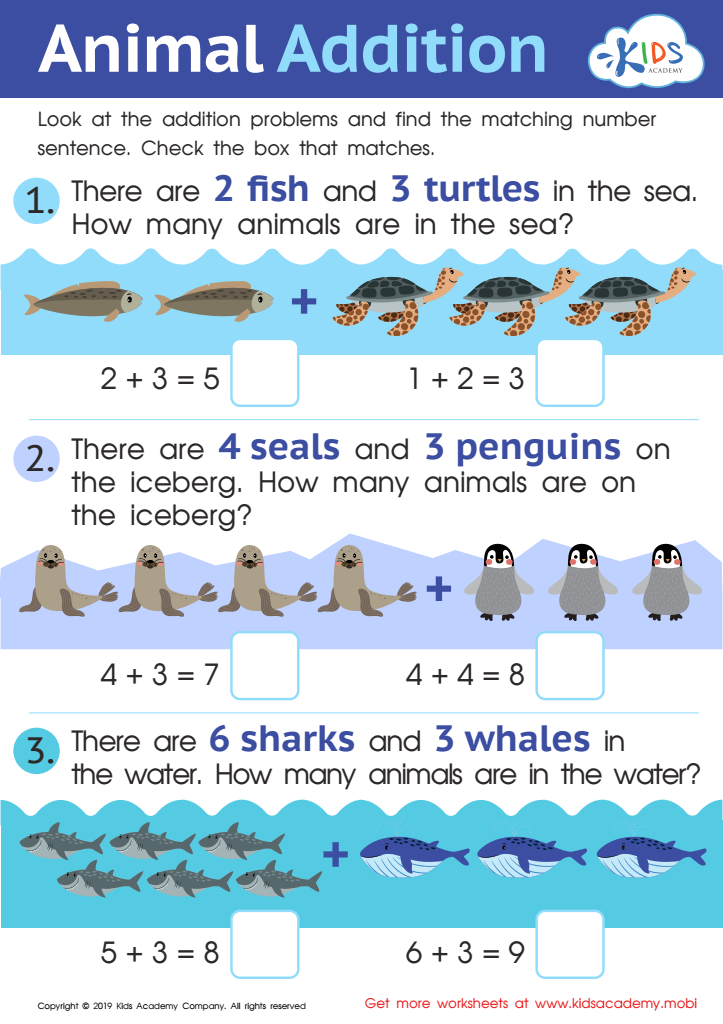
Animal Addition Worksheet








Parents and teachers should care about animal recognition addition and subtraction word problems for children aged 4-5 because they play a crucial role in early mathematical development and encourage cognitive skills. At this age, children are naturally curious about the world around them, including animals. Integrating animals into math problems makes learning relatable and engaging, fostering a child's interest in both literacy and numeracy.
These word problems help young learners develop critical skills such as problem-solving and logical thinking. As children identify animals and determine quantities, they practice basic arithmetic in a fun and relatable context. This approach also supports language development, as children learn to interpret and articulate math problems verbally, which enhances their comprehension skills.
Additionally, working with real-life contexts like animals allows children to visualize abstract concepts, making them easier to understand. Furthermore, interactive activities involving animals can promote social skills and teamwork, particularly in group settings.
Overall, incorporating animal recognition into math helps establish a foundation for lifelong learning, nurturing not just mathematical ability but also creativity, communication, and social interaction, which are essential for future academic success.