Pattern recognition Addition & Subtraction Worksheets for Ages 4-5
3 filtered results
-
From - To
Unlock the magic of early math learning with our Pattern Recognition Addition & Subtraction Worksheets, specially designed for ages 4-5. Fun, engaging, and educational, these worksheets help young learners easily grasp basic addition and subtraction through colorful patterns and sequences. Each activity sharpens critical thinking and problem-solving skills, laying a strong foundation for future math success. Perfect for home or classroom use, our expertly crafted materials encourage curiosity and boost confidence. Download now to turn learning into a joyous adventure for your preschooler, and watch them glow with newfound numerical understanding! Start your child's math journey today at Kids Academy!
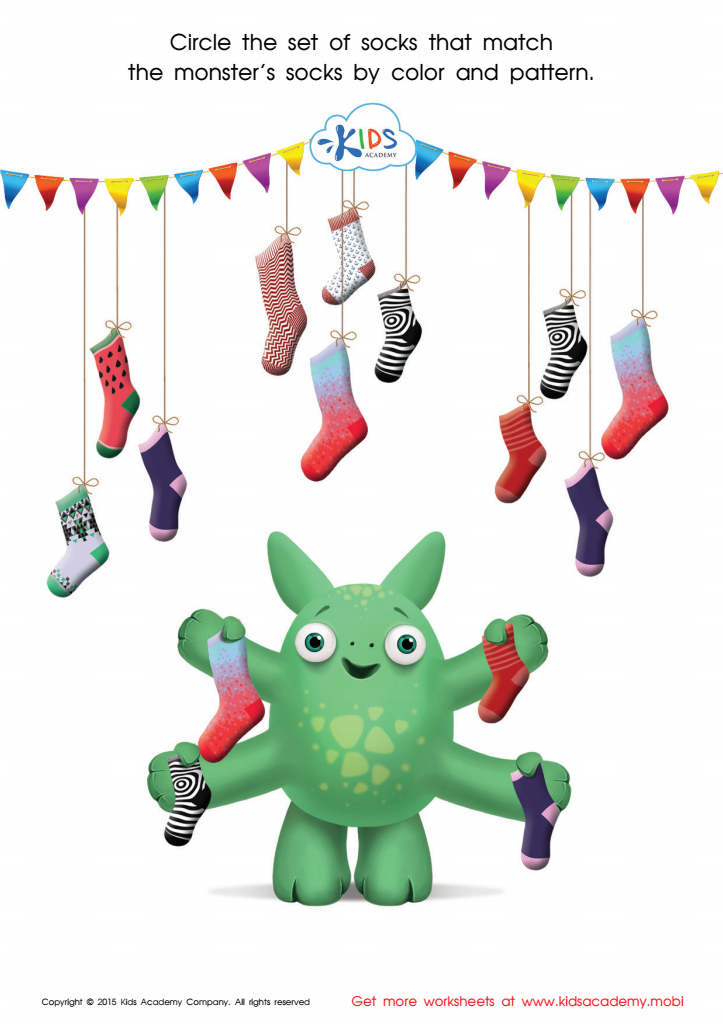
Sort the Monster's Socks Worksheet
 Assign to My Students
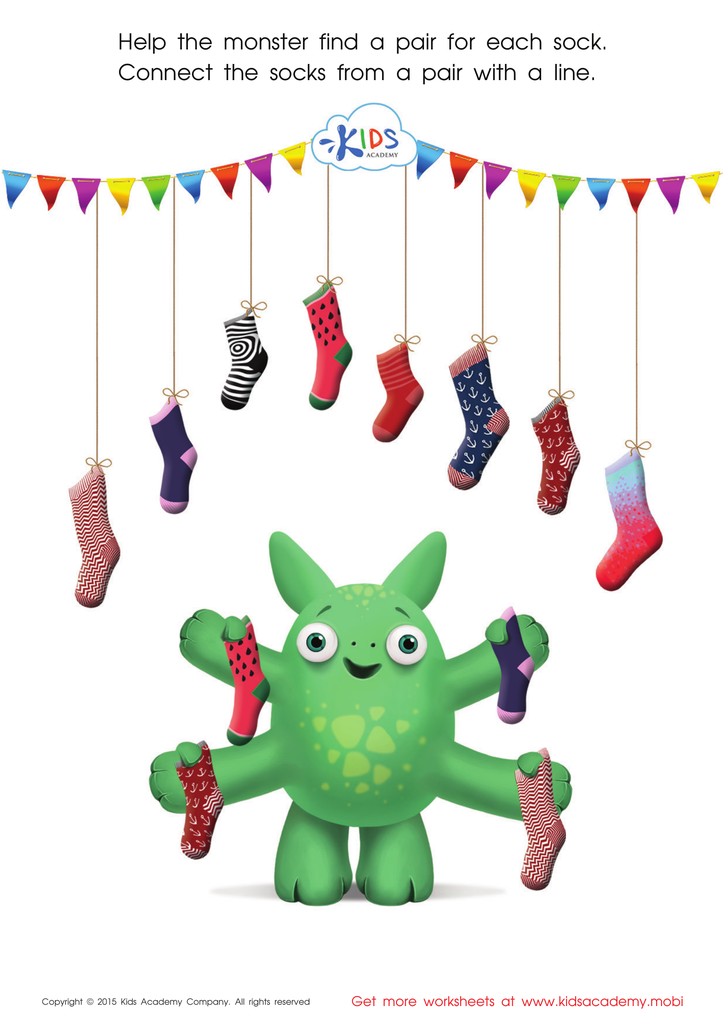
Math Matching Game: Monsterв's Socks Worksheet
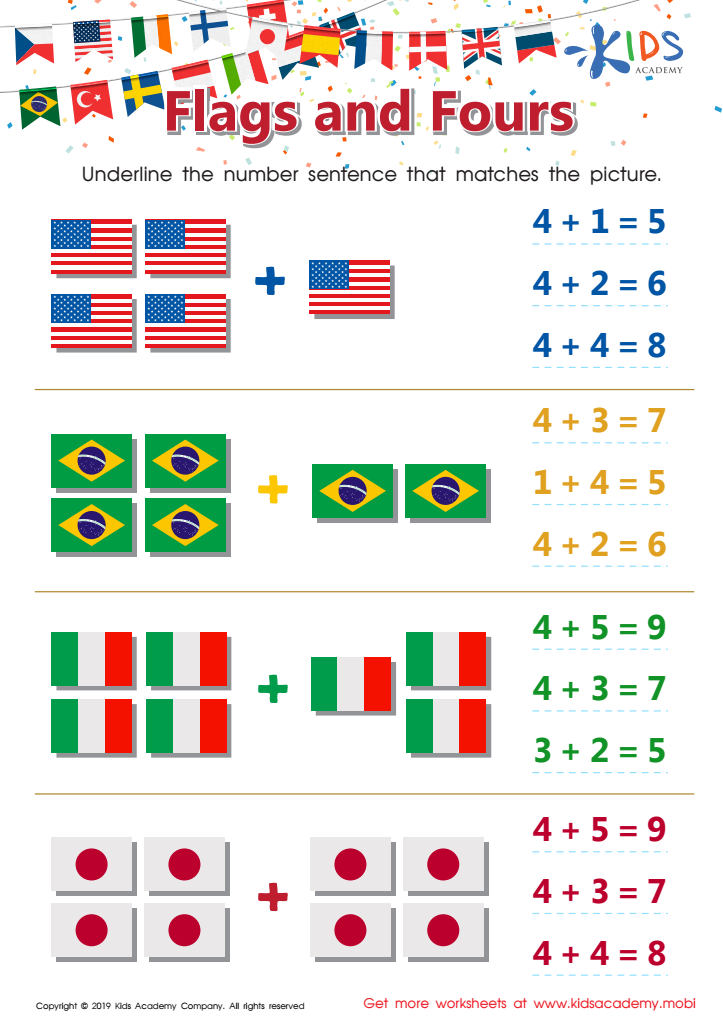
Flags and Fours Worksheet








Pattern recognition and basic addition and subtraction are foundational skills that play a significant role in the cognitive development of children aged 4-5. At this early stage, children’s brains are highly receptive to learning, and engaging them in activities that develop these skills provides a strong groundwork for future mathematical and logical thinking.
Pattern recognition goes beyond identifying simple sequences; it enhances children's ability to observe, predict, and establish order in their environment, key cognitive skills that are crucial in problem-solving situations across various disciplines. Recognizing patterns also aids in the development of early reading skills because language itself is structured in patterns, from letter combinations to word structures.
Addition and subtraction introduce fundamental mathematical concepts. These early math skills encourage logical reasoning and help children understand the concept of quantity, which is essential in everyday activities. Engaging in addition and subtraction exercises enhances fine motor skills and develops attention spans as children learn to work through problems progressively.
Moreover, early exposure to these concepts gives children confidence in their abilities. Positive experiences with pattern recognition and basic math increase their self-esteem and can cultivate a lifelong interest in learning. For teachers and parents, fostering these skills through playful activities ensures that children have a smooth transition to more complex mathematical and analytical thinking in their later academic pursuits.








