Understanding numeracy Addition & Subtraction Worksheets for Ages 4-5
4 filtered results
-
From - To
Welcome to our "Understanding Numeracy: Addition & Subtraction Worksheets for Ages 4-5" page! Here, young learners can develop foundational math skills through engaging and interactive worksheets specifically designed for preschoolers. Our resources focus on helping children enhance their understanding of basic addition and subtraction concepts. With colorful visuals and age-appropriate tasks, these worksheets promote early math proficiency in a fun and accessible way. Encourage your child’s mathematical journey while building confidence in their skills. Start exploring our collection now to discover how your little one can grasp essential numeracy concepts through play and practice!
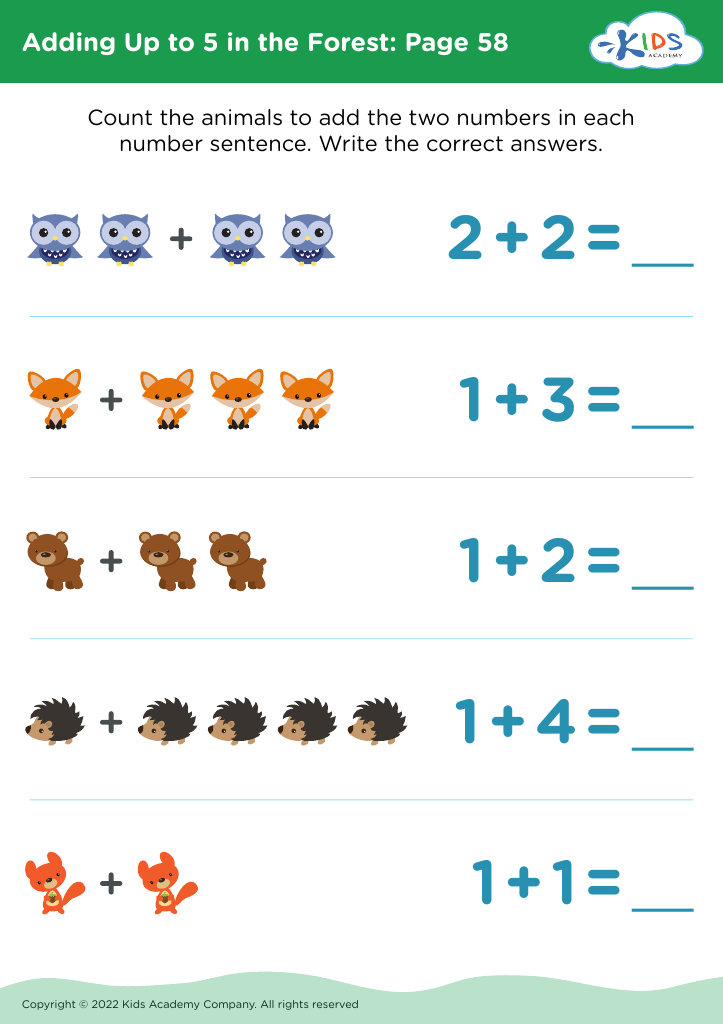
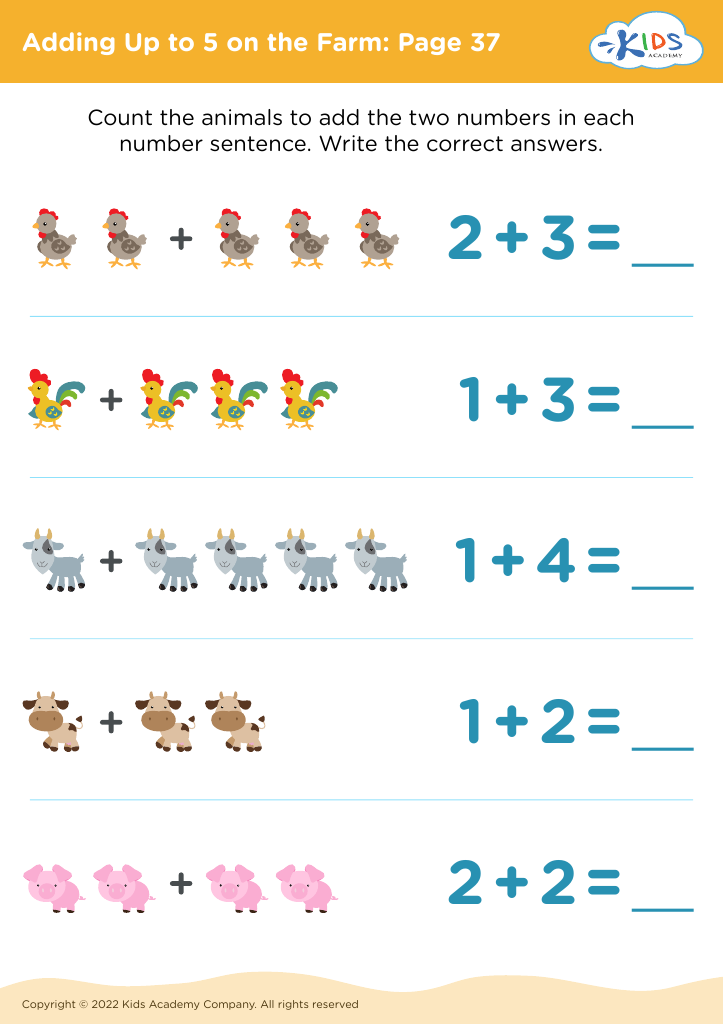
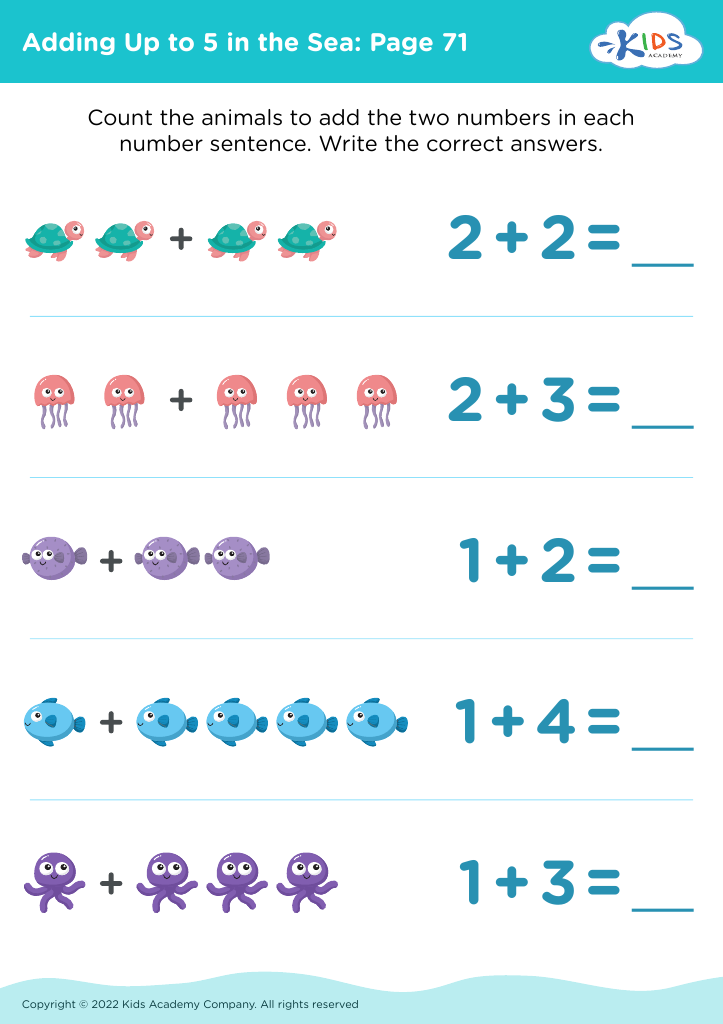
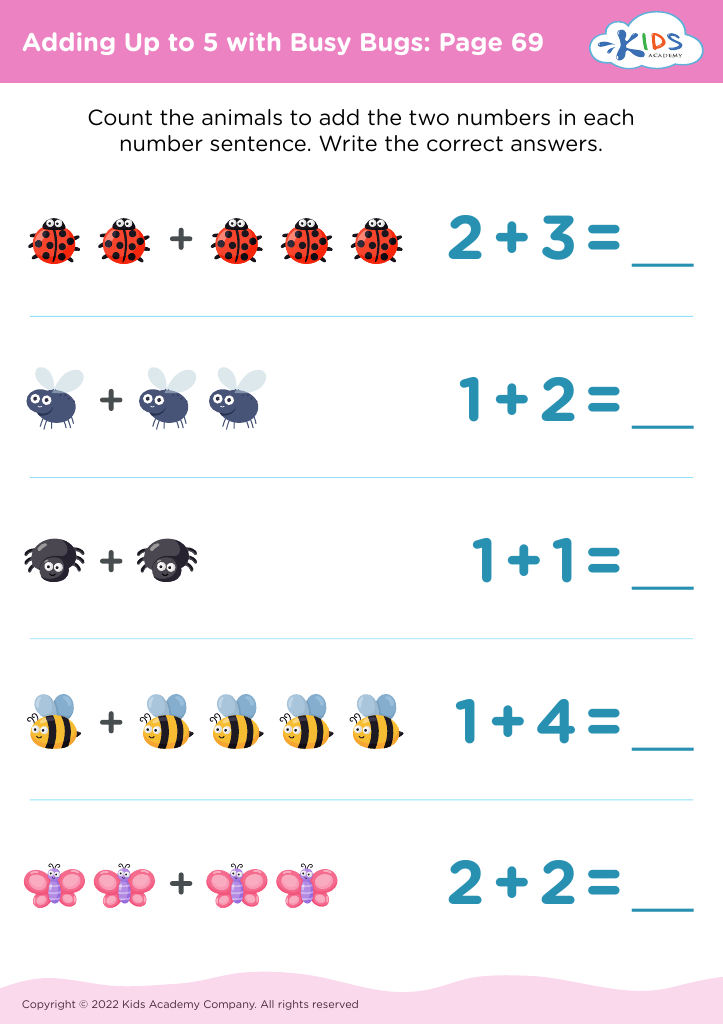








Understanding numeracy, specifically addition and subtraction, is fundamental for children ages 4-5, as it lays the groundwork for their future mathematical learning and problem-solving skills. During this critical developmental stage, children are naturally curious and absorb information like sponges, making it an ideal time for them to grasp the concepts of addition and subtraction.
Mastering these basic operations helps children develop essential cognitive skills, such as logical reasoning and critical thinking. Furthermore, numeracy fosters a sense of confidence that can influence their overall approach to learning—children who are comfortable with math are more likely to engage in classroom activities and tackle new challenges.
Parents and teachers should prioritize these skills because they promote not only academic success but also vital real-world applications; understanding how to add and subtract can help in daily situations, like counting snacks or sharing toys. By supporting children in becoming proficient in these foundational concepts, adults contribute to building a framework for all future mathematics learning, encouraging positive attitudes towards the subject, and ensuring that children are well-prepared for more complex mathematical concepts as they progress in their education. These early experiences with numbers can have lifelong benefits on children's learning trajectories.








