
Visual perception improvement Addition & Subtraction Worksheets for Ages 4-5
5 filtered results
Difficulty Level
Grade
Age
-
From - To
Subject
Activity
Standards
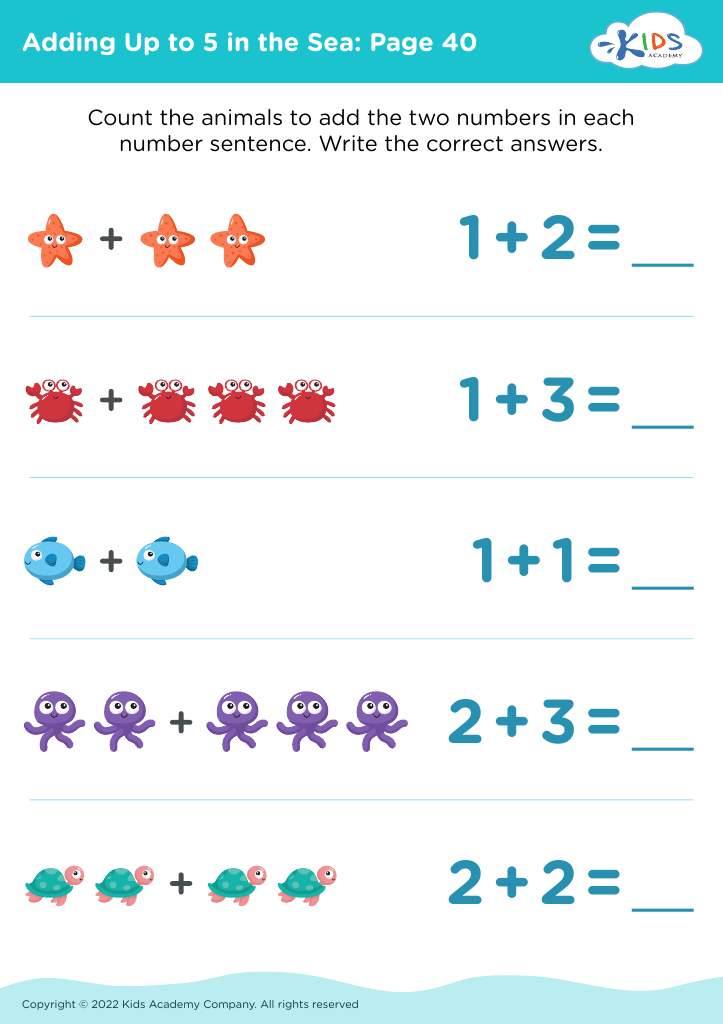
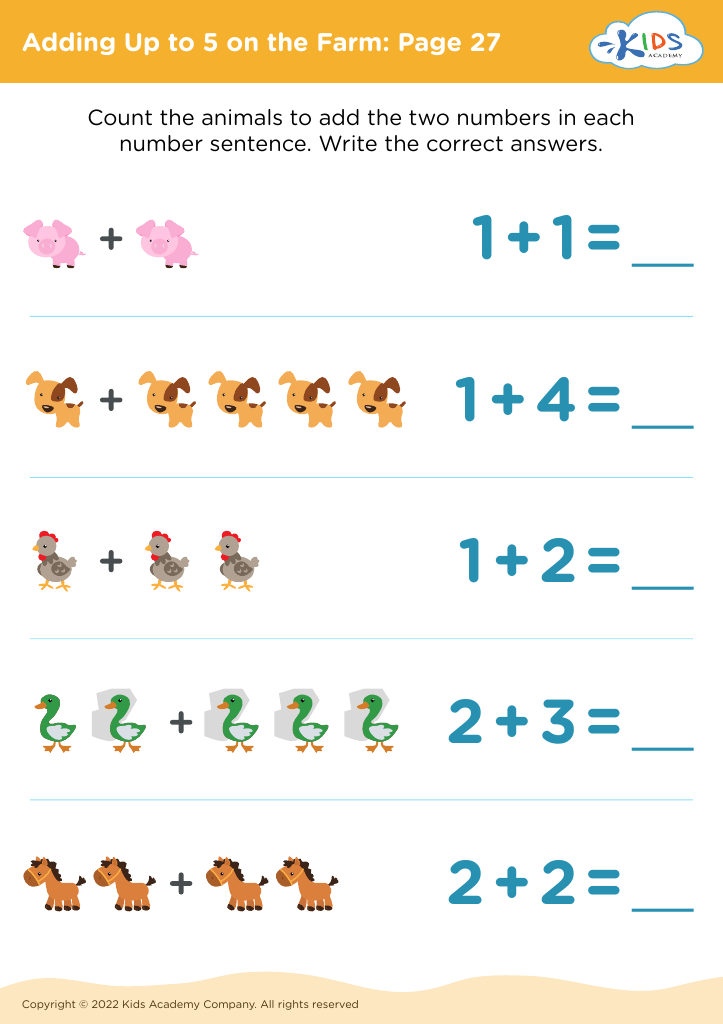
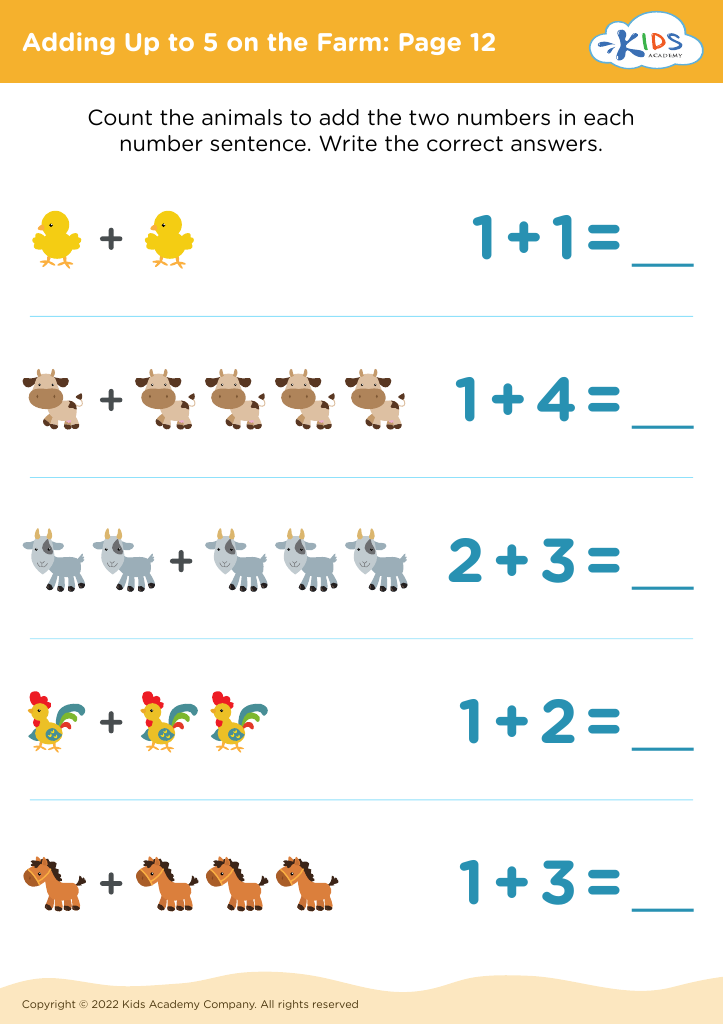
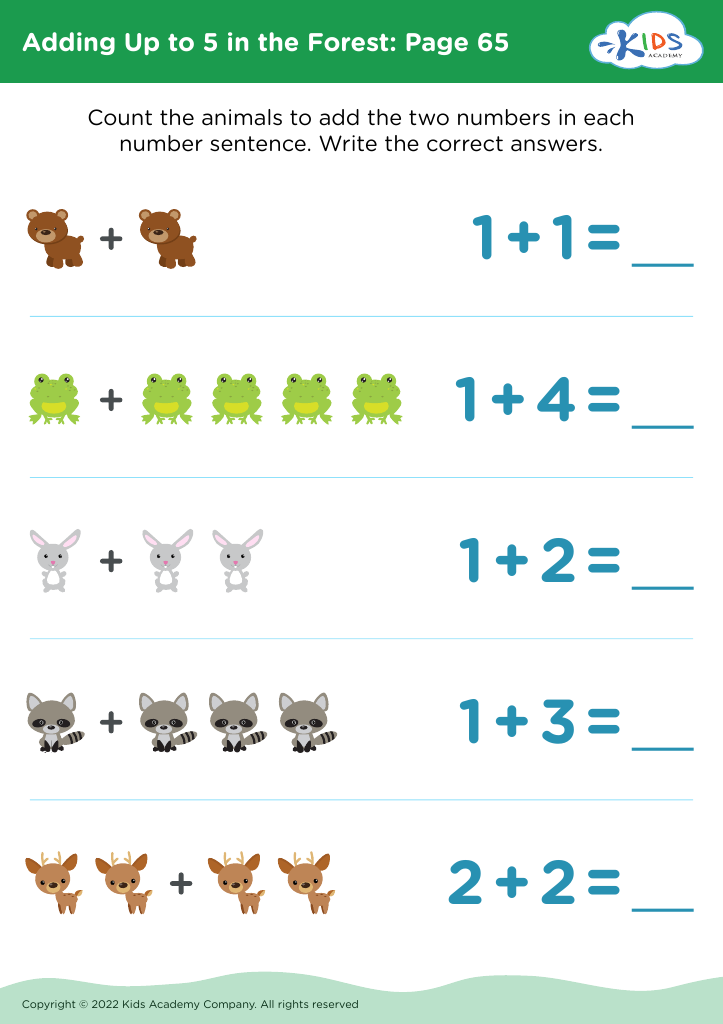
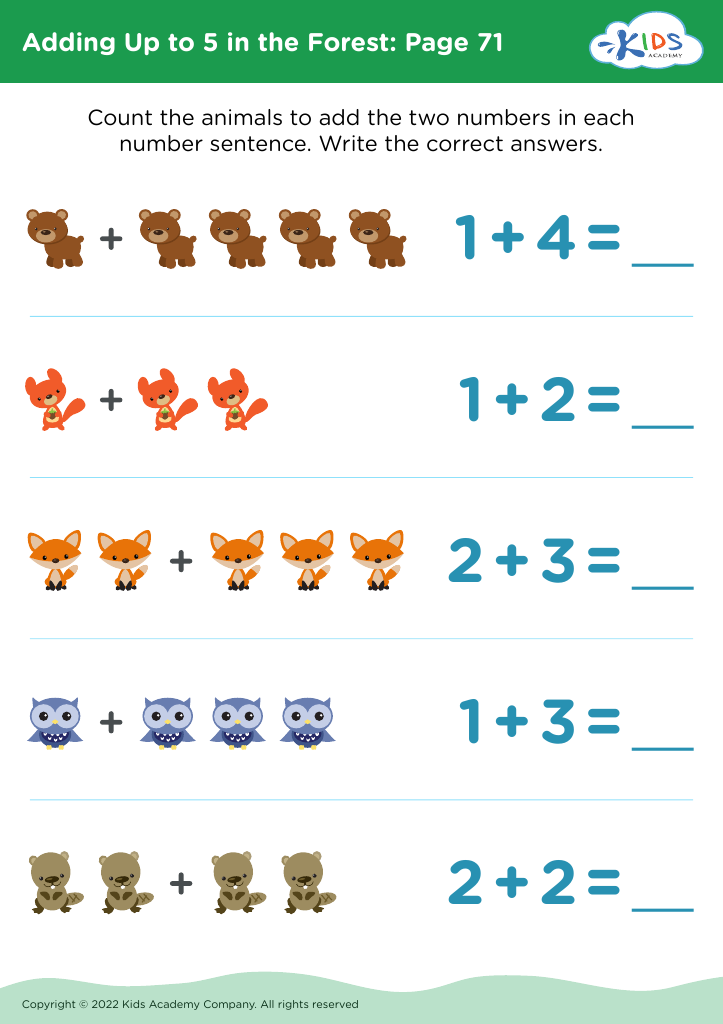
Enhance your child's visual perception skills with our engaging Addition & Subtraction Worksheets designed for ages 4-5. These worksheets are crafted to improve crucial visual processing abilities while reinforcing essential math concepts. Young learners will enjoy solving fun and colorful exercises that combine attractive visuals with foundational addition and subtraction tasks. Each activity is thoughtfully designed to captivate children's attention, making learning enjoyable and effective. By using our worksheets, kids will enhance their ability to recognize patterns, shapes, and spatial relationships, setting a strong foundation for future math success. Boost your little one's math confidence today with our vibrant printable resources!
Favorites
With answer key
Interactive
Join Kids Academy for Free
Who is primarily going to use this learning content?








Visual perception is a crucial skill for young learners, particularly in the context of addition and subtraction for ages 4-5. This age group is foundational for cognitive development, and effective visual perception enhances their ability to recognize numbers, shapes, and quantities.
When children can accurately perceive visual information, they are better equipped to understand mathematical concepts. For example, identifying the connections between symbols (like "+" and "-") and their meanings becomes easier. This skill also aids in visualizing problems, fostering mental math abilities, and developing their number sense.
Teachers and parents should care about improving visual perception because it not only supports mathematical skills but also lays the groundwork for future academic success. Children with strong visual-perceptual skills tend to perform better in school, as they can follow instructions more easily and engage with learning materials effectively.
Additionally, by integrating visual perception activities, such as sorting, matching, and puzzle-solving, educators and parents can create a fun learning environment. As children enjoy themselves, they build confidence in their abilities, reinforcing a positive mindset towards math that will carry into later learning stages. Early intervention in these skills ultimately sets children on a path toward lifelong learning and problem-solving competencies.








