Animal identification Addition Worksheets for Ages 4-5 - Page 2
27 filtered results
-
From - To
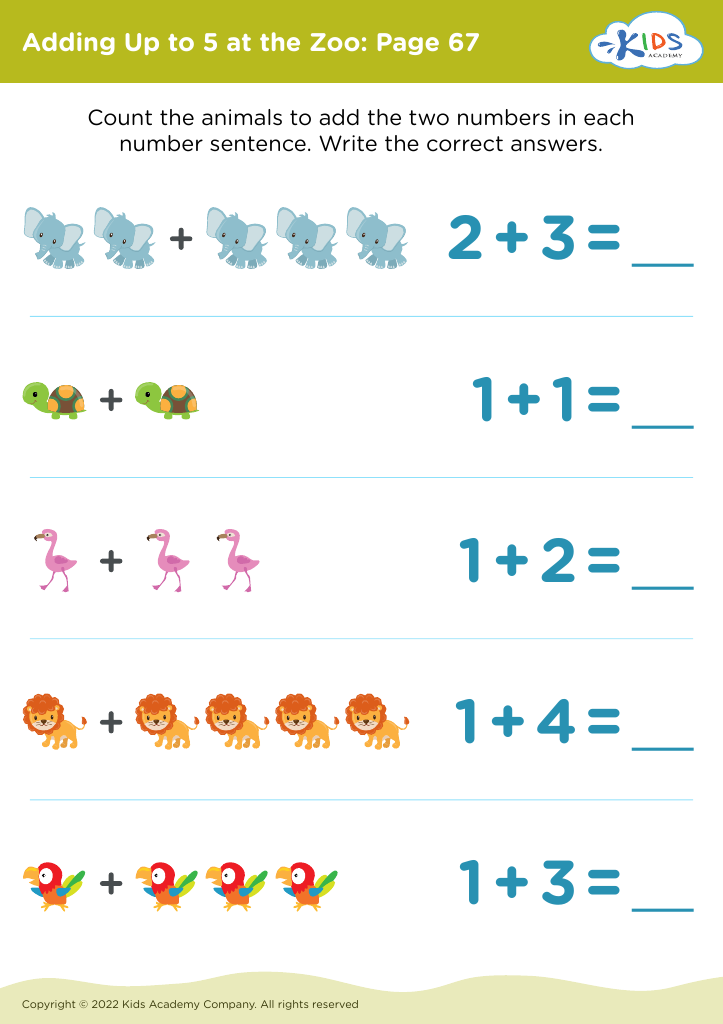
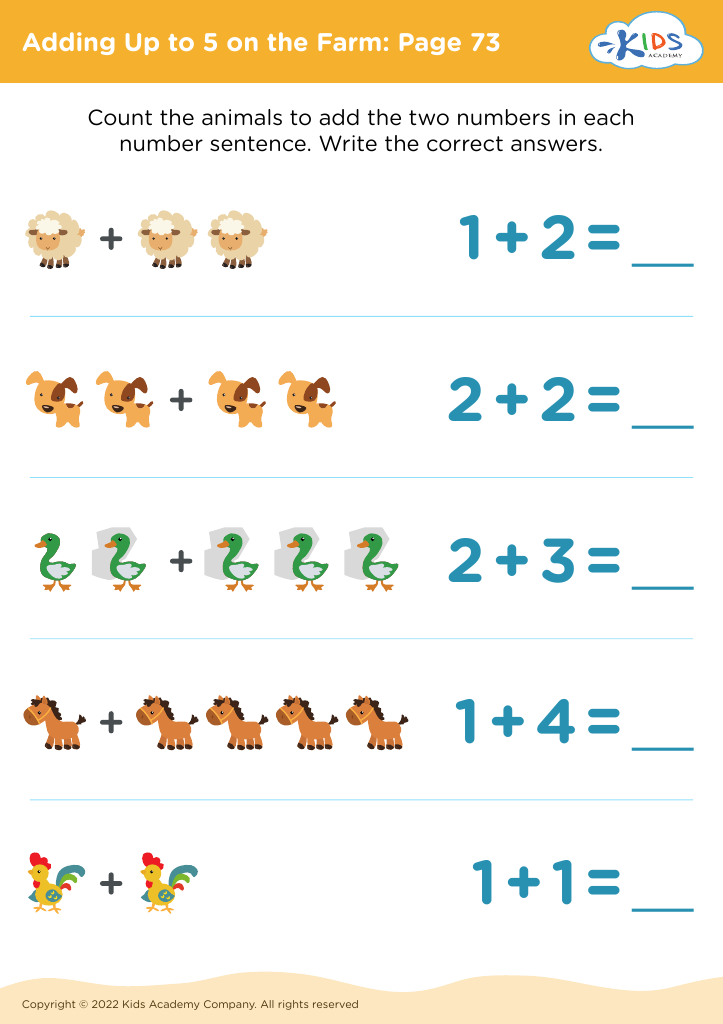
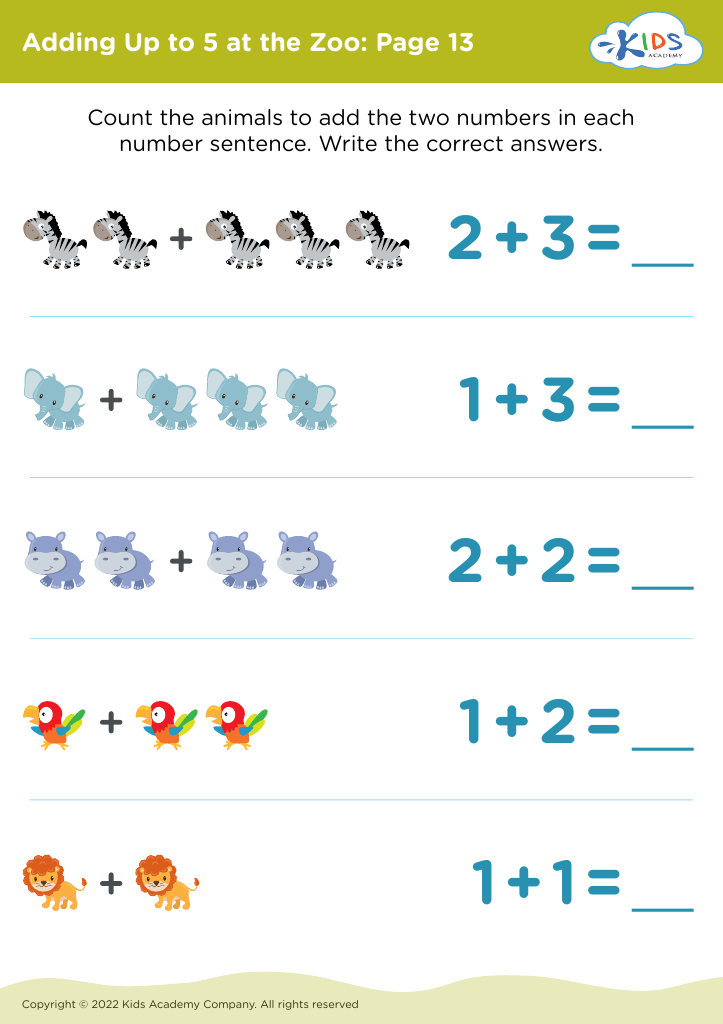








Animal identification addition is an engaging way for children ages 4-5 to learn basic math skills while fostering a love for animals and the natural world. Parents and teachers should prioritize this activity for several reasons.
Firstly, it helps reinforce early numeracy skills by integrating counting, addition, and pattern recognition into a thematic context. Through animal identification addition, children learn to associate numbers with tangible objects, making abstract concepts more relatable. This foundational understanding of math is critical as they progress in their education.
Moreover, this activity promotes cognitive development through problem-solving and critical thinking as children learn to group different animals and calculate totals. It also enhances fine motor skills through hands-on activities, such as sorting and counting animal figures.
In addition to academic benefits, incorporating animals into lessons can spark curiosity and enhance engagement. Children are often fascinated by animals, making learning enjoyable and memorable. This enthusiasm fosters a positive attitude towards education and encourages social interaction, as children can collaborate in groups or pairs.
Finally, discussing different animals raises awareness about biodiversity and environmental stewardship, key values in nurturing responsible future citizens. In summary, animal identification addition enriches early learning experiences holistically, blending math skills with curiosity and conservation.








