Basic arithmetic comprehension Addition Worksheets for Ages 4-5
3 filtered results
-
From - To
Unlock your child's mathematical potential with our Basic Arithmetic Comprehension Addition Worksheets, designed specifically for ages 4-5. These interactive and engaging worksheets introduce young learners to fundamental addition concepts, using colorful illustrations and relatable scenarios. Each worksheet encourages children to practice and reinforce their addition skills in a fun and enjoyable way, building their confidence in math. Perfect for classroom settings or at-home learning, our resources promote essential cognitive development while fostering a love for numbers. Explore our collection and help your child master basic addition with ease, setting the foundation for their future academic success!
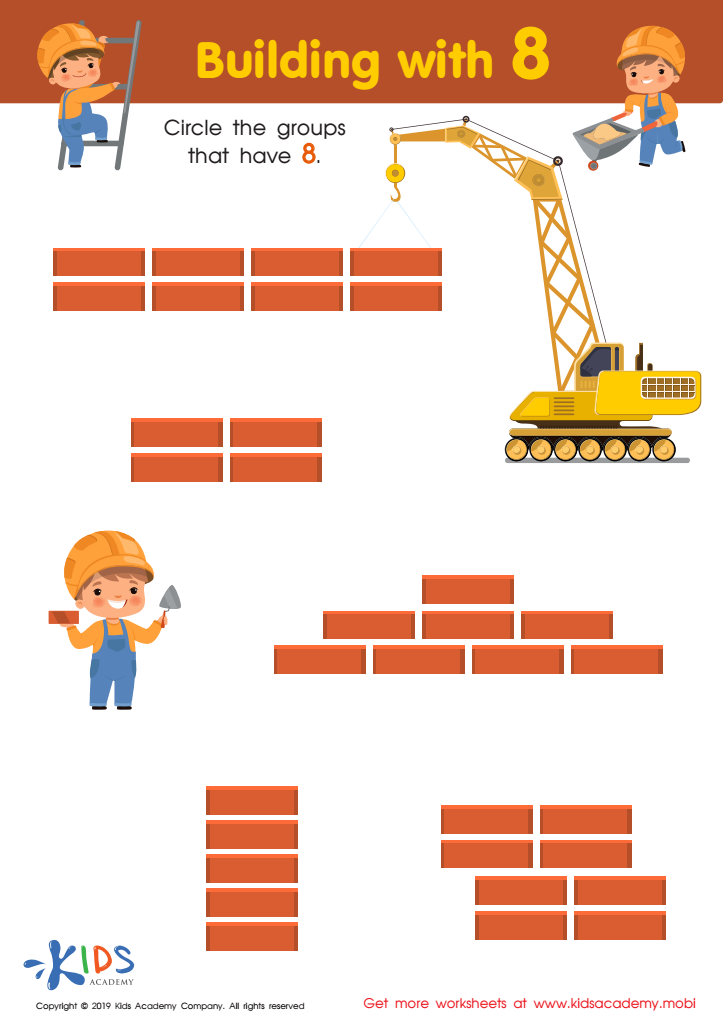
Building with 8 Worksheet
 Assign to My Students
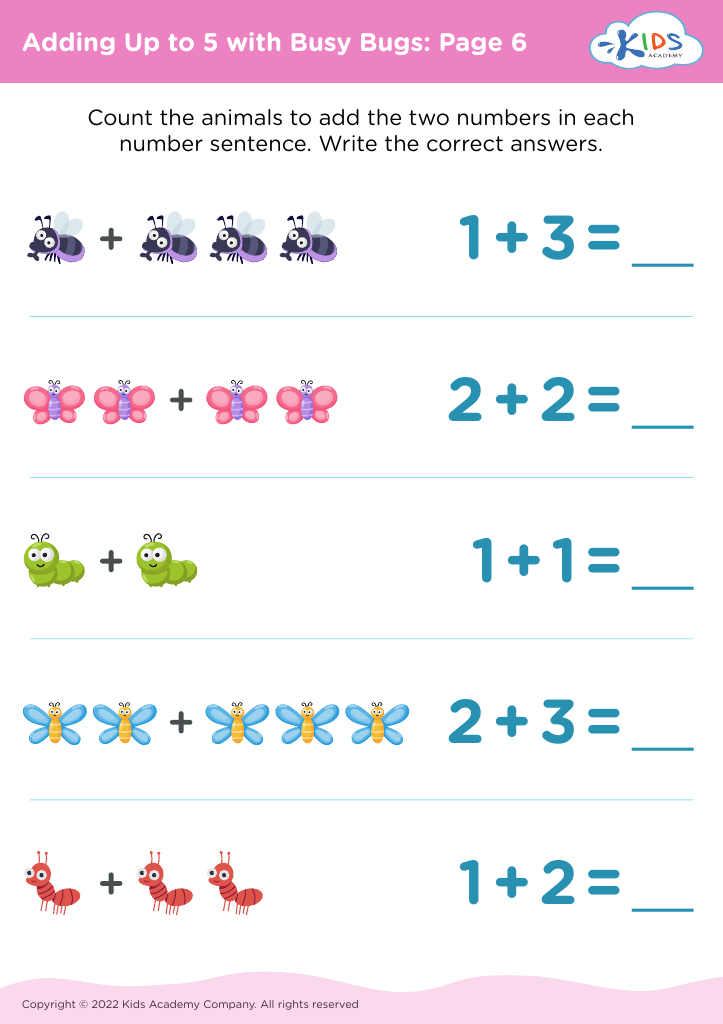
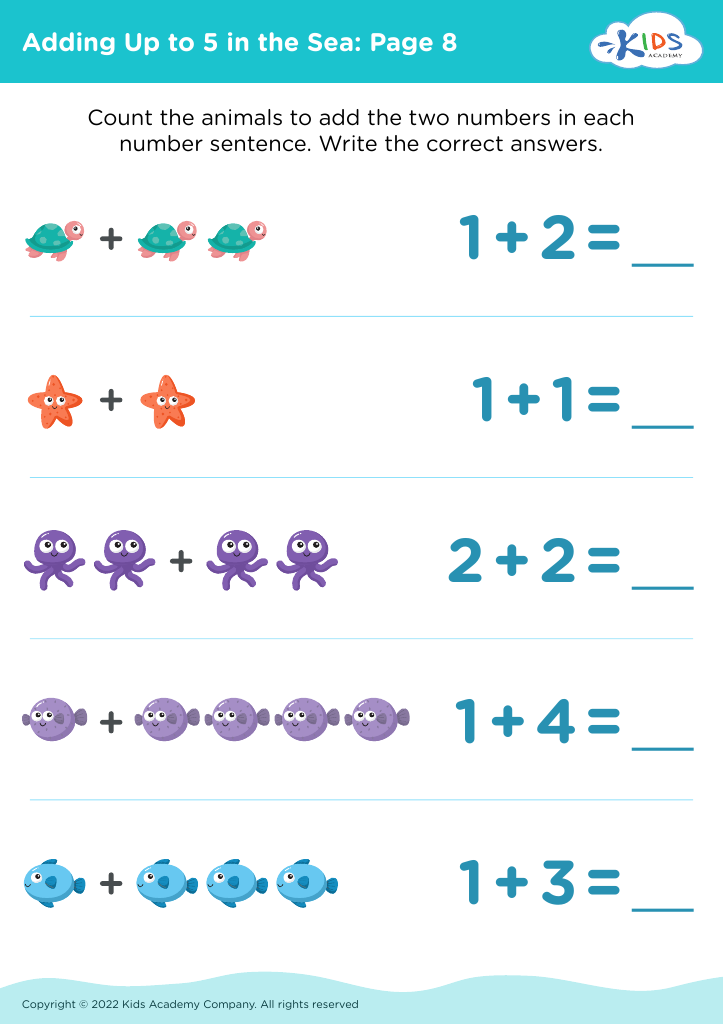







Parents and teachers should prioritize basic arithmetic comprehension, particularly addition, for children aged 4-5 for several compelling reasons. At this stage, children's cognitive abilities are rapidly developing, making it an opportune time to introduce foundational math concepts. Early comprehension of addition not only lays the groundwork for more complex math skills later but also enhances critical thinking and problem-solving abilities.
Moreover, addition is a gateway to understanding everyday situations, such as sharing items, counting toys, and measuring ingredients in cooking. These practical applications make math relatable and fun, fostering a positive attitude towards learning. Furthermore, research shows that early math skills predict later academic success, so cultivating a strong understanding of addition can be pivotal for future achievement.
Additionally, engaging in addition activities helps children develop vital social skills as they collaborate with peers during games, projects, and discussions. By instilling these foundational skills, parents and teachers can nurture confident learners who are prepared to tackle more advanced math concepts as they grow. Encouraging a love of math from an early age ultimately roots learning in curiosity, practicality, and creativity, establishing a solid foundation for lifelong mathematical understanding.








