Filters

101 filtered results

Clear all filters
Favorites
With answer key
Interactive

101 filtered results

Difficulty Level

Grade


Check out this FREE Trial Lesson on Addition for age 4-5!

H

Favorites
With answer key
Interactive
  • 4-5
  • Cognitive Development
  • Addition
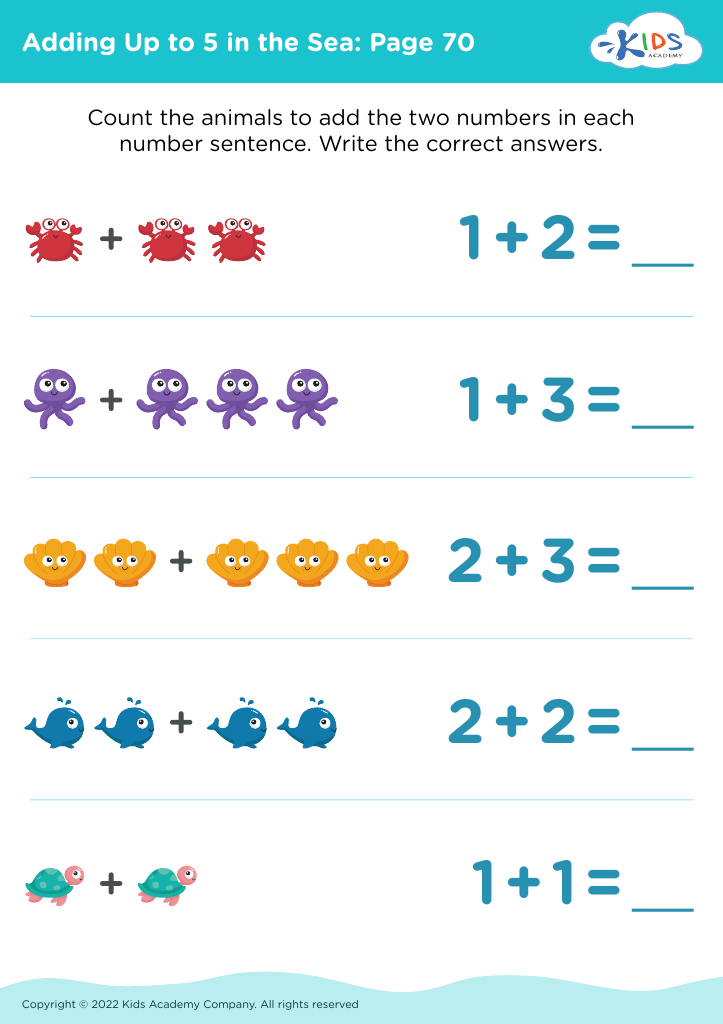
Adding Up to 5 in the Sea: Page 70
Worksheet
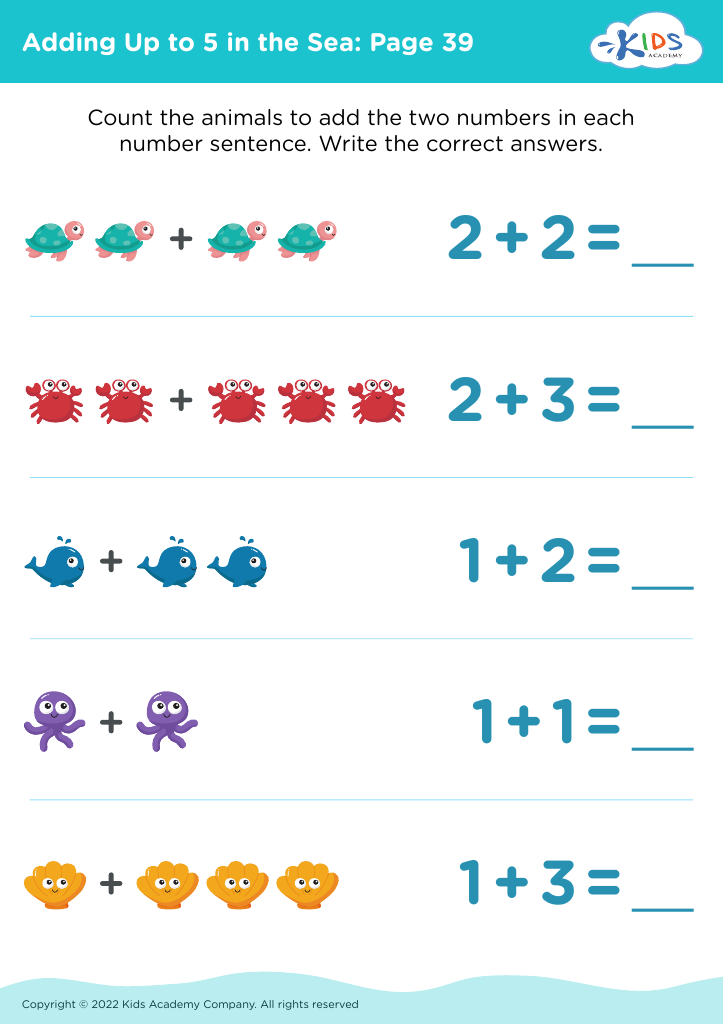
Adding Up to 5 in the Sea: Page 39
Worksheet
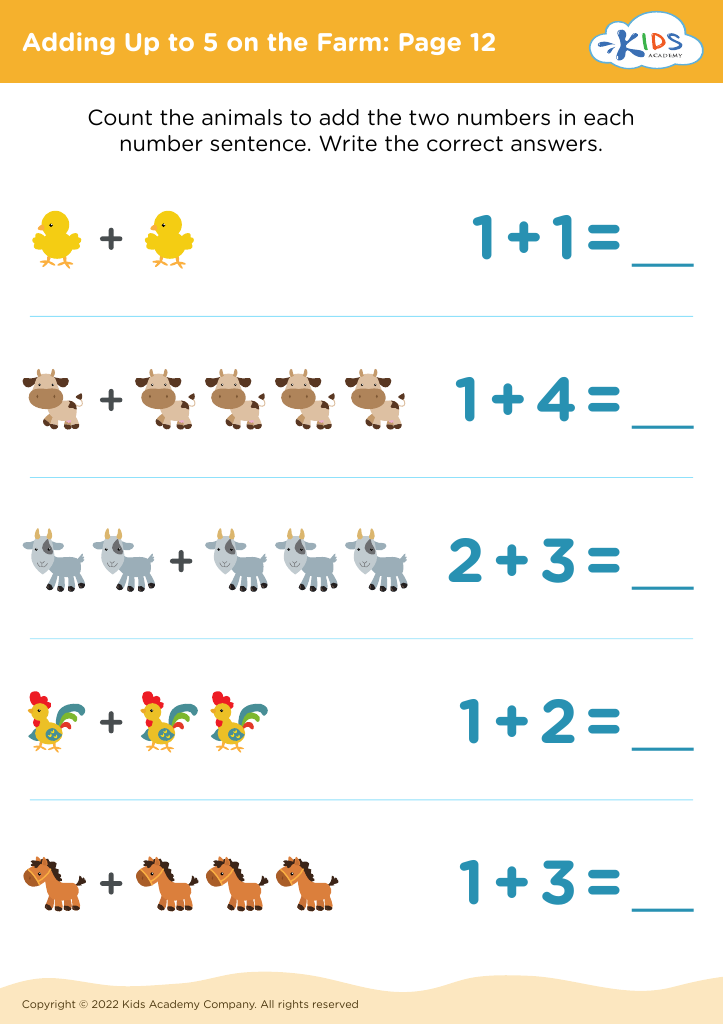
Adding Up to 5 on the Farm: Page 12
Worksheet
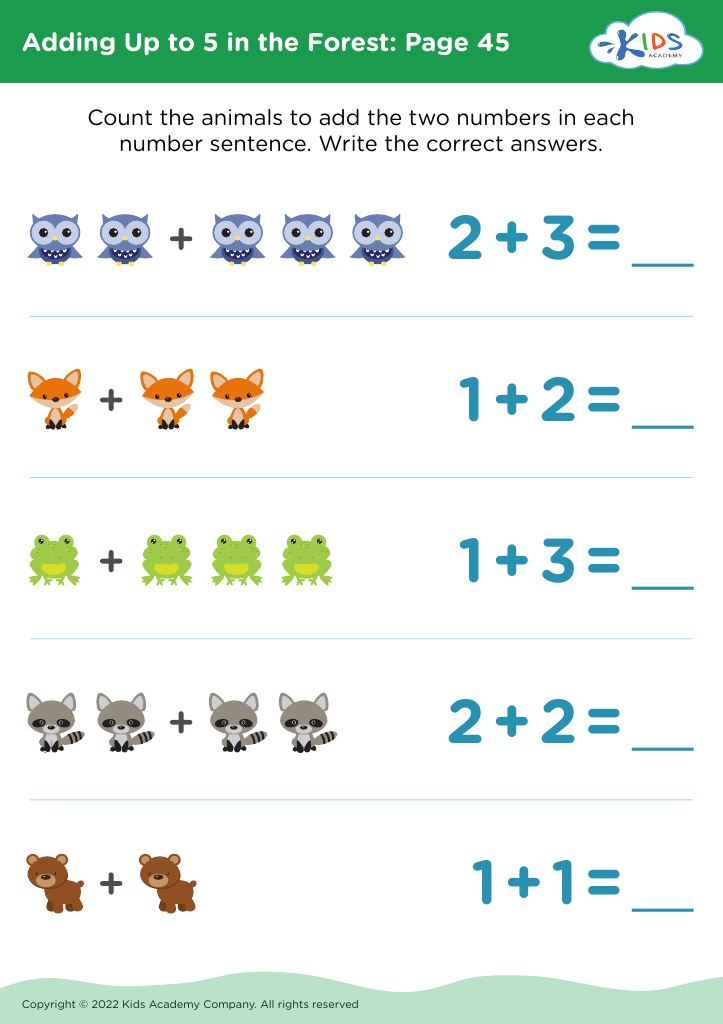
Adding Up to 5 in the Forest: Page 45
Worksheet
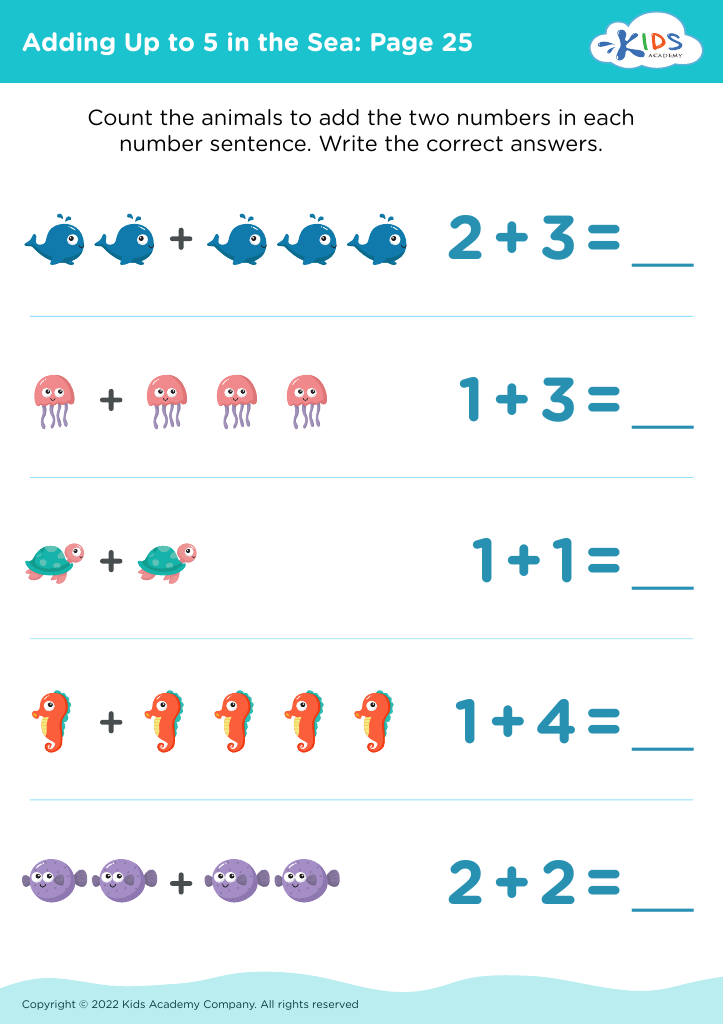
Adding Up to 5 in the Sea: Page 25
Worksheet
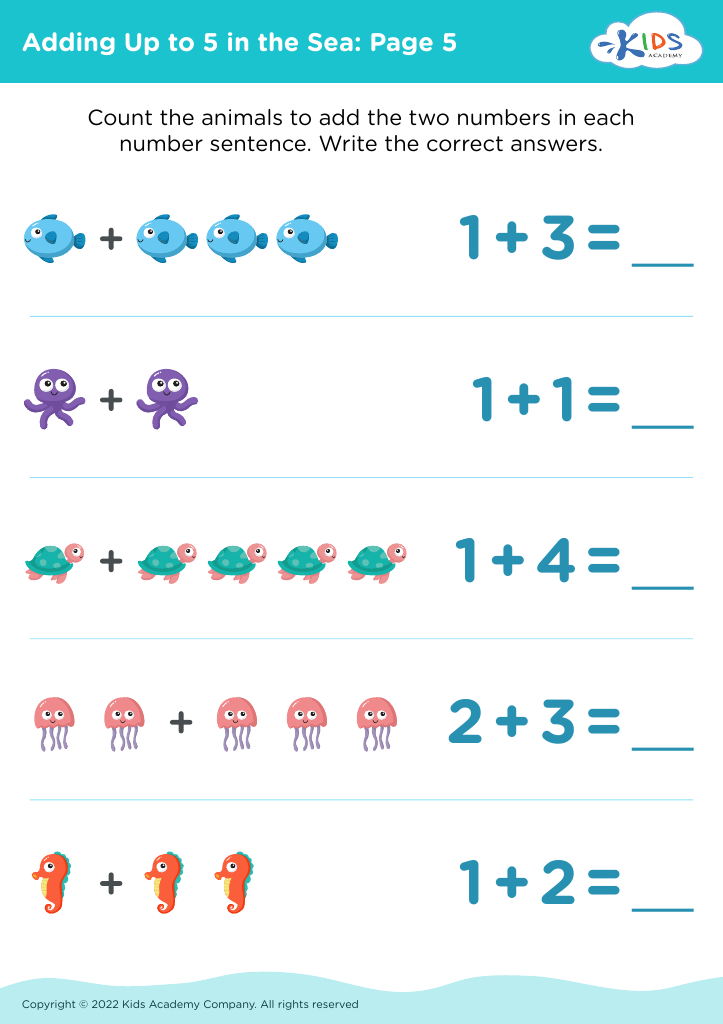
Adding Up to 5 in the Sea: Page 5

Adding Up to 5 in the Sea: Page 5

Adding Up to 5 in the Sea: Page 5
Worksheet
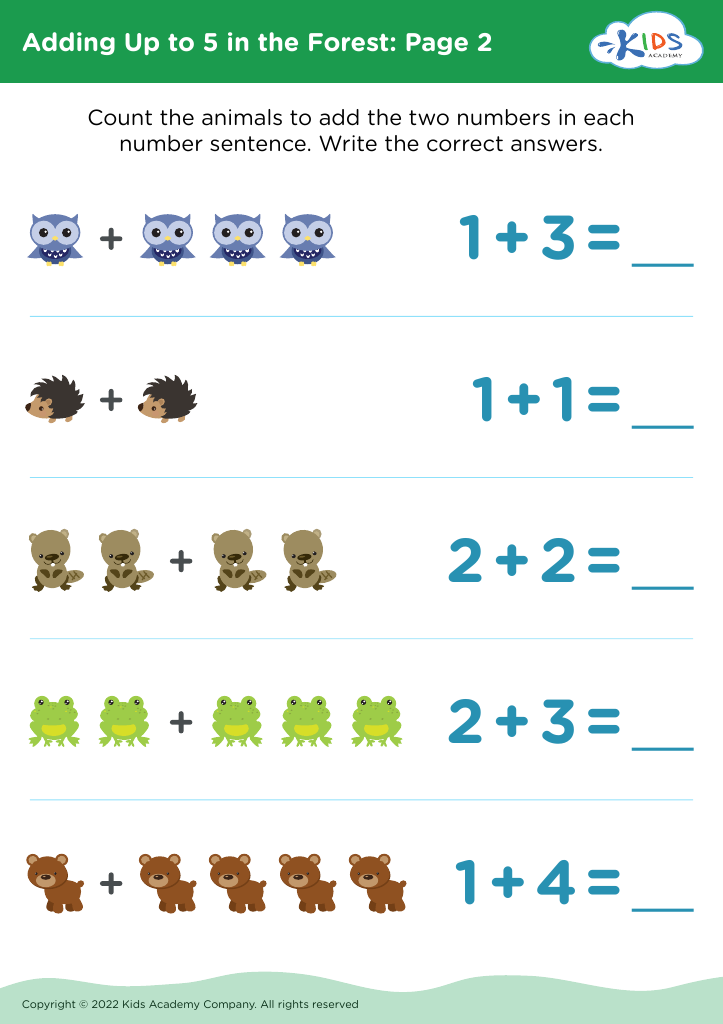
Adding Up to 5 in the Forest: Page 2
Worksheet
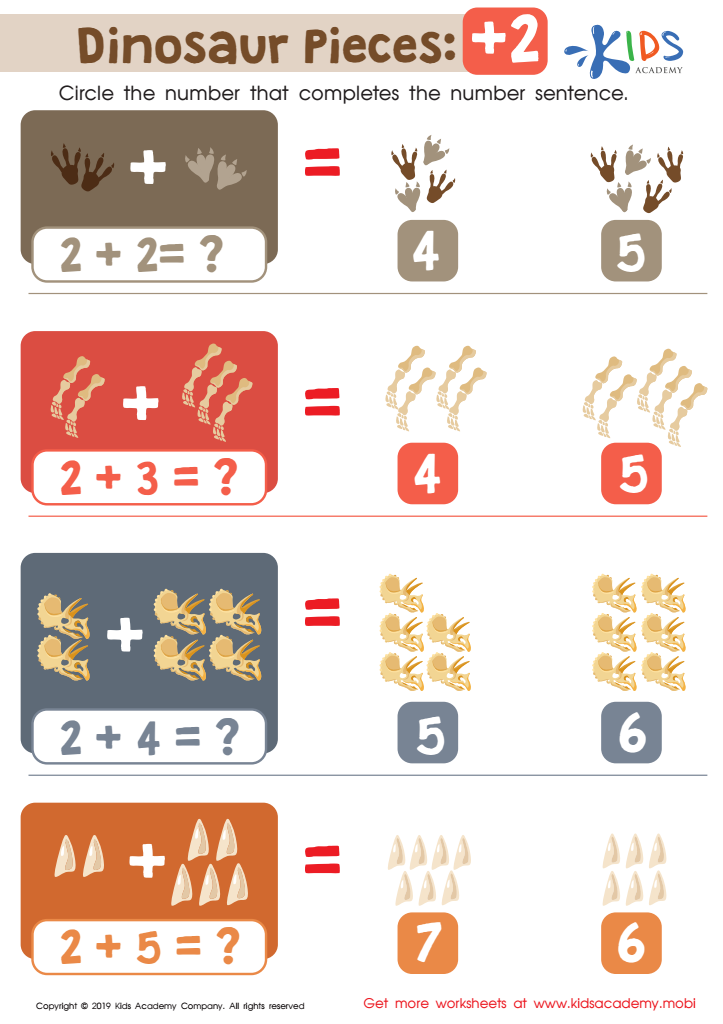
Dinosaur Pieces: +2 Worksheet

Dinosaur Pieces: +2 Worksheet

Kids love dinosaurs! See if your kids can solve these three equations featuring the mysterious creatures. Download the PDF and have them circle the number that completes each equation. Dinosaurs are extinct, not seen for thousands of years, but they can still help kids work on their math skills!
Dinosaur Pieces: +2 Worksheet
Worksheet
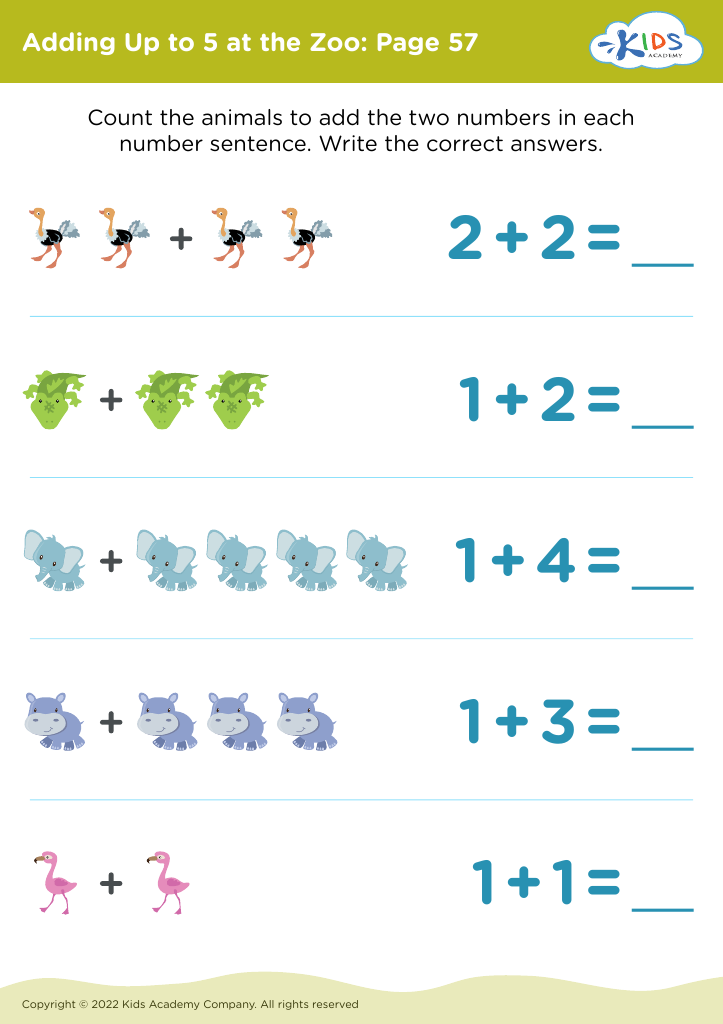
Adding Up to 5 at the Zoo: Page 57
Worksheet
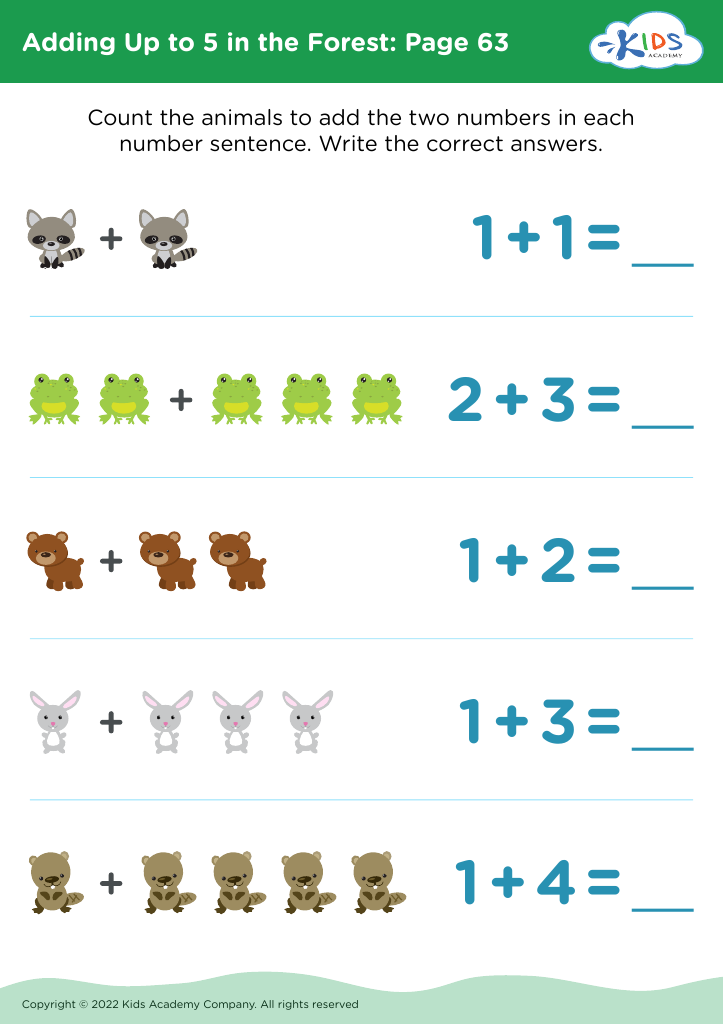
Adding Up to 5 in the Forest: Page 63
Worksheet
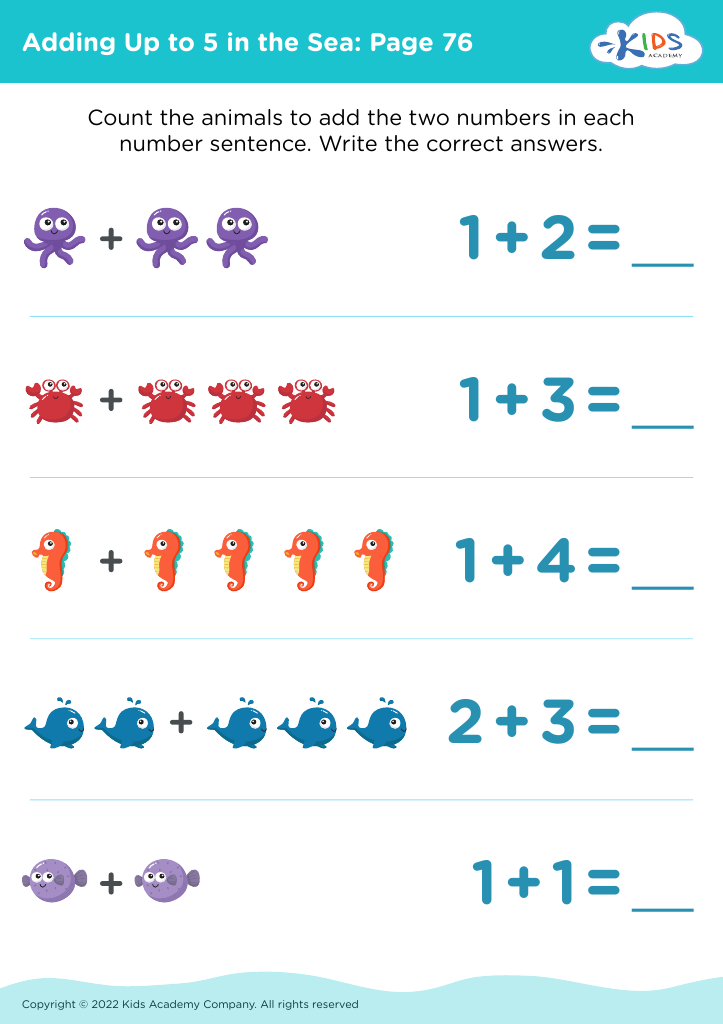
Adding Up to 5 in the Sea: Page 76
Worksheet
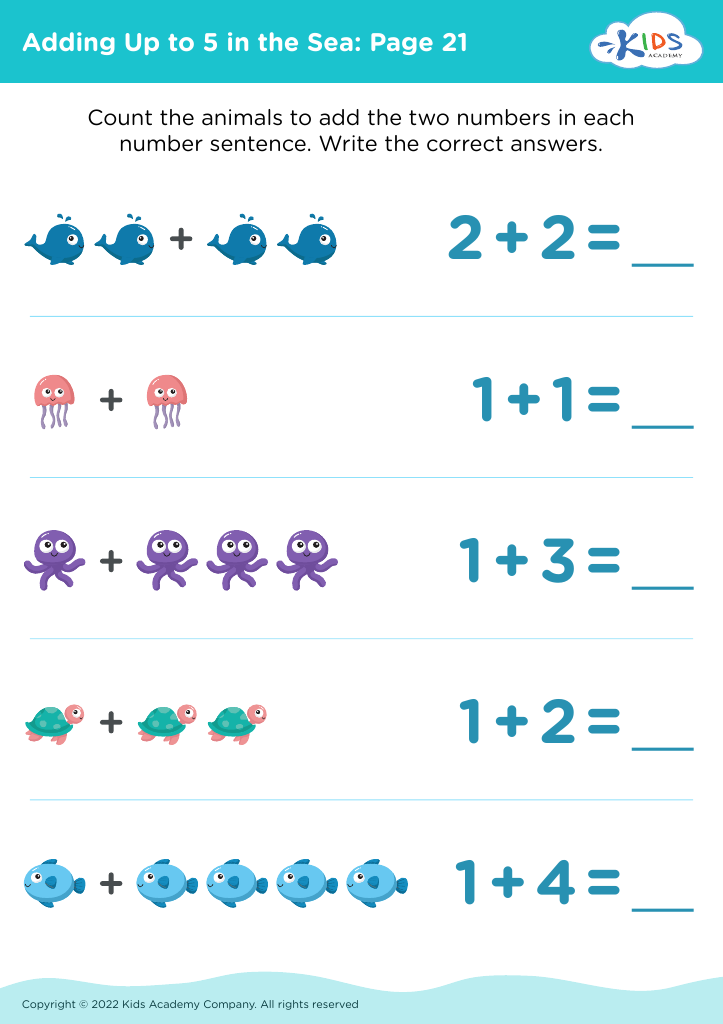
Adding Up to 5 in the Sea: Page 21
Worksheet
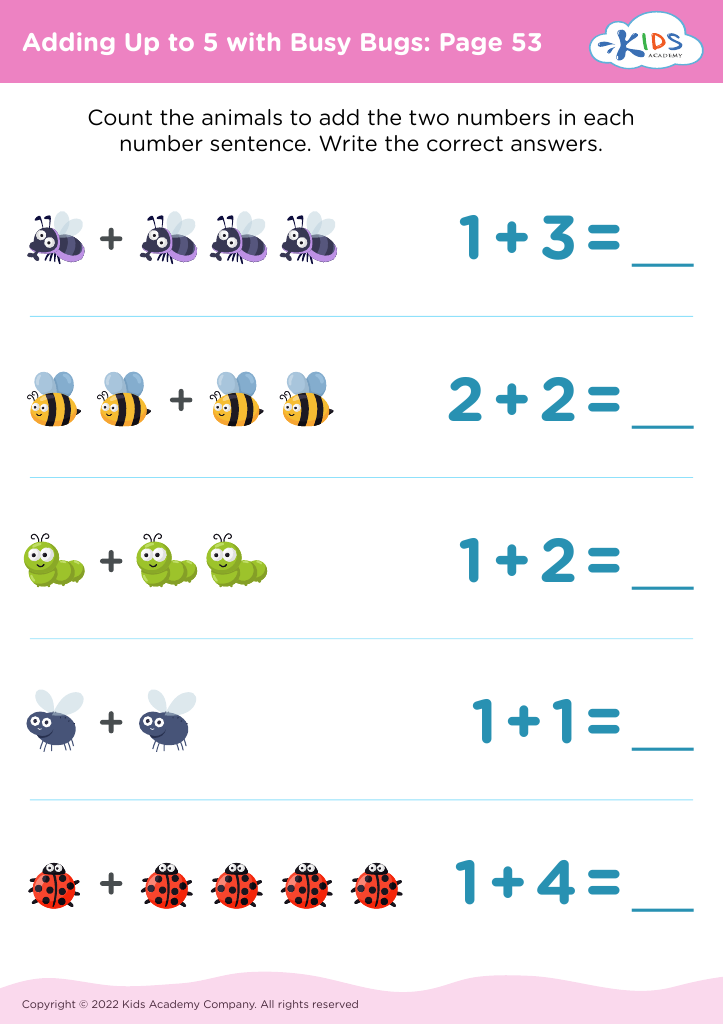
Adding Up to 5 with Busy Bugs: Page 53
Worksheet
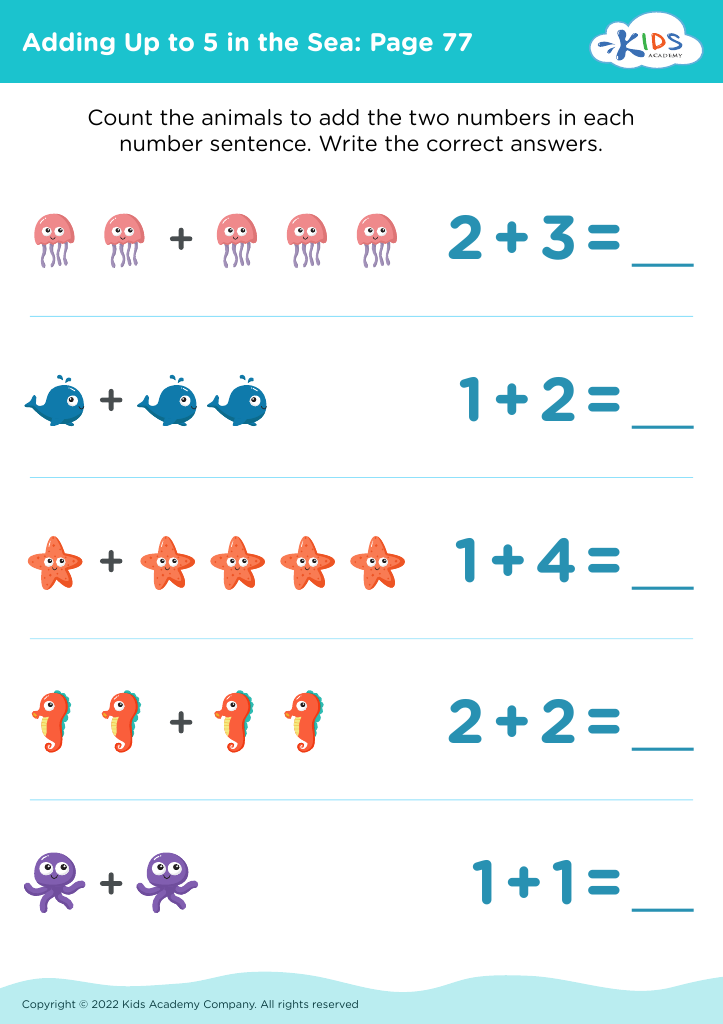
Adding Up to 5 in the Sea: Page 77
Worksheet
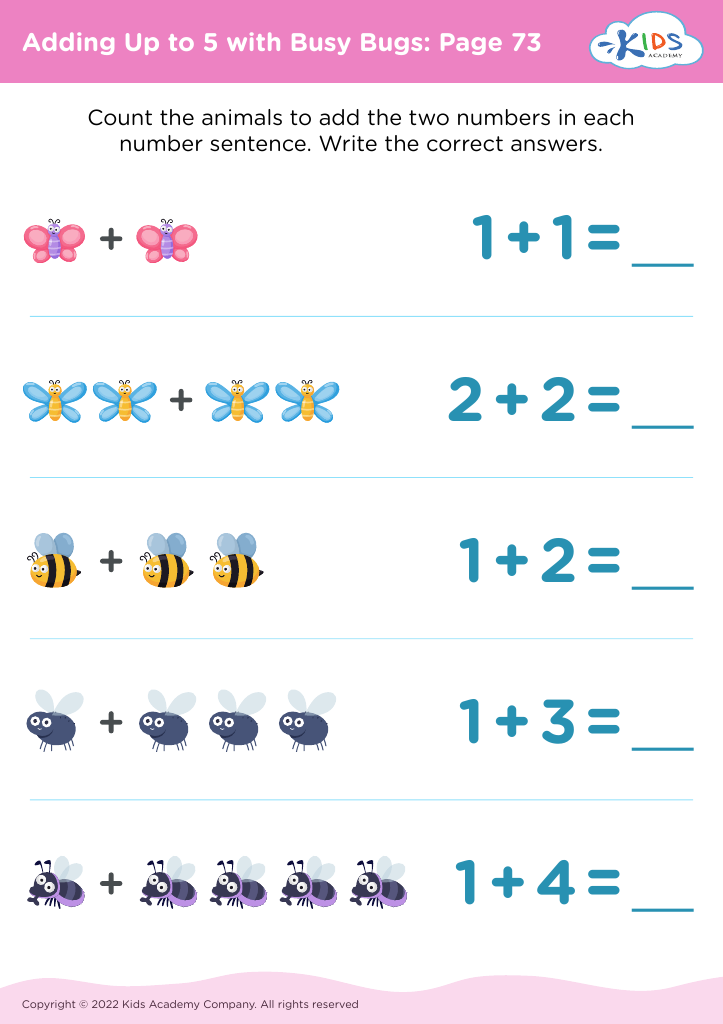
Adding Up to 5 with Busy Bugs: Page 73
Worksheet
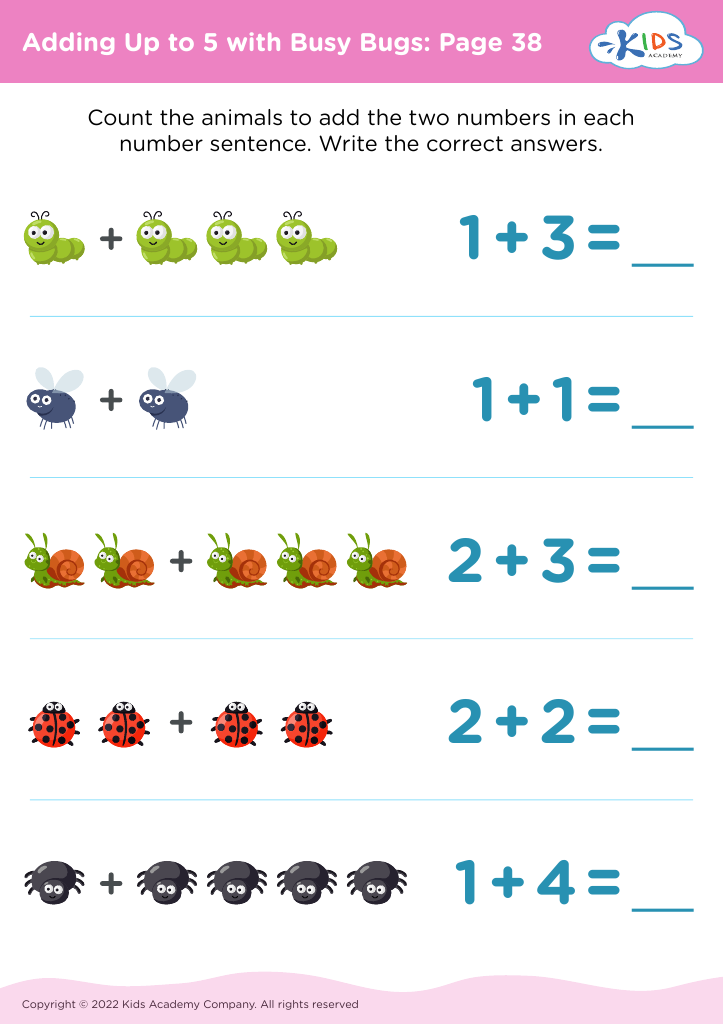
Adding Up to 5 with Busy Bugs: Page 38
Worksheet
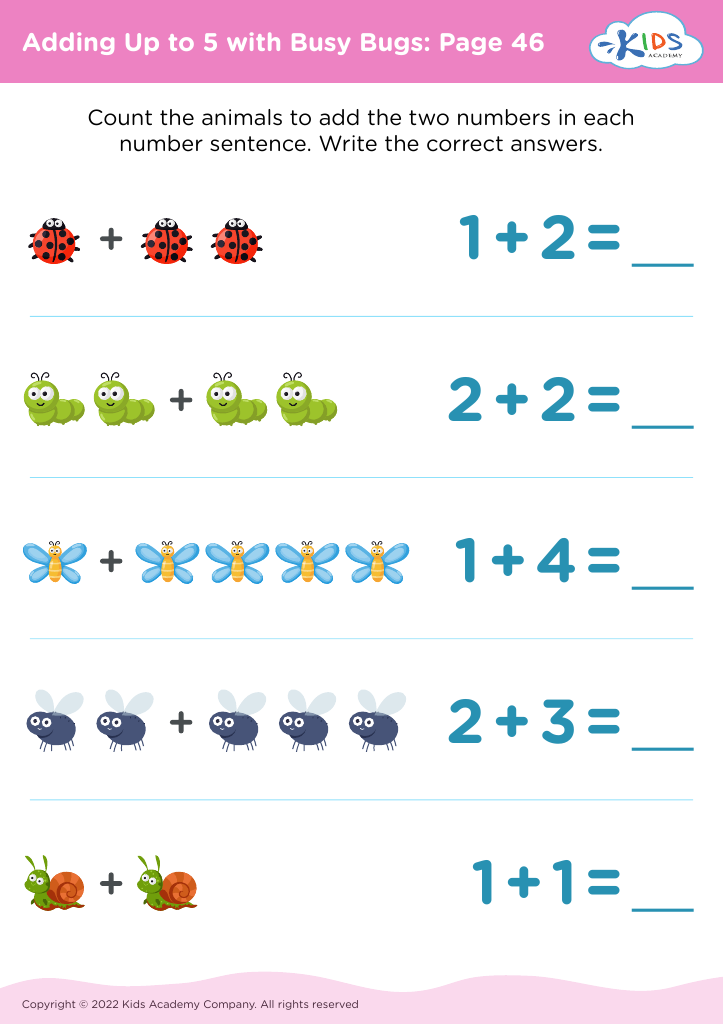
Adding Up to 5 with Busy Bugs: Page 46
Worksheet
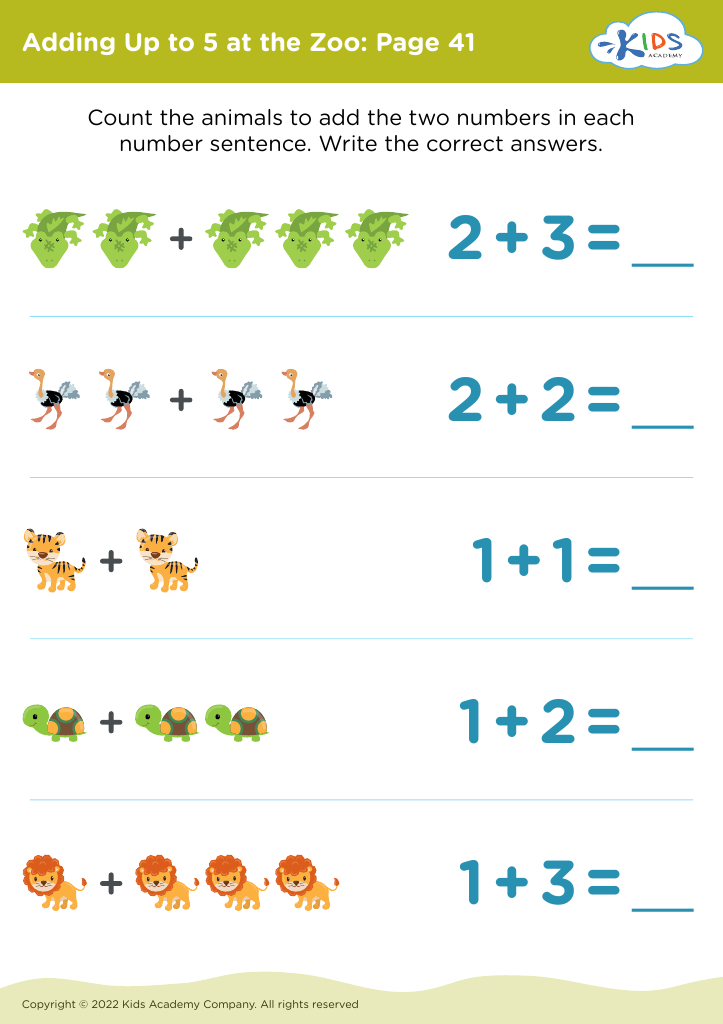
Adding Up to 5 at the Zoo: Page 41
Worksheet
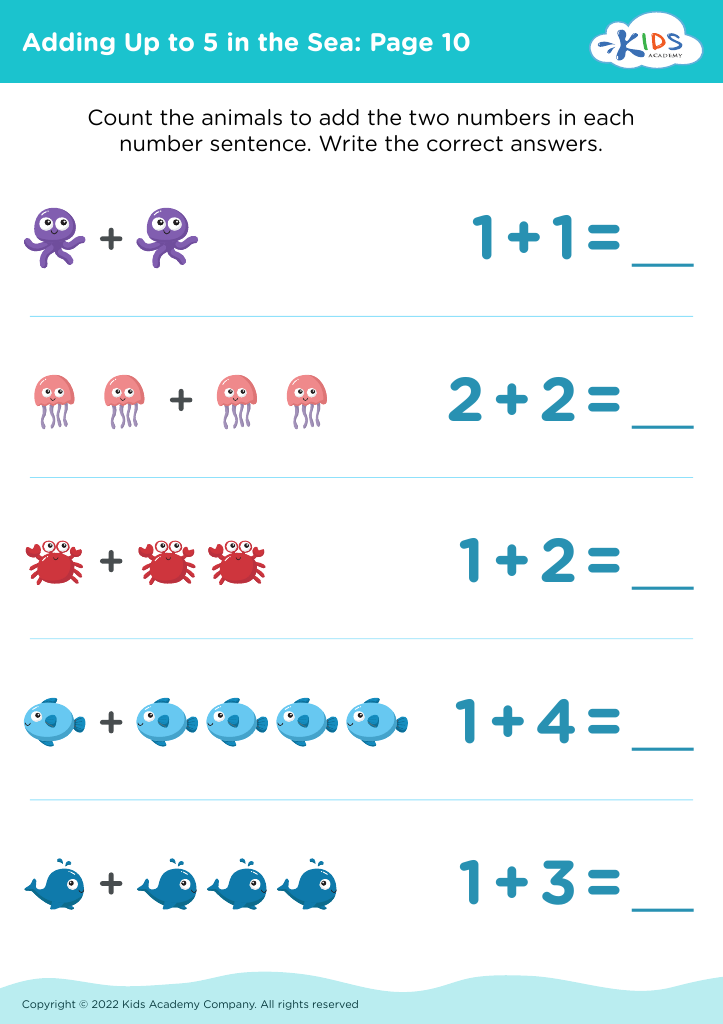
Adding Up to 5 in the Sea: Page 10
Worksheet
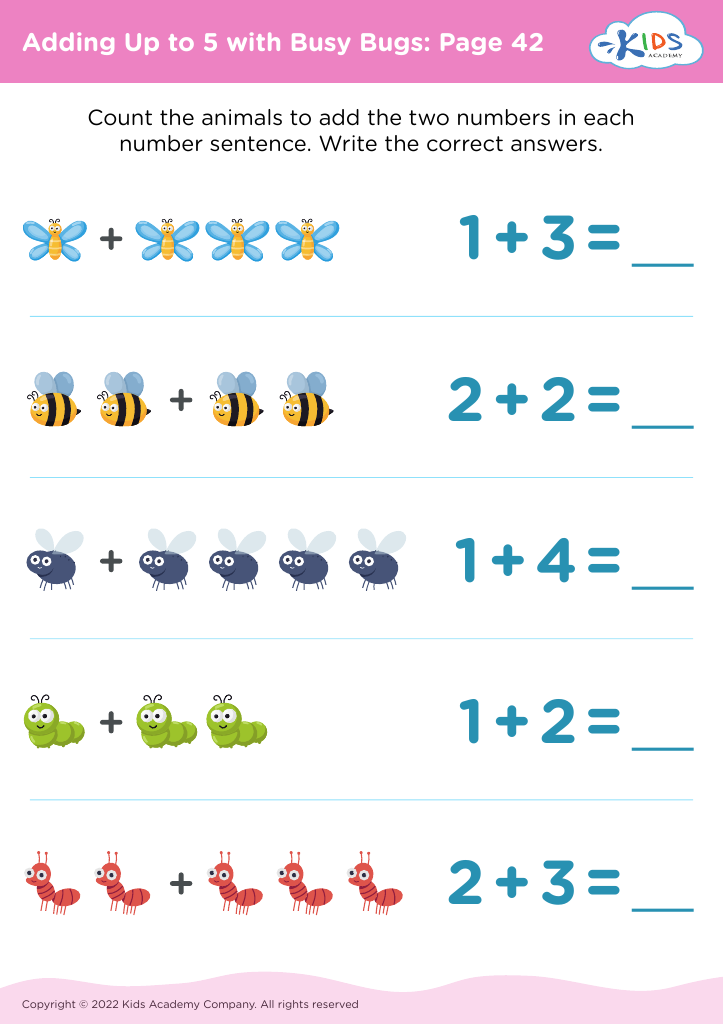
Adding Up to 5 with Busy Bugs: Page 42
Worksheet
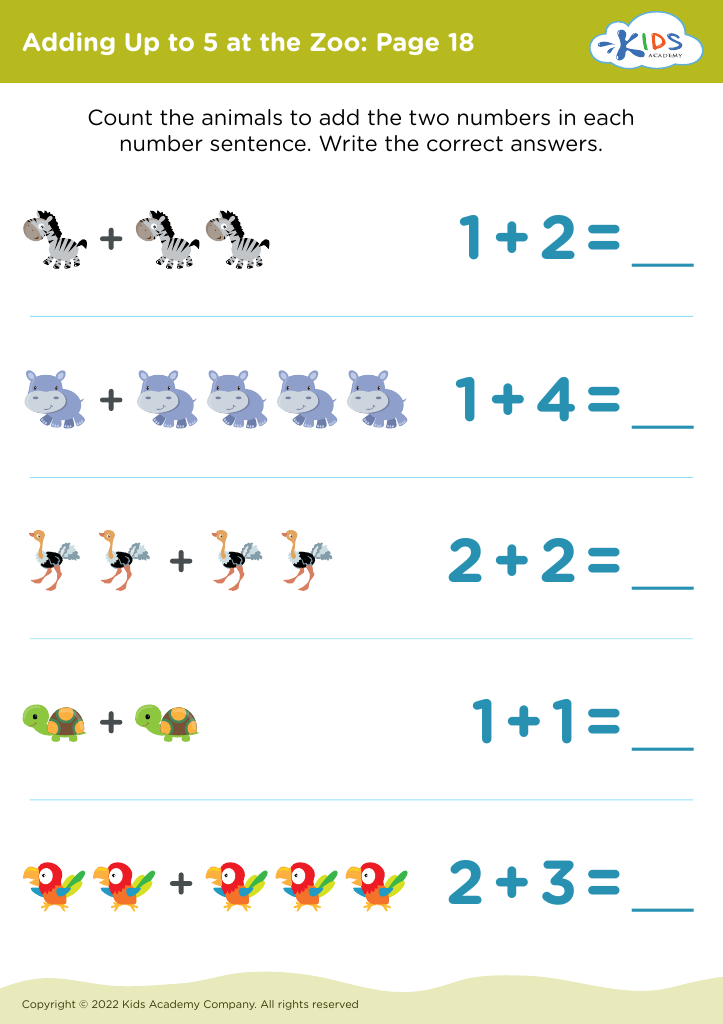
Adding Up to 5 at the Zoo: Page 18
Worksheet
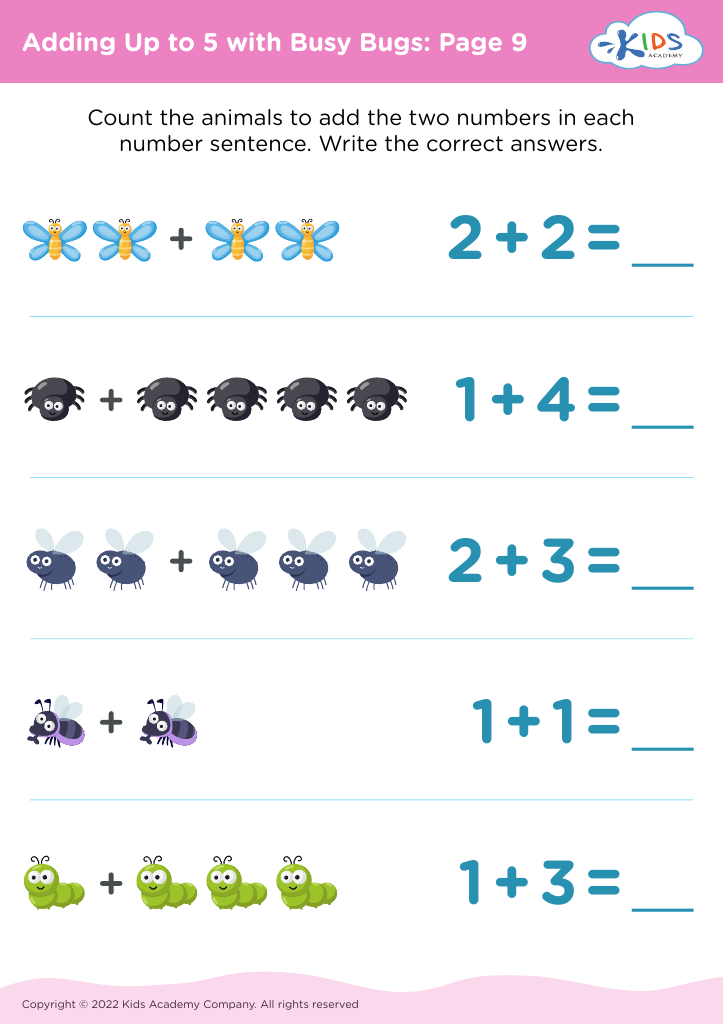
Adding Up to 5 with Busy Bugs: Page 9
Worksheet
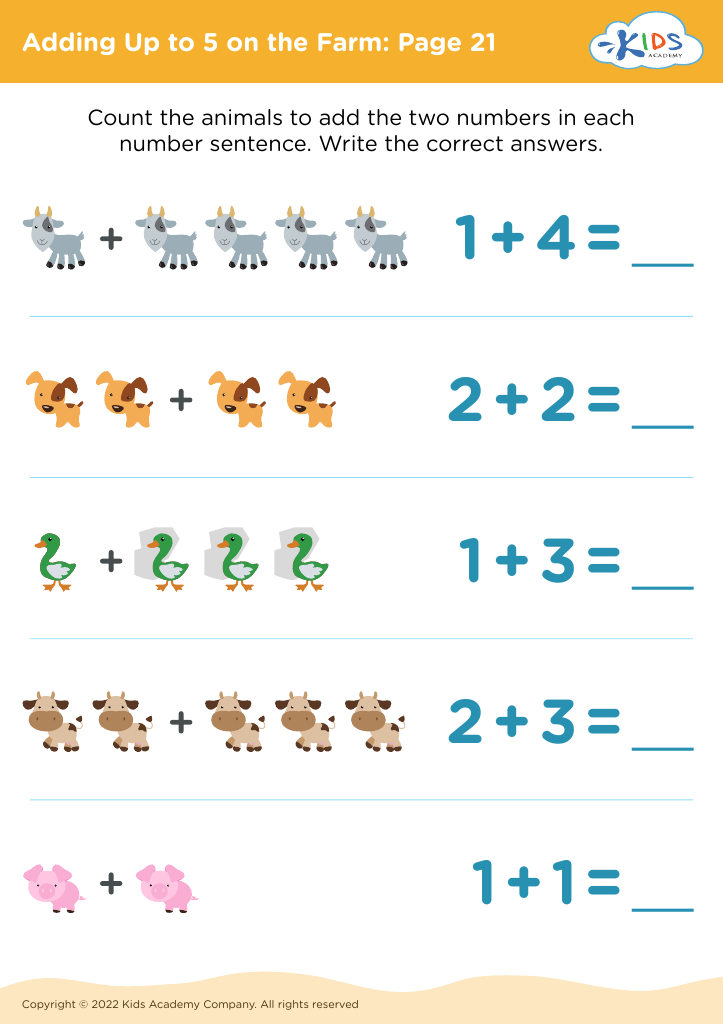
Adding Up to 5 on the Farm: Page 21
Worksheet
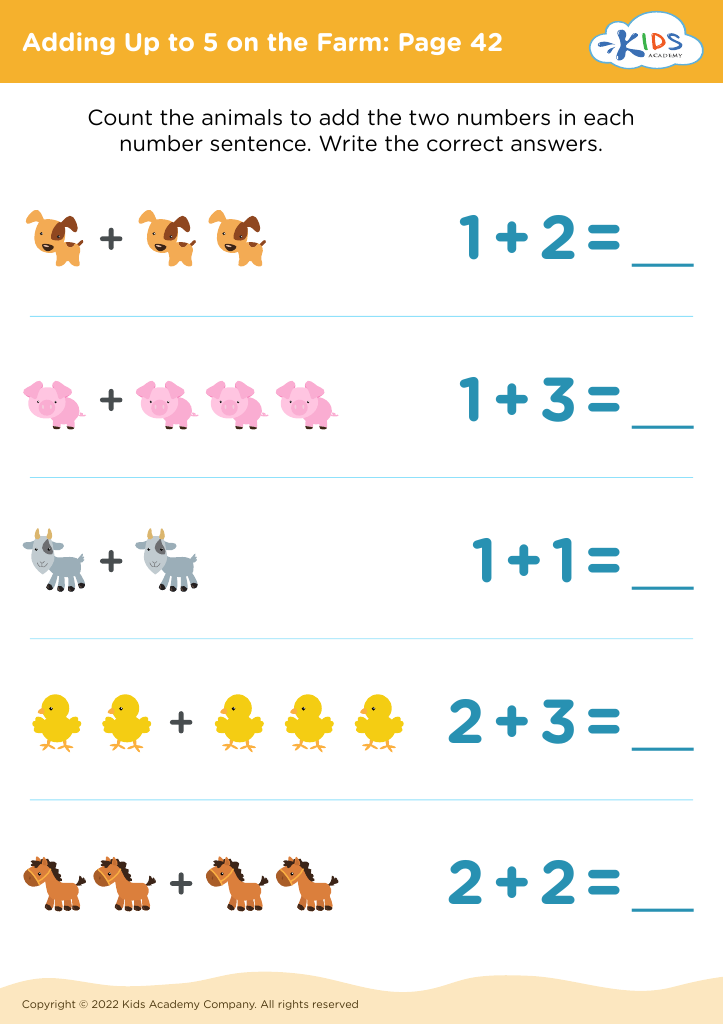
Adding Up to 5 on the Farm: Page 42
Worksheet


Cognitive development during ages 4 to 5 is a crucial period where children begin to enhance their ability to think, understand, and learn. At this age, they start to grasp basic mathematical concepts, including addition, which serves as a foundational skill for future mathematical learning. It’s in these early years that the brain is most malleable and can readily absorb new information, making it the ideal time to introduce fundamental concepts.

Parents and teachers should prioritize cognitive development in addition because it not only supports mathematical skills but also enhances problem-solving and logical thinking capabilities. Young children begin to recognize patterns, understand relationships between numbers, and develop critical thinking skills, which are essential for their overall academic success.

Practicing addition can also improve other cognitive functions such as memory, attention, and concentration. When young learners are engaged in counting objects, combining groups of items, or using fingers to add numbers, they are actively involved in hands-on learning that has profound implications for their brain development.

Furthermore, introducing these concepts in a stimulating and supportive environment fosters a positive attitude towards learning. Early success with addition can encourage confidence and a love for mathematics, laying down a solid academic foundation that will benefit children throughout their educational journey and beyond.