Filters

380 filtered results

Clear all filters
Favorites
With answer key
Interactive

380 filtered results

Difficulty Level

Grade


Check out this FREE Trial Lesson on Addition for age 4-5!

My Family

Favorites
With answer key
Interactive
  • 4-5
  • Number Recognition
  • Addition
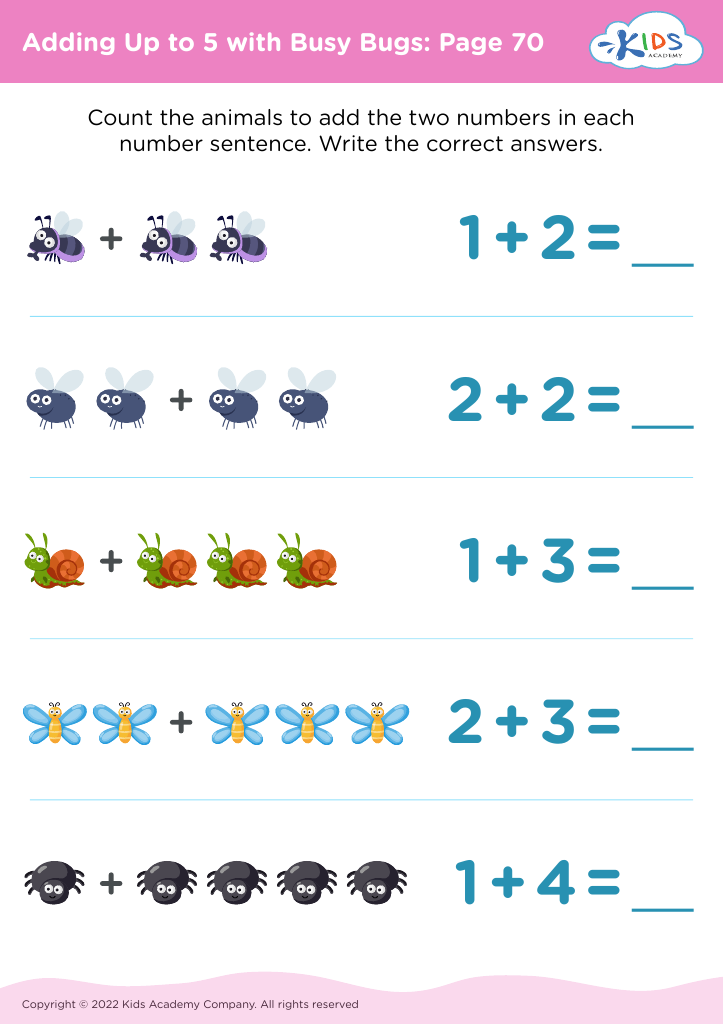
Adding Up to 5 with Busy Bugs: Page 70
Worksheet
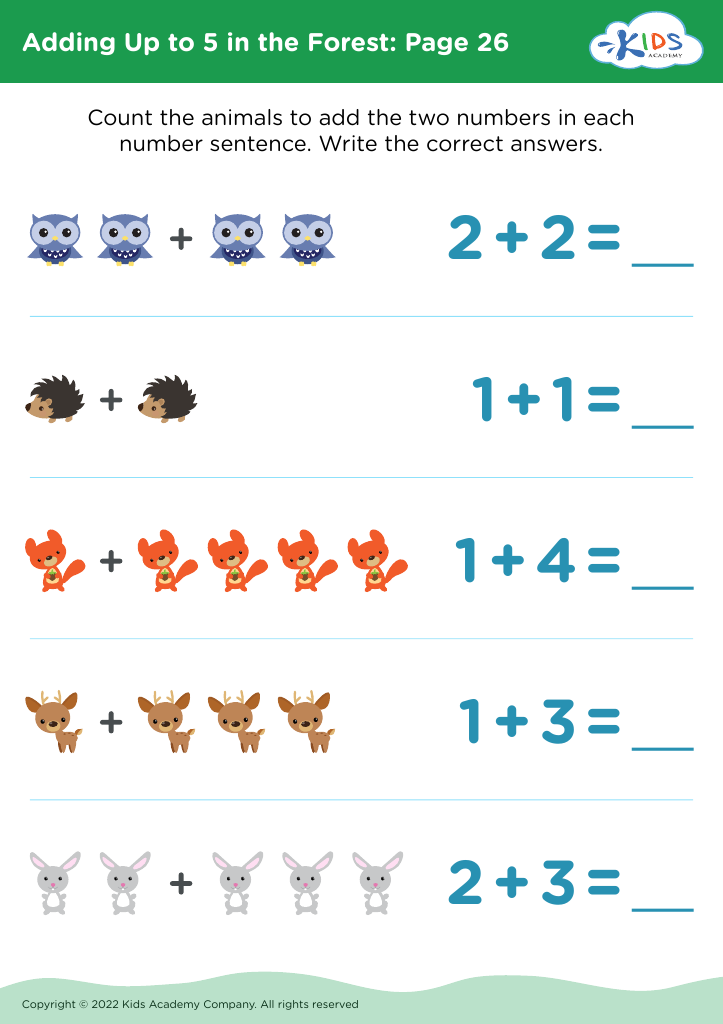
Adding Up to 5 in the Forest: Page 26
Worksheet
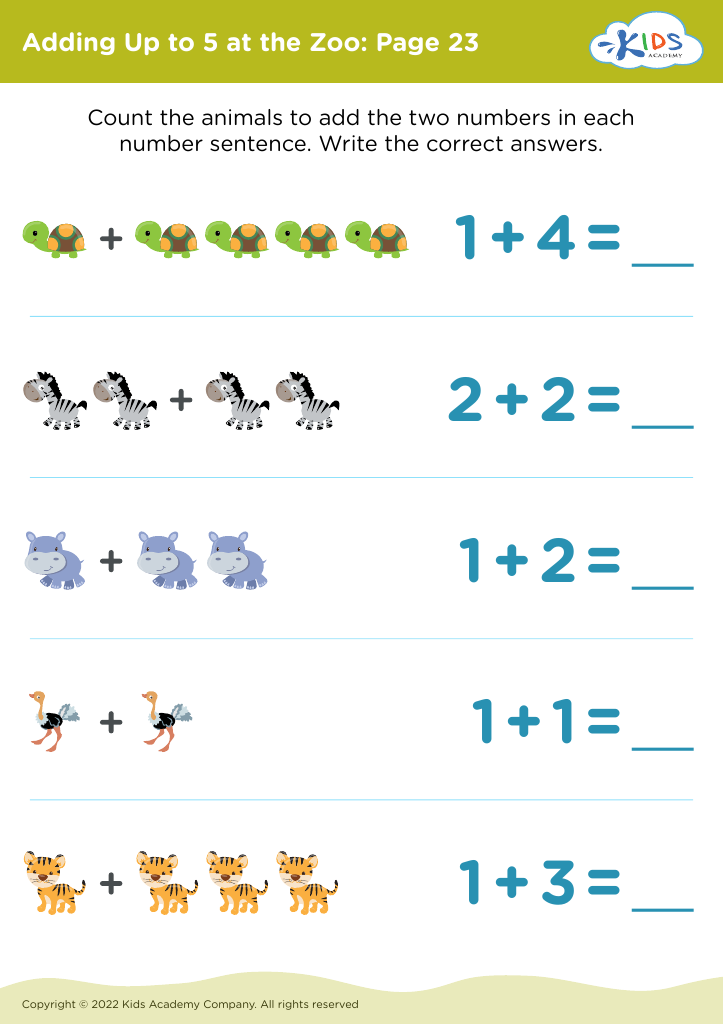
Adding Up to 5 at the Zoo: Page 23
Worksheet
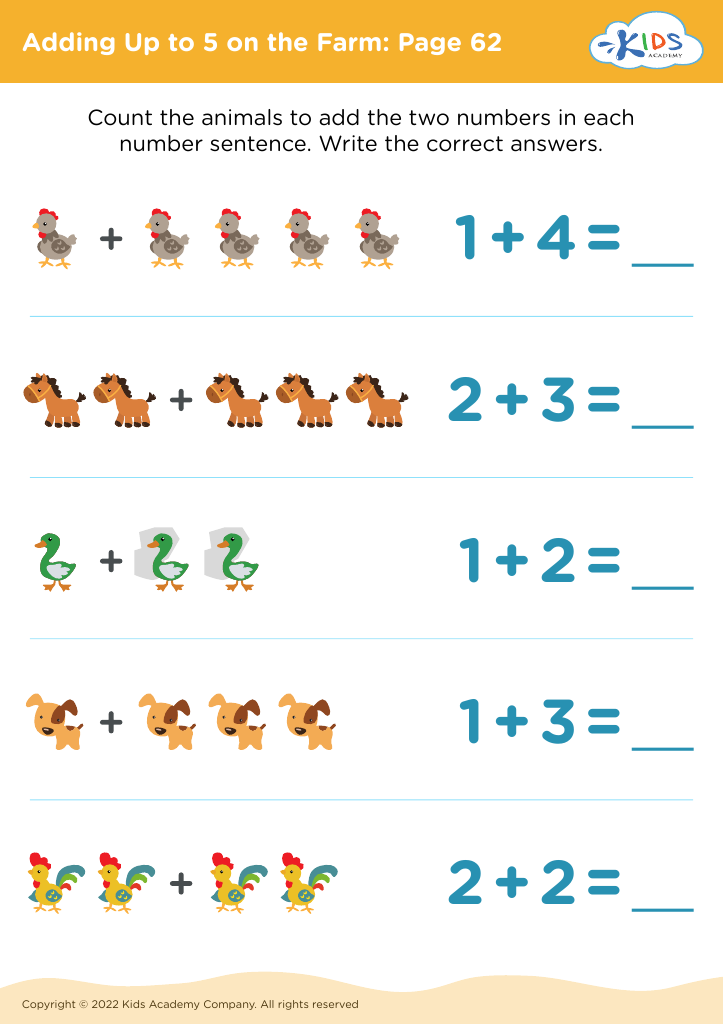
Adding Up to 5 on the Farm: Page 62
Worksheet
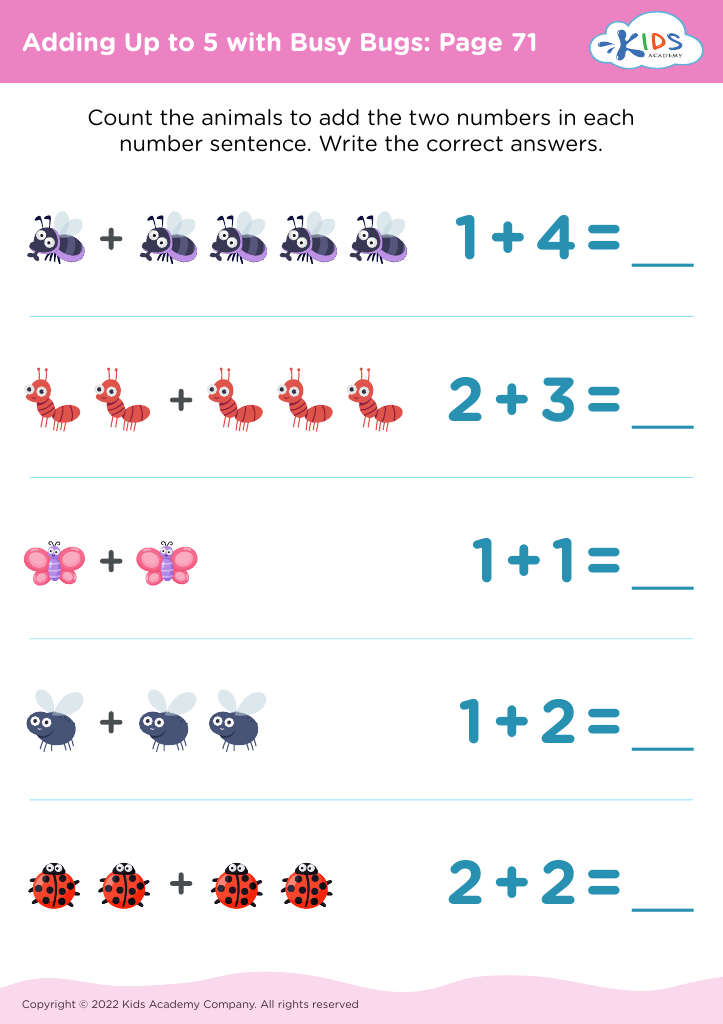
Adding Up to 5 with Busy Bugs: Page 71
Worksheet
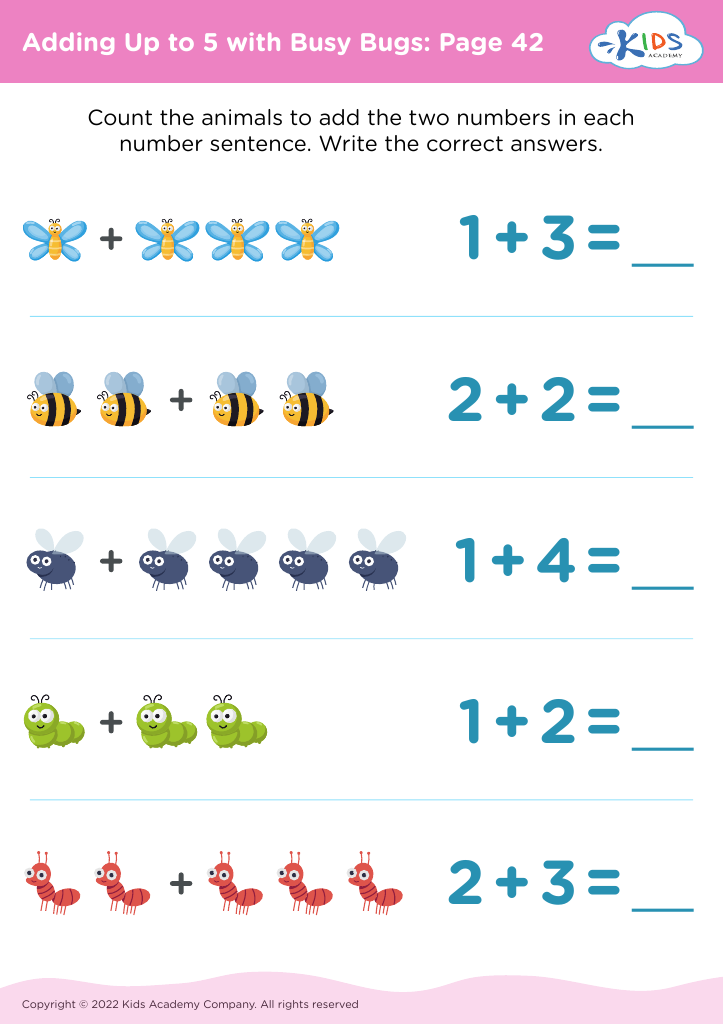
Adding Up to 5 with Busy Bugs: Page 42
Worksheet
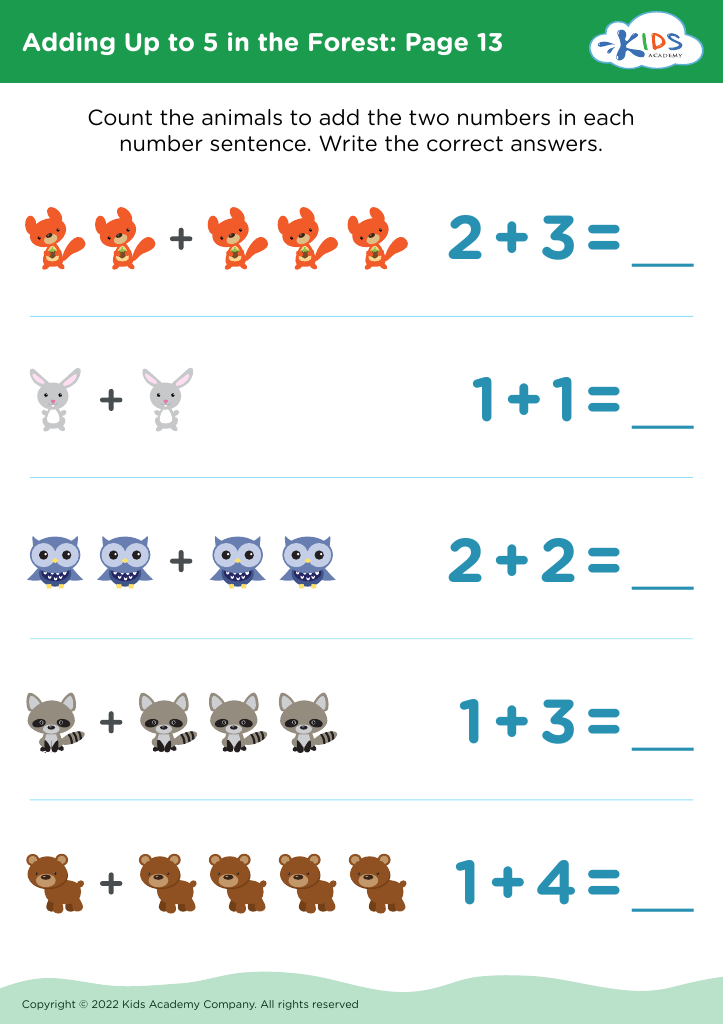
Adding Up to 5 in the Forest: Page 13
Worksheet
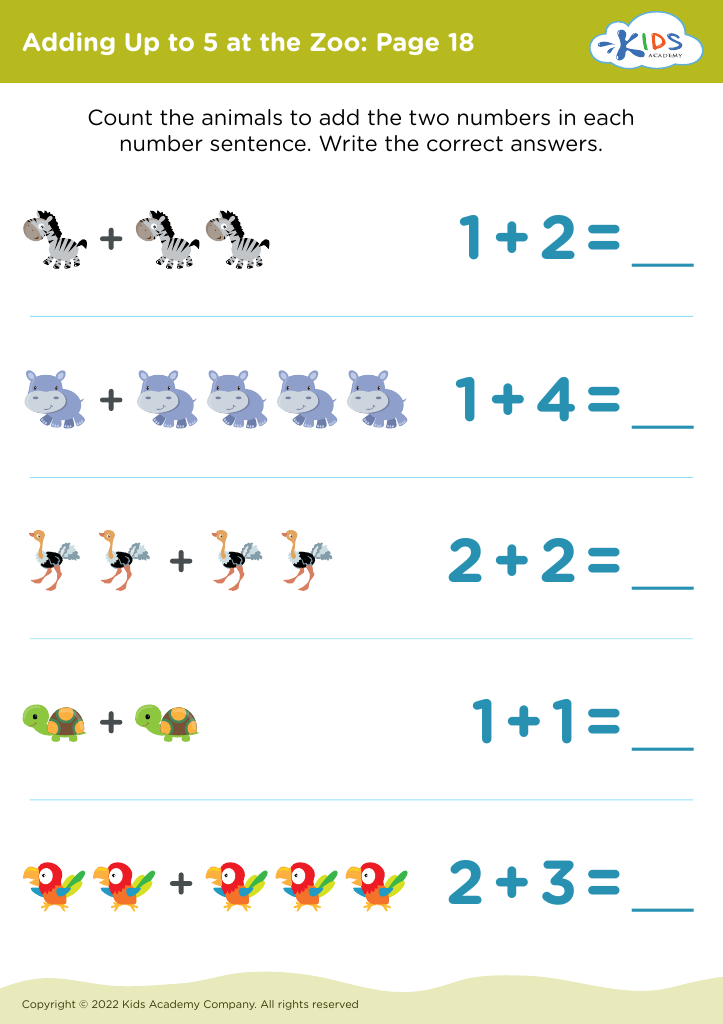
Adding Up to 5 at the Zoo: Page 18
Worksheet
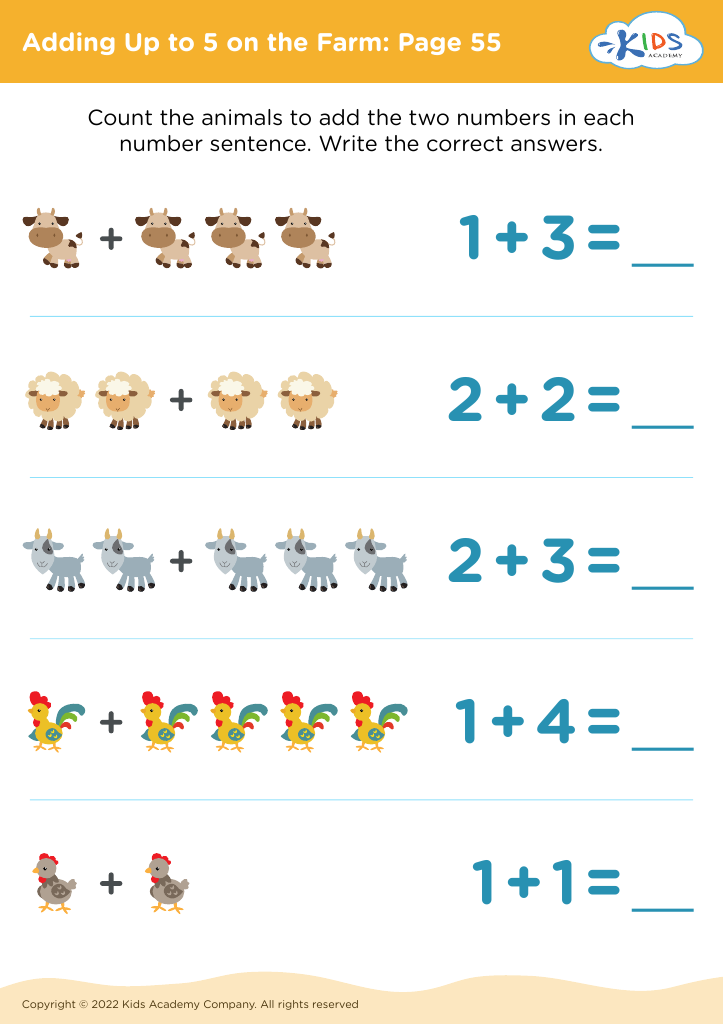
Adding Up to 5 on the Farm: Page 55
Worksheet
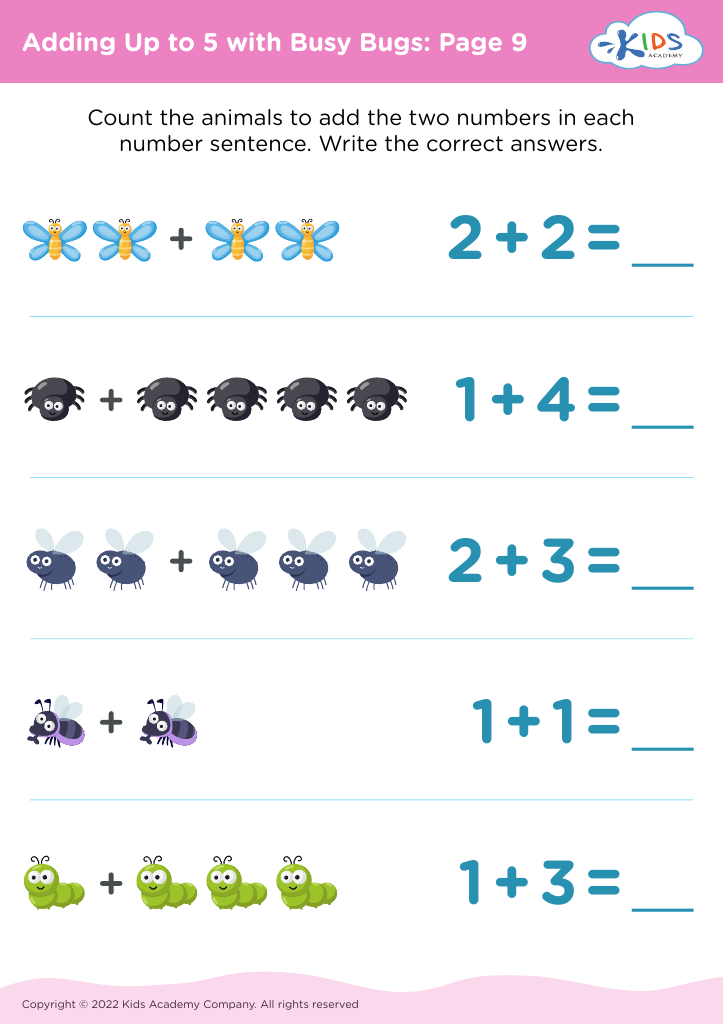
Adding Up to 5 with Busy Bugs: Page 9
Worksheet
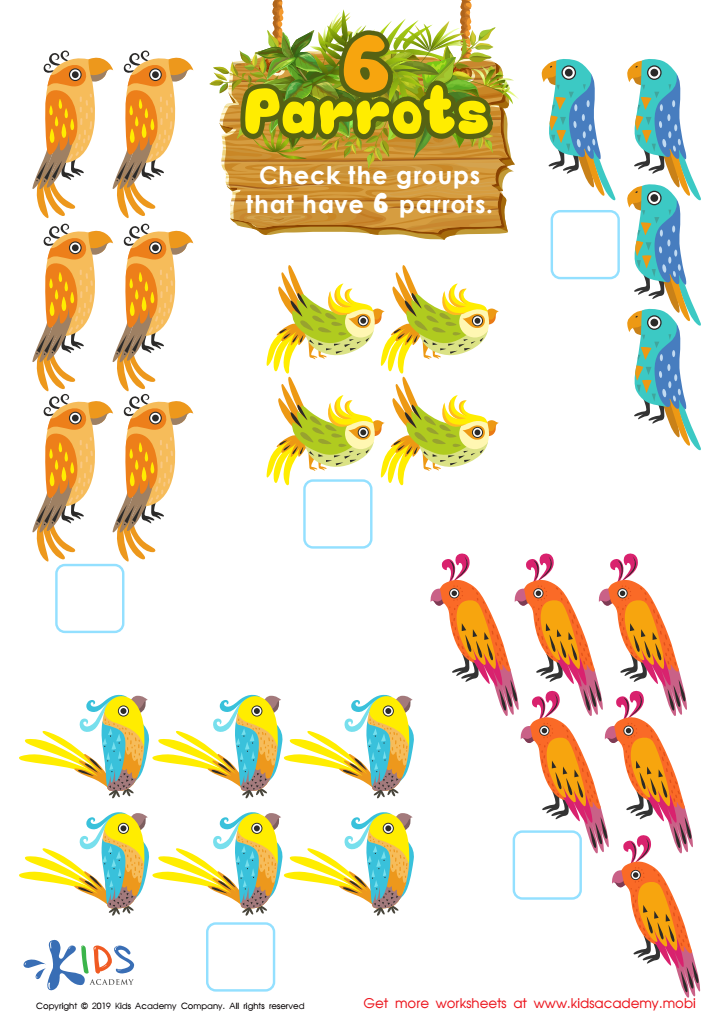
6 Parrots Worksheet
6 Parrots Worksheet

6 Parrots Worksheet

Love parrots? Here's a free worksheet to help your children practice counting to six with colorful parrot representations! Kids will adore counting the parrots and checking off groups of six - and it won't even feel like math! Just a fun way to make some new and exciting friends.
6 Parrots Worksheet
Worksheet
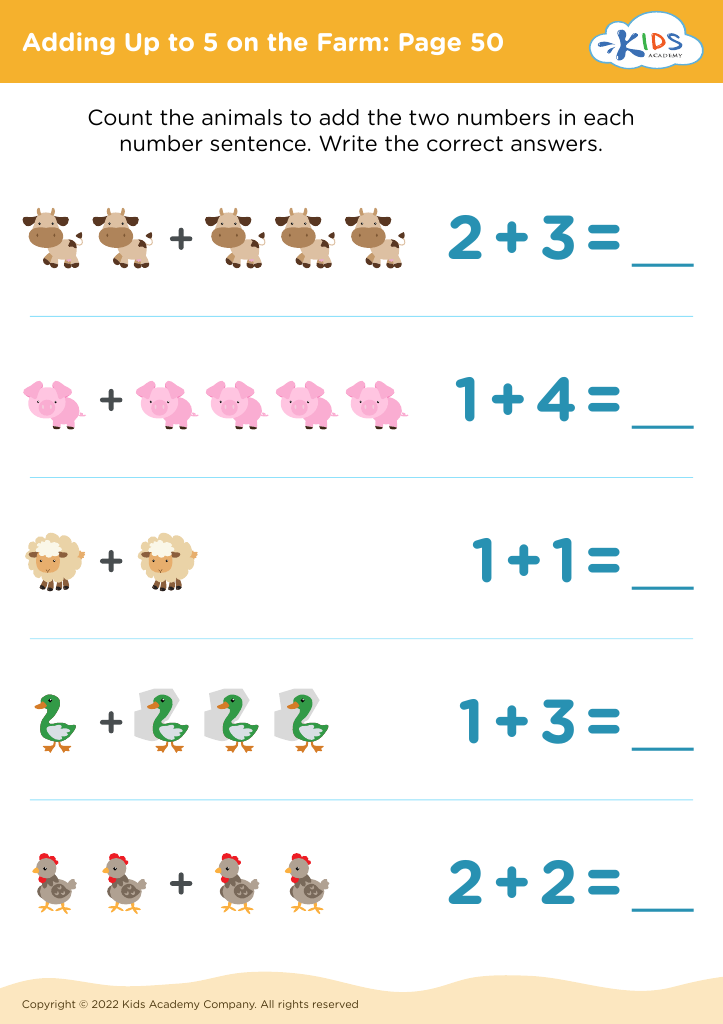
Adding Up to 5 on the Farm: Page 50
Worksheet
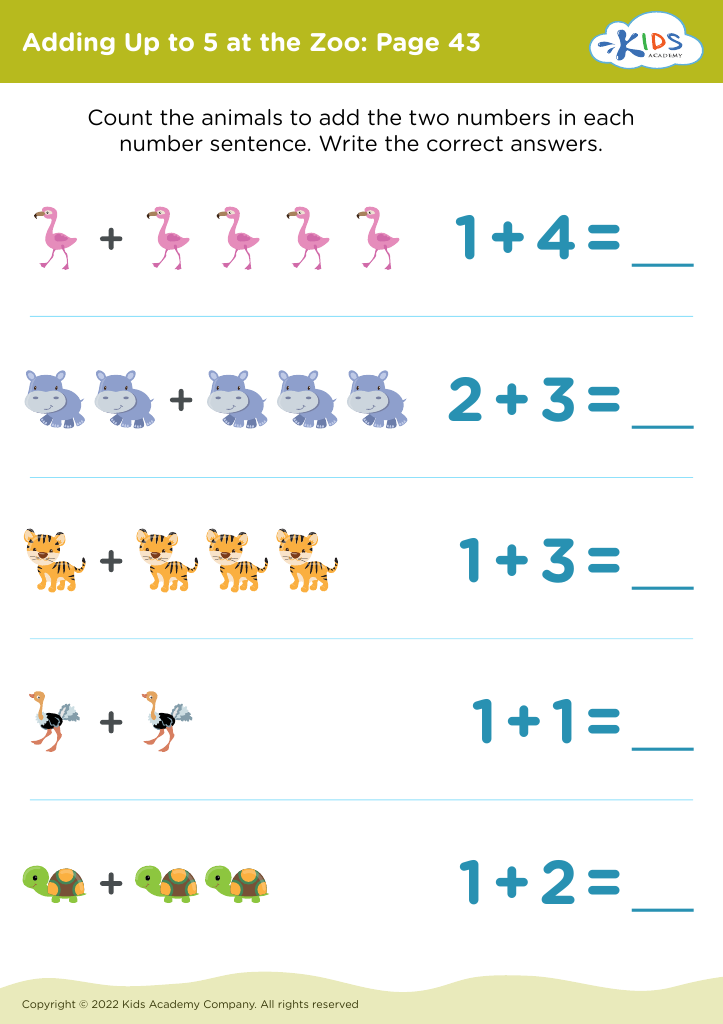
Adding Up to 5 at the Zoo: Page 43
Worksheet
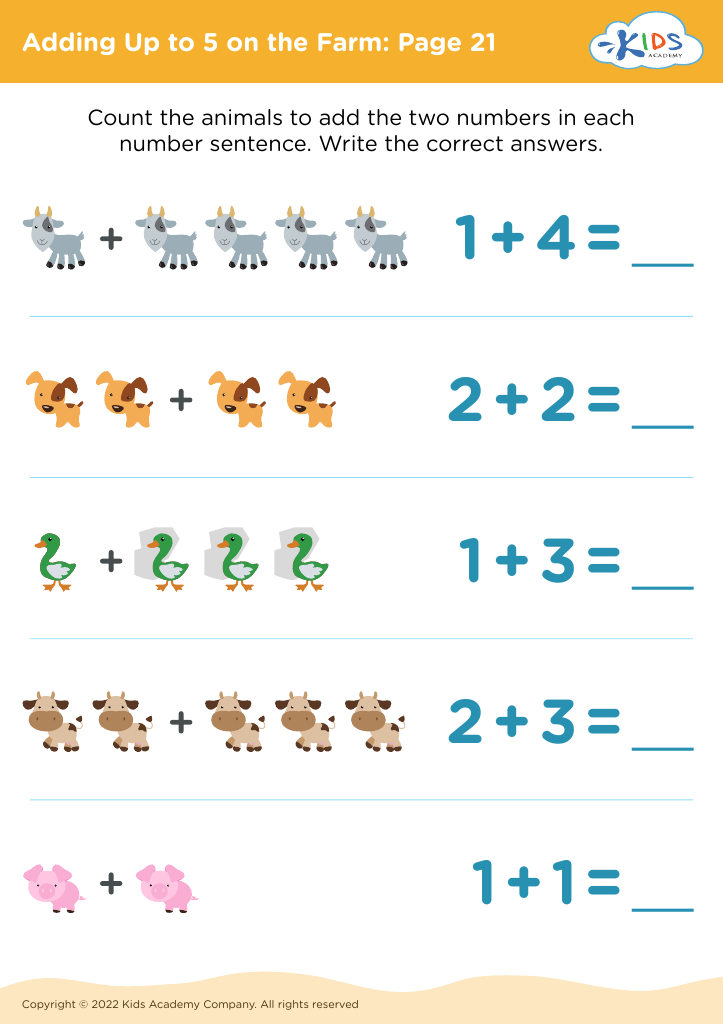
Adding Up to 5 on the Farm: Page 21
Worksheet
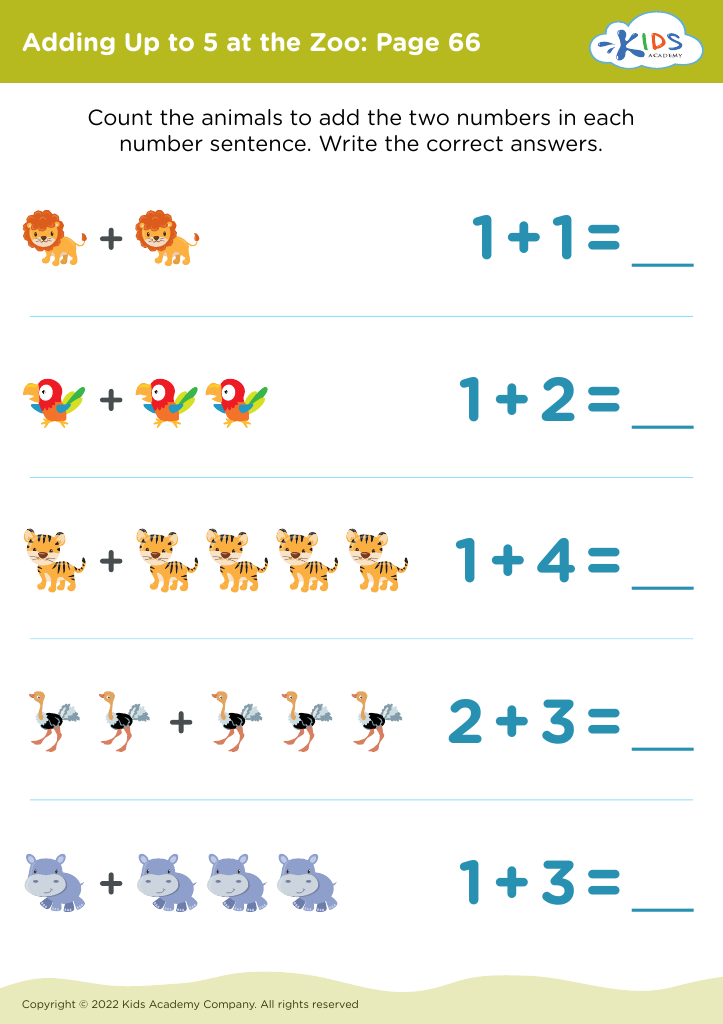
Adding Up to 5 at the Zoo: Page 66
Worksheet
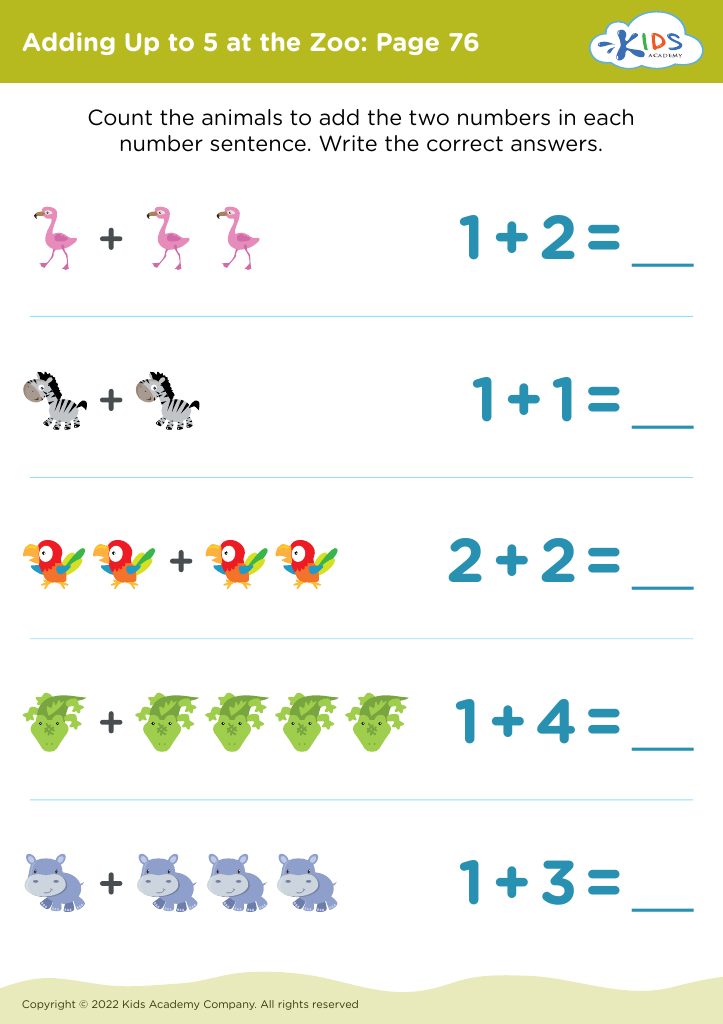
Adding Up to 5 at the Zoo: Page 76
Worksheet
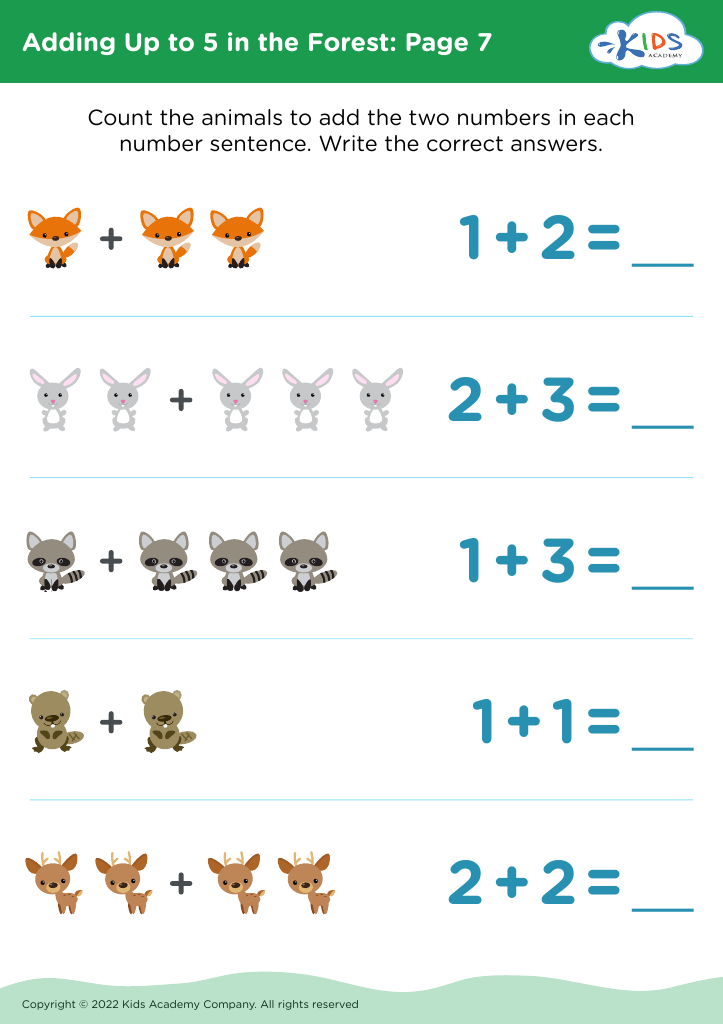
Adding Up to 5 in the Forest: Page 7
Worksheet
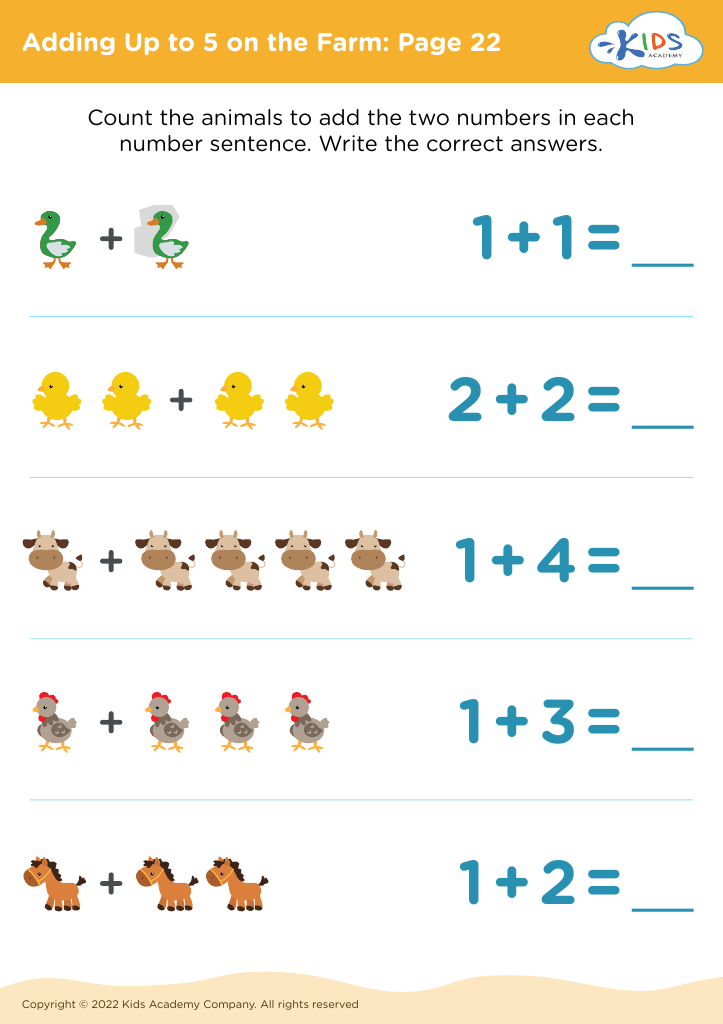
Adding Up to 5 on the Farm: Page 22
Worksheet
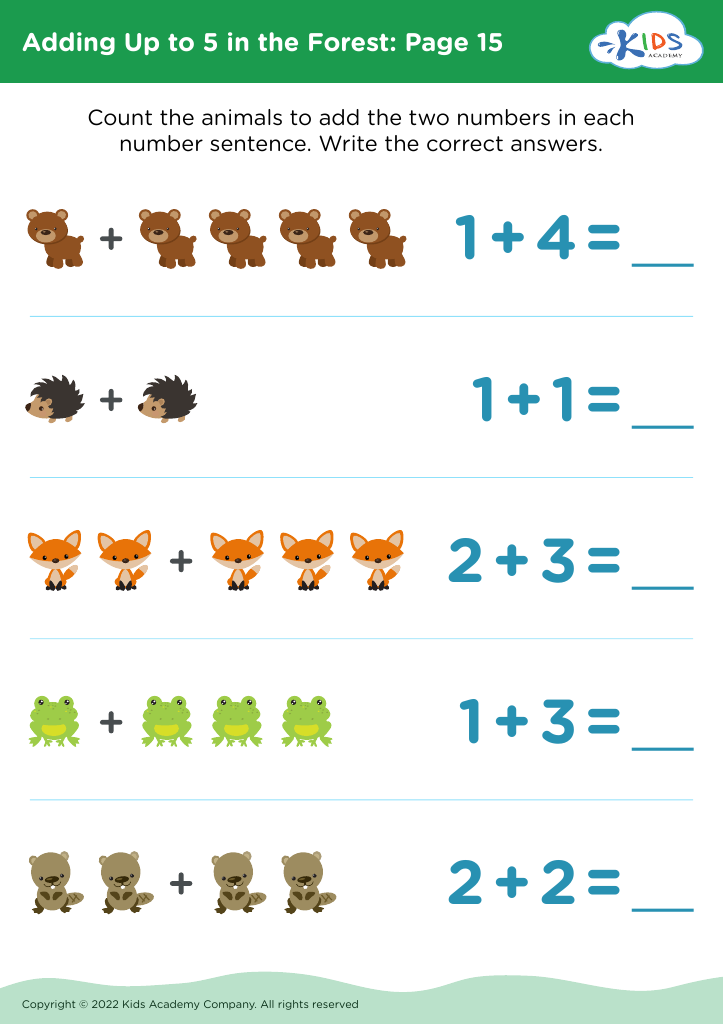
Adding Up to 5 in the Forest: Page 15
Worksheet
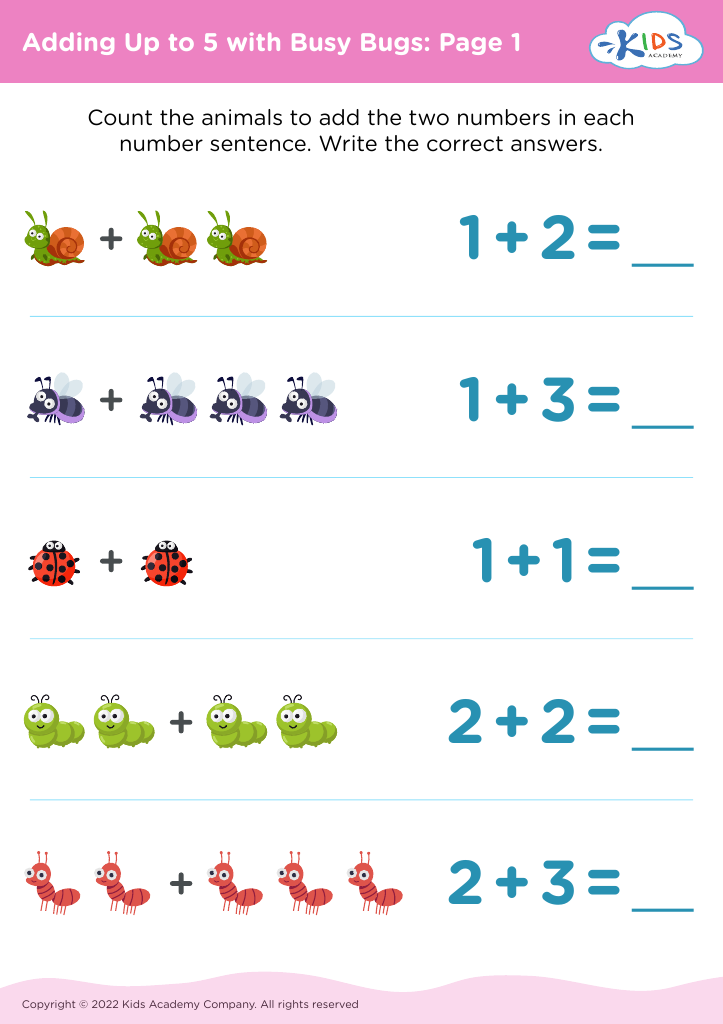
Adding Up to 5 with Busy Bugs: Page 1
Worksheet
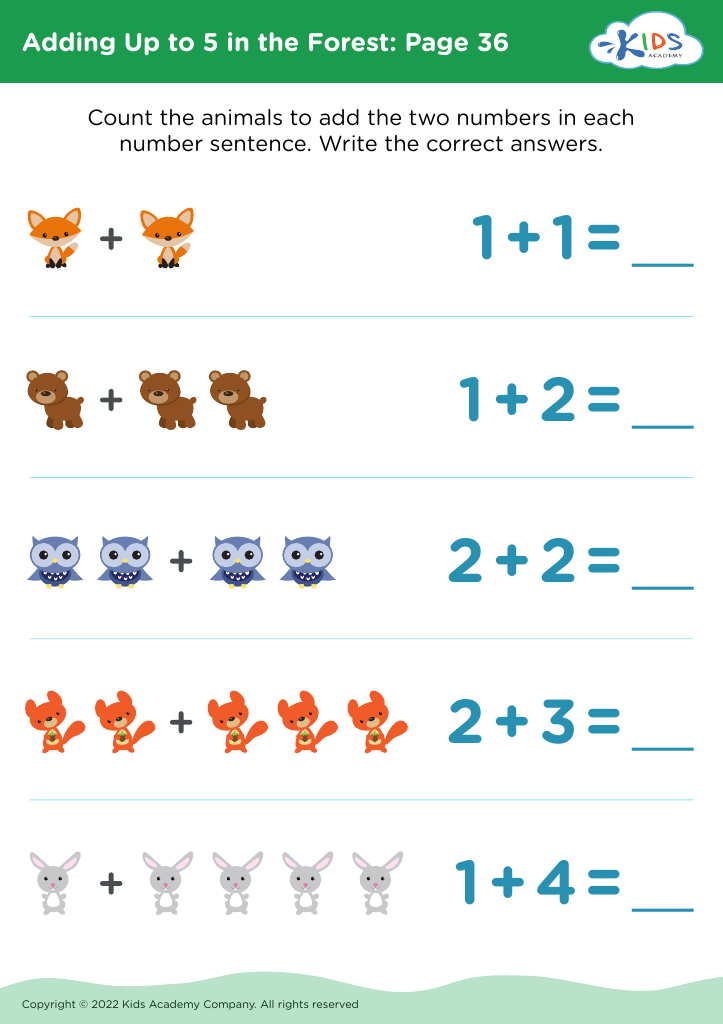
Adding Up to 5 in the Forest: Page 36
Worksheet
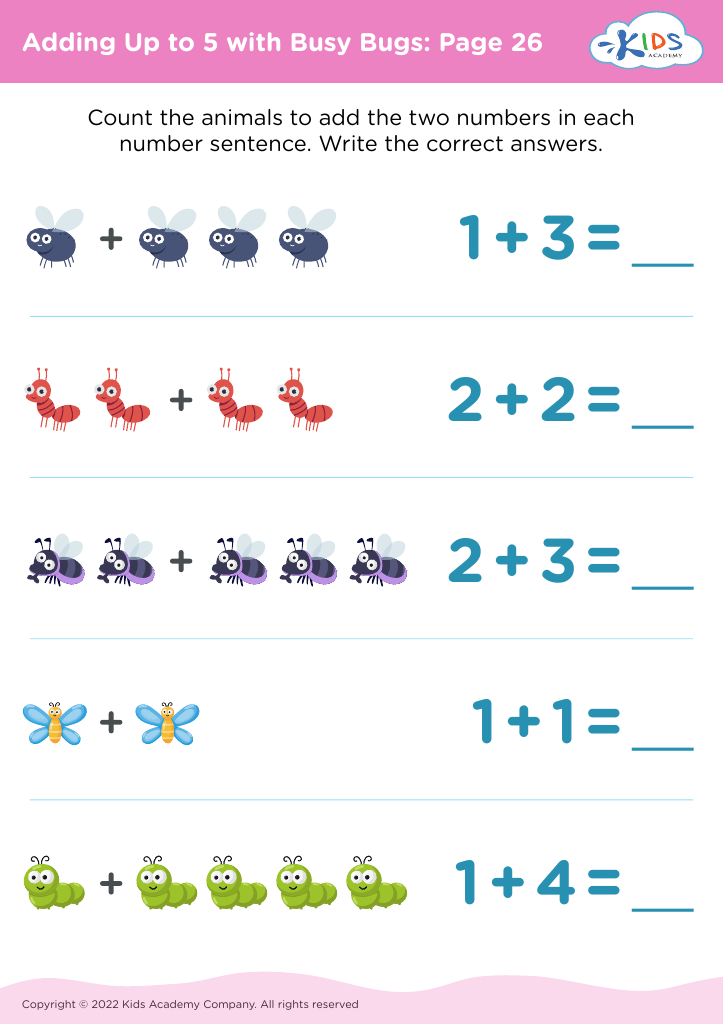
Adding Up to 5 with Busy Bugs: Page 26
Worksheet
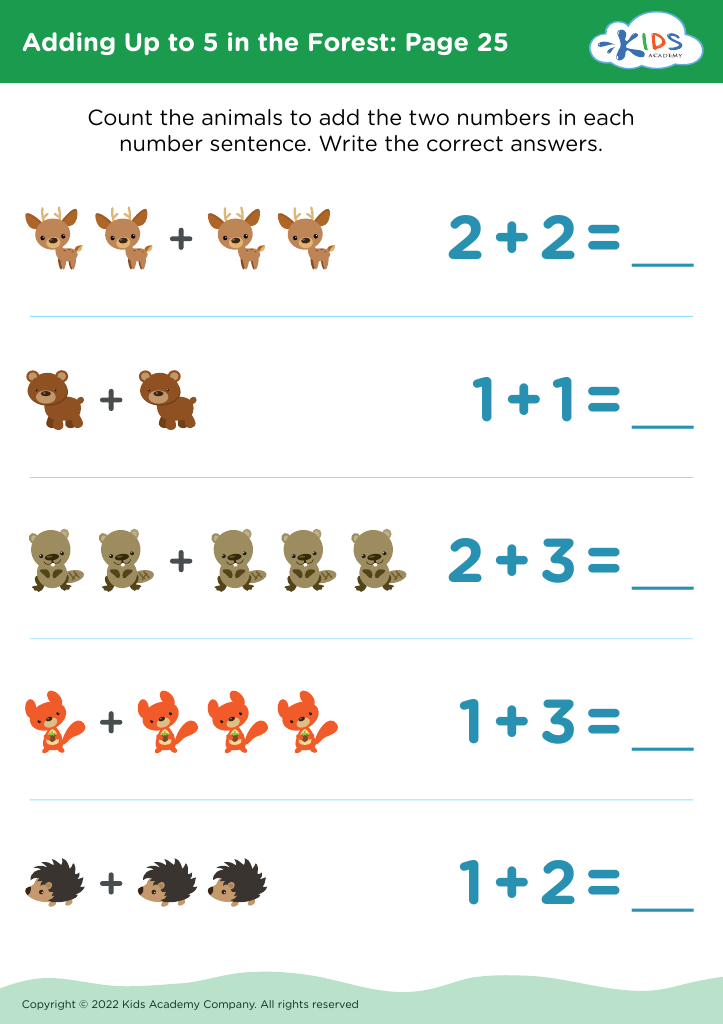
Adding Up to 5 in the Forest: Page 25
Worksheet
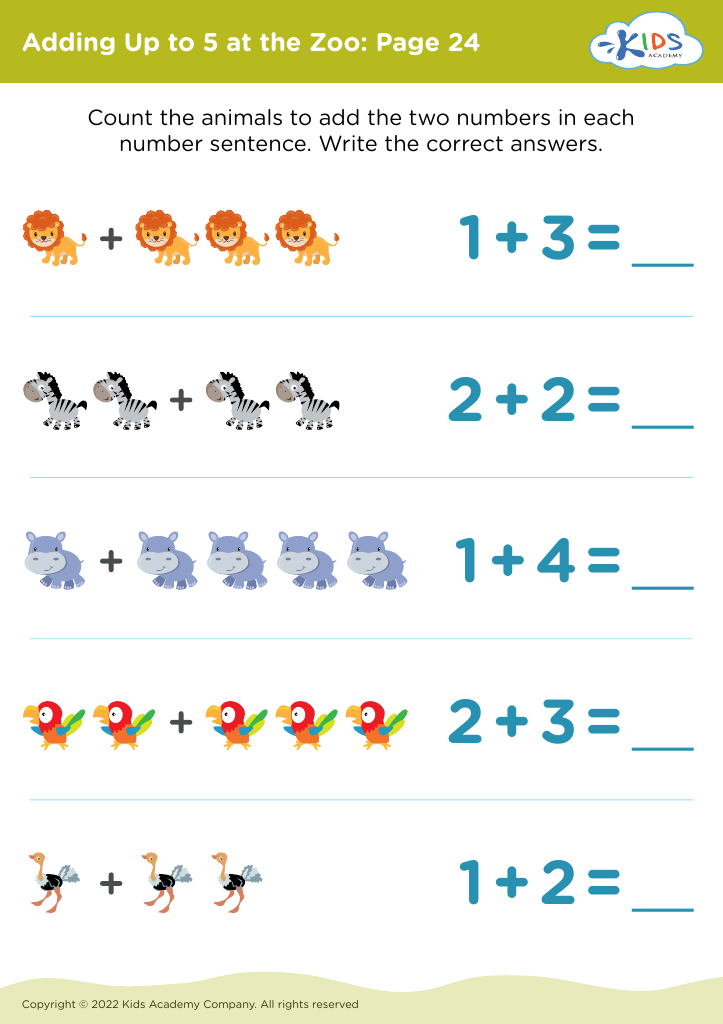
Adding Up to 5 at the Zoo: Page 24
Worksheet


Number recognition and addition are foundational skills that set the groundwork for a child's future learning in mathematics and critical thinking. For children ages 4-5, mastering these concepts is crucial for several reasons.

First, number recognition helps children identify and understand numerical symbols, which is a precursor to memorizing more complex mathematical operations. This skill boosts their confidence as they begin to interact with numbers in everyday situations, such as counting objects or understanding quantities.

Second, simple addition lays the groundwork for more advanced math concepts. By introducing addition through engaging activities and games, children can grasp the idea of combining sets, which fosters an understanding of number relationships. This not only enhances their math proficiency but also sparks curiosity and enjoyment in the subject.

Furthermore, children who develop these skills early on are often better prepared for academic challenges in later grades. For parents and teachers, investing time in number recognition and addition with young learners encourages positive attitudes toward math, making it less daunting as they progress in their education. Overall, prioritizing these skills is essential for building a strong mathematical foundation and ensuring academic success in the future.