Understanding Sequences Addition Worksheets for Ages 4-5
3 filtered results
-
From - To
Introduce your little ones to the world of numbers with our "Understanding Sequences Addition Worksheets" designed specifically for ages 4-5. These interactive worksheets help young learners grasp the concept of sequences while practicing addition in a fun and engaging way. Through colorful illustrations and step-by-step exercises, children will enhance their mathematical foundation by recognizing patterns and solving simple addition problems. Perfect for both classroom settings and home learning, these worksheets encourage critical thinking and promote early math skills. Foster a love for learning and build confidence in your child's abilities with our thoughtfully crafted addition worksheets today!
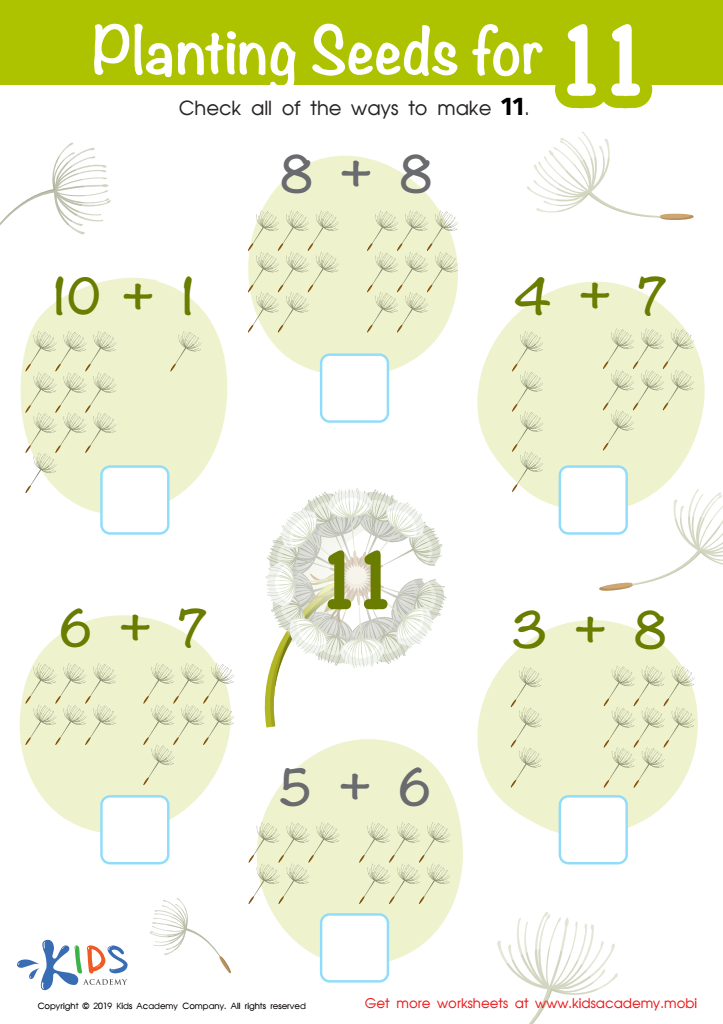
Planting Seeds for 11 Worksheet
 Assign to My Students
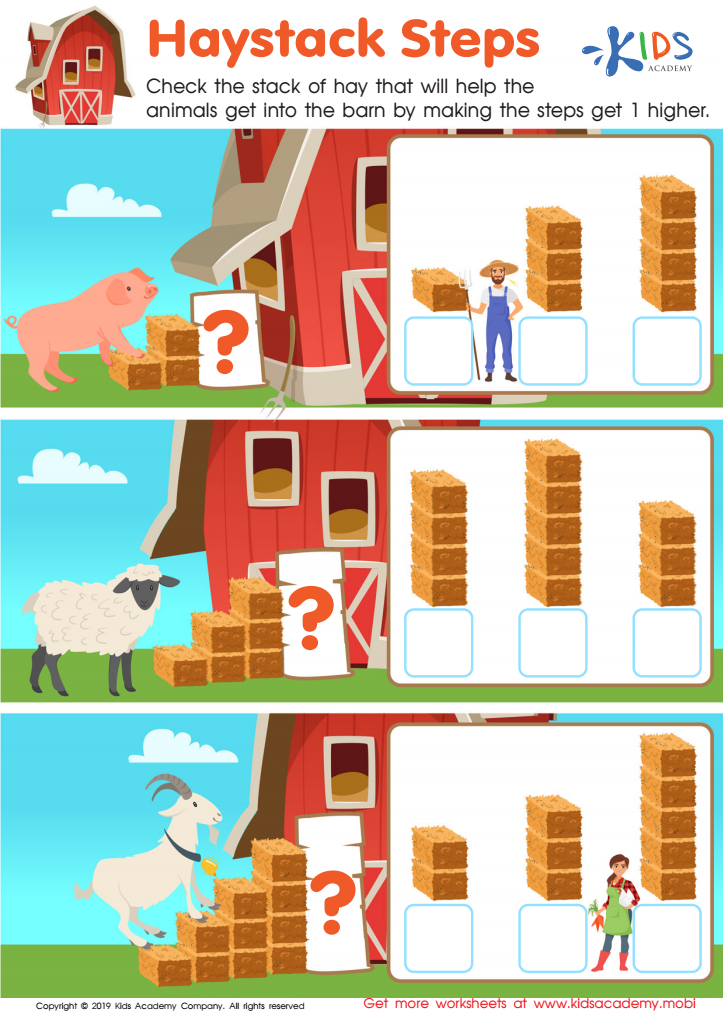
Haystack Steps Worksheet








Understanding sequences in addition, especially for children aged 4-5, is crucial for several reasons, and both parents and teachers play vital roles in this early mathematical development. Firstly, learning about sequences helps children recognize patterns, which are foundational skills not only for mathematics but also for analytical thinking. By engaging with sequences, kids develop an understanding of how numbers connect and relate, setting the stage for more complex arithmetic later on.
Secondly, incorporating sequences into addition teaches children about order and the importance of steps in solving problems. As they learn to add numbers in a sequential manner, they strengthen their ability to follow processes, which is valuable across all subjects, including reading and science.
Additionally, fostering an early love for math can lead to more positive attitudes towards the subject in the future. Engaging children in fun sequence-related activities—such as counting games, number songs, or interactive stories—makes learning enjoyable and memorable.
Lastly, these foundational skills support parents and teachers in creating a cohesive learning environment. When both caregivers and educators prioritize understanding sequences, they reinforce the value of collaborative learning, ultimately enabling children to thrive in their educational journey.








