Counting practice Geometry Worksheets for Ages 4-5
5 filtered results
-
From - To
Explore our engaging Counting Practice Geometry Worksheets, specially designed for children ages 4-5! These worksheets seamlessly integrate counting skills with geometric shapes, fostering a fun and interactive learning experience. Kids will enjoy identifying and counting shapes like circles, squares, and triangles, all while enhancing their spatial awareness. Our colorful and visually appealing worksheets promote early math skills and help develop critical thinking. With various activities tailored to young learners, these resources are perfect for parents and educators aiming to support foundational knowledge in geometry and counting. Dive into learning fun with our printable worksheets today!
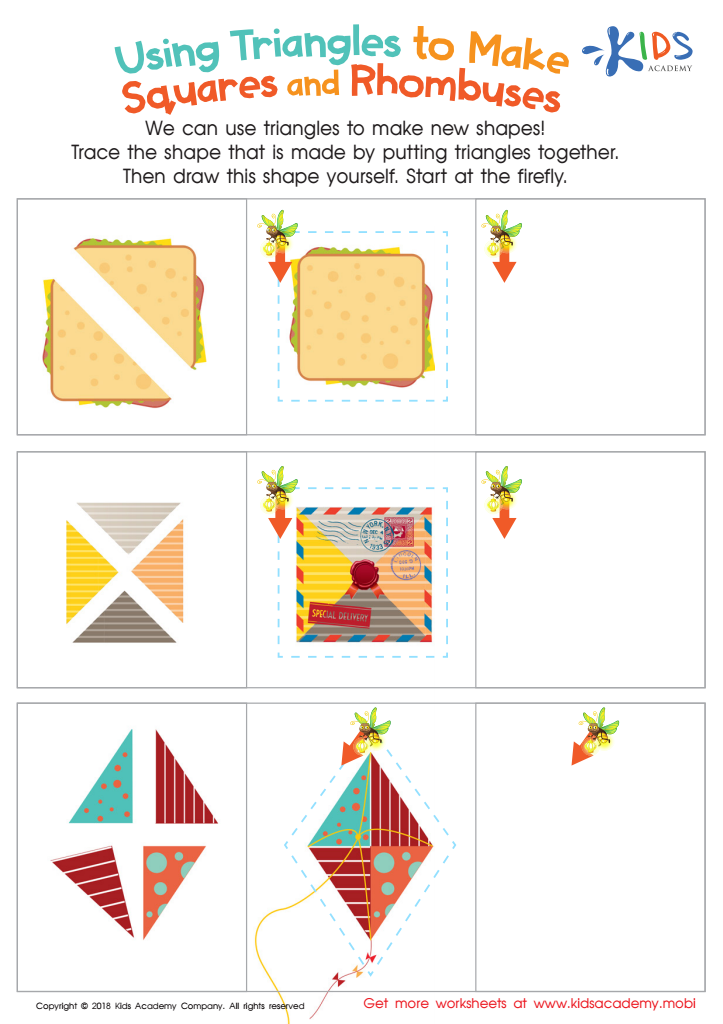
Using Triangles to Make Squares and Rhombuses Worksheet











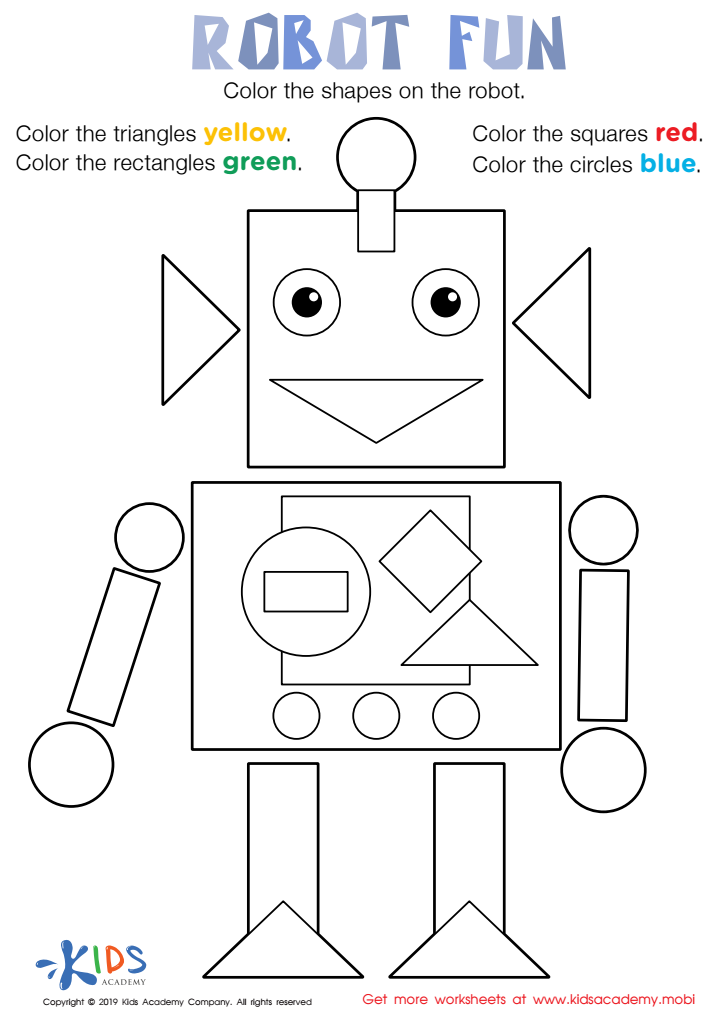
Robot Fun Worksheet
 Assign to My Students
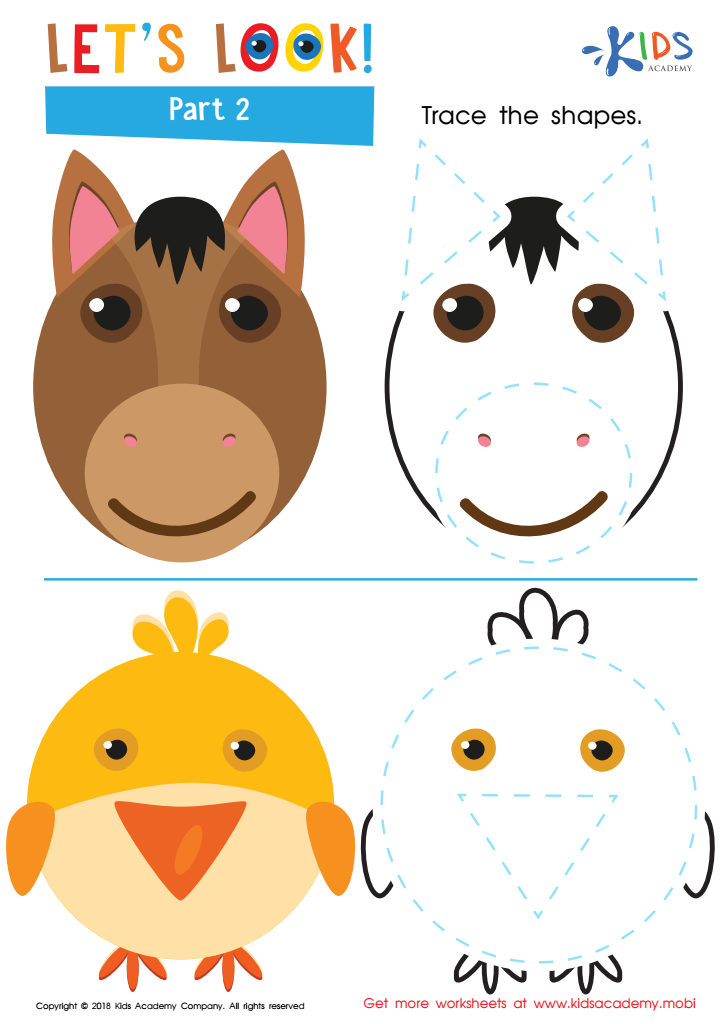
Let's Look! Part 2 Worksheet
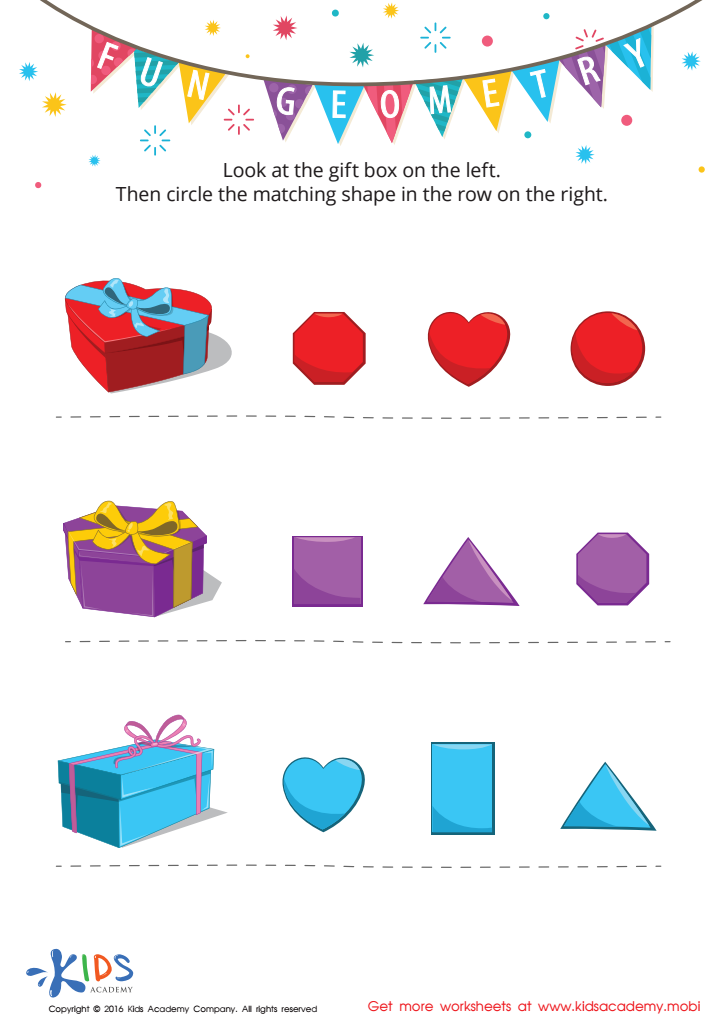
Fun Geometry Worksheet
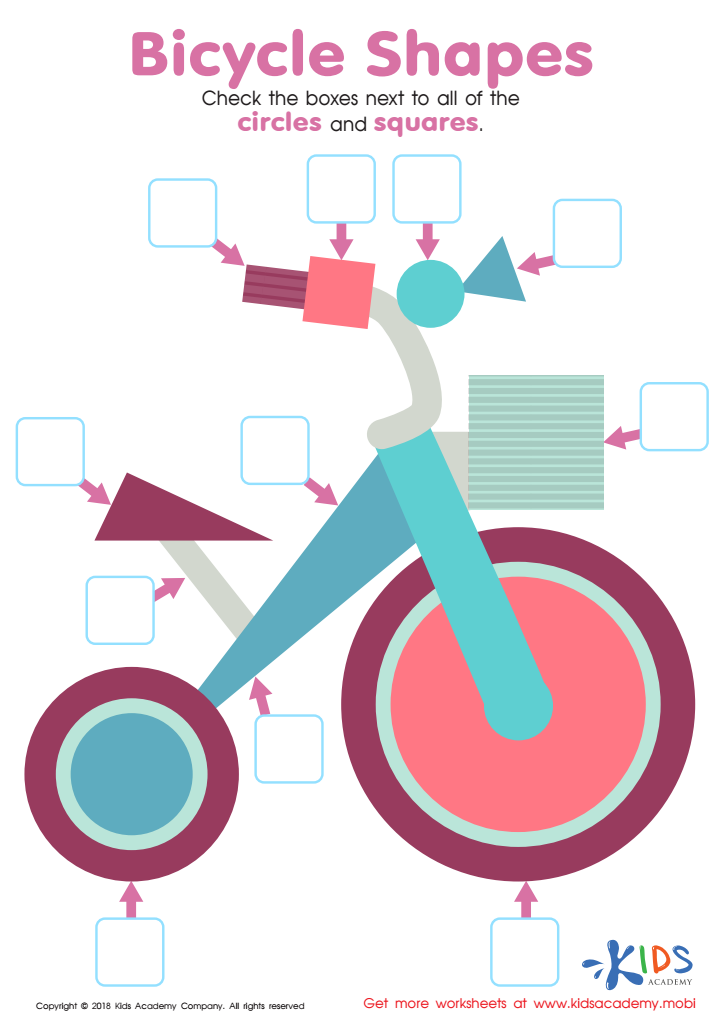
Bicycle Shapes Worksheet








Counting practice and geometry play essential roles in the early development of young children, particularly between the ages of 4 and 5. During this stage, children are not only establishing foundational math skills but also building their cognitive abilities. Engaging in counting helps little learners understand the concept of numbers, promoting better problem-solving skills and logical thinking. By practicing counting, children can learn to recognize patterns and sequences, which are crucial for grasping more complex mathematical concepts later on.
Incorporating geometry into this age group's learning enhances spatial awareness and critical thinking. Children begin to identify shapes and understand their properties, helping them navigate their environment and develop strong visual-motor skills. Activities such as sorting shapes, building with blocks, or tracing geometric forms lay the groundwork for more complex spatial reasoning required in higher-level math.
Furthermore, incorporating these practices into early education fosters a positive attitude toward mathematics, making it a fun and enjoyable experience. Teachers and parents who focus on counting and geometry encourage a love of learning, paving the way for academic success in areas that involve mathematics. It is essential for educators and caregivers to recognize the long-term benefits these foundational skills confer as children progress in their educational journeys.








