Spatial reasoning Geometry Worksheets for Ages 4-5
4 filtered results
-
From - To
Discover our engaging Spatial Reasoning Geometry Worksheets designed specifically for children ages 4-5! These worksheets aim to enhance early math skills through interactive and fun activities. Young learners will explore shapes, spatial relationships, and basic geometry concepts while fostering critical thinking and problem-solving abilities. Tailored to support preschool and kindergarten curriculums, our worksheets feature colorful illustrations and age-appropriate challenges that captivate young minds. Spark creativity and curiosity as your child navigates through various exercises, making learning about geometry both enjoyable and effective. Perfect for at-home practice or classroom use, these resources provide a solid foundation for lifelong math success.
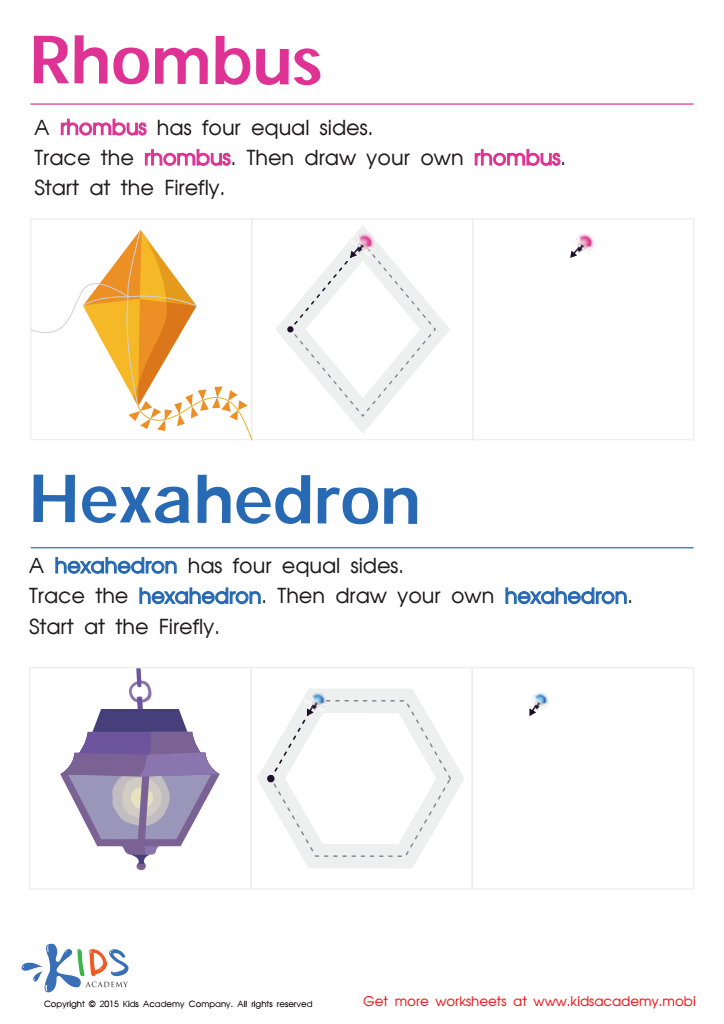
Draw a Rhombus And a Hexahedron Printable
 Assign to My Students











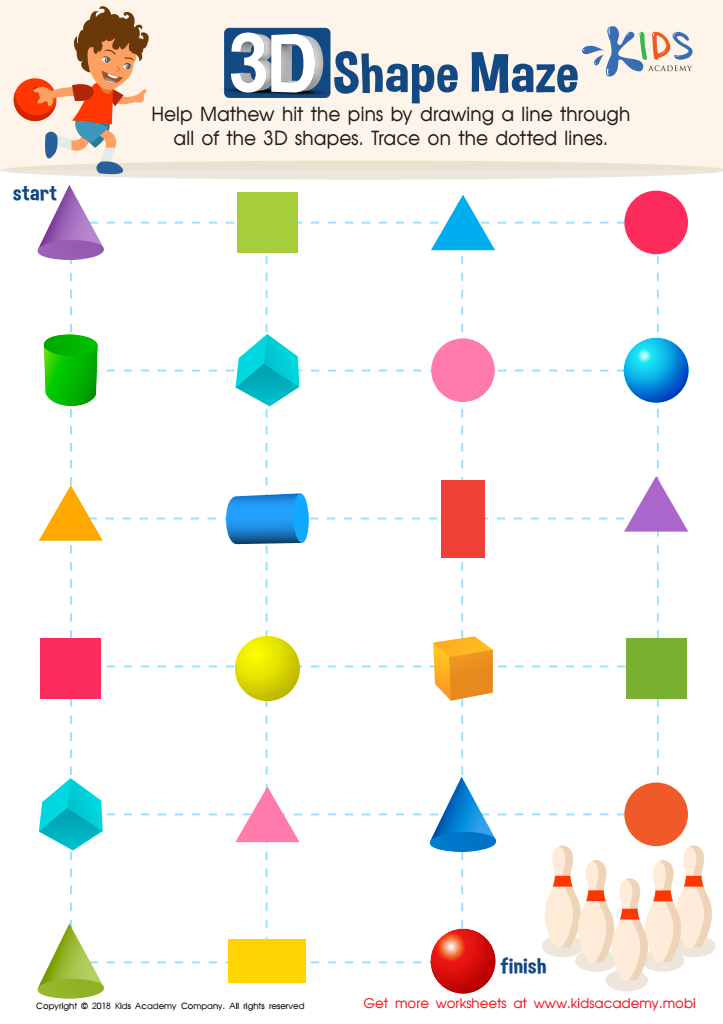
Shapes Maze Geometry Worksheet
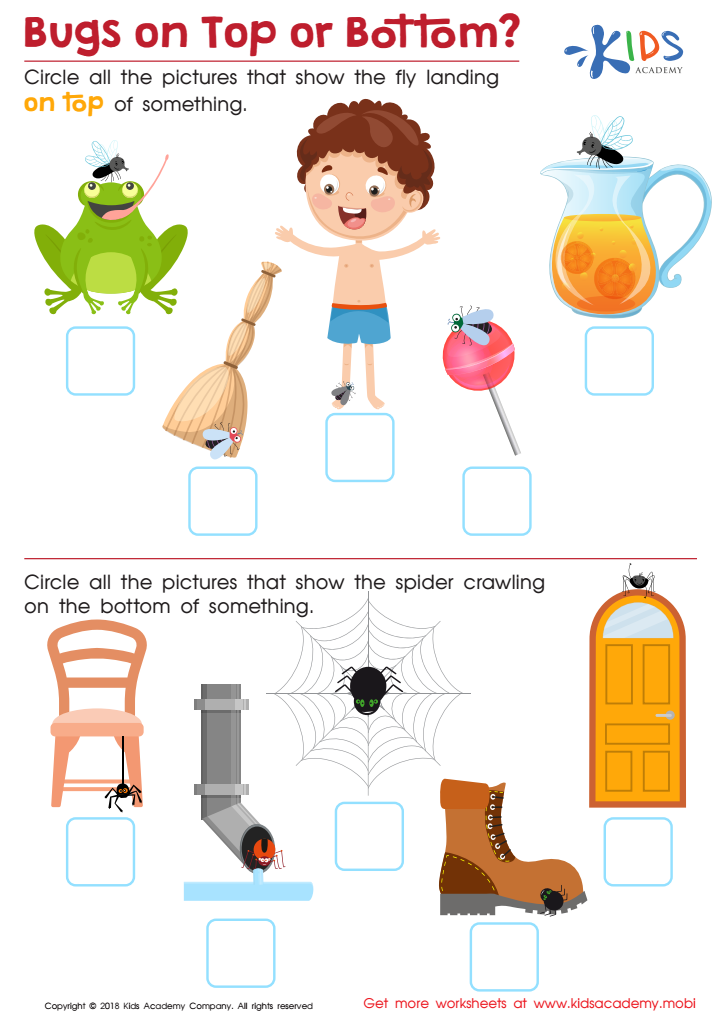
Bugs on Top or Bottom? Worksheet
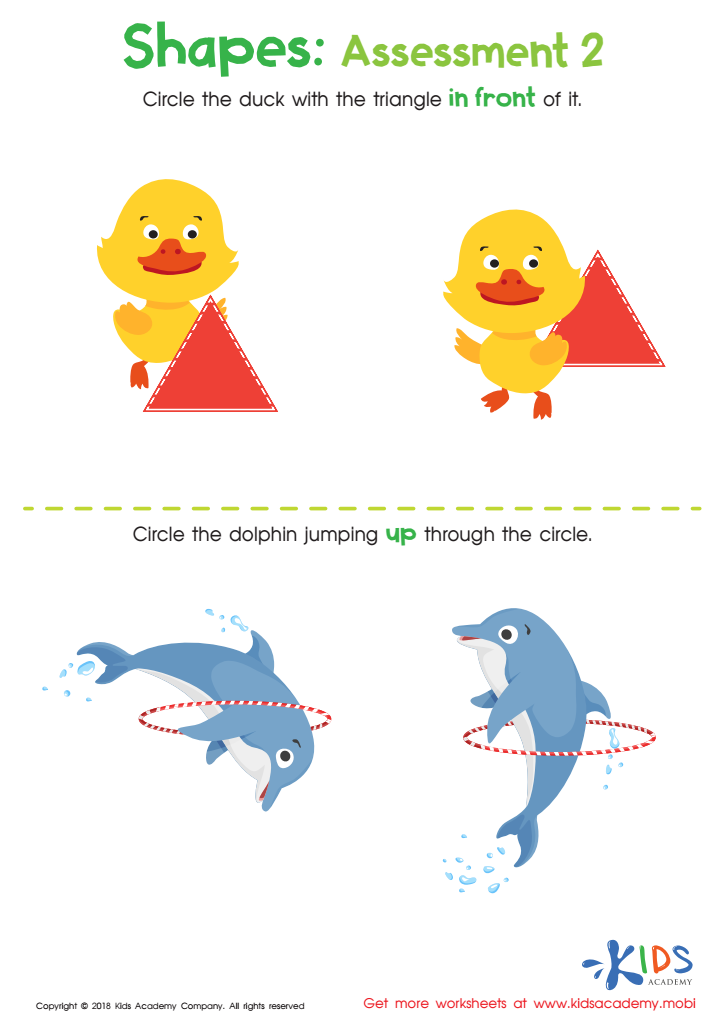
Geometry – Assessment 2 Worksheet








Spatial reasoning and geometry play essential roles in early childhood development, particularly for children ages 4-5. At this age, an active engagement with spatial concepts lays a strong foundation for future learning in math, science, and engineering. Through exploring shapes, sizes, and spatial relationships, children build critical cognitive skills that enhance problem-solving and analytical thinking.
Parents and teachers should care about spatial reasoning because it fosters creativity and innovation. When children manipulate objects, recognize patterns, and understand spatial orientation, they improve their abilities to visualize and conceptualize. Activities like building with blocks, sorting shapes, and completing puzzles not only promote motor skills but also encourage foundational math skills such as measuring and comparing.
Additionally, strong spatial reasoning skills are linked to better performance in later academic pursuits. Research indicates that children who engage in spatial reasoning activities in early childhood tend to excel in STEM fields as they grow older. Therefore, integrating fun, hands-on activities that enhance spatial awareness should be a priority in the early years, benefiting both children's academic success and everyday problem-solving abilities. Consequently, nurturing spatial reasoning from a young age sets the stage for lifelong learning and successful navigation of complex challenges.








