Enhance your child's early math abilities with our engaging Addition Skills Worksheets designed for ages 4-5. Our interactive resources provide a fun and supportive way for young learners to master the basics of addition while building number fluency. Featuring colorful illustrations and age-appropriate challenges, these worksheets encourage children to recognize numbers, understand simple addition concepts, and develop critical thinking skills. Perfect for use at home or in the classroom, our worksheets are not just educational but also designed to spark interest and enthusiasm in learning. Start fostering a love for math in your little one today!

Check out this FREE Trial Lesson on Numbers for age 4-5!

Solve Tricky Number Situations by Drawing (3 numbers) - Part 1

Favorites
With answer key
Interactive
  • 4-5
  • Addition skills
  • Numbers
Counting Coins Worksheet

Counting Coins Worksheet

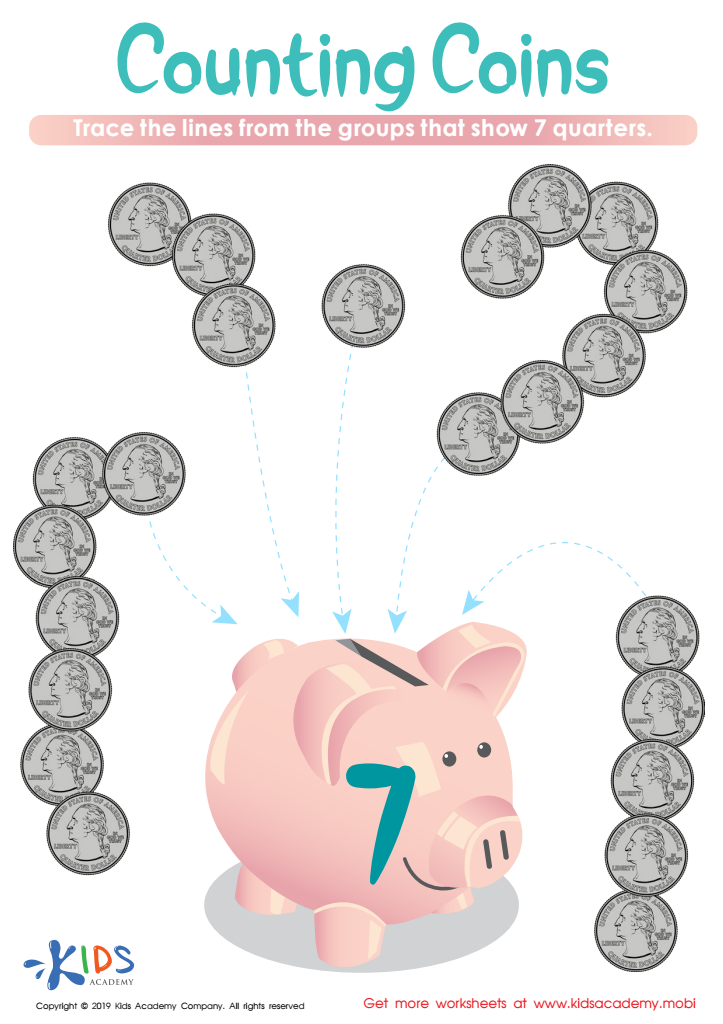
Help your students overcome their fear or aversion of counting and learning numbers with this fun worksheet! It features colorful pictures with four groups of coins. Ask the students to count each group, then trace the lines to the piggy bank. Show them it's easy to count and learn numbers!
Counting Coins Worksheet
Worksheet
Fruity Problem Solving Worksheet

Fruity Problem Solving Worksheet

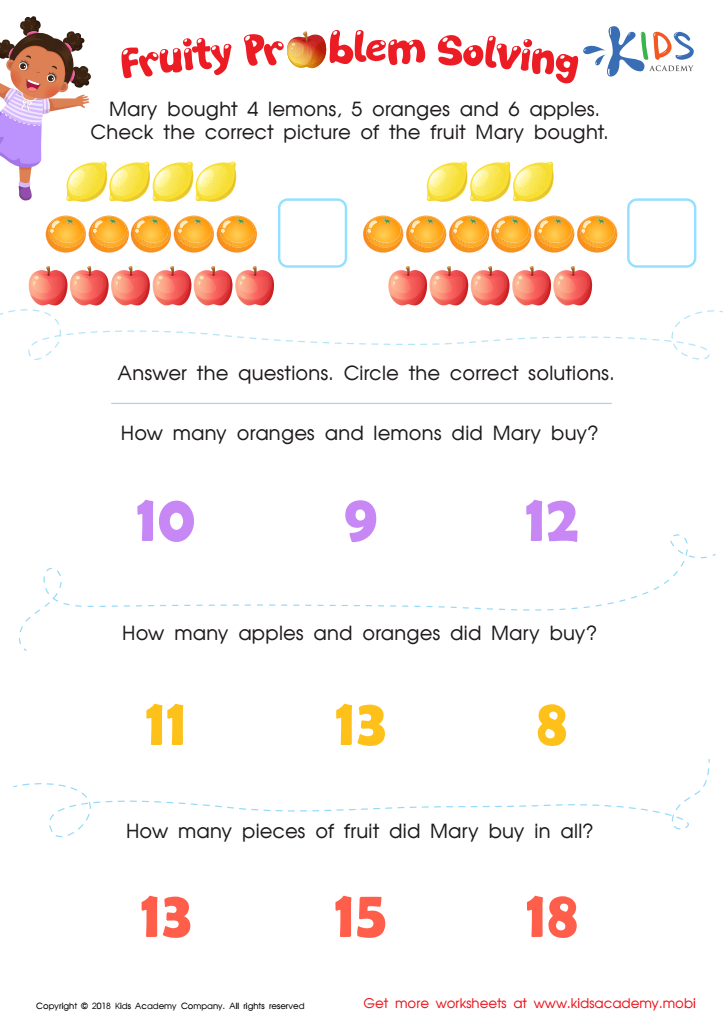
Practice addition word problems with young mathematicians using this PDF worksheet featuring fruit. As they read each problem carefully and circle the correct sums, they'll reinforce attention to detail and fine motor skills. Tangible representations are key to helping them with basic addition.
Fruity Problem Solving Worksheet
Worksheet
Number Stories One More - Assessment 1 Worksheet Preview

Number Stories One More – Assessment 1 Worksheet
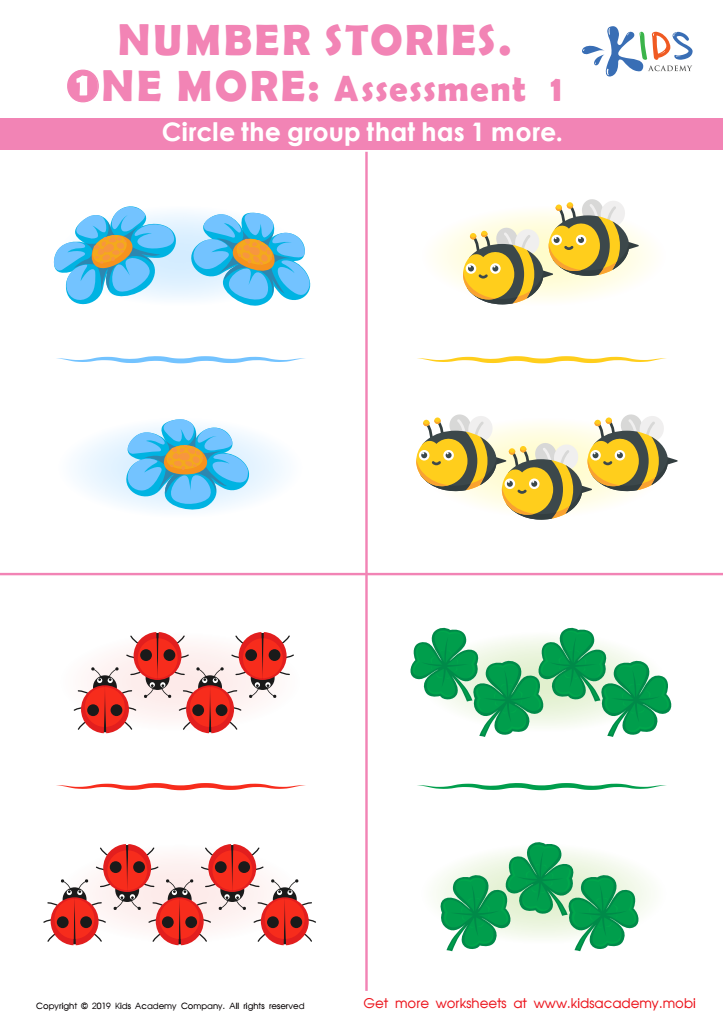
Does your child need a fun way to practice distinguishing between different groups of numbers? This free PDF worksheet will have them circle the group that has one more. With its colorful nature drawings, it's an attractive activity that visual learners will enjoy!
Number Stories One More – Assessment 1 Worksheet
Worksheet
Adding Up with Old MacDonald Worksheet

Adding Up with Old MacDonald Worksheet

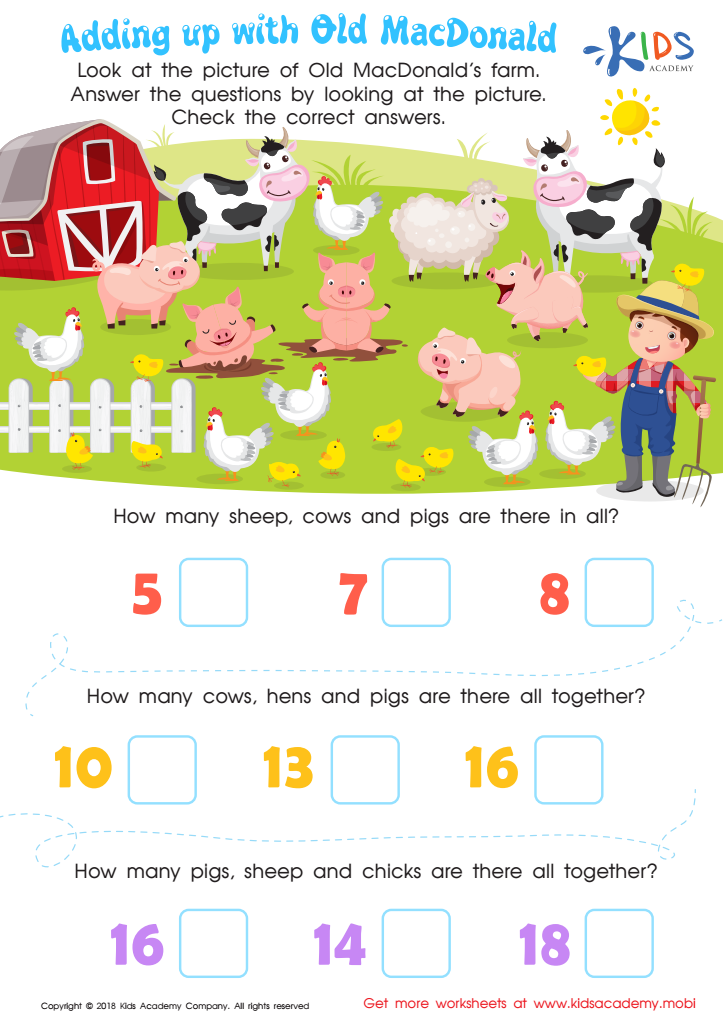
Old MacDonald needs help counting his animals! Give your little math whiz a fun challenge with a free PDF worksheet. They'll love counting the animals and doing basic addition with two or three addends. Who knew math could be so much fun on the farm?
Adding Up with Old MacDonald Worksheet
Worksheet
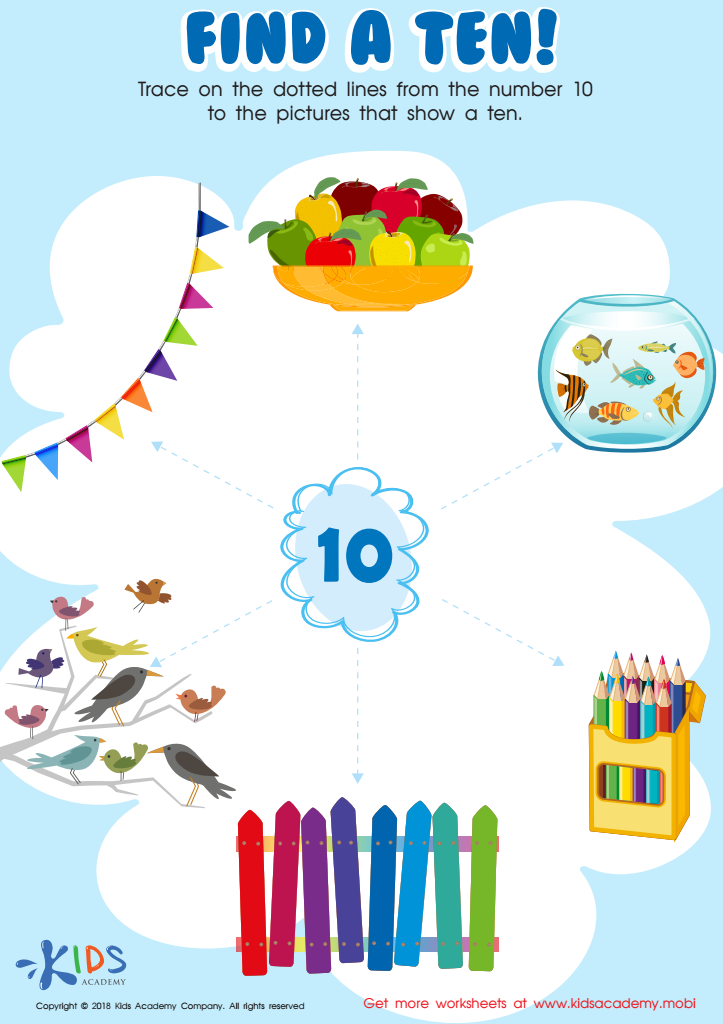
Kindergarten math worksheet: find a ten

Kindergarten Math Worksheet: Find a Ten
Help your child learn to count to 10 joyfully with this kindergarten math worksheet: Find a Ten! It's full of vivid images to make counting easier. Just count the items in each picture and trace the dotted lines for the correct answer.
Kindergarten Math Worksheet: Find a Ten
Worksheet
Make 6 Worksheet
Make 6 Worksheet

Make 6 Worksheet

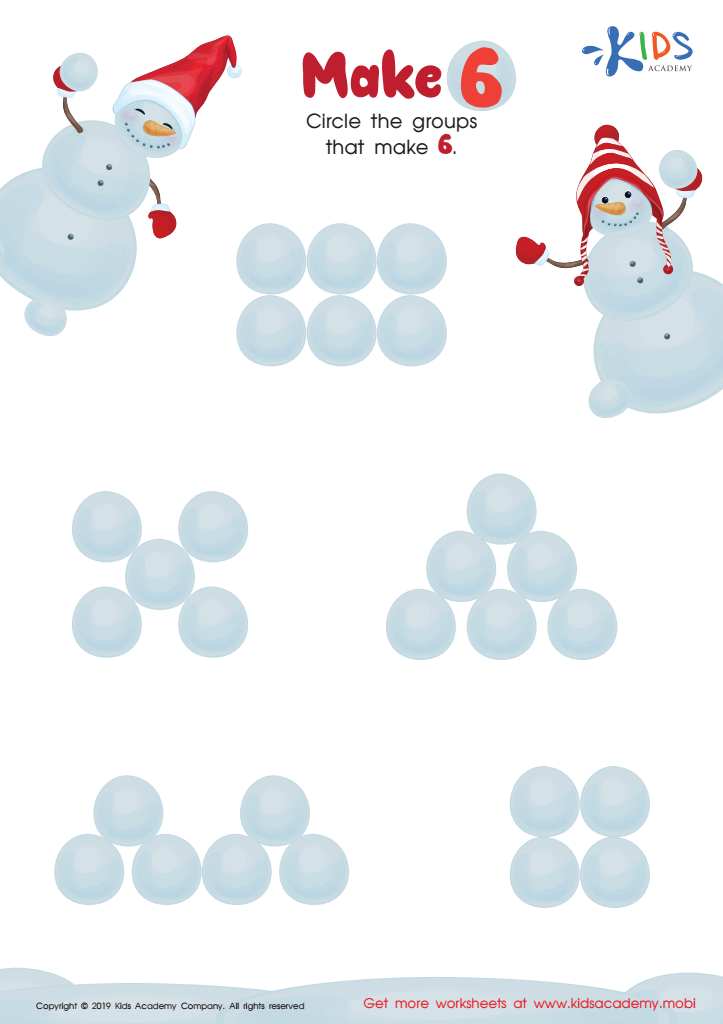
Fun snowball fights are great! With lots of ammo, kids can join their snowman friends and count out groups of six. Through number sense practice, and seeing one-to-one picture representation, your child can strengthen their skills while having a blast. Don't forget to bundle up as they may ask for more!
Make 6 Worksheet
Worksheet


Addition skills are foundational for children aged 4-5 and play a crucial role in their cognitive development. Teaching children how to add not only builds their mathematical abilities but also enhances their problem-solving skills and logical reasoning. Early exposure to addition helps them understand the concept of numbers as well as the relationships between them, fostering what is often referred to as number sense.

Additionally, mastering addition boosts confidence and encourages a positive attitude towards math, as children experience the satisfaction of solving a problem correctly. This skill directly impacts their future academic success, as mathematics is a building block for higher-level math and critical thinking.

Moreover, addition skills can be integrated into everyday life, making learning fun and practical. For instance, teachers and parents can use games, food, or toys to create engaging activities that promote practice in a playful manner. This interactive approach fosters a love for learning, which is essential in their early education journey.

Ultimately, by prioritizing addition skills, parents and teachers equip young learners with tools that will benefit them throughout their educational and personal lives, laying the groundwork for future endeavors.