
Matching skills Numbers Worksheets for Ages 4-5
5 filtered results
Difficulty Level
Grade
Age
-
From - To
Subject
Activity
Standards
Introduce your young learner to the world of numbers with our expertly crafted Matching Skills Numbers Worksheets for Ages 4-5. These engaging and educational exercises are designed to help preschoolers and kindergarteners develop foundational math skills through fun matching activities. Perfectly aligned with early learning standards, these worksheets foster number recognition, counting, and logical thinking. Each printable sheet combines vibrant illustrations with interactive tasks to captivate and motivate growing minds. By matching numbers to corresponding groups of objects or symbols, children enhance their cognitive abilities and build a strong basis for future mathematical success. Unlock the joy of learning at Kids Academy!
Favorites
With answer key
Interactive
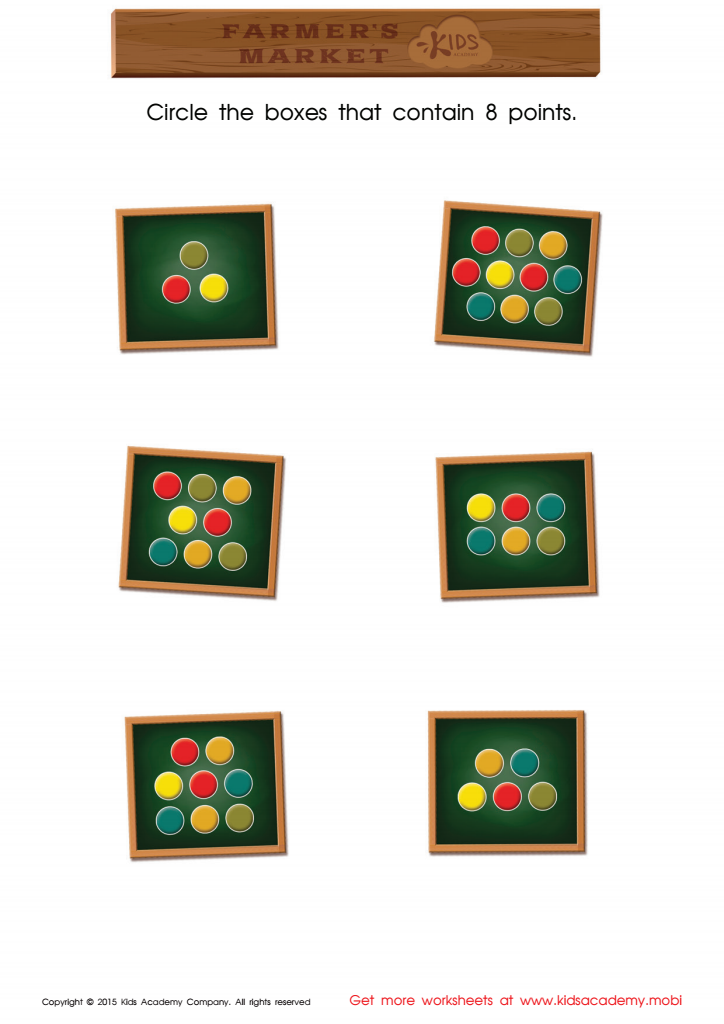
Count and Match Points 8 Math Worksheet
This free PDF helps children develop their number skills by counting the points in the boxes. Each box contains a total of 9 points, making it a fun and colorful activity. Parents can encourage their young ones by guiding them if they need help counting. By the end of the worksheet, children should have a better understanding of numbers.
 Assign to My Students
Count and Match Points 8 Math Worksheet
Worksheet
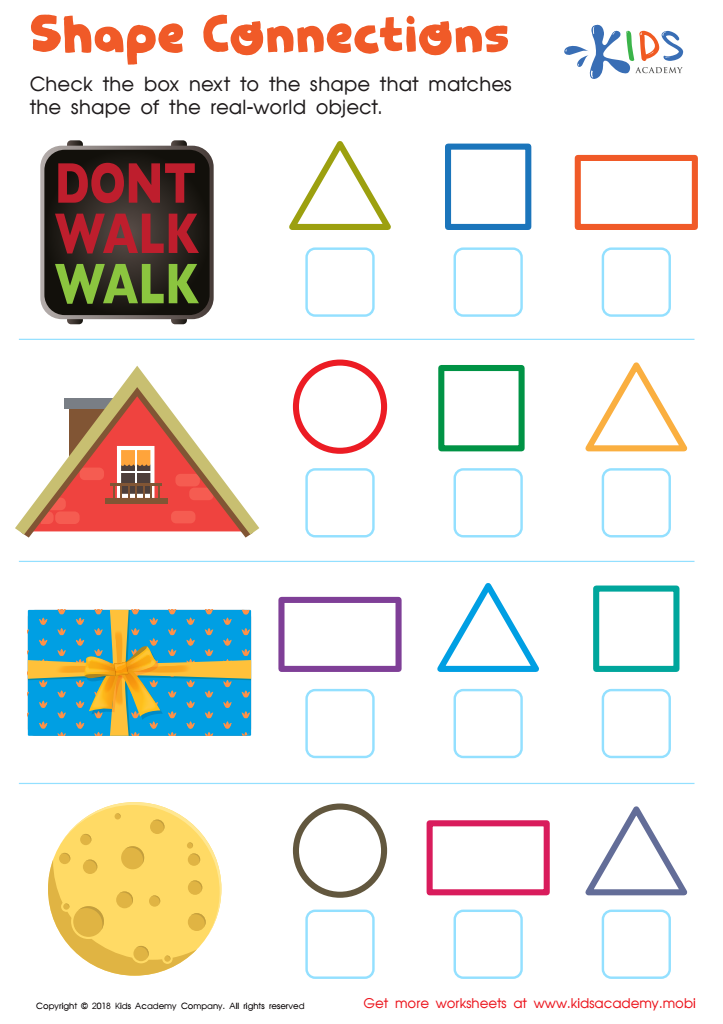
Shape Connections Worksheet
Geometric shapes are all around us and this fun worksheet brings it to life. Kids will match real-world pictures with the corresponding basic shapes, connecting how math is used in various aspects of daily life. A great way to reinforce these concepts!
Shape Connections Worksheet
Worksheet
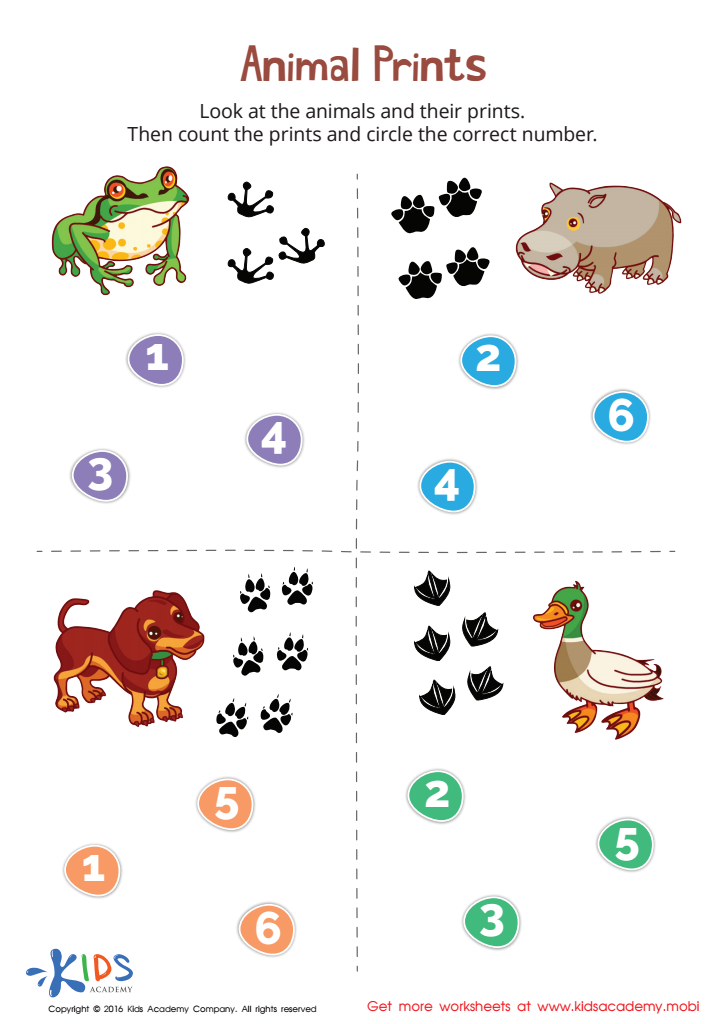
Animal Prints Match-Up Worksheet
Help your little learner build early math skills with this fun animal paw prints worksheet. With it, they'll count, recognize numbers, and learn about the animals that make the paw prints. Talk to them about the prints and ask them to count. They'll love exploring and learning about the different animals, all while sharpening essential math skills!
Animal Prints Match-Up Worksheet
Worksheet
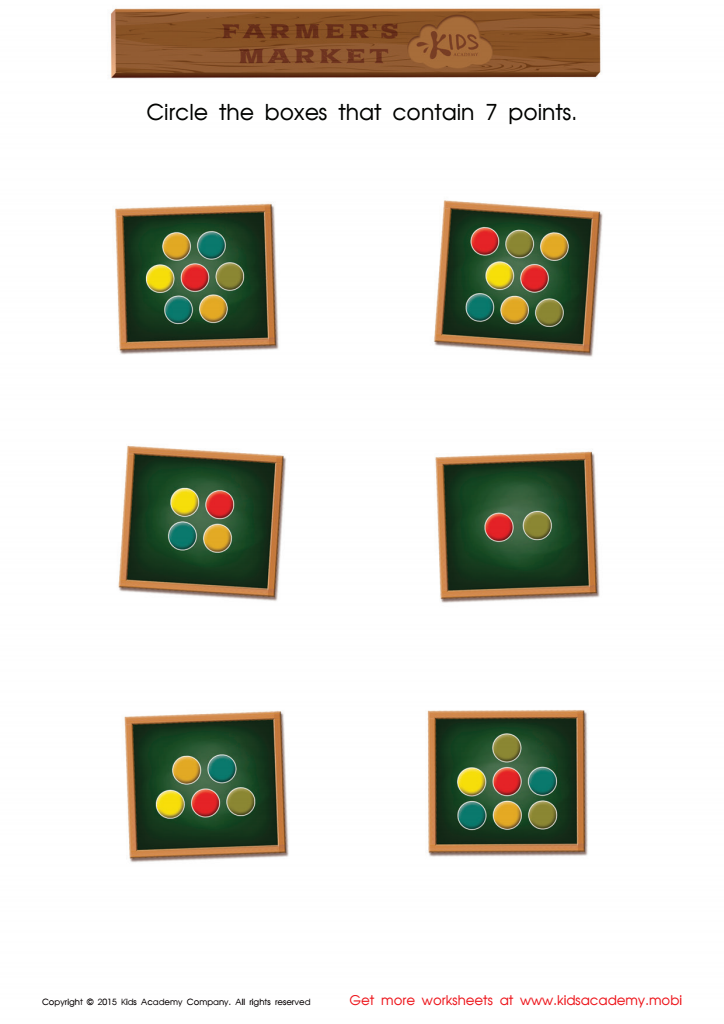
Count and Match Points 7 Math Worksheet
Help your child count and recognize similar numbers by using this fun, colorful worksheet. Guide them to count the dots in each box, then circle those with a total of 7. It's a great way for your child to see how different arrangements lead to the same number.
Count and Match Points 7 Math Worksheet
Worksheet
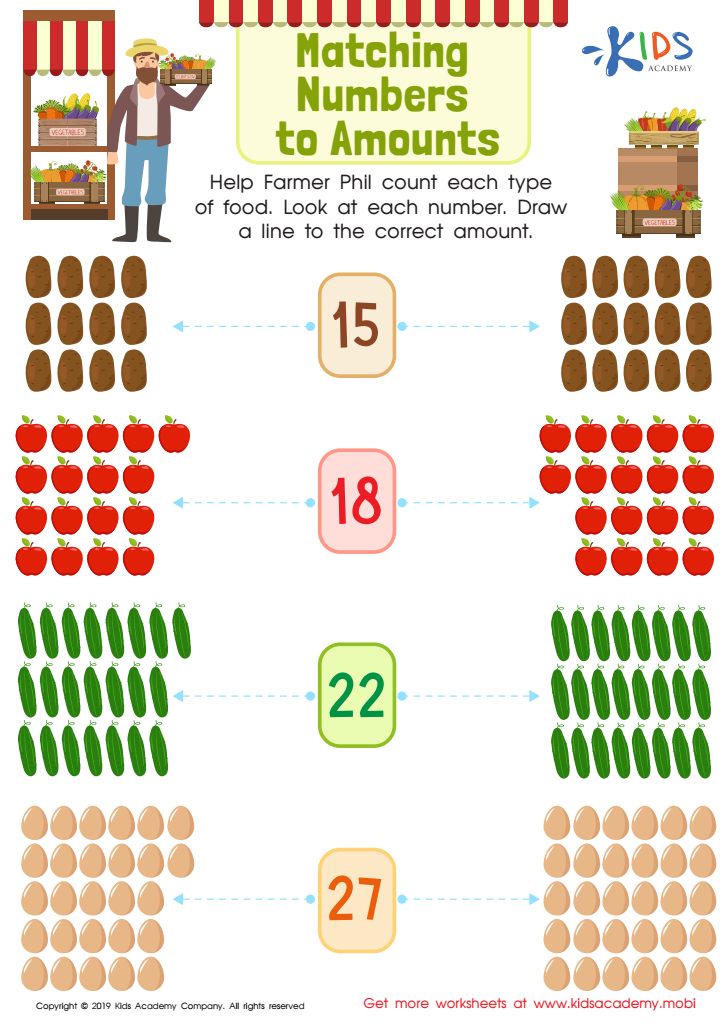
Matching Numbers to Amounts Worksheet
Farmer Phil needs your kid's help! Ensure they know the basics of math such as counting, adding and subtracting. Before beginning, help your child identify and count the different foods in the picture. Then, draw a line to the correct amount.
Matching Numbers to Amounts Worksheet
Worksheet
Join Kids Academy for Free
Who is primarily going to use this learning content?








Matching number skills, particularly for ages 4-5, form the foundation for early math education and cognitive development. This age is crucial for nurturing basic numeracy, as children transition from preschool to kindergarten. Parents and teachers who emphasize matching skills help children recognize numbers, their sequence, and corresponding quantities, making abstract concepts more concrete.
When children engage in matching activities, such as pairing numeral cards with groups of objects, it enhances their counting abilities, one-to-one correspondence, and number recognition. This fosters essential skills such as problem-solving, critical thinking, and logical reasoning, which are vital for academic success across various subjects.
Moreover, these activities strengthen fine motor skills and concentration. By repeatedly handling small objects, children develop hand coordination and stamina, aiding handwriting and other precision tasks. Matching also encourages socio-emotional development, as children often participate in collaborative activities, learning patience, cooperation, and peer interaction.
In essence, instilling strong number matching skills at a young age equips children with the confidence and abilities needed for more complex mathematical concepts. It's an investment in their academic future and overall cognitive growth, making early childhood an optimal time for parents and teachers to cultivate these vital competencies.








