Spatial reasoning Numbers Worksheets for Ages 4-5
3 filtered results
-
From - To
Explore our engaging Spatial Reasoning Numbers Worksheets designed specifically for ages 4-5! These worksheets provide a fun and interactive way for young learners to develop essential spatial reasoning skills while mastering numbers. Children will enhance their ability to understand shapes, positions, and spatial relationships through various activities, including shape sorting, pattern recognition, and position identification. With colorful illustrations and simple instructions, our worksheets make learning enjoyable and effective. Perfect for parents and teachers looking to support early math skills and cognitive development, these resources make foundational learning exciting. Start building your child's spatial awareness and mathematical confidence today!
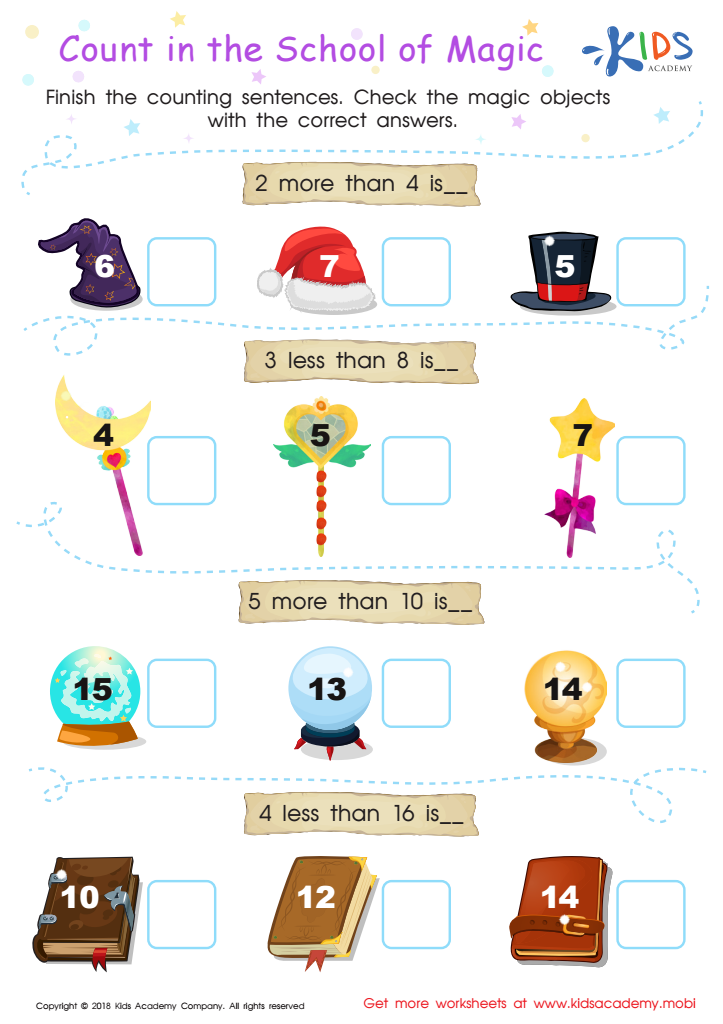
Count in the School of Magic Worksheet
 Assign to My Students
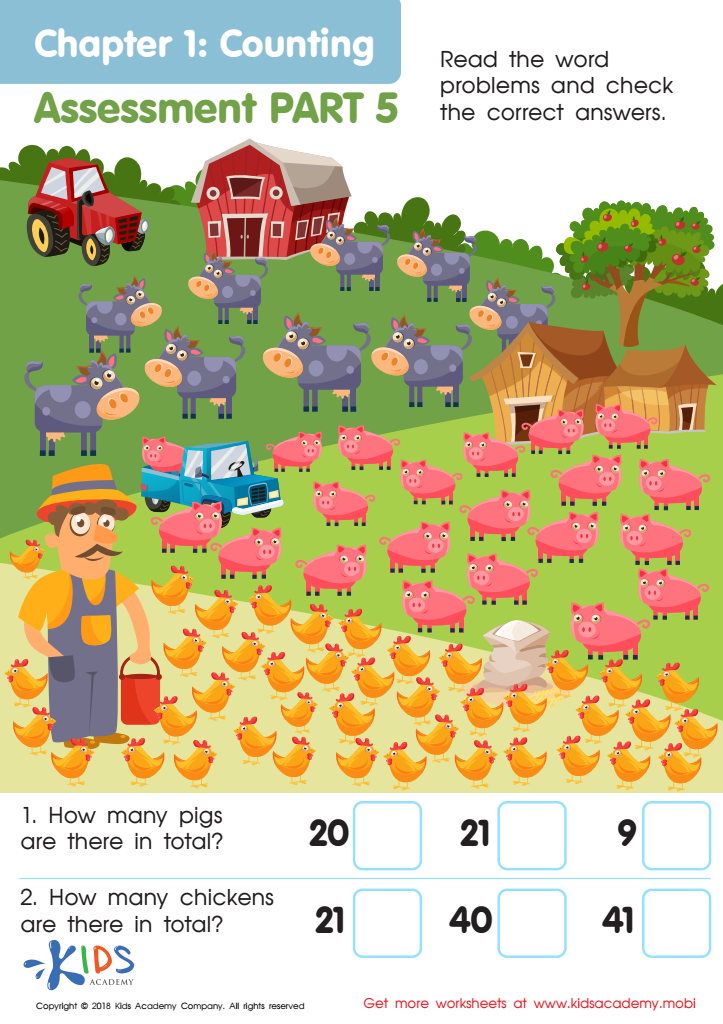
Counting: Assessment 5 Worksheet
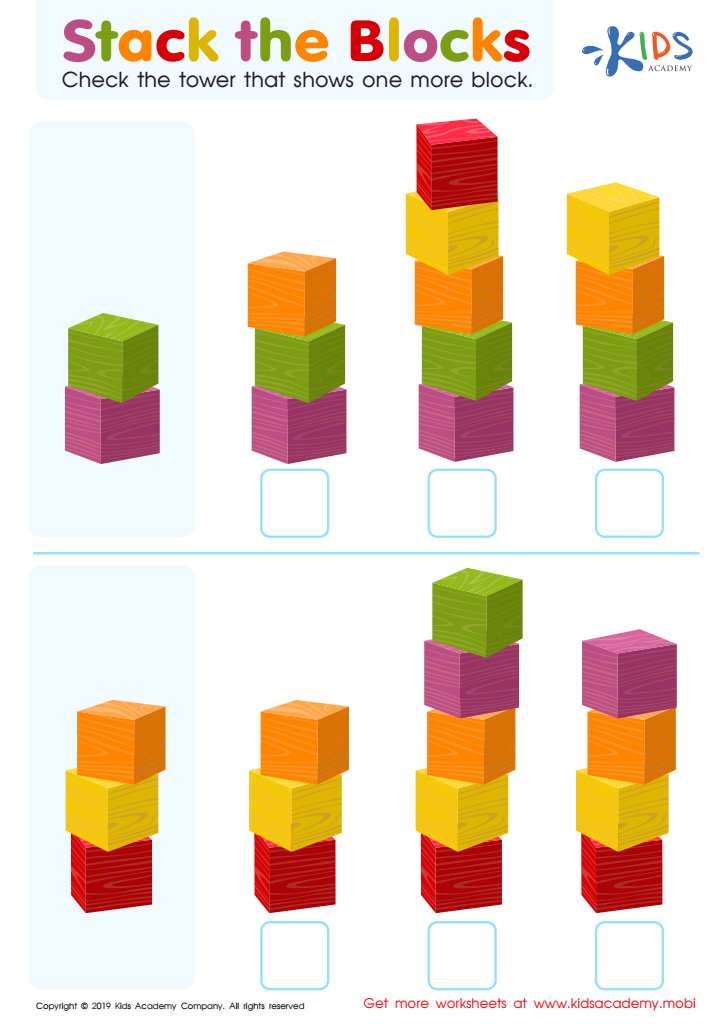
Stack the Blocks Worksheet








Spatial reasoning is crucial for early development, particularly for children aged 4-5, as it lays the foundation for various cognitive skills including mathematics, science, and problem-solving. At this age, children are naturally curious about their environment, eager to explore shapes, sizes, and how objects relate to each other in space. Engaging in activities that nurture spatial reasoning helps them understand principles of geometry and measurement, essential for their academic journey.
Parents and teachers should care about spatial reasoning because it is linked to later success in STEM (science, technology, engineering, and mathematics) fields. When children grasp spatial concepts, they develop critical thinking skills that assist in understanding more complex mathematical ideas, like fractions and volume. Moreover, strong spatial reasoning fosters better memory and attention skills, giving children the tools they need to process information more efficiently.
Incorporating play-based learning strategies, such as building blocks, puzzles, and hands-on activities, can significantly enhance spatial skills. Supporting spatial reasoning early in life not only prepares children for academic success but also encourages creativity and confidence in problem-solving, instilling a lifelong love of learning. Ultimately, fostering spatial reasoning is an investment in a child’s future.








