Understanding sequencing Numbers Worksheets for Ages 4-5
4 filtered results
-
From - To
Our "Understanding Sequencing Numbers Worksheets for Ages 4-5" are designed to foster essential early math skills in preschoolers and kindergarteners. Through engaging and colorful activities, children learn to arrange numbers in the correct sequence, enhancing their number sense and logical thinking. Each worksheet incorporates fun themes and illustrations, making learning an enjoyable adventure. This resource helps young learners grasp foundational concepts critical for later math success. Developed by education experts, the worksheets offer structured practice with gradually increasing difficulty. Nurture your child's numerical abilities and confidence with our expertly crafted sequencing worksheets tailored for young minds.
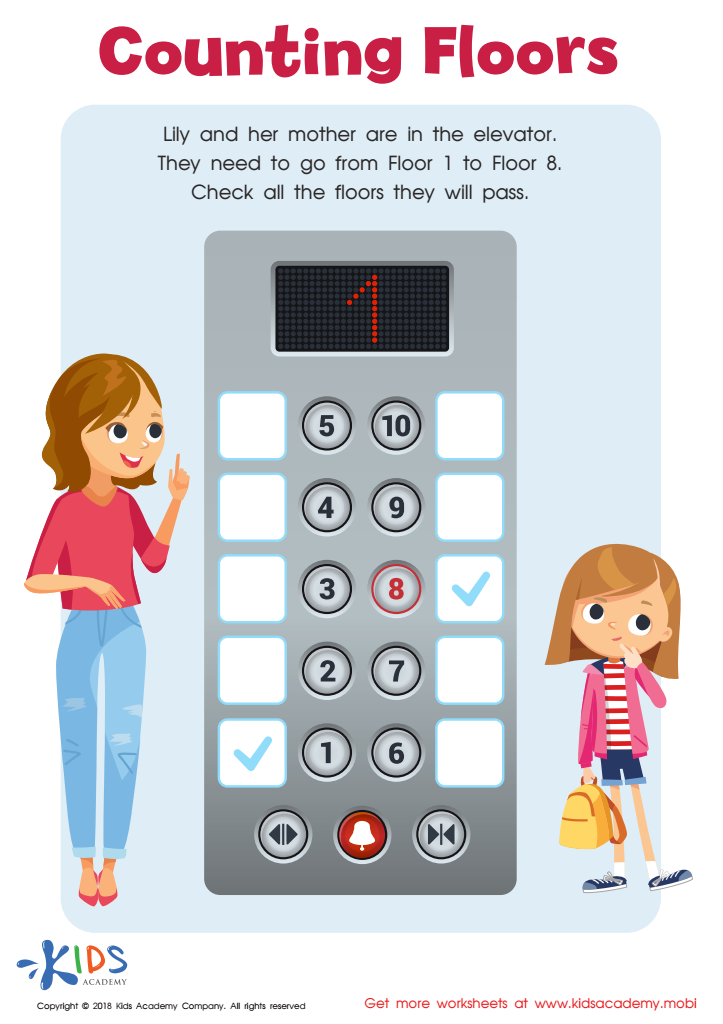
Counting Floors Worksheet
 Assign to My Students

One More Jumps In Worksheet
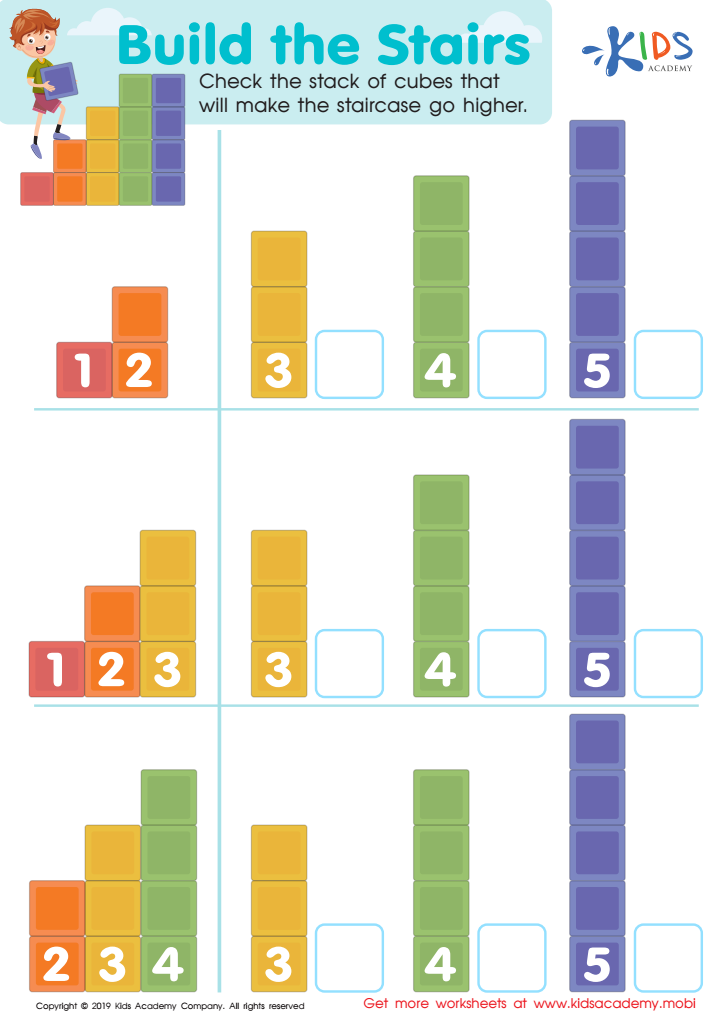
Build the Stairs Worksheet
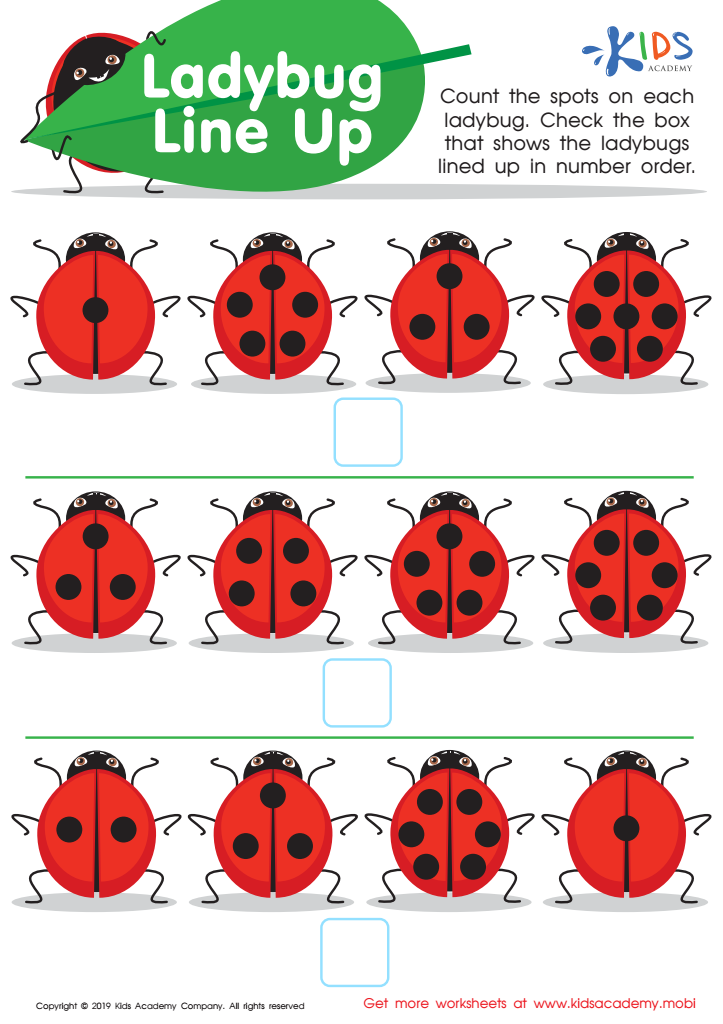
Ladybug Line Up Worksheet








Understanding sequencing numbers is fundamental for young children, particularly ages 4-5, as it forms the basis of mathematical comprehension and broader cognitive development. For parents and teachers, nurturing this skill early helps children grasp the concept of order and patterning, which is vital in math and real-world scenarios.
Sequencing numbers allows children to recognize the logical flow of events and objects, facilitating their ability to predict outcomes and reason systematically. For example, understanding that after 3 comes 4, and then 5, helps in more complex problem-solving later on, like addition and subtraction.
On top of academic benefits, sequencing boosts memory and attention to detail. As children practice arranging numbers in the correct order, their brain cells solidify the ability to store and retrieve sequential information efficiently, a skill that transcends into reading and daily routines. Mastery of sequencing adds structure to their thinking patterns and leverages their ability to follow instructions coherently.
Therefore, by giving attention to number sequencing at an early age, parents and teachers lay down a solid educational foundation. This early intervention not only enhances a child's future academic achievements but also supports the holistic development of critical thinking and analytical skills essential for day-to-day functionality.








