Addition Practice Math Worksheets for Ages 4-5 - Page 2
102 filtered results
-
From - To
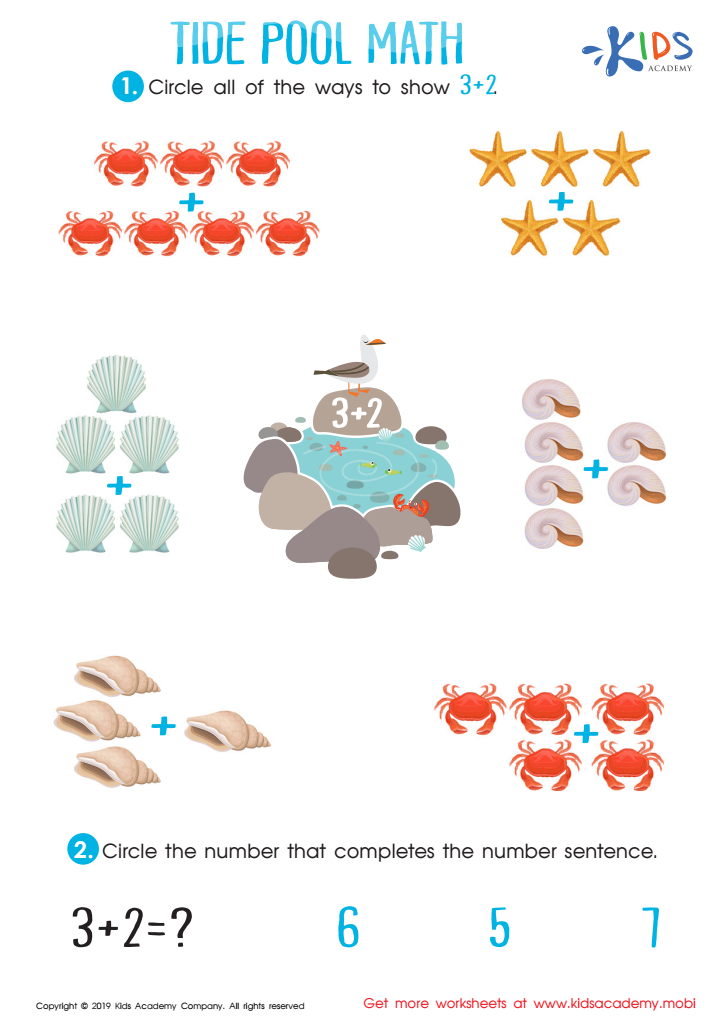
Tide Pool Math Worksheet
 Assign to My Students
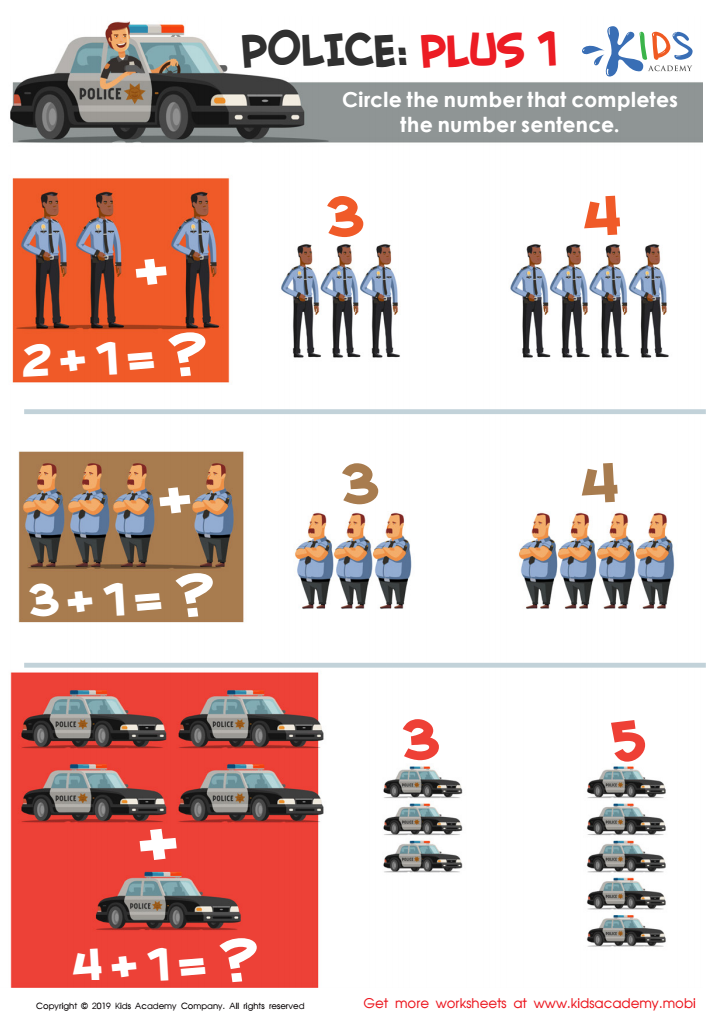
Police: Plus 1 Worksheet
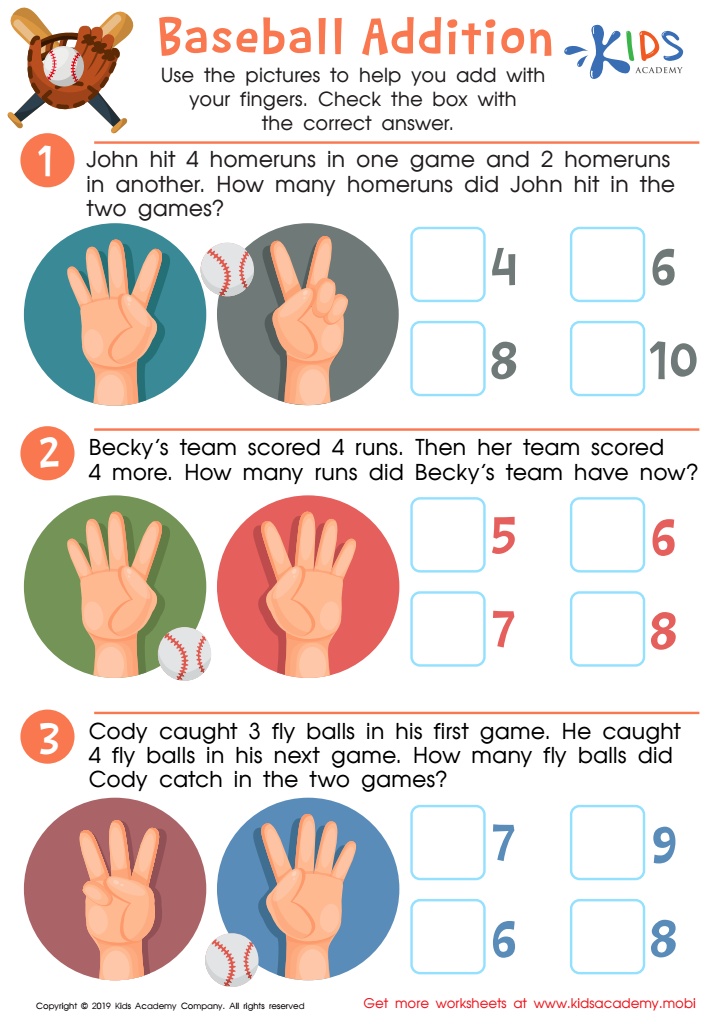
Baseball Addition Worksheet
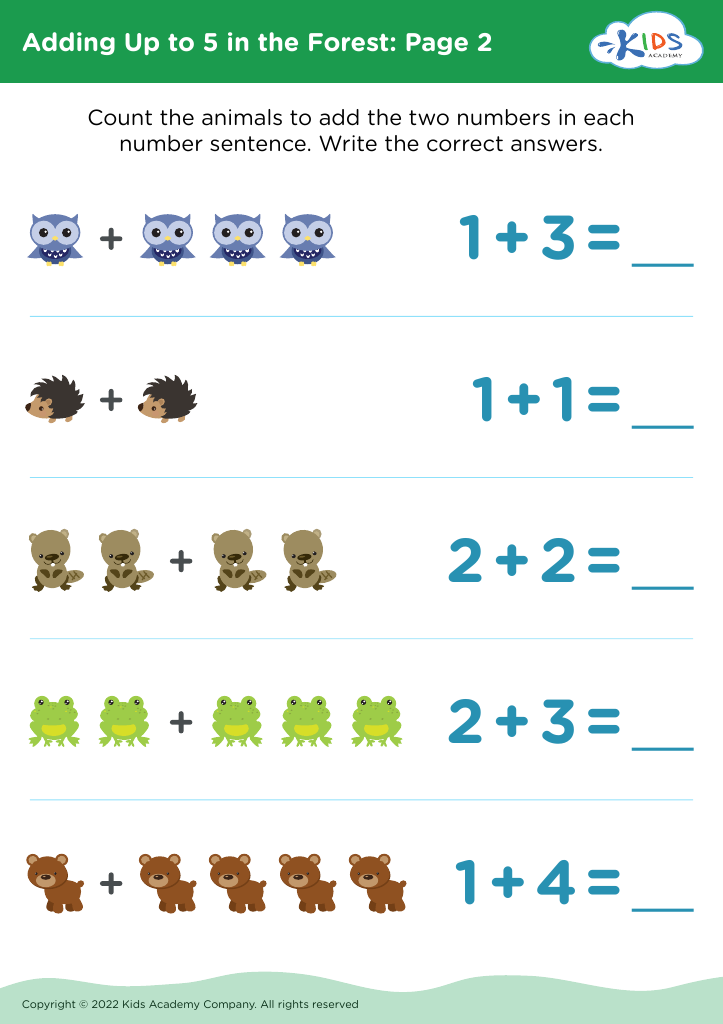
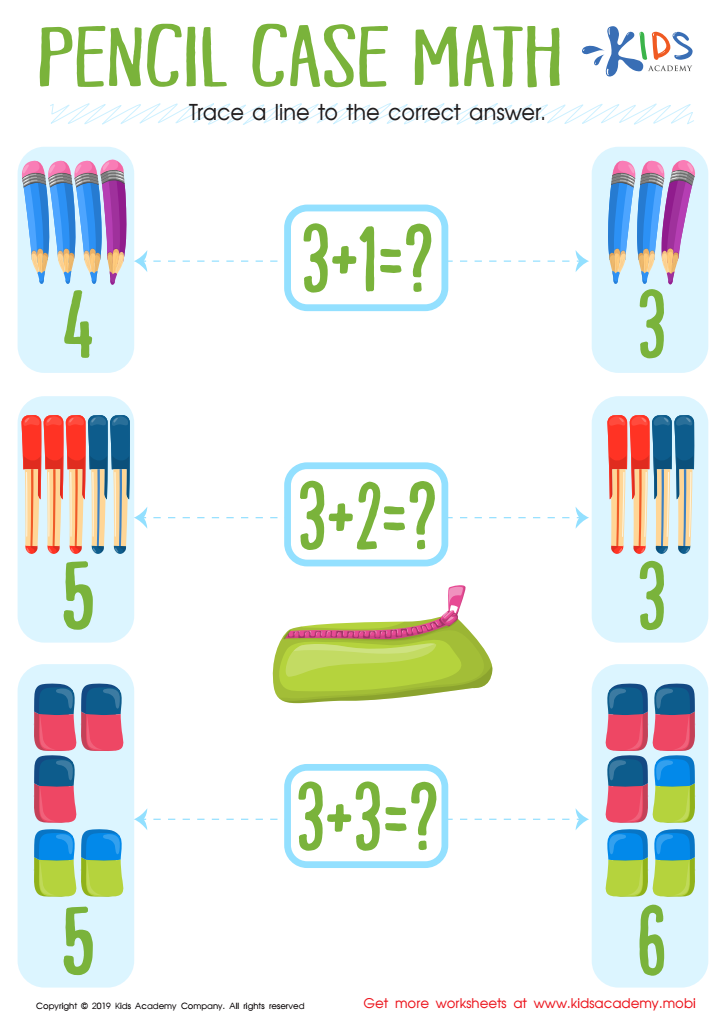
Pencil Case Math Worksheet
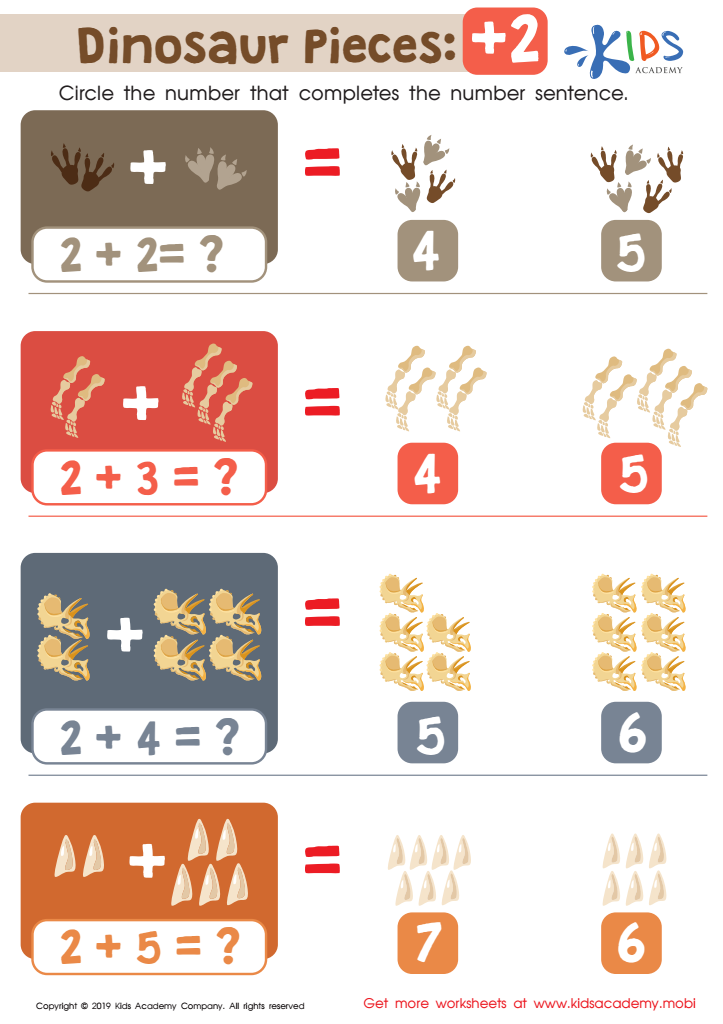
Dinosaur Pieces: +2 Worksheet
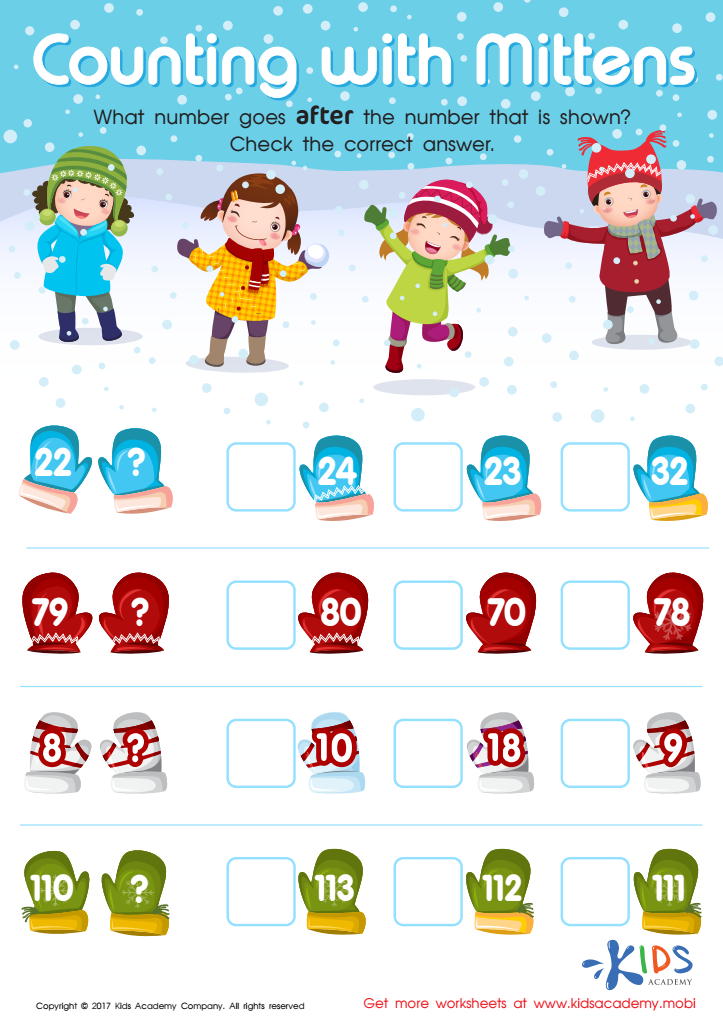
Counting with Mittens Worksheet
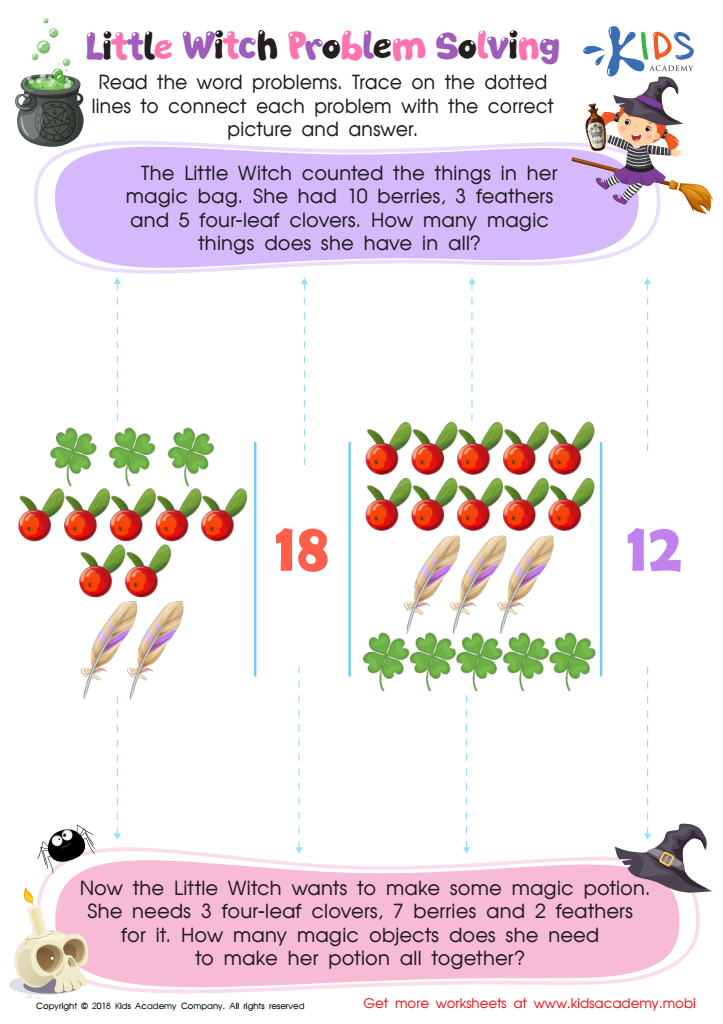
Little Witch Problem Solving Worksheet
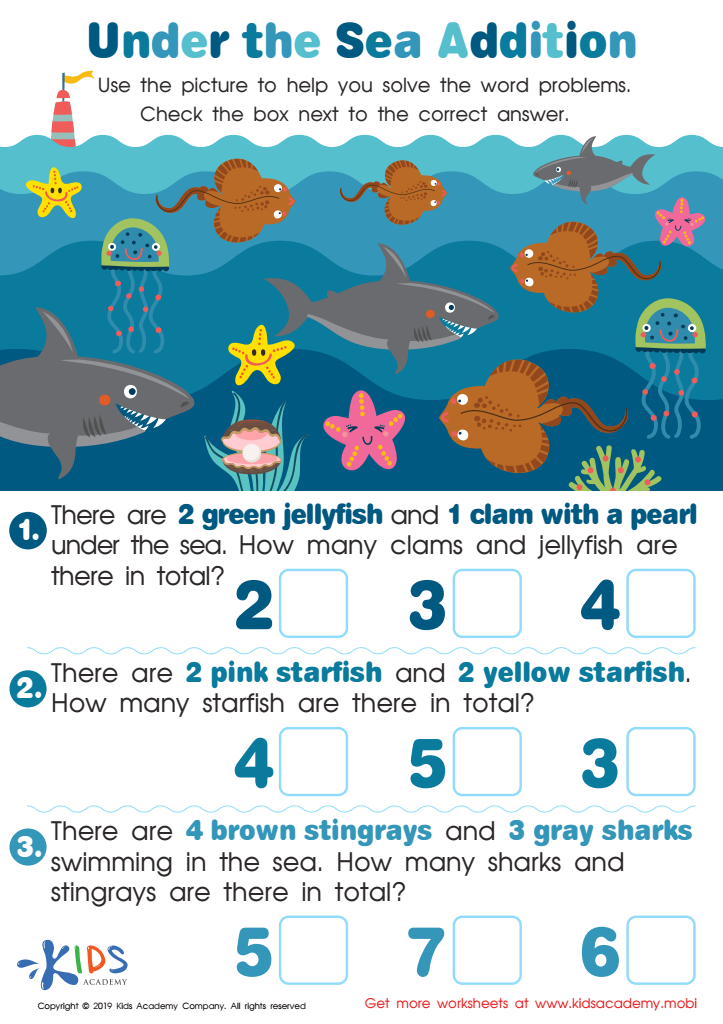
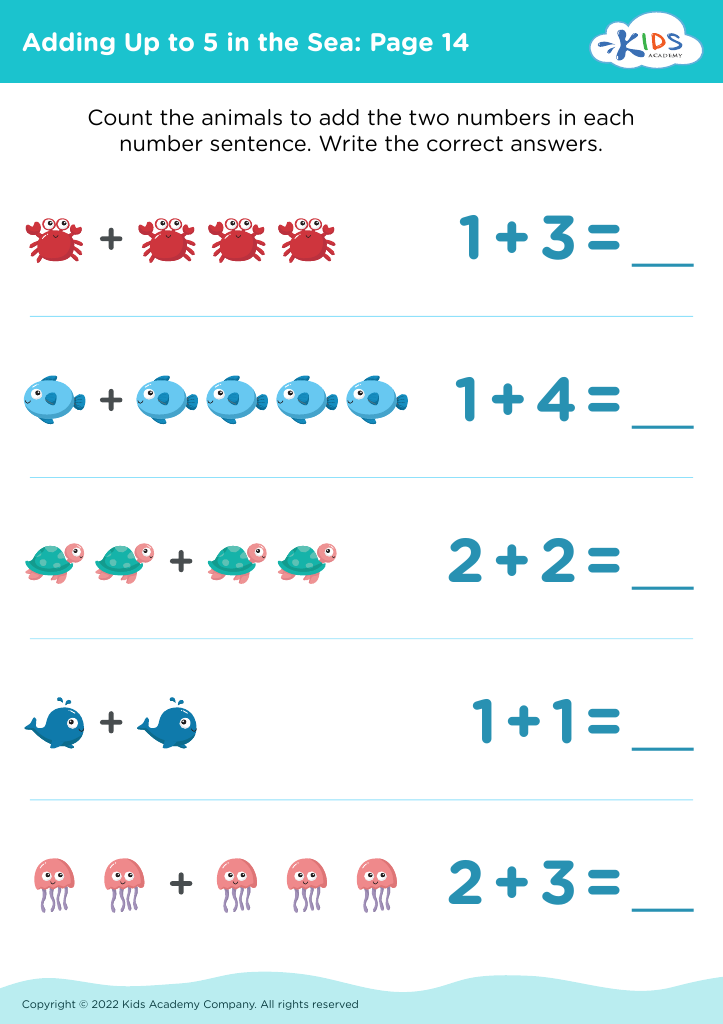
Under the Sea Addition Worksheet
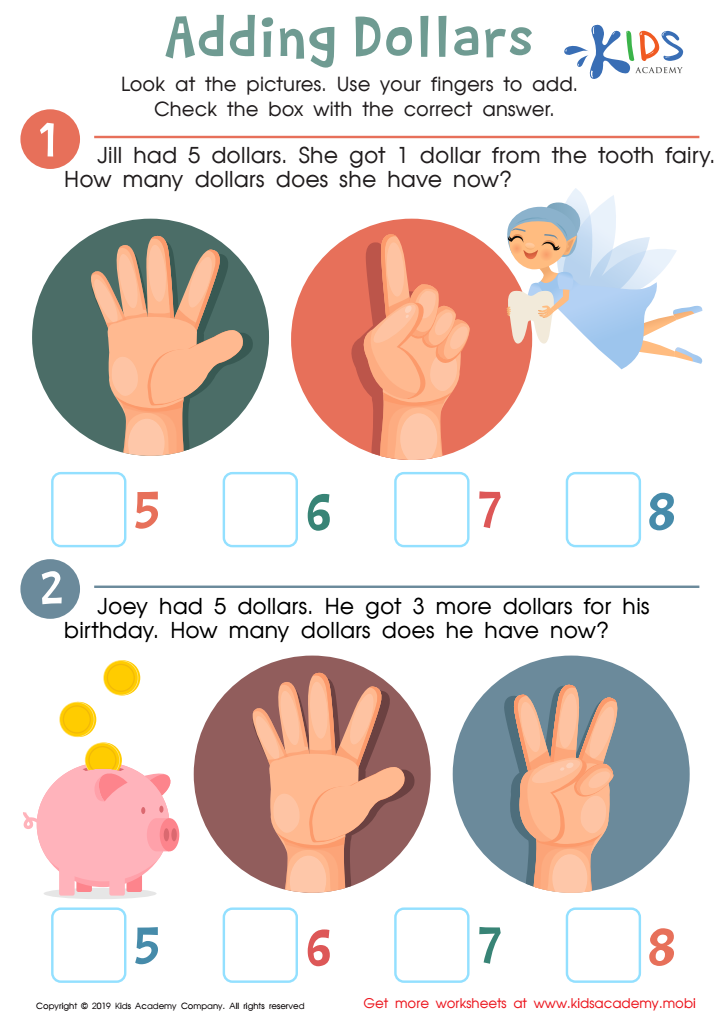
Tooth Fairy Addition Worksheet
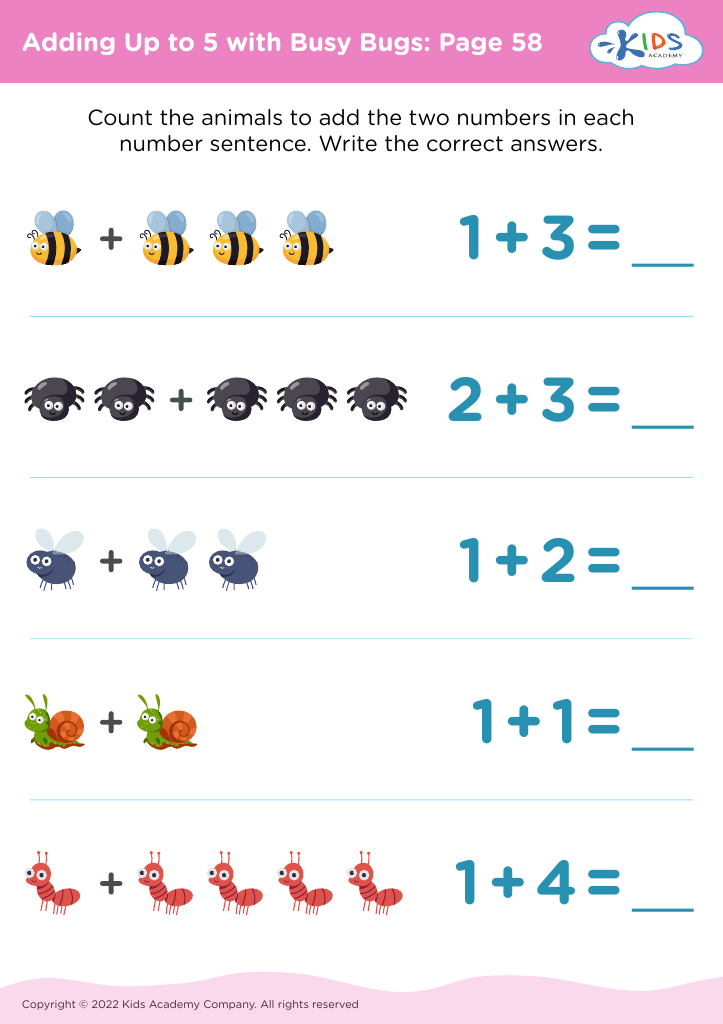
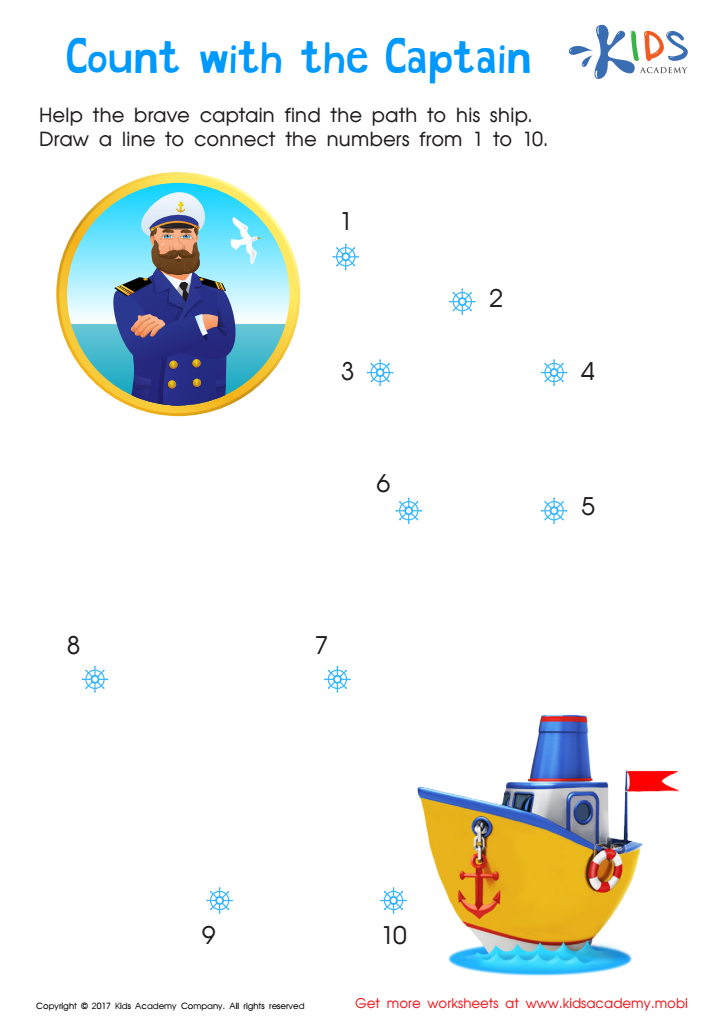
Count with the Captain Connect Dots Worksheet
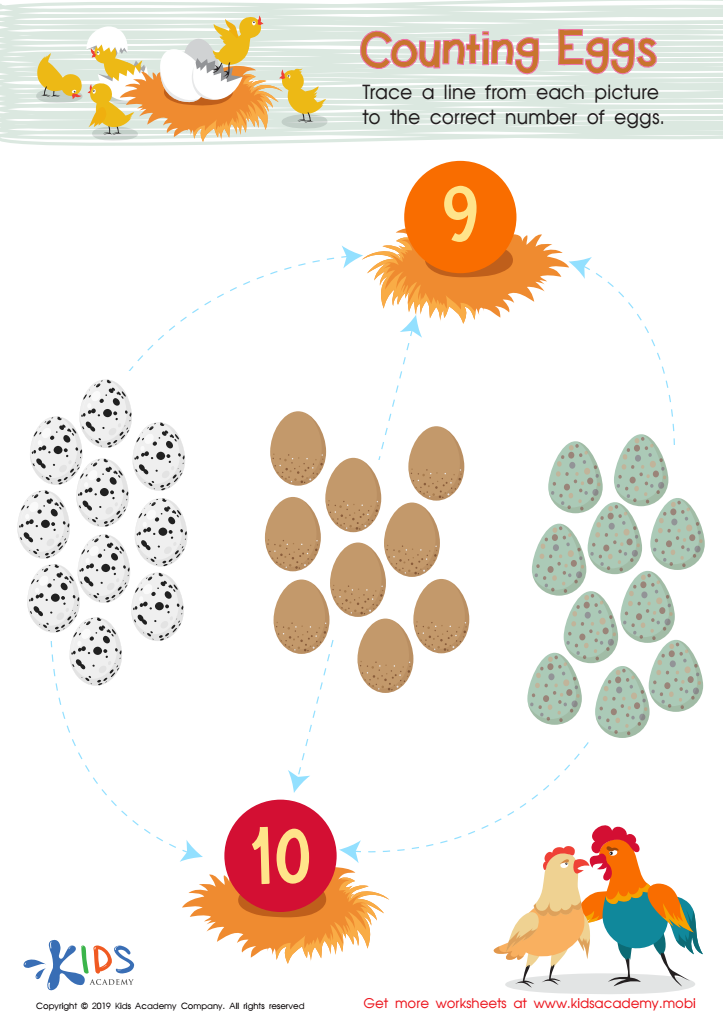
Counting Eggs Worksheet
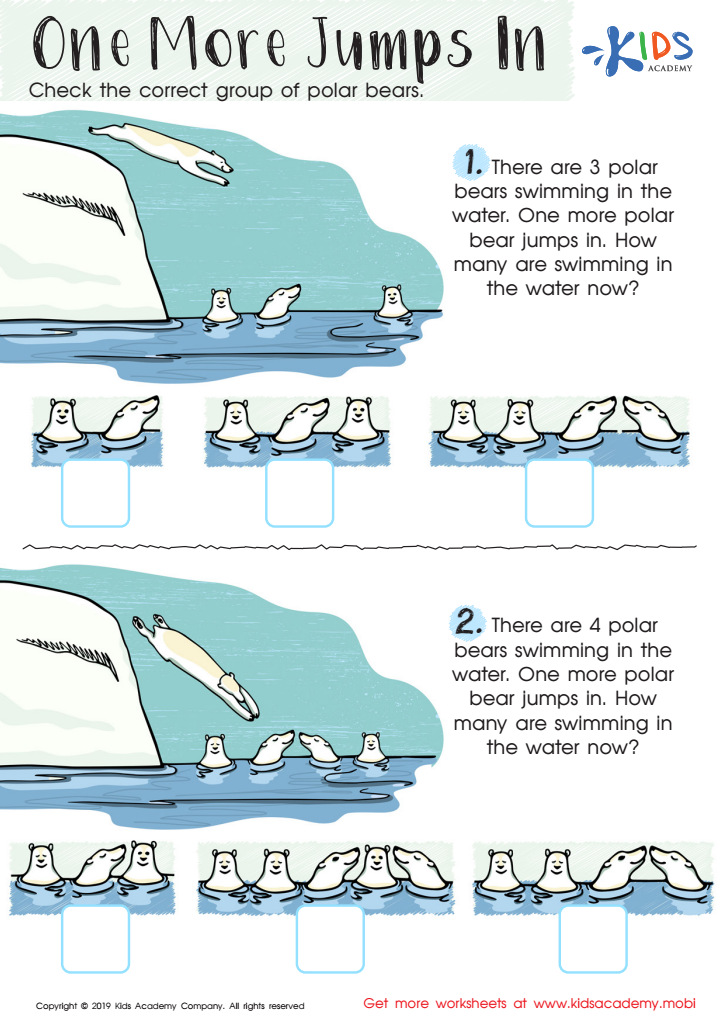
One More Jumps In Worksheet








Parents and teachers should care deeply about addition practice for children aged 4-5 because early math skills form the foundation for future academic success. At this developmental stage, young minds are highly receptive and capable of grasping fundamental concepts that will pave the way for more complex mathematical learning. Practicing addition helps to boost a child's numeracy skills and offers numerous cognitive benefits, such as improved problem-solving abilities, enhanced memory, and better logical thinking.
Introducing children to addition at an early age ensures they develop a positive attitude toward math, which can instill confidence and reduce anxiety around the subject. Moreover, regular practice in a fun and engaging way can make learning feel like play, fostering an enjoyable educational experience. Through activities that incorporate counting, understanding quantities, and basic addition, children begin to appreciate numbers and how they relate to everyday life.
Beyond academic advantages, starting math practice early supports the development of fine motor skills and hand-eye coordination when using objects or writing numbers. Ultimately, building a strong mathematical foundation from an early age prepares children for kindergarten and beyond, facilitating smoother transitions into higher levels of learning. Caring about early math practice signifies investing in a child's holistic growth and future potential.








