Animal identification Math Worksheets for Ages 4-5 - Page 2
31 filtered results
-
From - To
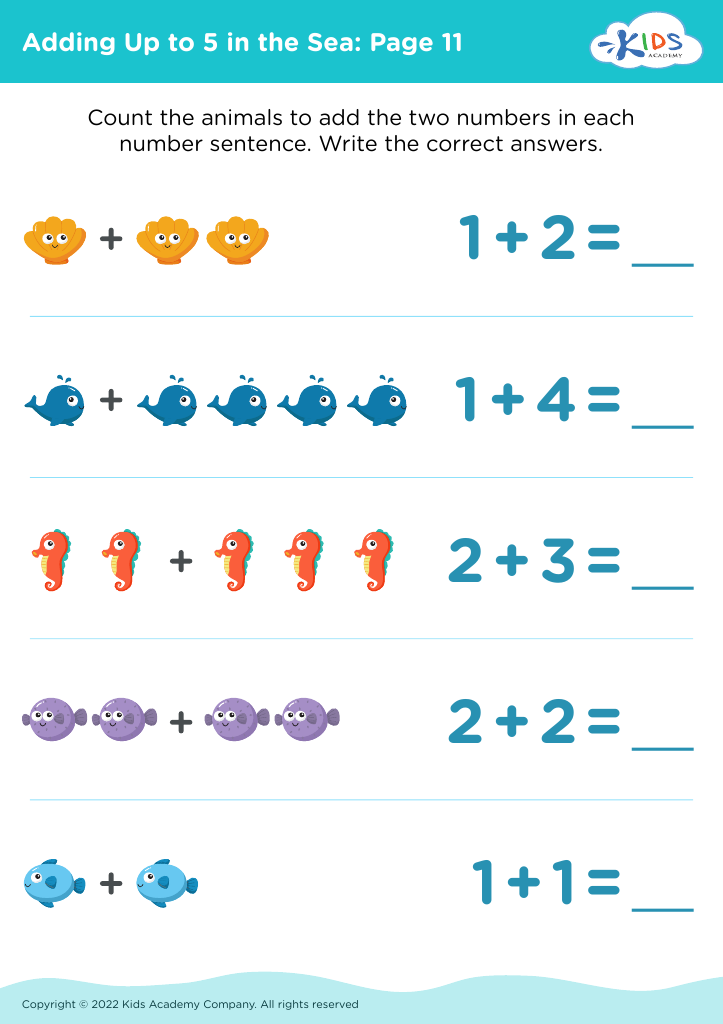
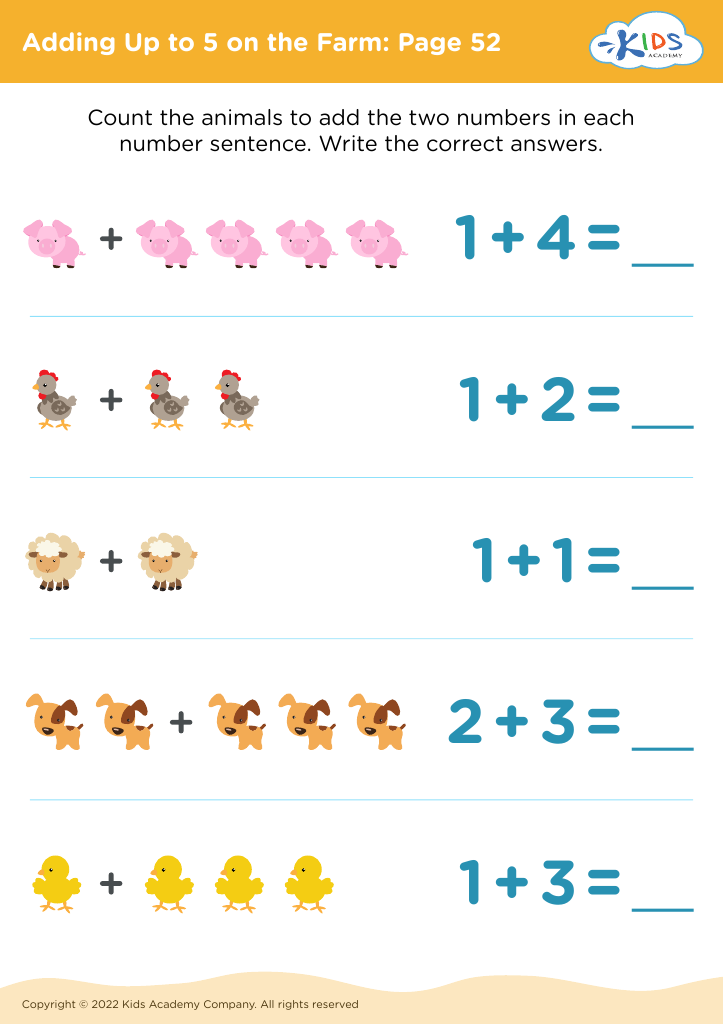
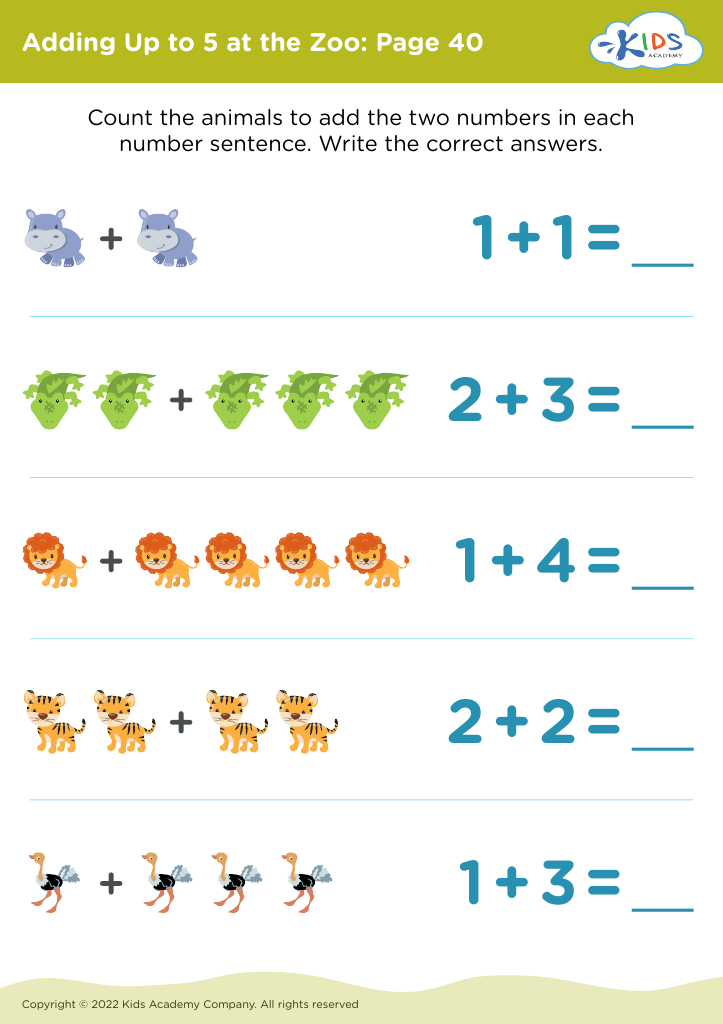
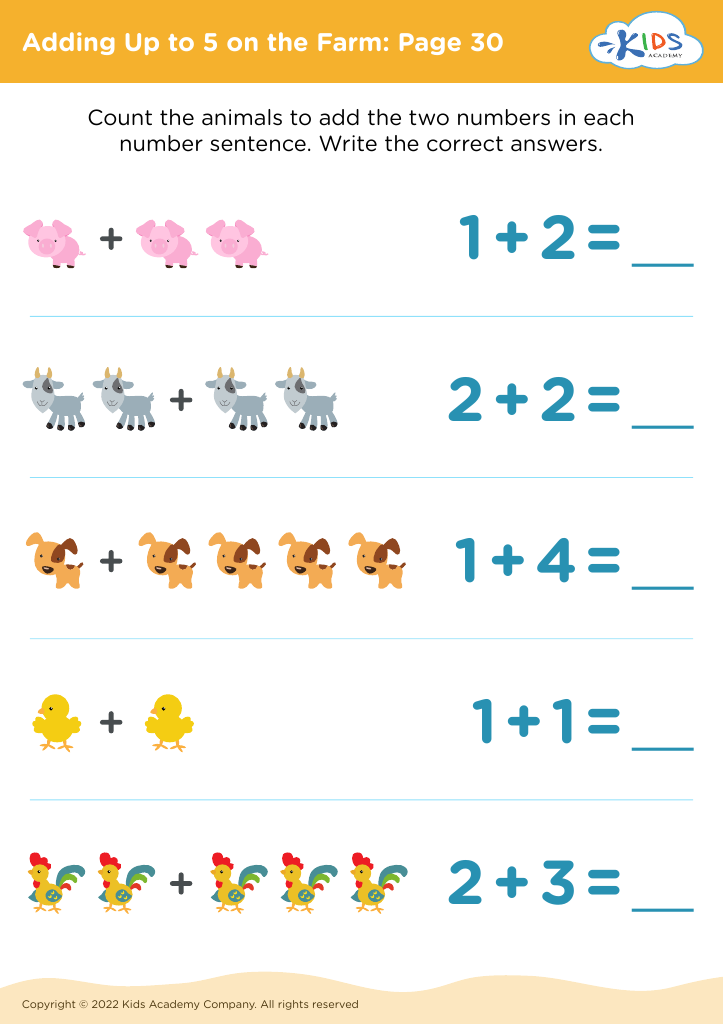
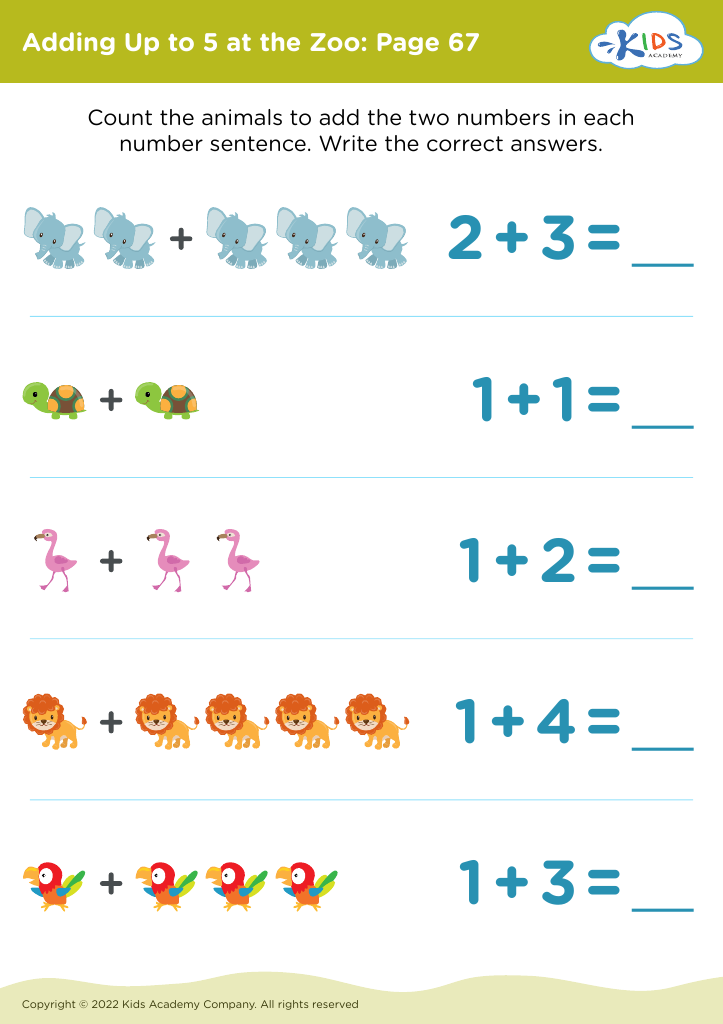
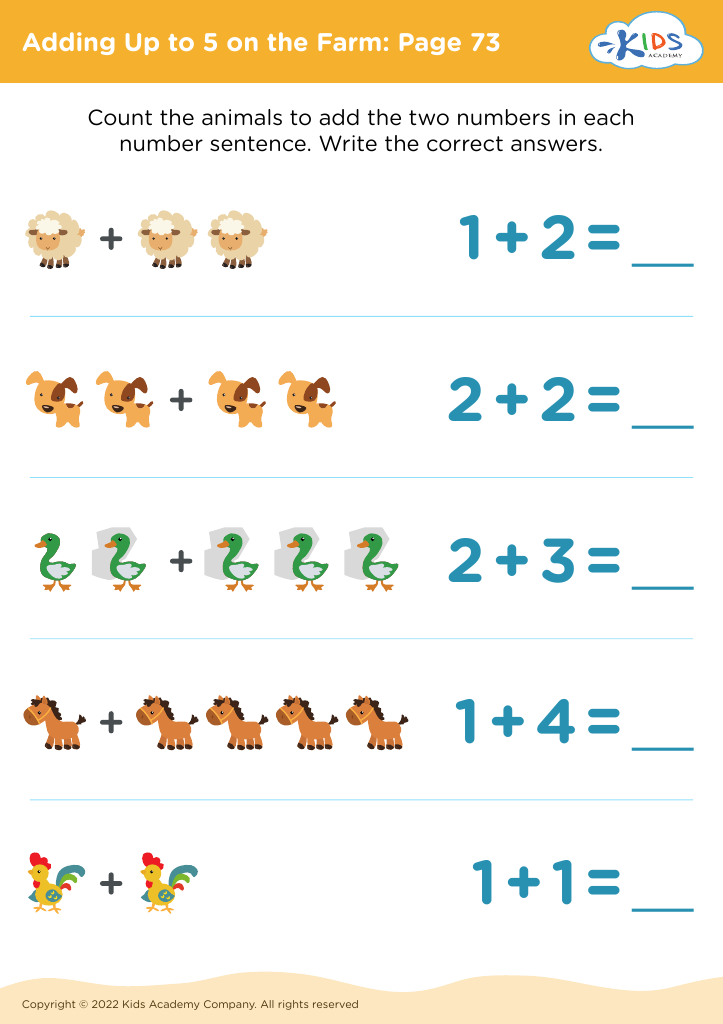
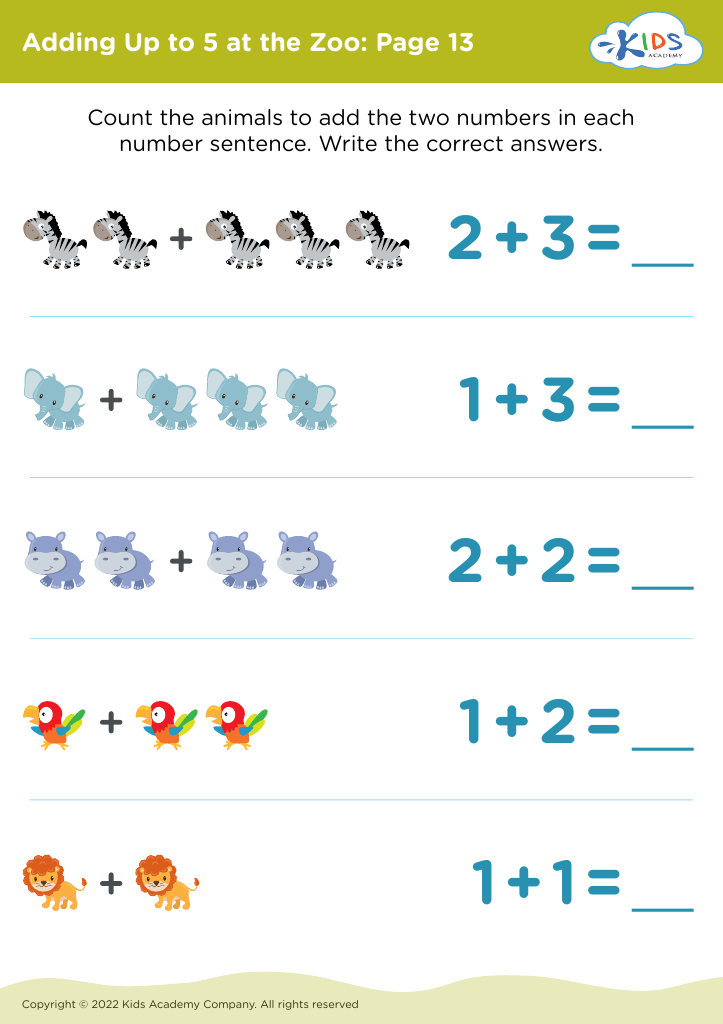







Animal identification math for ages 4-5 is crucial for early childhood development as it combines foundational math skills with engaging content about animals. This learning approach not only helps children recognize and categorize different animals but also fosters critical thinking, problem-solving, and observational skills. When parents and teachers create opportunities for young learners to engage in activities involving animal identification and classification, they can facilitate understanding of basic math concepts, such as counting, sorting, and comparing sizes.
Engaging with animals inspires curiosity, allowing children to explore their world in a fun and interactive manner. It also aids in developing language skills, as children learn to articulate their thoughts about different species and environments. Moreover, incorporating animal identification into math lessons enhances social skills, as children often collaborate in groups, sharing knowledge and making discoveries together.
By caring about animal identification math, parents and teachers nurture holistic growth, increasing children's awareness of biodiversity and fostering a sense of responsibility for nature. Such educational experiences lay the groundwork for lifelong learning and appreciation of math while helping children connect with the world around them, enriching their academic and emotional development in the early stages of life.








