Animal recognition Math Worksheets for Ages 4-5
108 filtered results
-
From - To
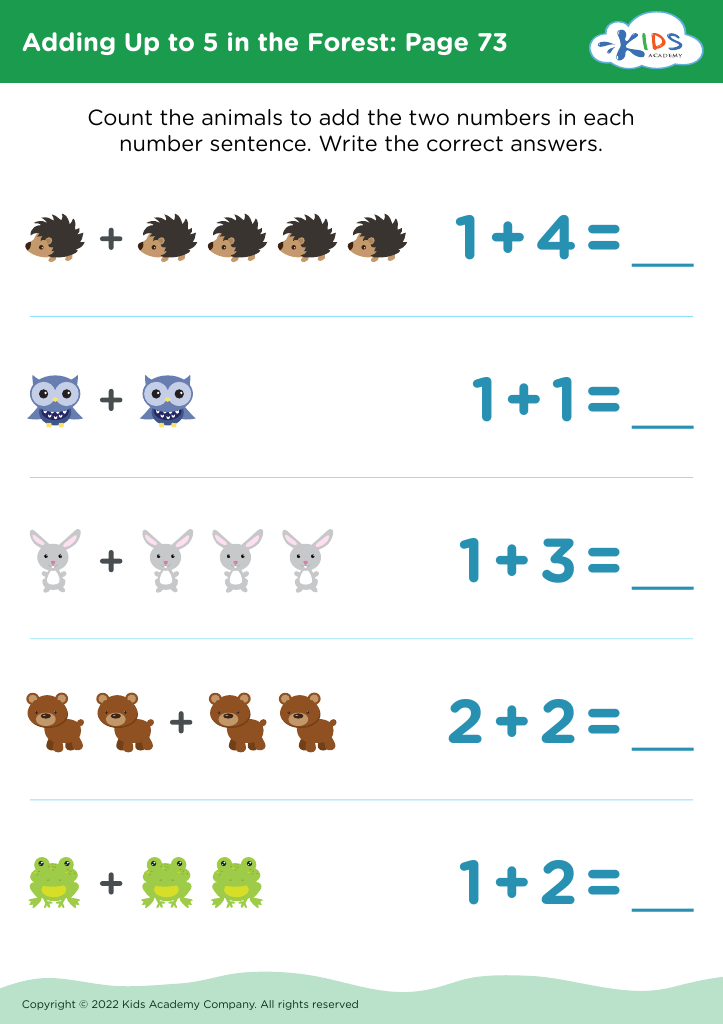
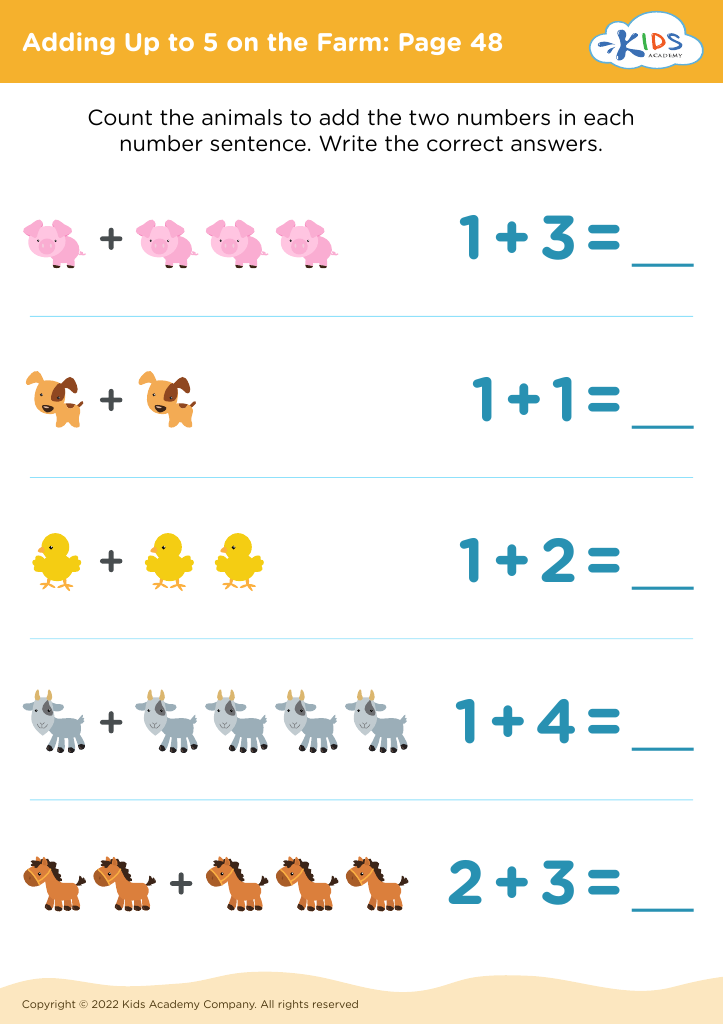
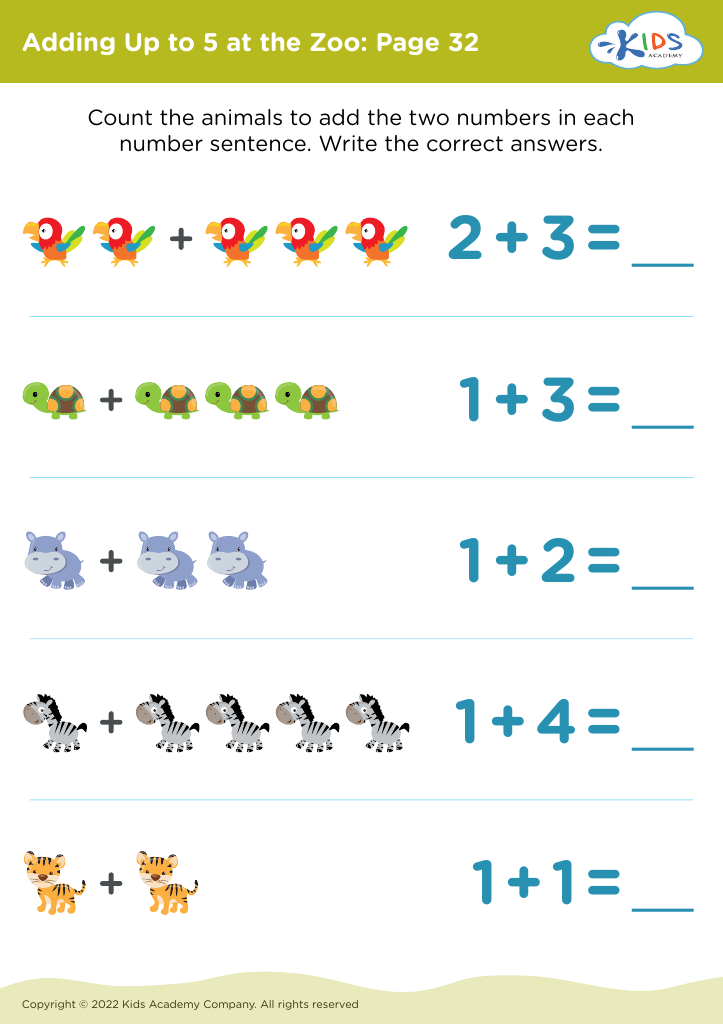
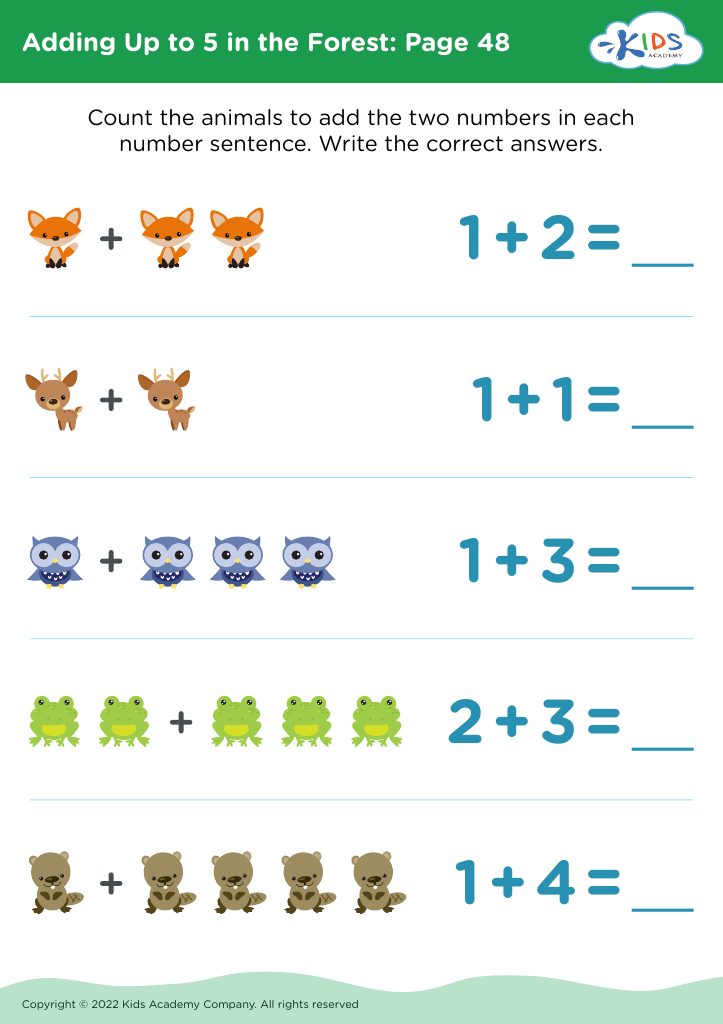
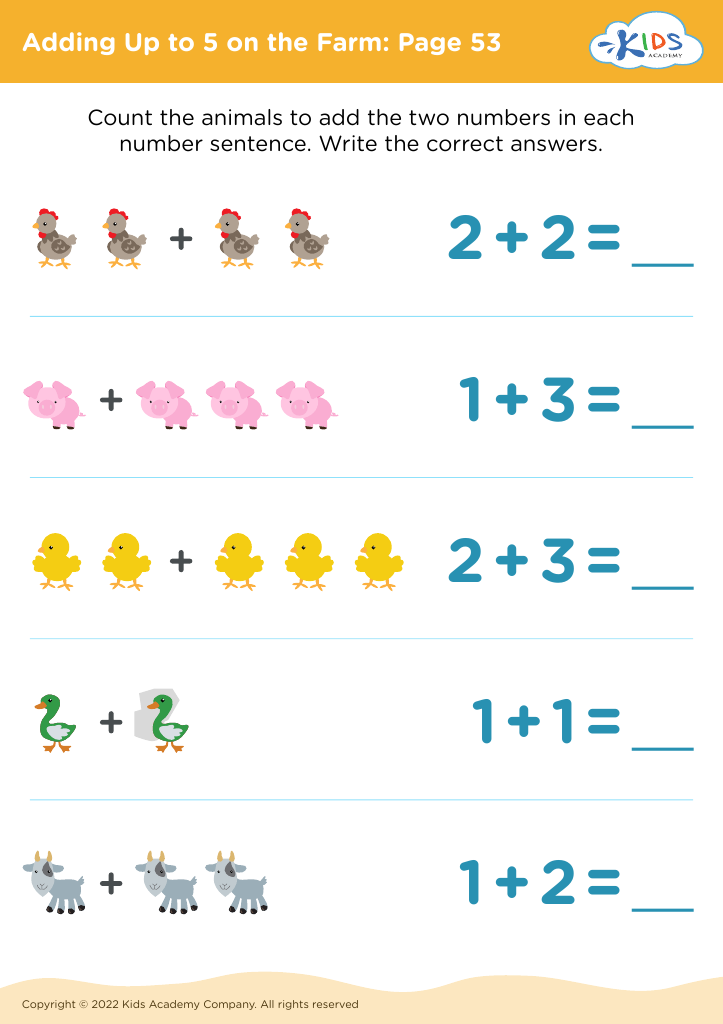
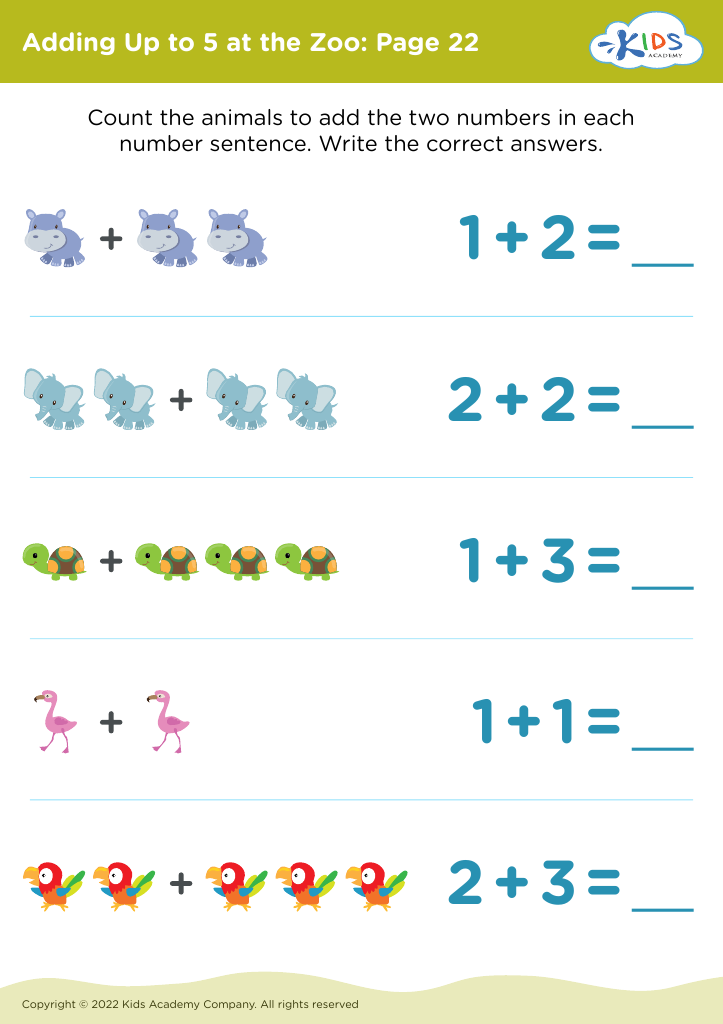
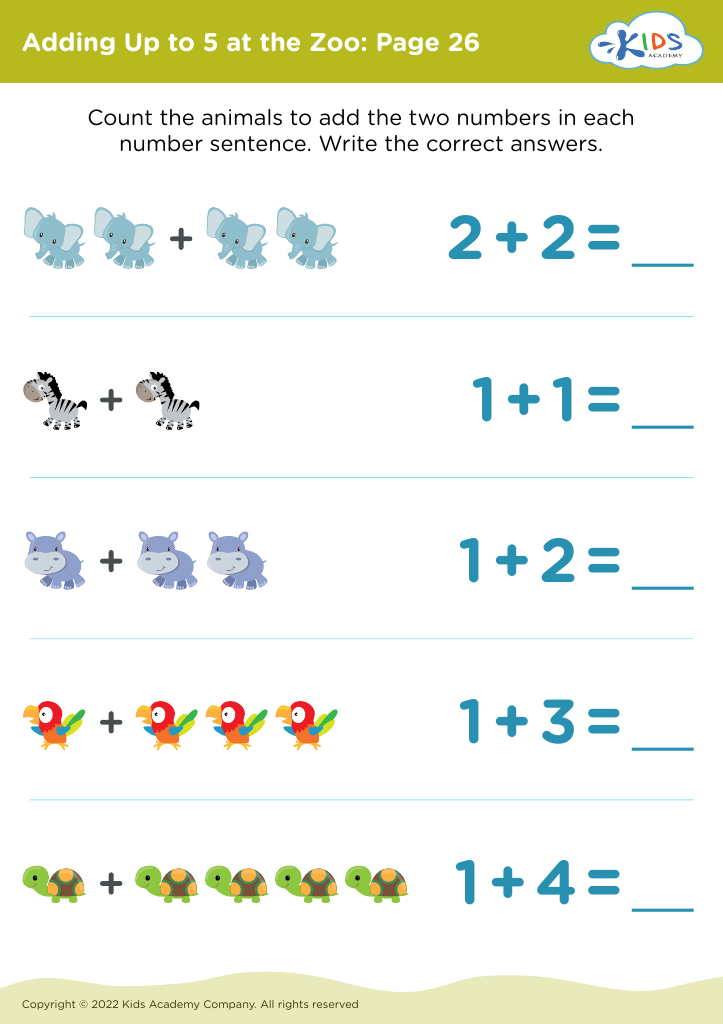
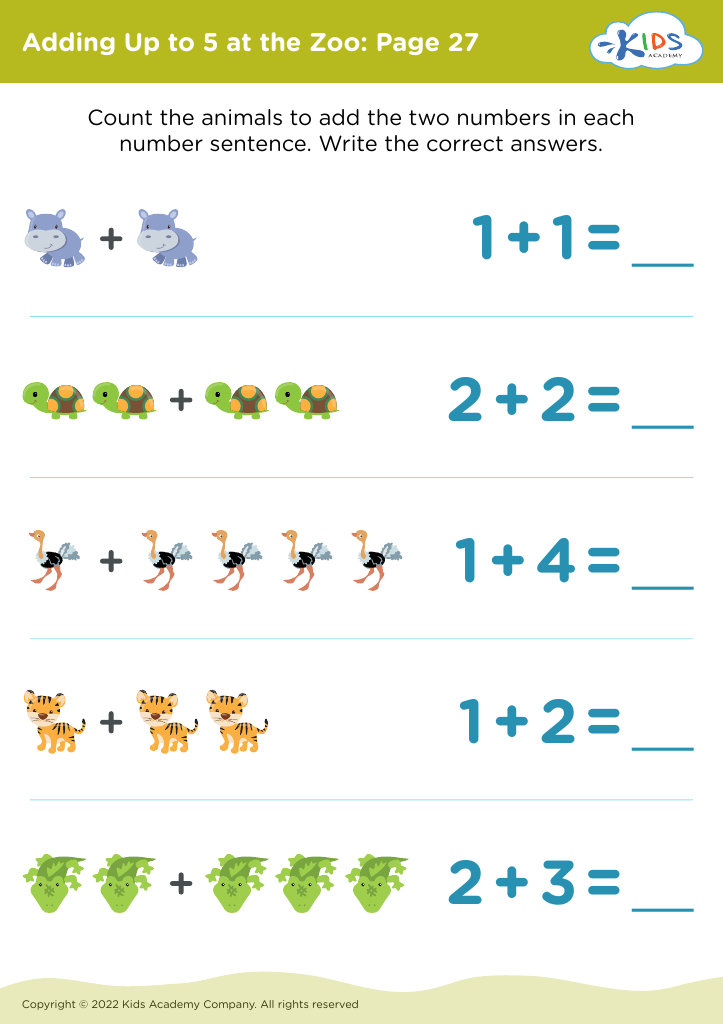
Discover our engaging Animal Recognition Math Worksheets designed specifically for ages 4-5! These fun and interactive worksheets help young learners develop essential math skills while exploring the animal kingdom. Children will practice counting, comparing sizes, and identifying different animals through vibrant illustrations and simple math problems. Our resources promote critical thinking and are aligned with early learning standards, ensuring that your little ones are perfectly prepared for future academic success. Whether in the classroom or at home, these worksheets make math enjoyable and accessible. Download and watch your child's confidence soar as they conquer math with their favorite animals!
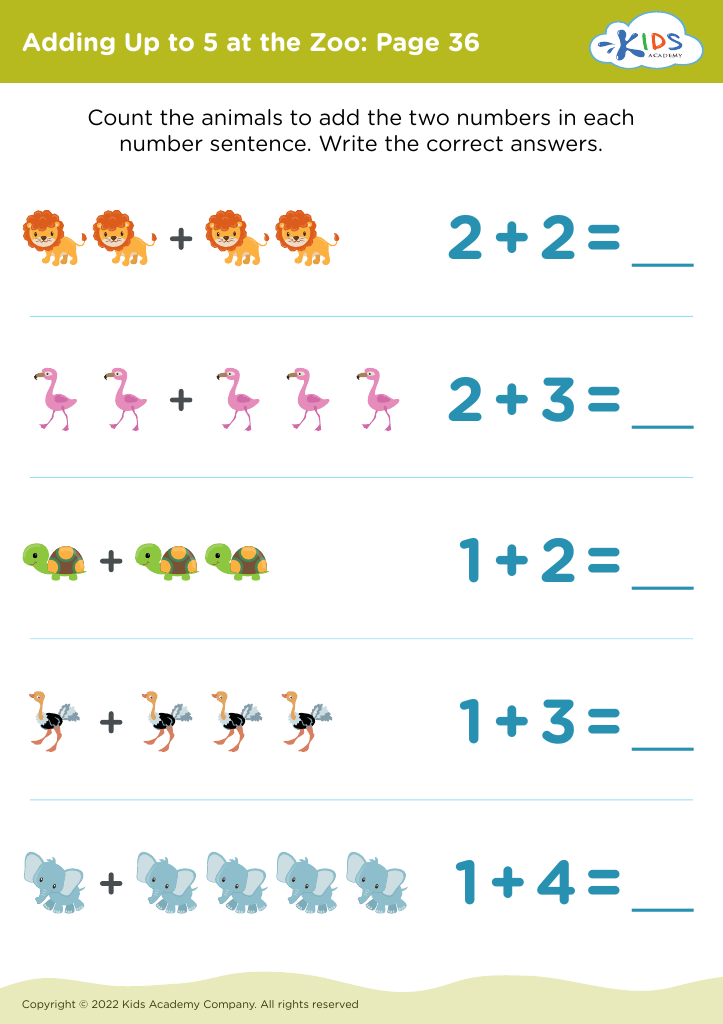
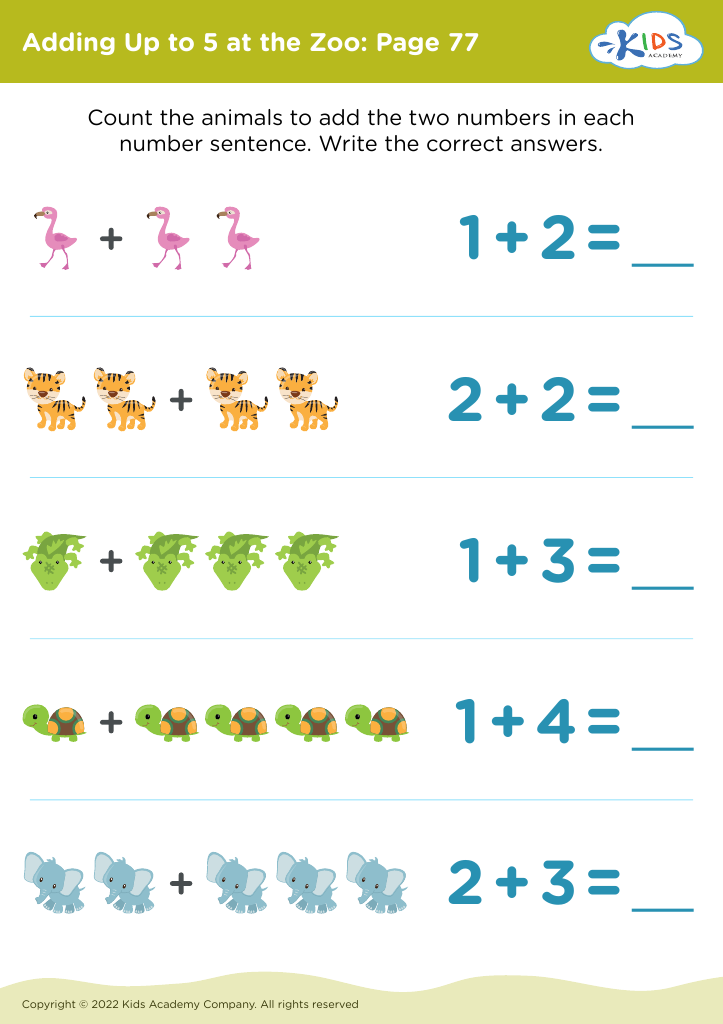
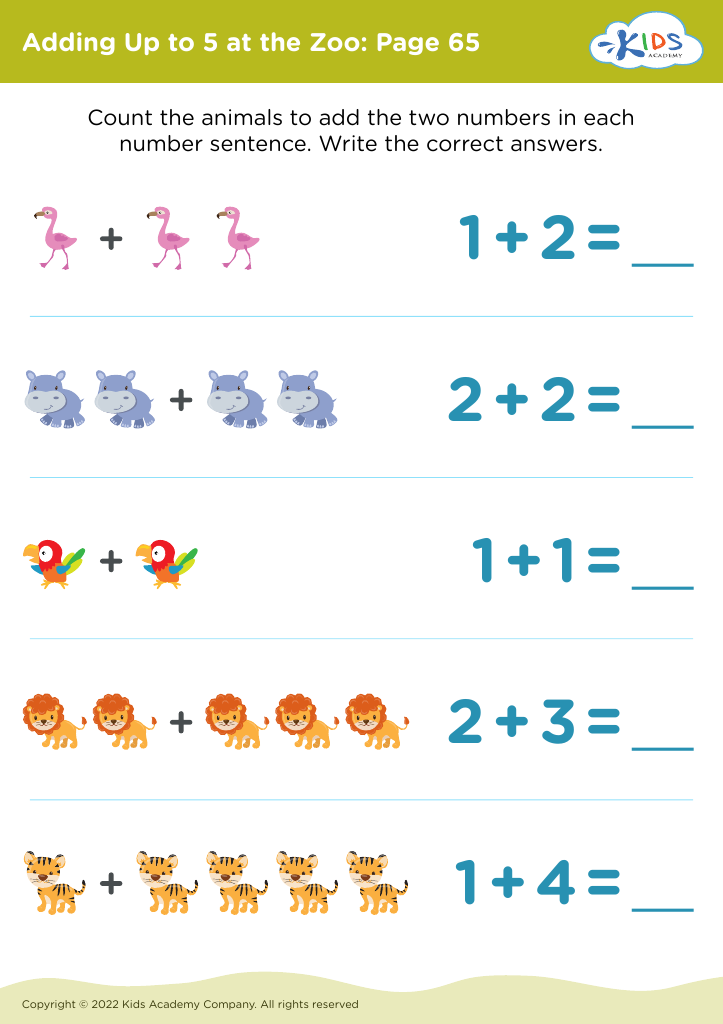
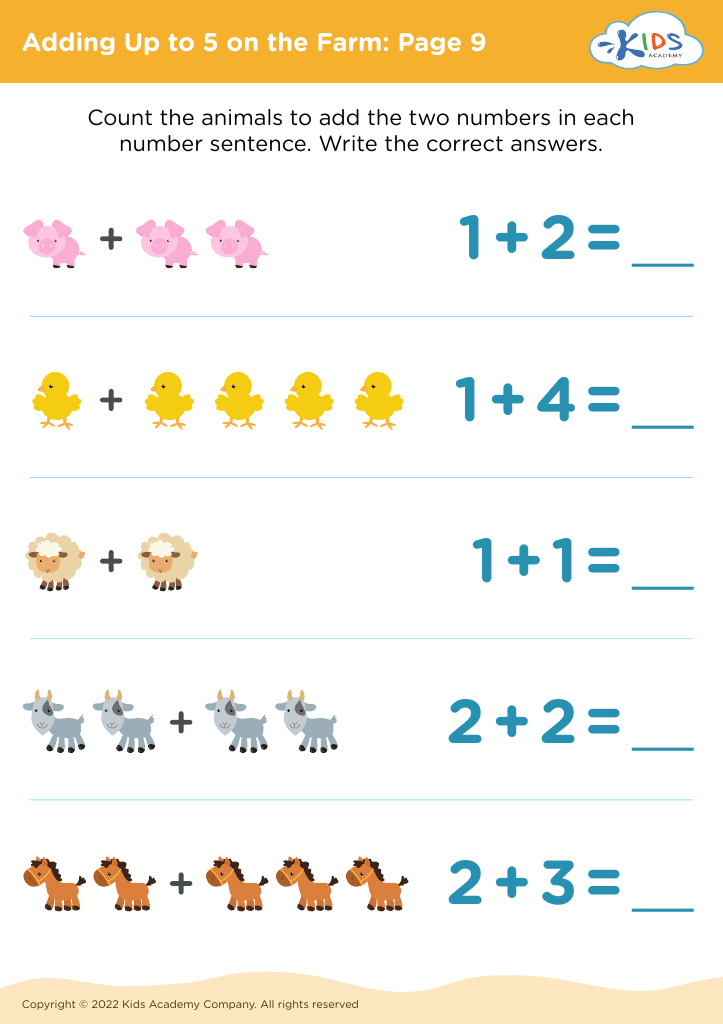
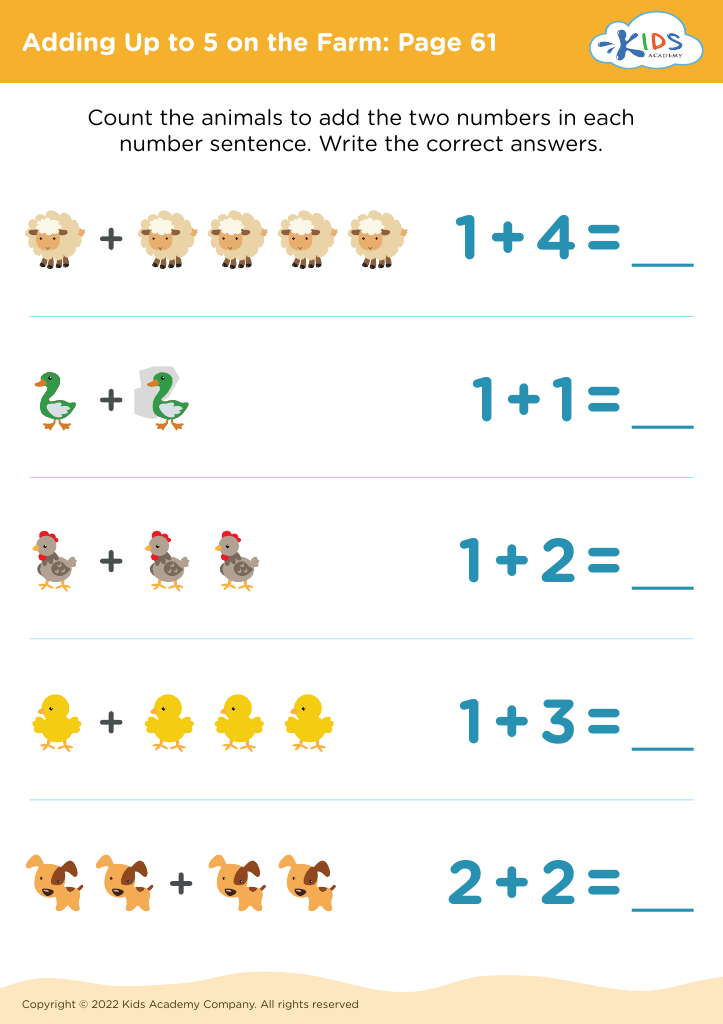
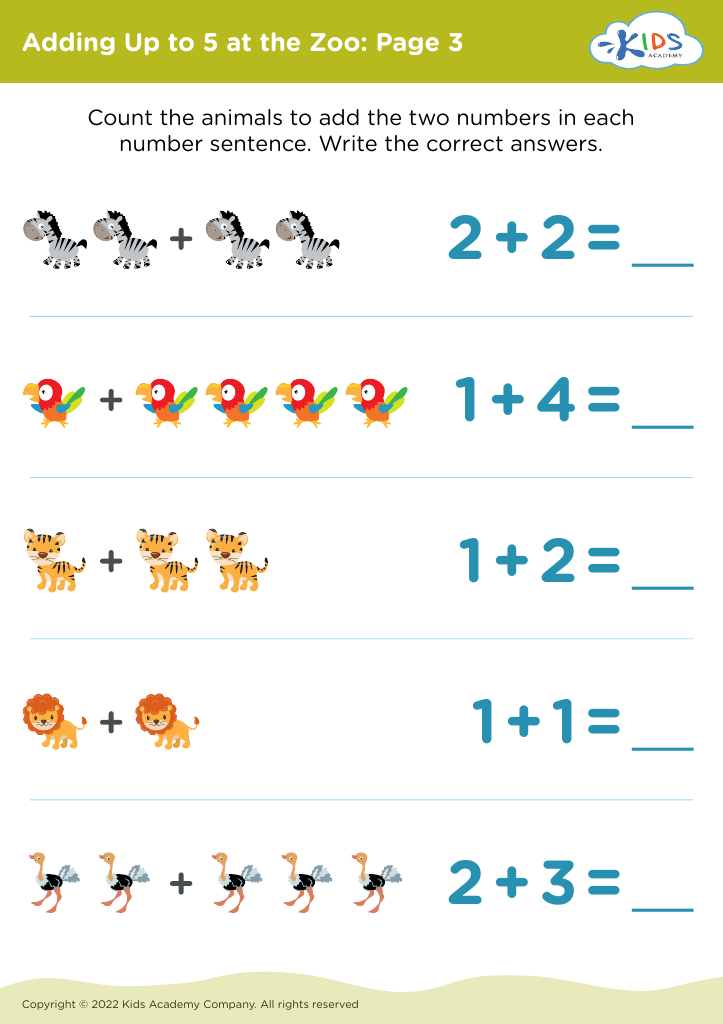
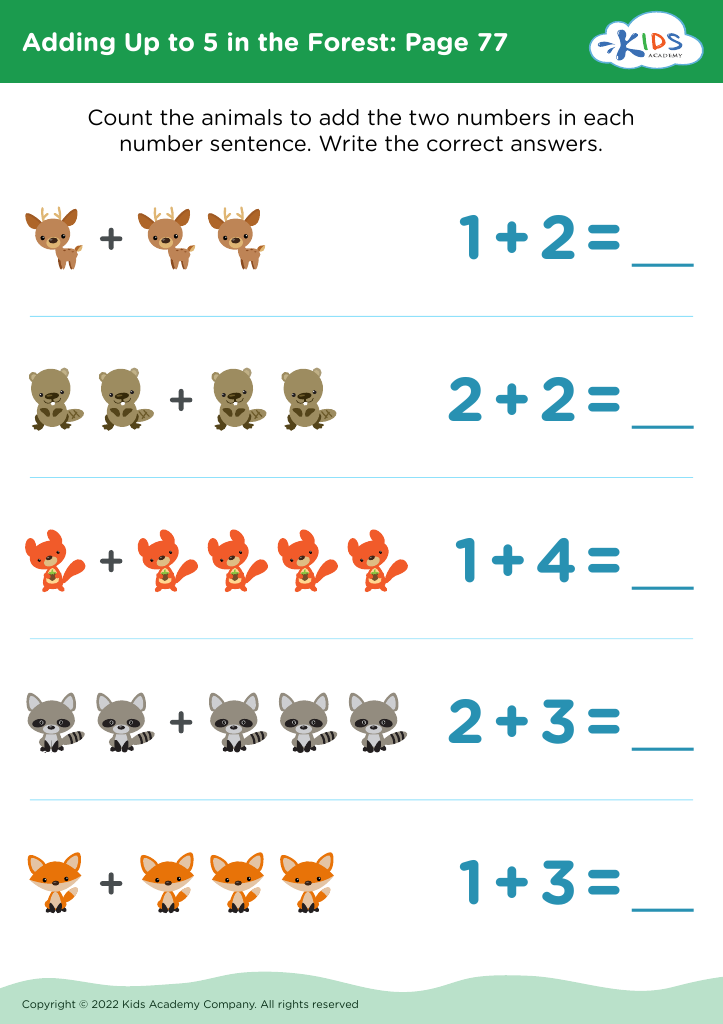
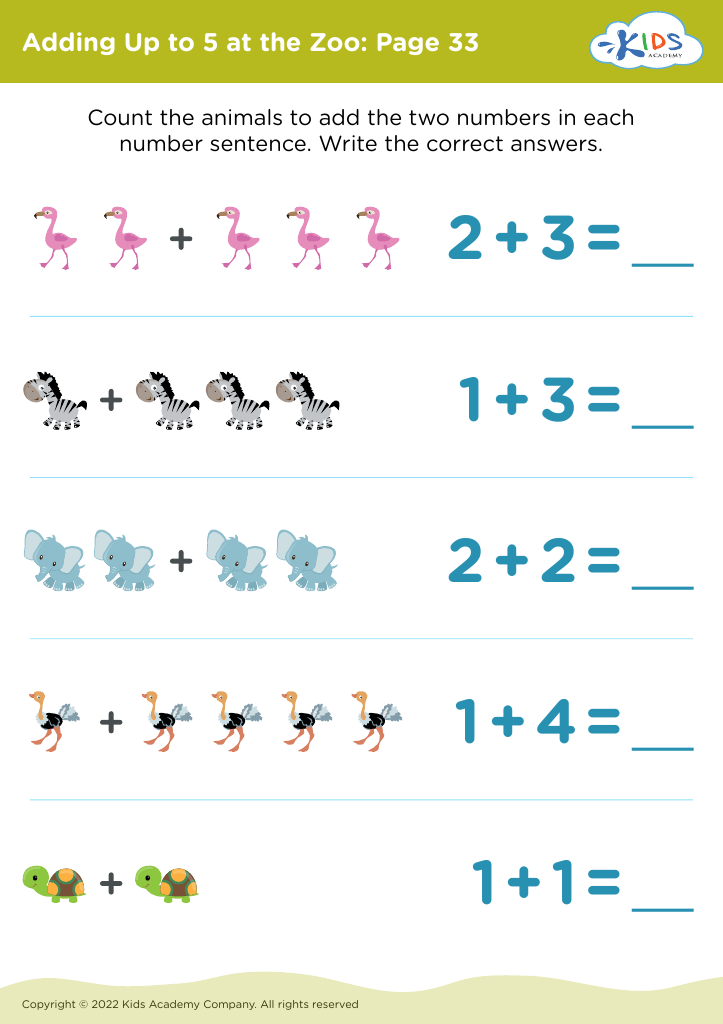
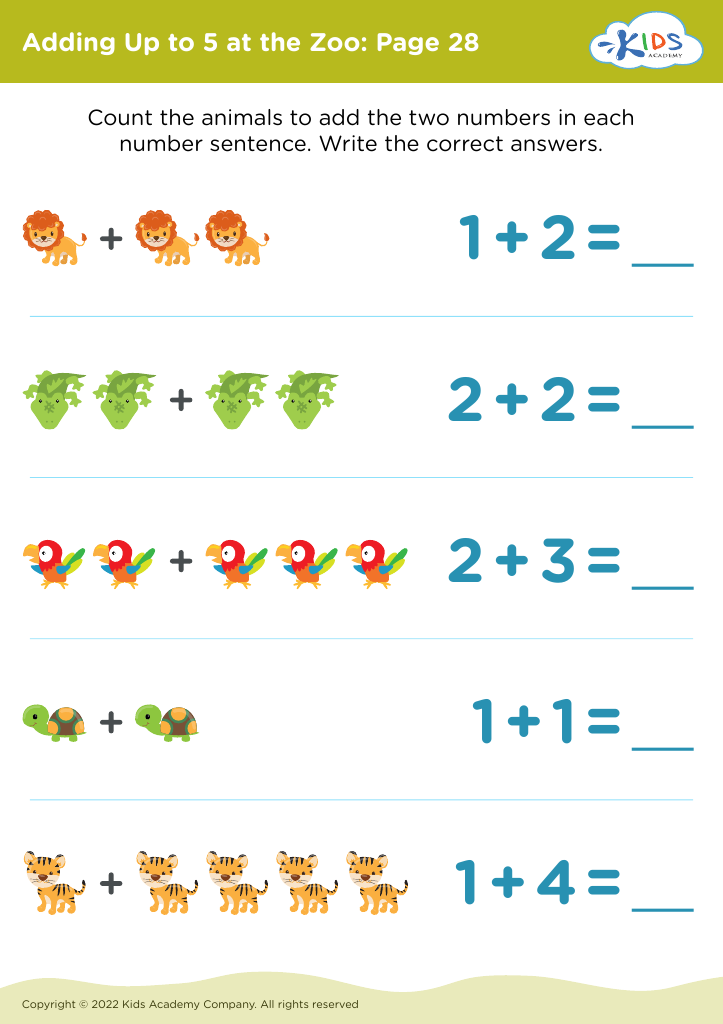
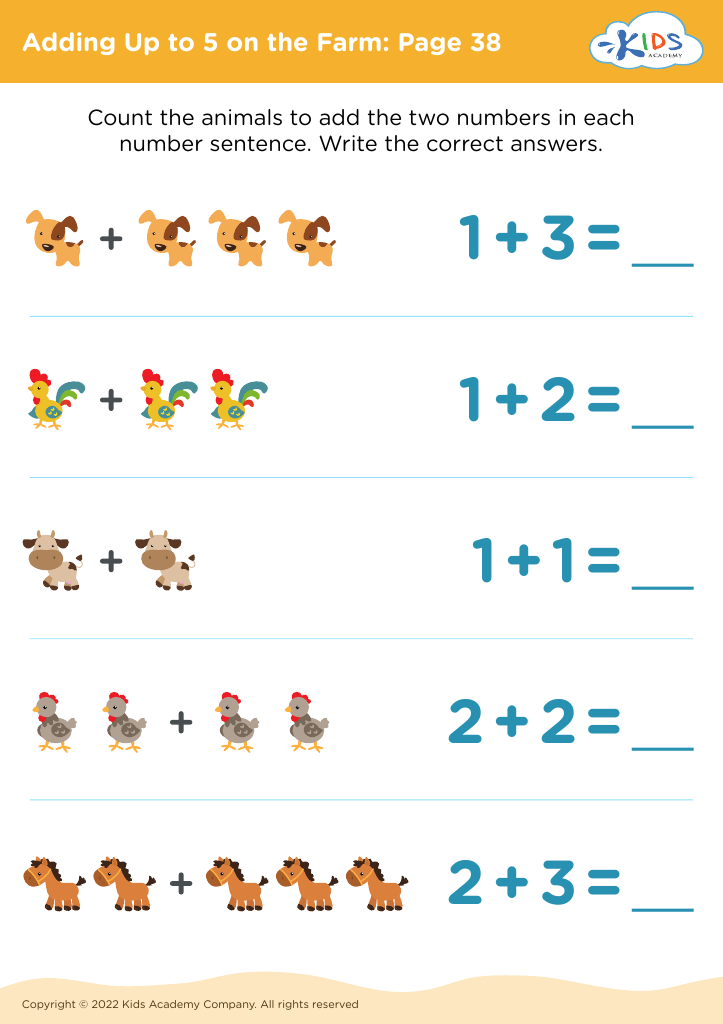
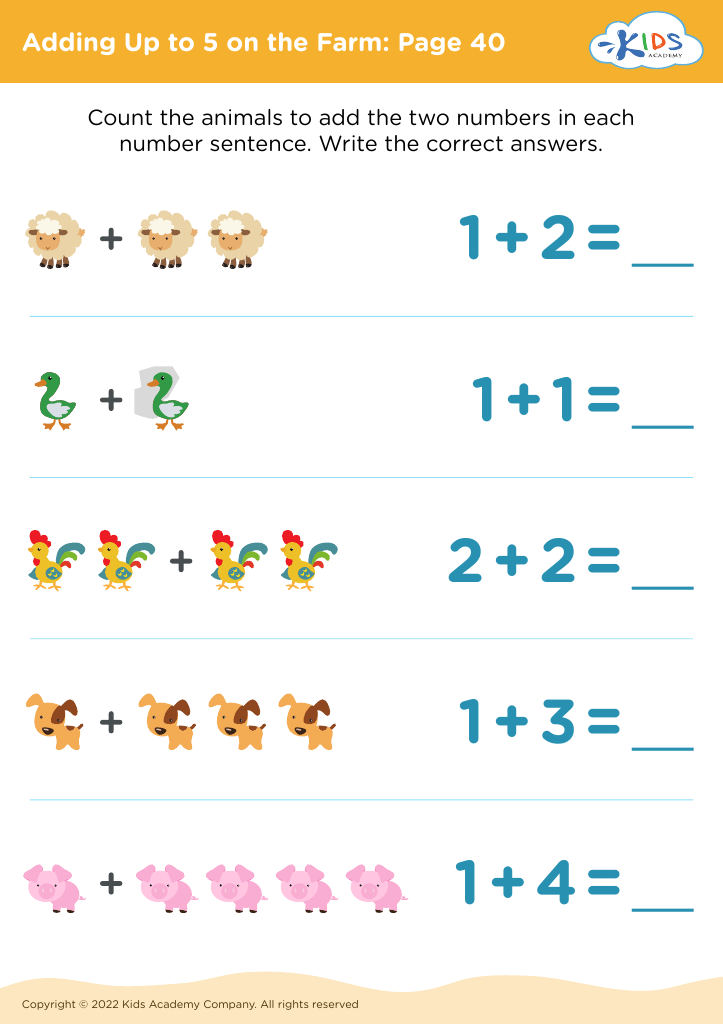
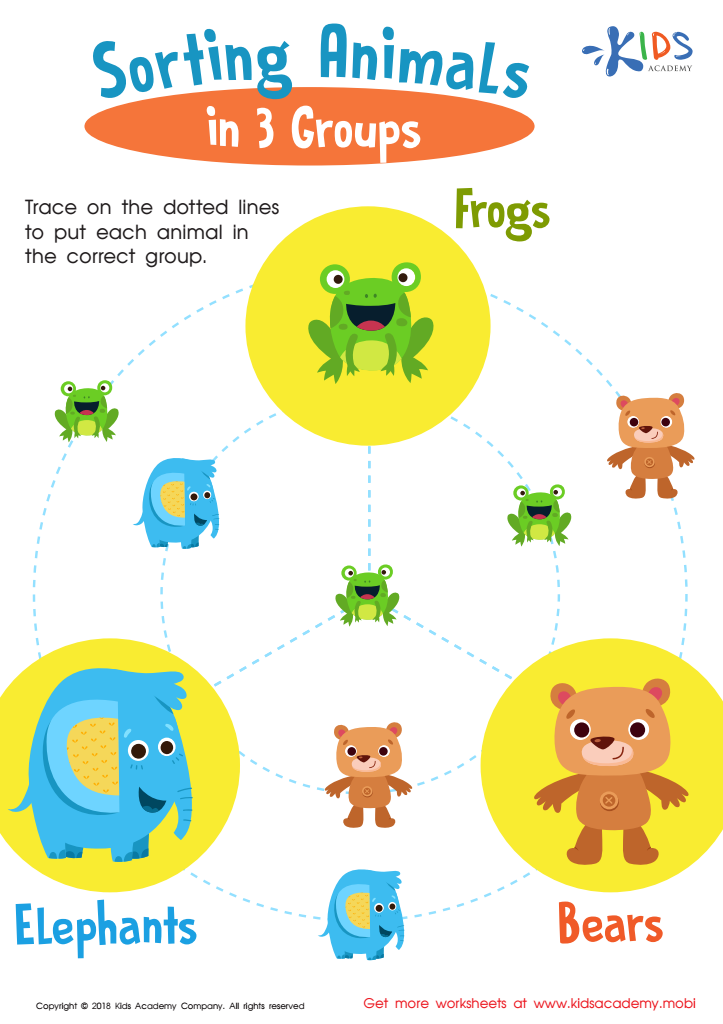
Sorting Animals in 3 Groups Worksheet
 Assign to My Students
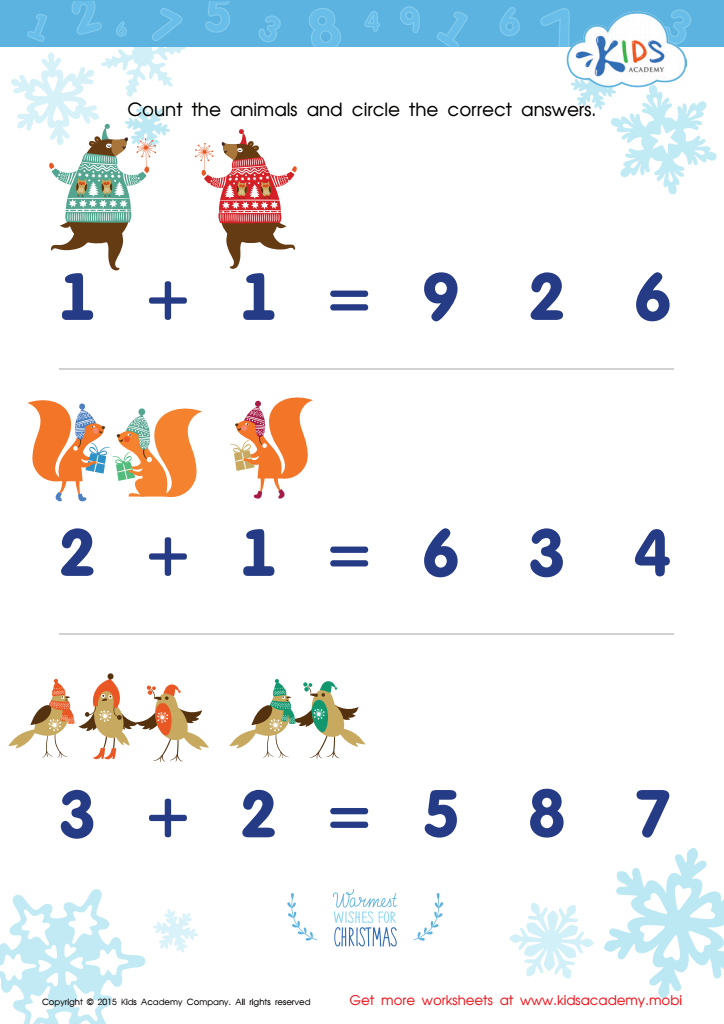
Count Funny Animals Worksheet
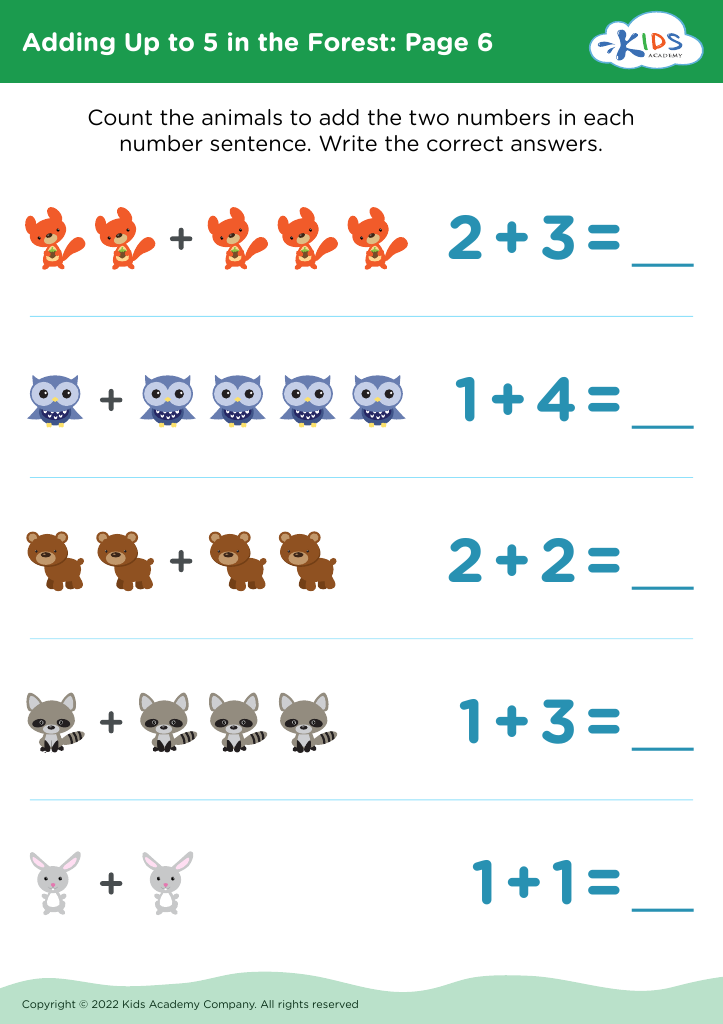
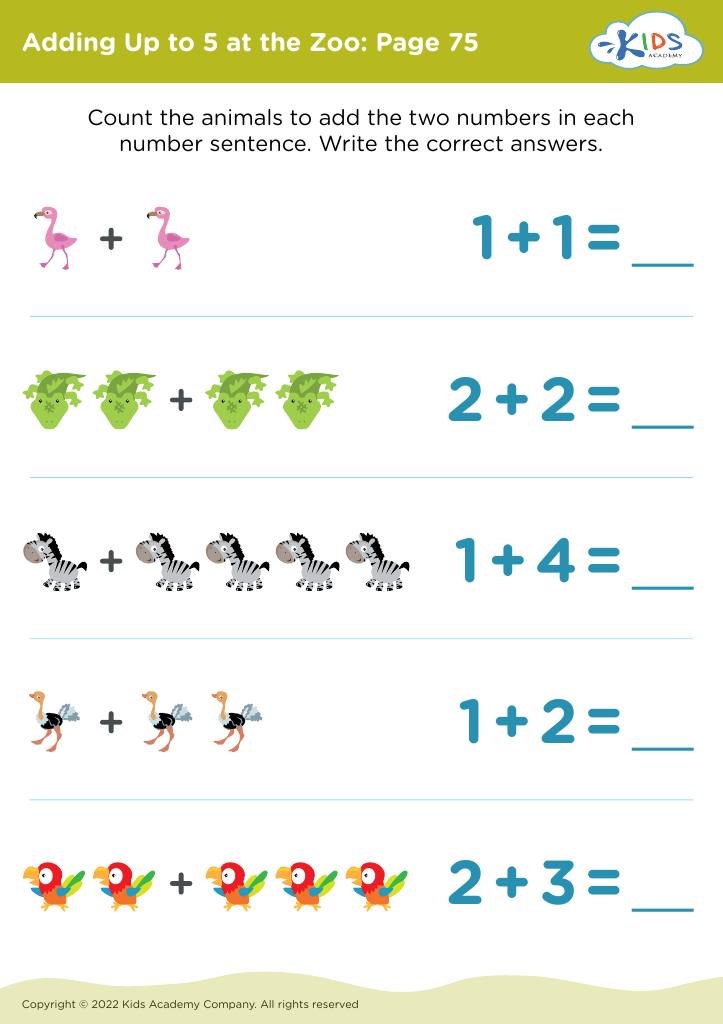
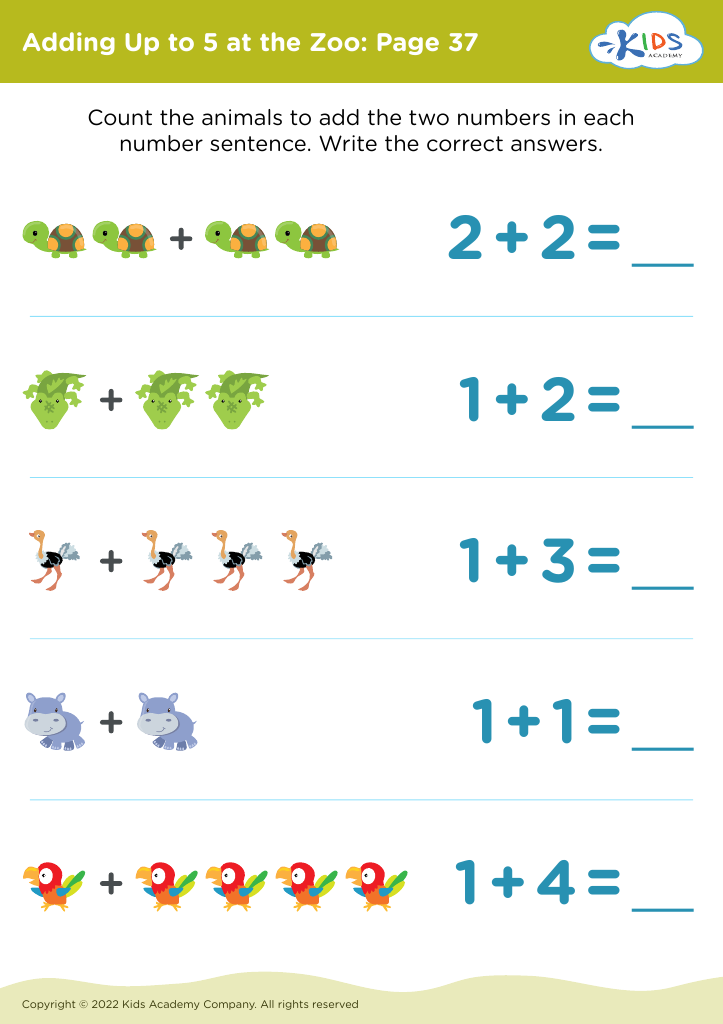


.jpg)


Animal recognition math for ages 4-5 combines early mathematical concepts with familiar and engaging themes, making learning both fun and effective. At this stage, children are naturally curious and eager to explore the world around them, including animals. Integrating animal recognition into math promotes cognitive development through recognition, counting, sorting, and grouping activities.
Parents and teachers should care about this approach because it fosters essential skills in a holistic manner. Children can learn to identify various animals while enhancing their numerical understanding, such as counting the number of legs on different animals or sorting them by size or habitat. This interactive learning connects mathematical ideas to real-world contexts, making abstract concepts more tangible.
Moreover, utilizing themes like animal recognition can inspire a love for both math and science, promoting curiosity and exploration. Engaging students with vibrant images and stimulating activities caters to different learning styles and keeps them motivated. Finally, it also encourages the development of social skills as children collaborate on projects or share their findings, thus nurturing teamwork and communication abilities. For all these reasons, animal recognition math should be a key component of early education practices.








