Basic math abilities Math Worksheets for Ages 4-5
3 filtered results
-
From - To
Discover our engaging Basic Math Abilities Worksheets designed for children aged 4-5, perfect for nurturing early math skills! Our printable activities help young learners grasp essential concepts such as counting, addition, and subtraction through fun, interactive exercises. Each worksheet is carefully crafted to promote critical thinking and problem-solving abilities while building a solid foundation in mathematics. Whether at home or in the classroom, these worksheets offer a variety of challenges that cater to different learning styles. Equip your child with the confidence they need to excel in math from an early age! Explore our collection today and watch your little mathematician thrive.
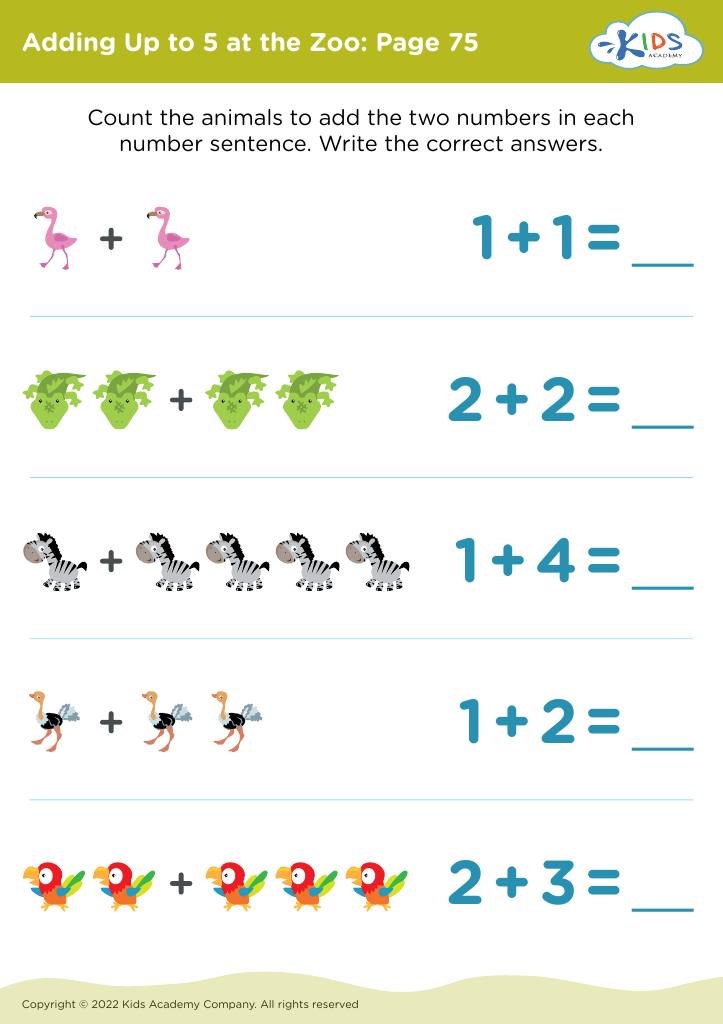
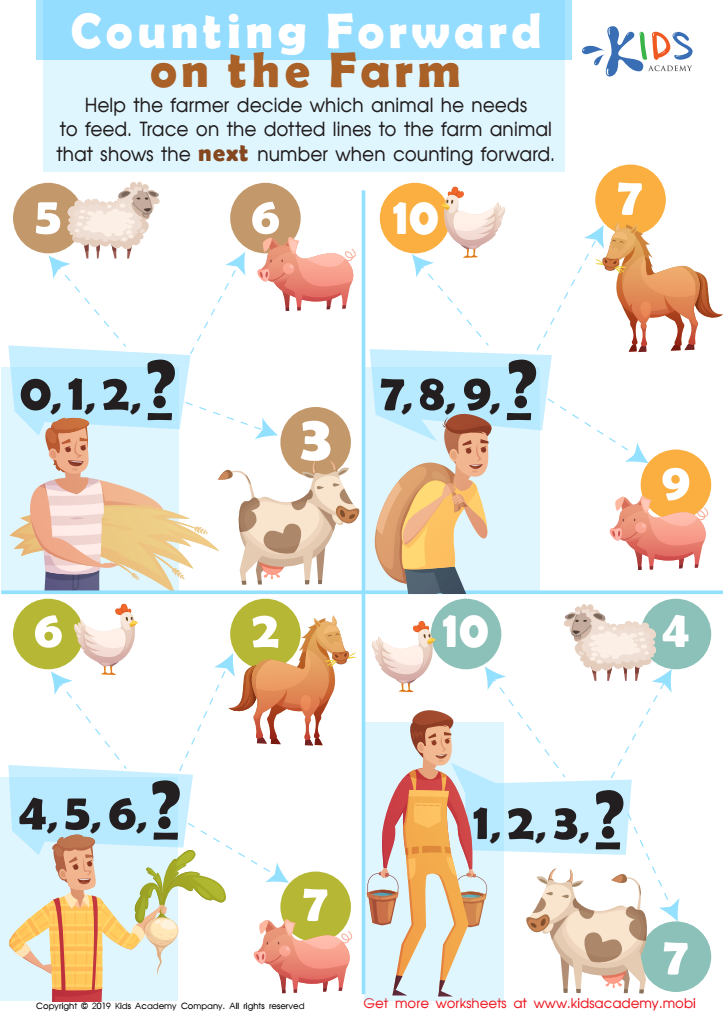
Counting Forward On the Farm Worksheet
 Assign to My Students
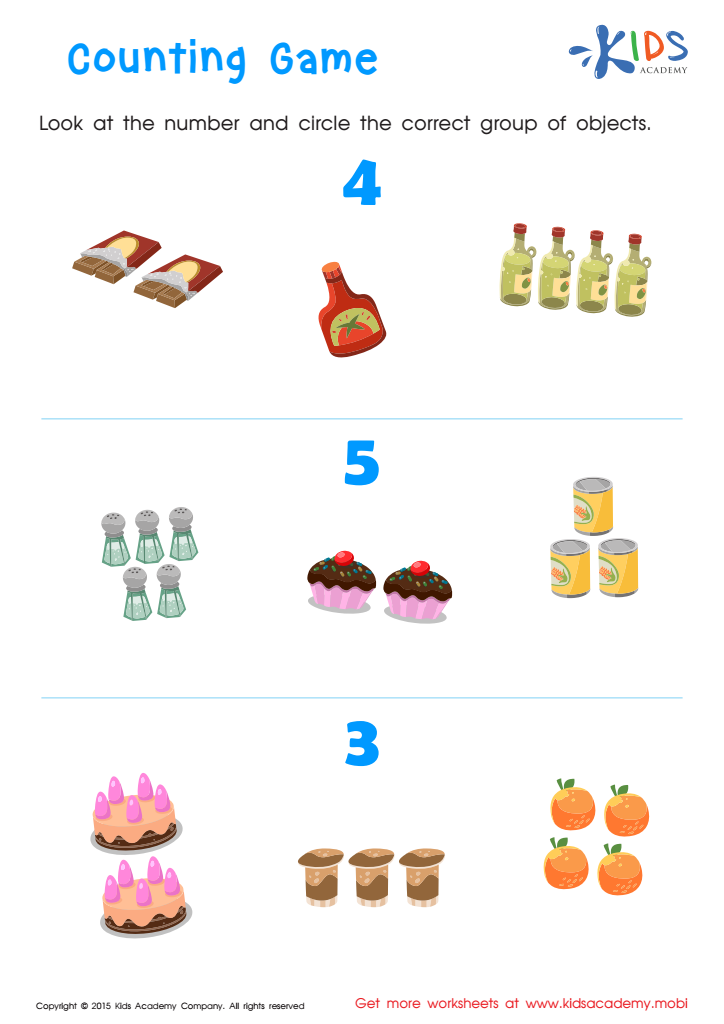
Counting Worksheet








Basic math abilities are crucial for preschool-aged children (ages 4-5) as they lay the foundation for future learning and cognitive development. At this age, children begin to understand fundamental concepts like counting, number recognition, basic addition and subtraction, and patterns. Engaging in these activities enhances their problem-solving skills and logical reasoning, essential in everyday life.
When parents and teachers prioritize early math skills, they promote a positive attitude towards learning and math, which can lead to greater achievement in later grades. Early exposure encourages curiosity and excitement about numbers, fostering a lifelong appreciation for mathematics. Quality early math experiences can also enhance language development, as children use mathematical terms and discuss their thought processes.
Moreover, children who grasp basic math concepts tend to develop better critical thinking and analytical skills, empowering them to navigate academic challenges as they progress through school. This foundation also supports them in other subjects, such as science and literacy, where logic and pattern recognition are vital. By investing time in developing basic math abilities, parents and teachers contribute significantly to a child's overall growth, ensuring they are equipped for future academic and life successes.








