Understanding opposites Math Worksheets for Ages 4-5
4 filtered results
-
From - To
Introduce young learners to the exciting world of opposites with our "Understanding Opposites Math Worksheets for Ages 4-5". These engaging worksheets are thoughtfully designed to help preschoolers and kindergarteners grasp the concept of opposites, enhancing their critical thinking and problem-solving skills. Each activity presents easy-to-follow exercises that clearly illustrate different pairs of opposites, ensuring a fun and educational experience. Perfect for both classroom and home use, these worksheets provide a strong foundation in early math learning while boosting cognitive development and visual learning. Start exploring the wonders of opposites with your child today!
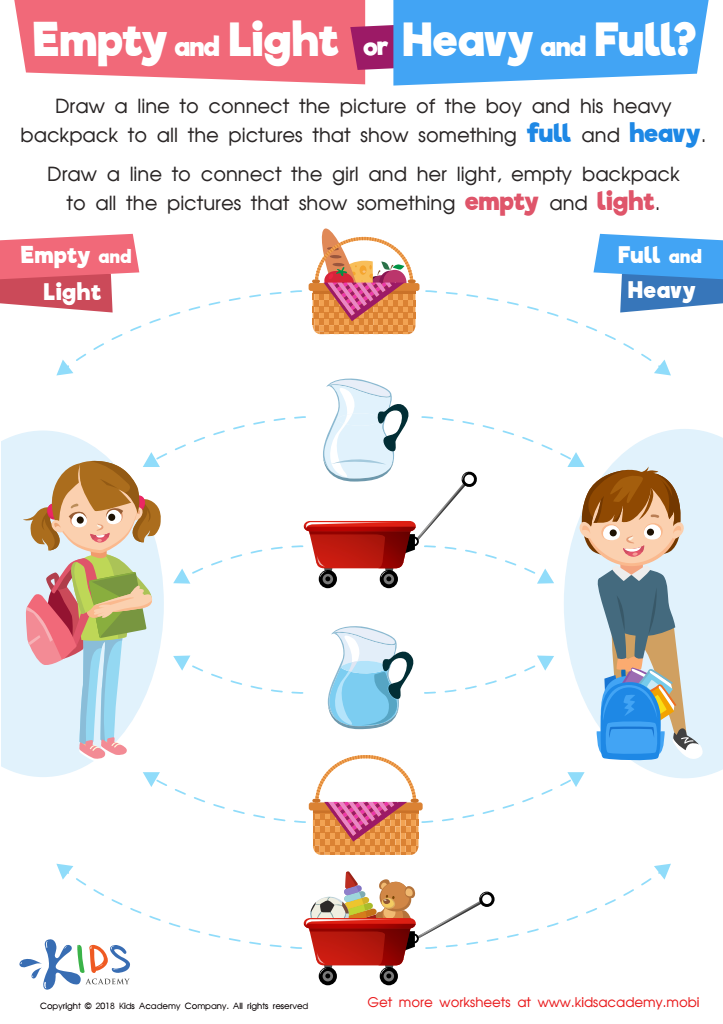
Empty and Light or Heavy and Full? Worksheet
 Assign to My Students
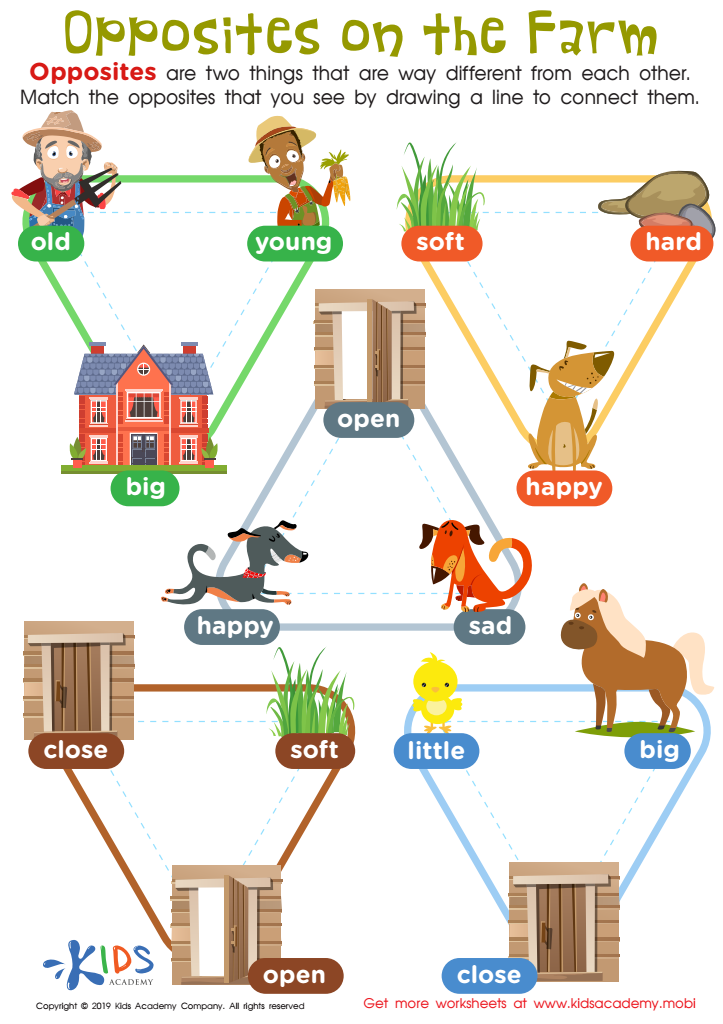
Opposites on the Farm Worksheet
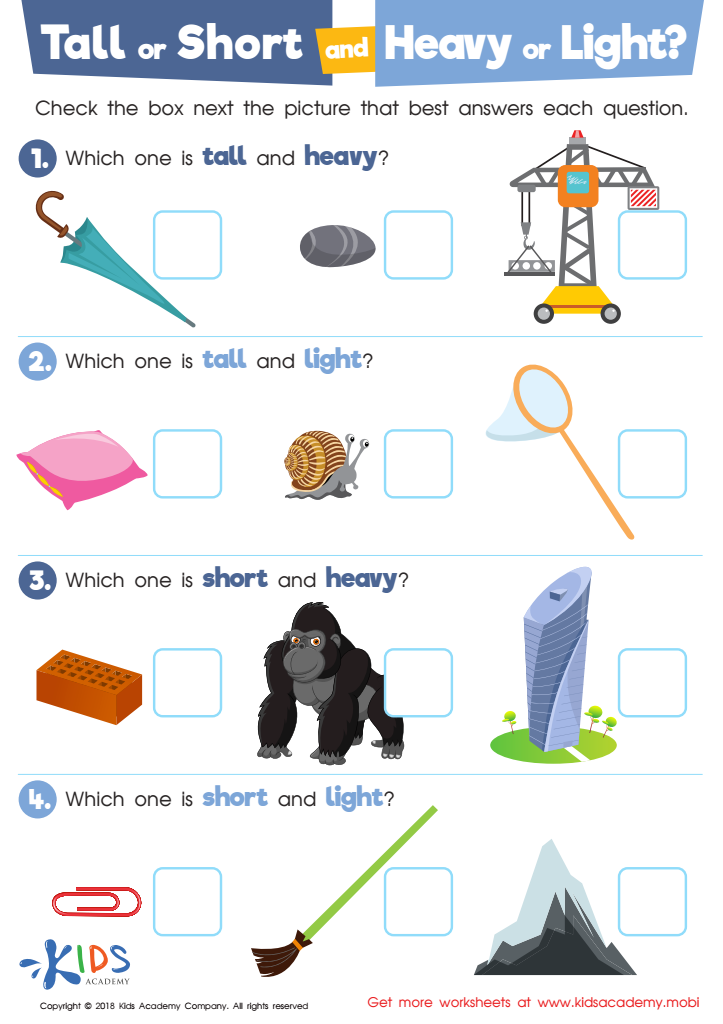
Tall or Short and Heavy or Light? Worksheet
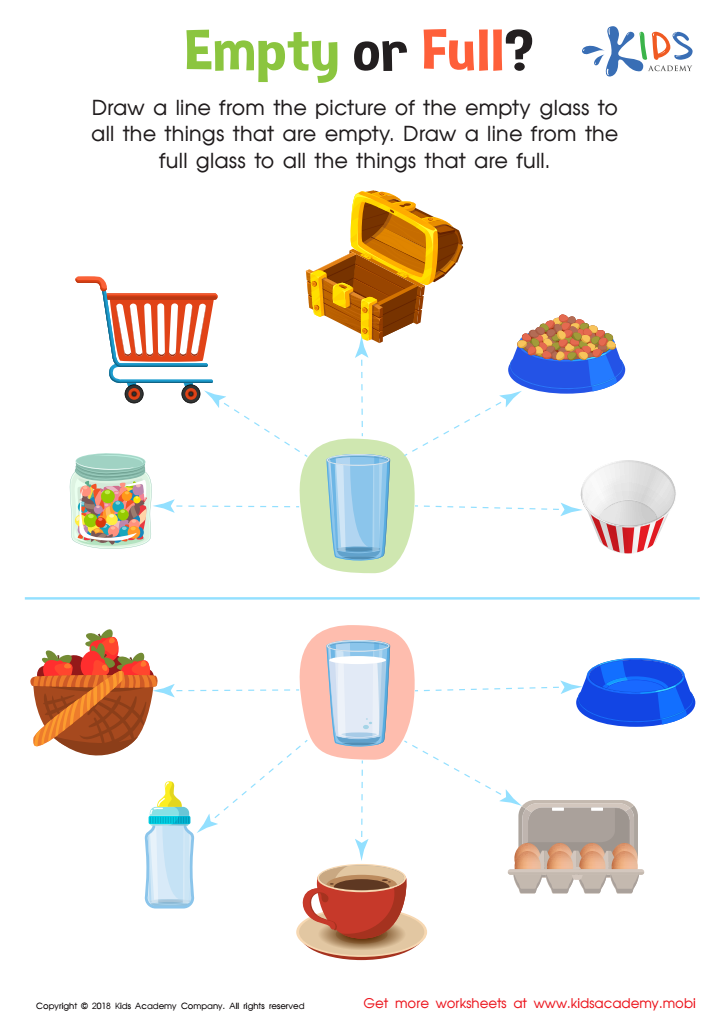
Empty or Full? Worksheet








Understanding opposites in math is crucial for young children, aged 4-5, as it establishes a foundation for cognitive development and mathematical thinking. This early concept helps children comprehend that numbers and operations are part of a broader system, which is fundamental for grasping more complex math topics later.
For parents and teachers, focusing on opposites—such as big and small, heavy and light, or near and far—develops a child's critical thinking and problem-solving skills. Deciphering opposites requires kids to identify patterns, make comparisons, and distinguish differences, which are essential abilities in both math and everyday contexts. Recognizing these contrasts fortifies their understanding of the world around them, enabling better decision-making skills and fostering inquisitiveness.
Moreover, learning about opposites enhances children’s vocabulary and language skills, as it encourages discussions about differences and similarities. This, in turn, supports their ability to follow instructions and engage meaningfully with educational content.
By integrating the concept of opposites into mathematical learning, educators and parents prepare young children for higher-level math by building strong, interconnected cognitive frameworks. These foundational skills not only benefit academic progress but also instill confidence and enthusiasm in learning, setting the stage for lifelong curiosity and success.








