Understanding subtraction Math Worksheets for Ages 4-5
4 filtered results
-
From - To
Unlock your child's potential with our "Understanding Subtraction Math Worksheets for Ages 4-5." These engaging, colorful worksheets are designed to introduce young learners to the concept of subtraction in a fun and simple way. Each worksheet includes detailed illustrations and easily understandable problems to help children grasp basic subtraction skills. Tailored specifically for early learners, these resources are perfect for at-home practice or supplementary classroom activities. As they practice, kids will develop essential math foundations, problem-solving abilities, and confidence. Make subtraction enjoyable and effective with our expertly-crafted worksheets!
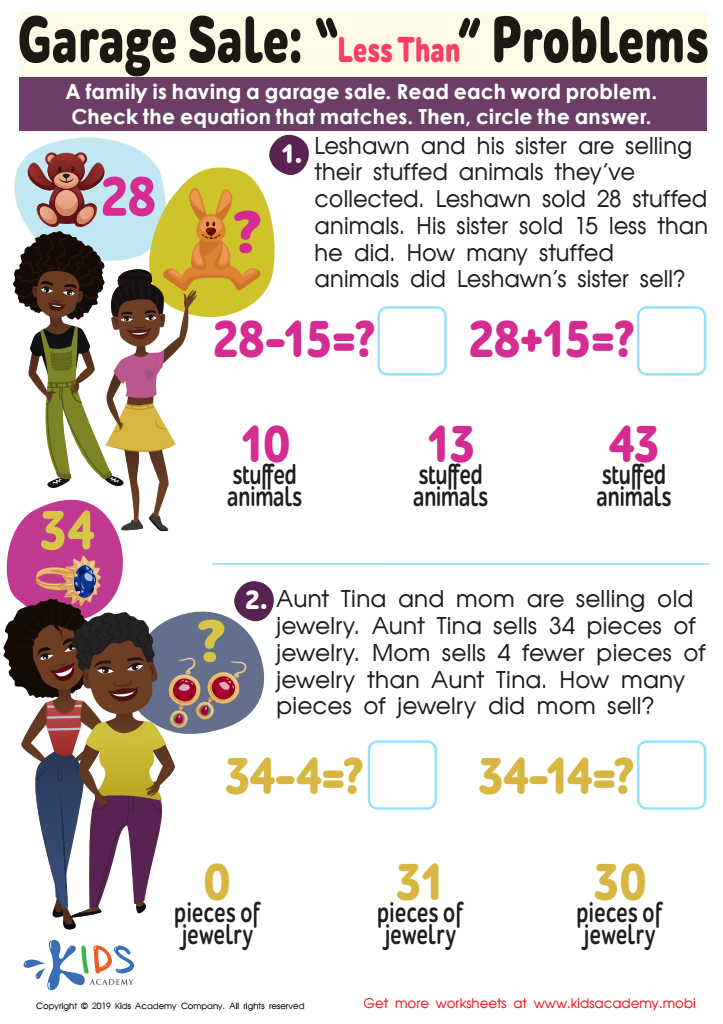
Garage Sale Less Than Worksheet
 Assign to My Students
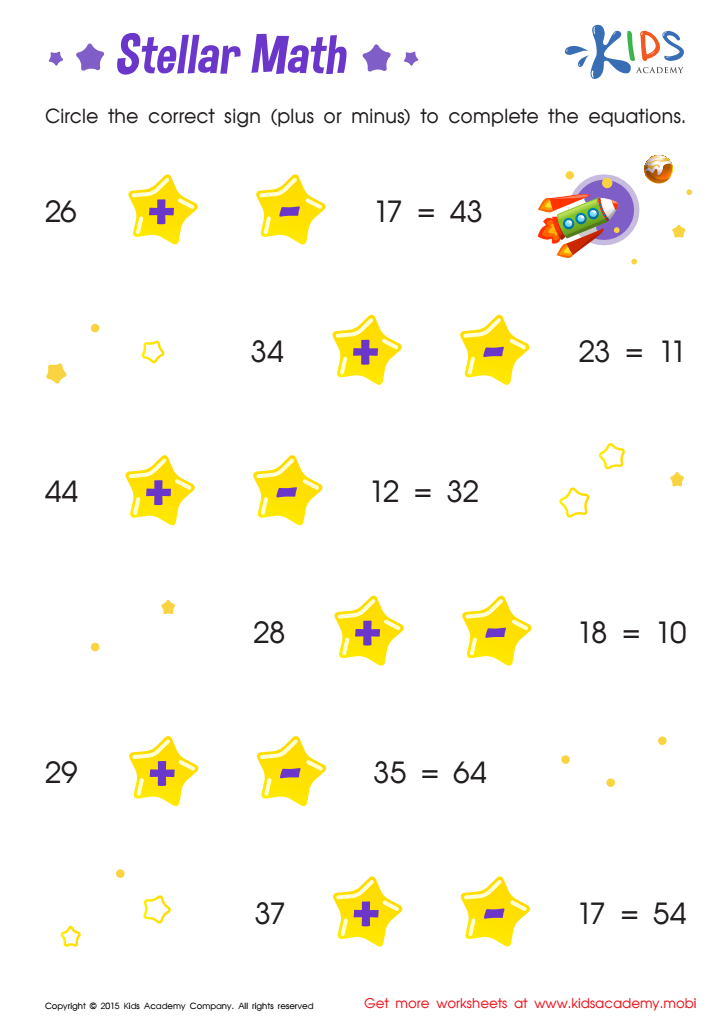
Stellar Math Substraction Worksheet
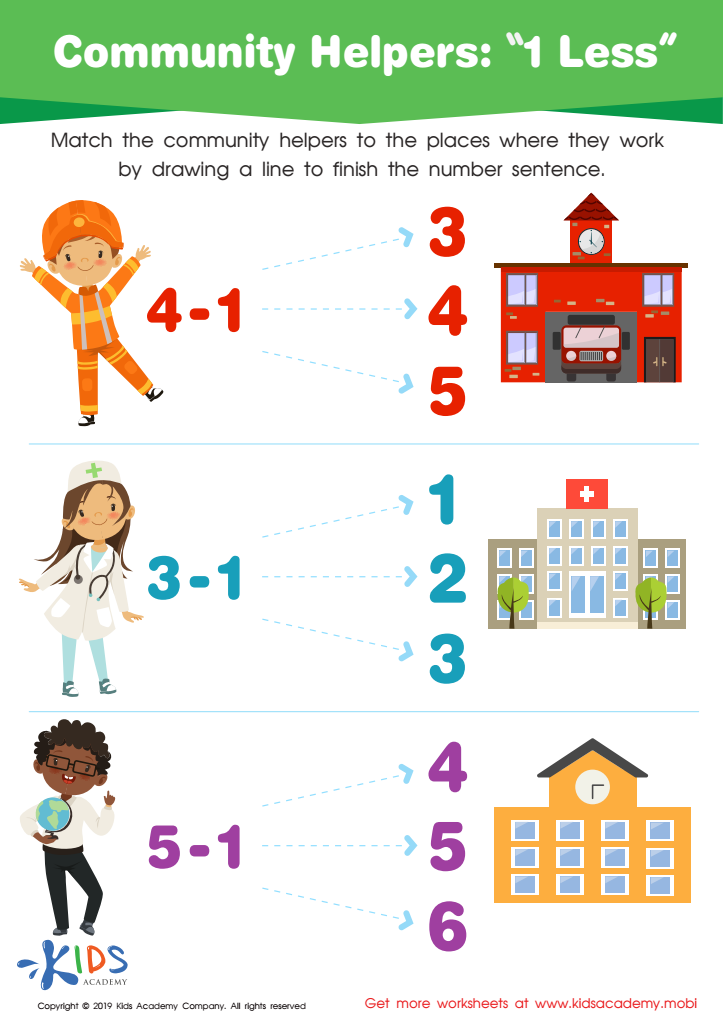
Community Helpers: 1 less Worksheet
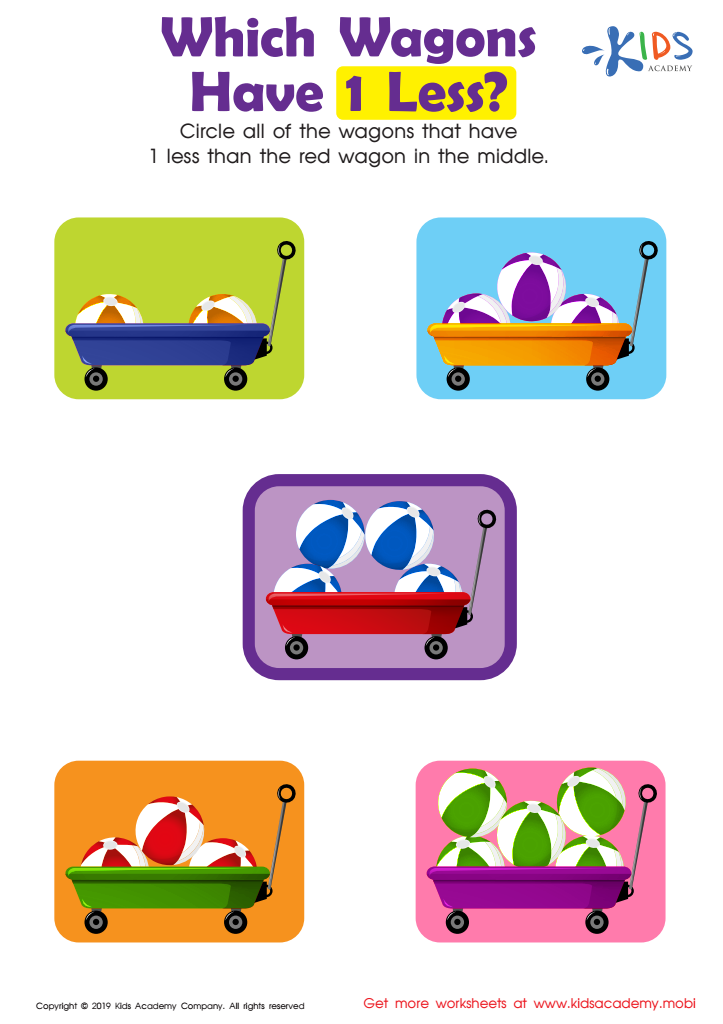
Which Wagons Have 1 Less? Worksheet








Understanding subtraction is pivotal for young children, and both parents and teachers play a key role in fostering this foundational math skill in 4- to 5-year-olds. At this age, children are in a critical period of cognitive development. Grasping basic subtraction helps them develop essential problem-solving and critical-thinking skills, which are crucial for their future learning experiences. By understanding the concept of "taking away," children also begin to comprehend more advanced mathematical ideas like negative numbers and algebraic thinking later on.
Parents and teachers should care about this aspect because it builds a strong numerical foundation. Engaging children in subtraction through fun activities, such as counting toys or subtracting snacks, makes learning enjoyable and relevant. This practical application reinforces their understanding of how subtraction is used in everyday life.
Moreover, mastering this skill early instills confidence in young learners, making them more willing to tackle new and more complex mathematical concepts. Early proficiency in subtraction can set the stage for academic success, reduce math anxiety, and foster a lifelong positive relationship with math. Therefore, a collaborative effort between parents and teachers in nurturing this skill can provide the strong mathematical foundation children need for their educational journey.








