Weather identification Math Worksheets for Ages 4-5
3 filtered results
-
From - To
Discover our engaging Weather Identification Math Worksheets for ages 4-5, designed to make learning fun and interactive! Perfect for early learners, these worksheets help children recognize different weather types including sunny, rainy, snowy, and windy conditions. By integrating math concepts, children will practice counting, comparing, and sorting while exploring the fascinating world of weather. Each printable activity promotes critical thinking and enhances cognitive skills, making it an ideal resource for preschool and Kindergarten educators or parents at home. Ready to inspire your little learners? Download our delightful worksheets today and watch them thrive as they master essential math and weather identification skills!
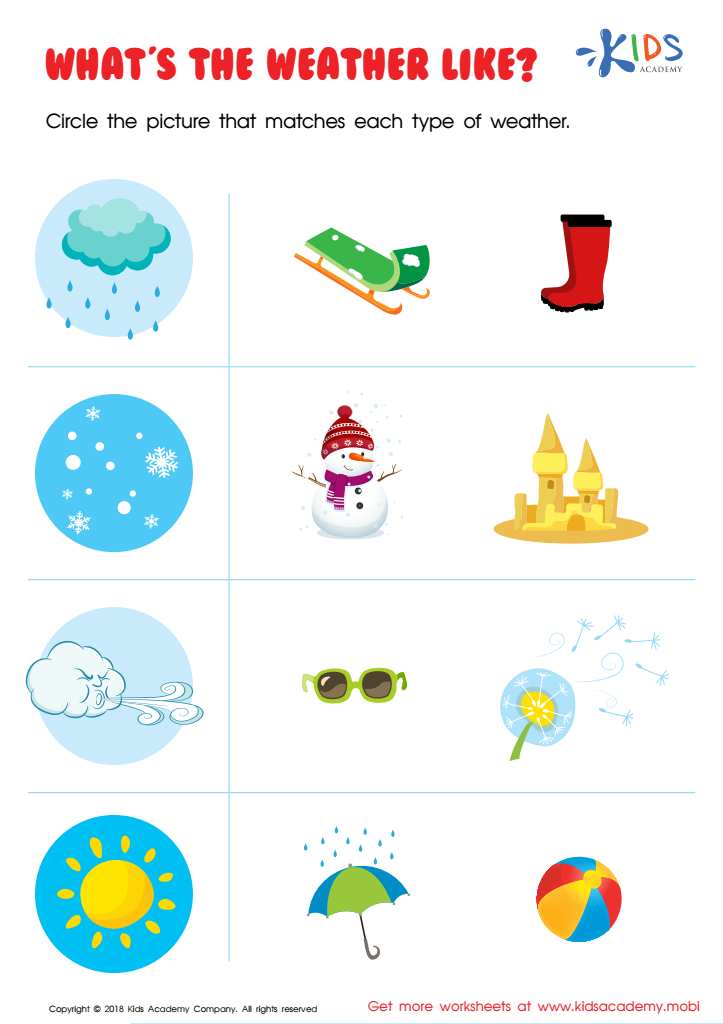
What's the Weather Like? Worksheet
 Assign to My Students
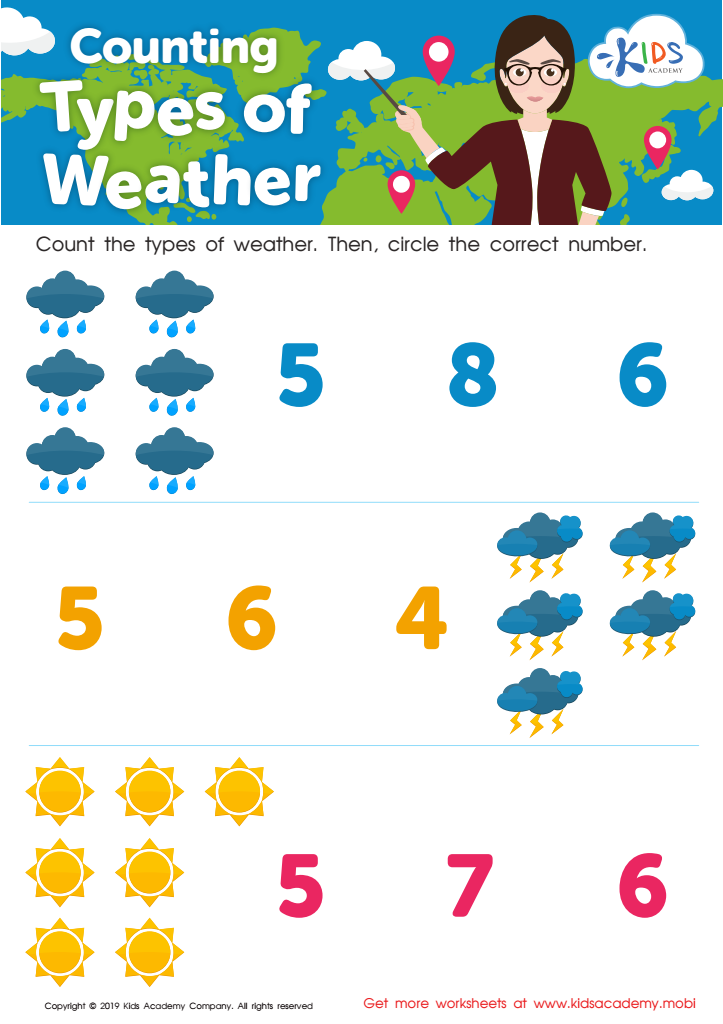
Counting Types of Weather Worksheet
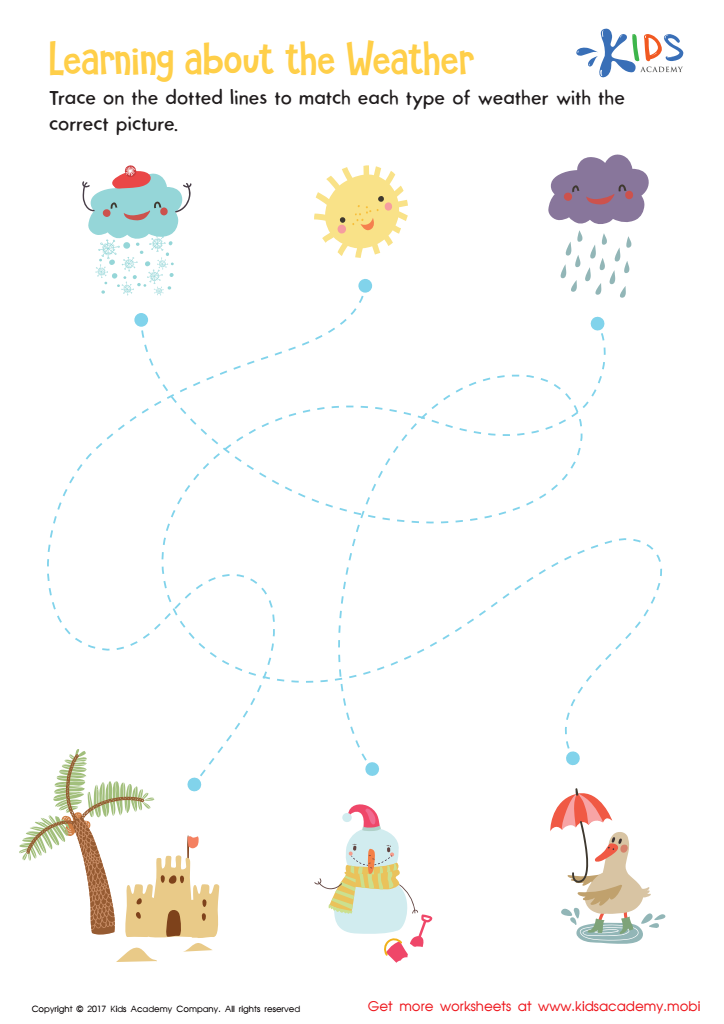






Weather identification is an essential learning theme for children aged 4-5 because it intertwines foundational concepts of math and science with everyday experiences. By engaging with weather-related activities, children develop critical observational skills. Recognizing different types of weather—such as sunny, rainy, or windy—allows children to categorize and gather data, laying the groundwork for basic mathematical concepts like sorting, counting, and measuring.
Incorporating weather into math lessons enables young learners to apply numerical skills in practical situations, such as predicting weather patterns or measuring temperature. This helps to enhance their understanding of statistics and probabilities in a context they can relate to. Additionally, weather identification nurtures vocabulary development and critical thinking, as children articulate their observations and make predictions based on their observations.
Engaging with weather also encourages exploration and curiosity, stimulating an interest in the natural world. Teachers and parents can utilize real-life examples, turning weather identification into an engaging, interactive process that promotes learning outside of traditional settings. By caring about this multi-disciplinary approach, they provide children with a rich educational experience, fostering a joyful, inquiry-based learning environment that supports cognitive development and fosters essential lifelong skills.








