Pattern recognition Patterns Worksheets for Ages 4-5
5 filtered results
-
From - To
Unlock your child's potential with our Pattern Recognition Worksheets designed specifically for ages 4-5! These engaging and educational printables help young learners explore and identify various patterns through fun and interactive activities. With bright, colorful designs and age-appropriate challenges, children will develop essential skills such as logical thinking, sequencing, and problem-solving. Perfect for preschool and kindergarten students, our pattern recognition worksheets make learning enjoyable while laying the foundation for future math success. Get started today and watch your child’s confidence grow as they master crucial early math concepts through play and discovery!
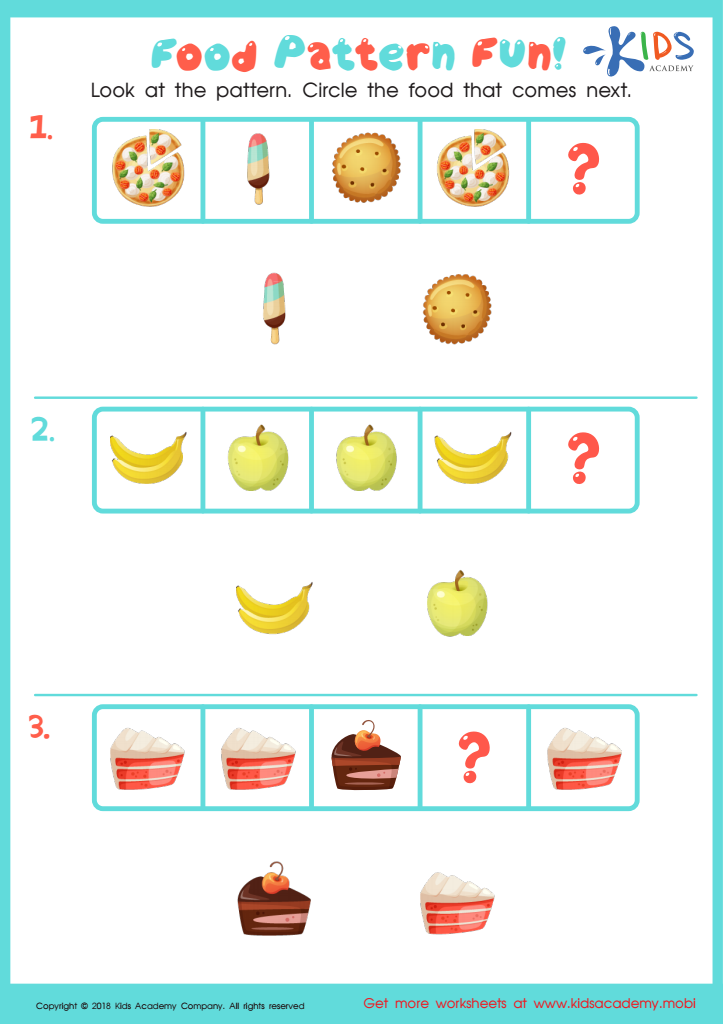
Food Pattern Fun Worksheet
 Assign to My Students
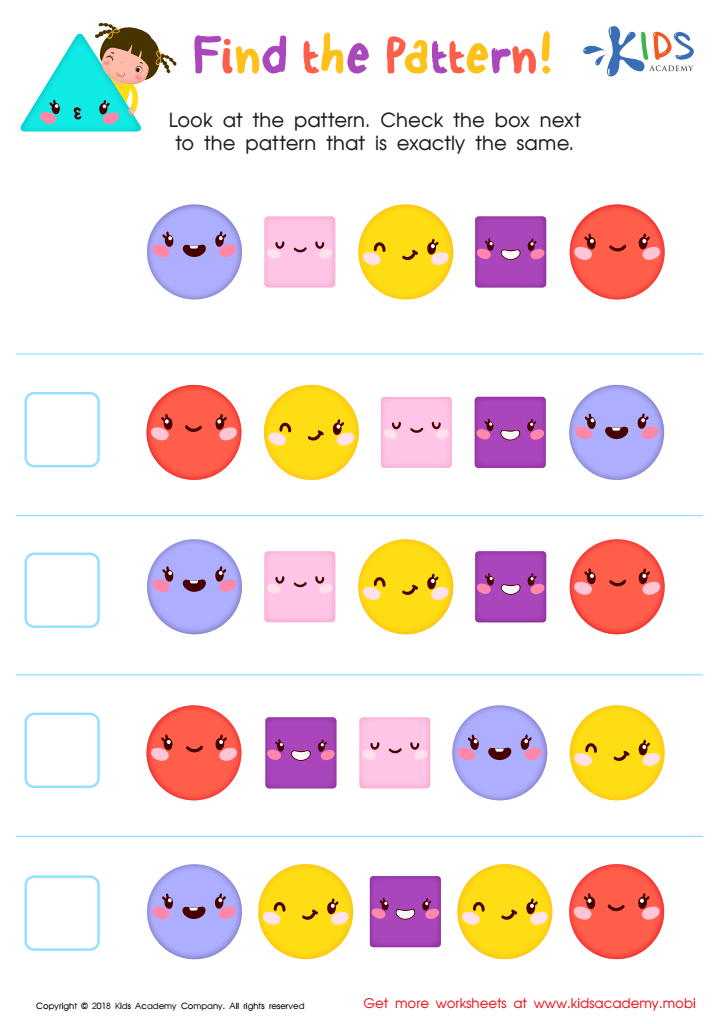
Find the Pattern Worksheet
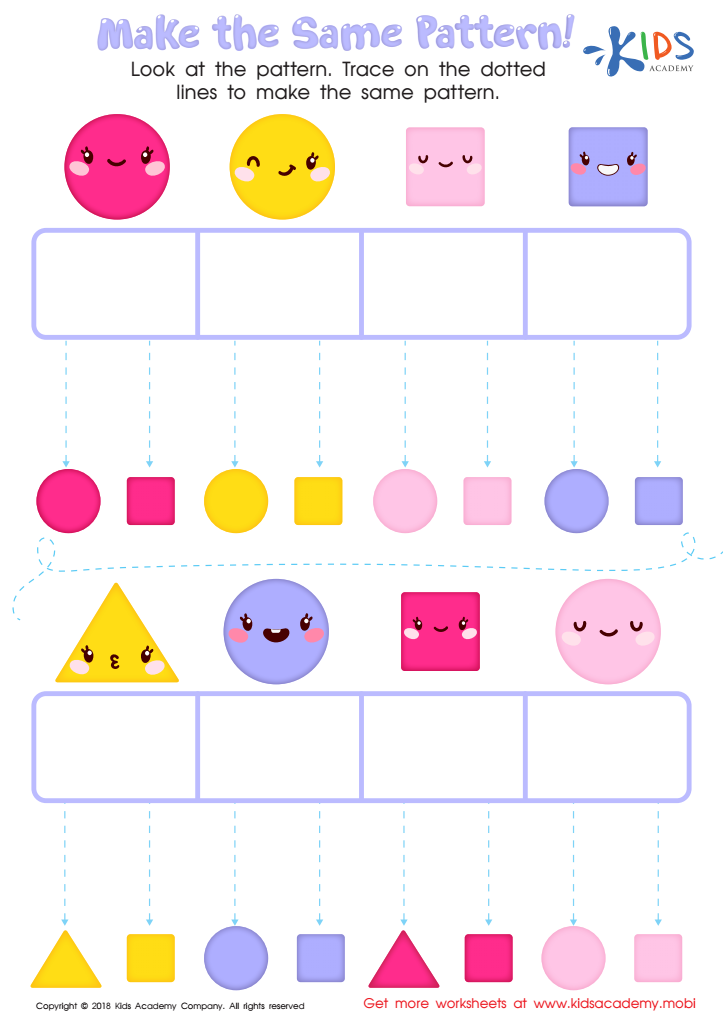
Make the Same Pattern Worksheet
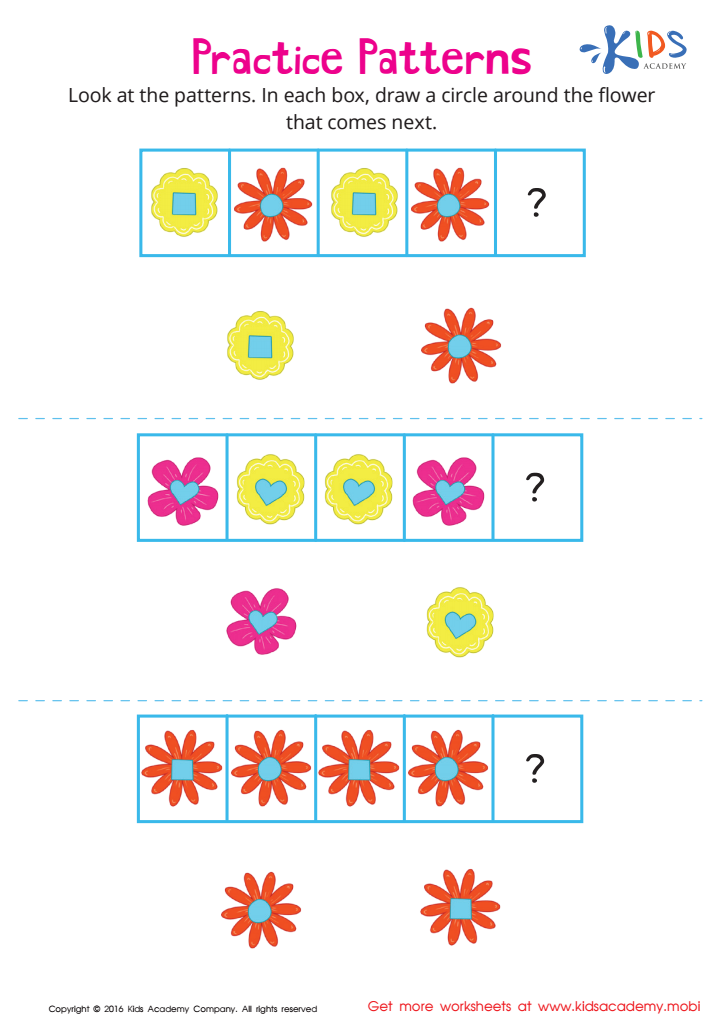
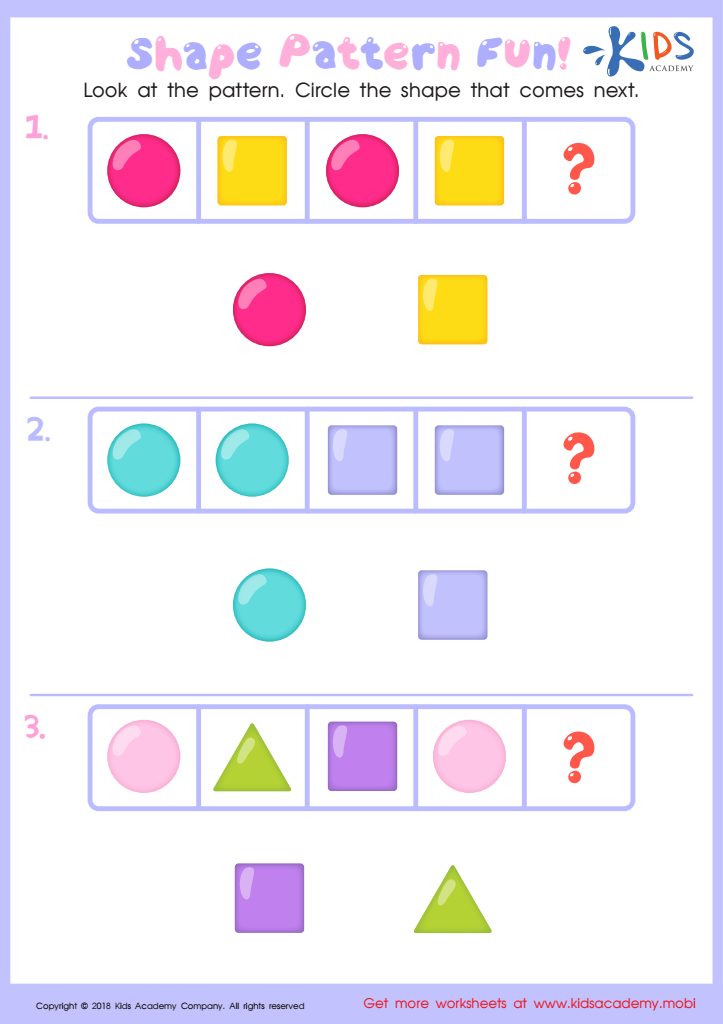
Shape Pattern Fun Worksheet








Pattern recognition is a foundational skill that significantly impacts a child's cognitive development and future learning abilities. For children aged 4-5, recognizing and understanding patterns lays the groundwork for math and language skills, both of which are critical in early education.
First, pattern recognition enhances mathematical ability by helping children grasp abstract concepts like sequencing, symmetry, and spatial awareness. Recognizing patterns in numbers and shapes boosts their understanding of more complex mathematical operations they will encounter as they progress in school.
Second, in language development, pattern recognition aids in understanding syntax and grammar. By recognizing patterns in sentences and word usage, children can better comprehend how language is structured, eventually improving their reading and writing abilities.
Moreover, pattern recognition fosters problem-solving skills and logical thinking. When children identify patterns, they learn to make predictions, establish relationships, and discern order in chaos, skills essential for critical thinking.
Additionally, engaging in activities that promote pattern recognition exercises memory and attention, which are essential for learning across all subjects. This not only encourages academic readiness but also boosts confidence as children successfully decode and understand their environment.
In summary, fostering pattern recognition in young children is crucial for unlocking their potential in various domains of learning. Parents and teachers should emphasize this skill to promote cognitive development and set a solid foundation for future education.








