Cognitive Development Word Problems Worksheets for Ages 4-5
4 filtered results
-
From - To
Explore our engaging Cognitive Development Word Problems Worksheets designed specifically for children aged 4-5. These worksheets combine fun and learning, helping young learners enhance their critical thinking and problem-solving skills through relatable scenarios. Each activity encourages kids to apply their cognitive abilities as they tackle age-appropriate challenges, fostering a love for math while building essential foundational skills. Perfect for classrooms and home learning, our interactive problems promote independence and creativity. With colorful illustrations and clear instructions, children will enjoy exploring mathematics through real-life contexts, paving the way for a strong academic future. Start your child’s journey toward logical thinking today!
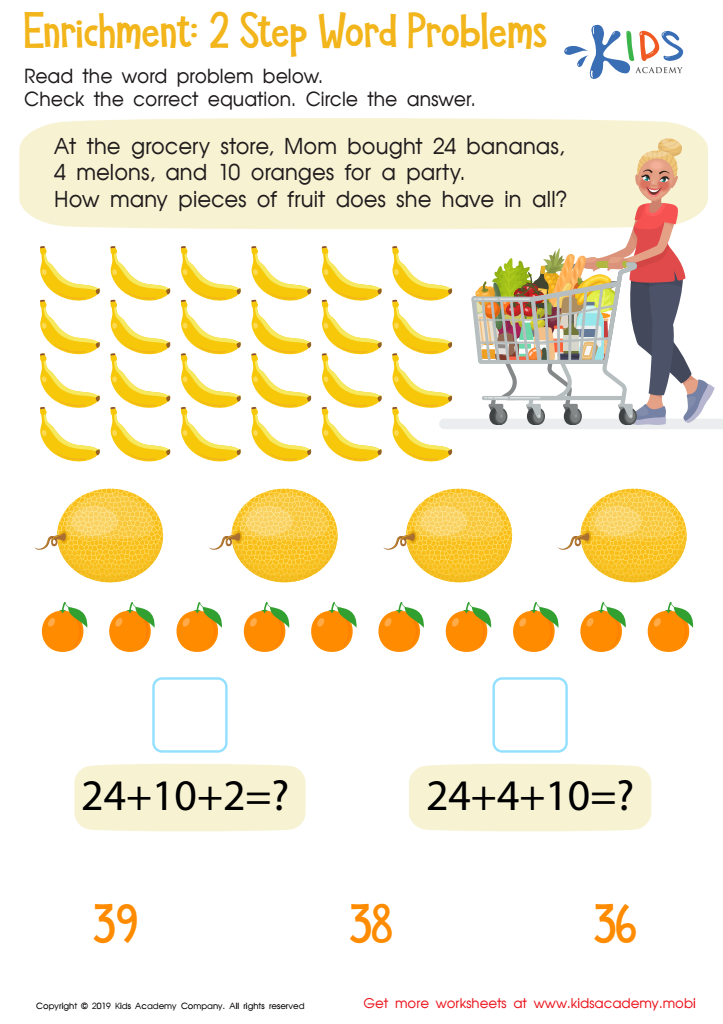
Enrichment -2 Step Word Problems Worksheet
 Assign to My Students
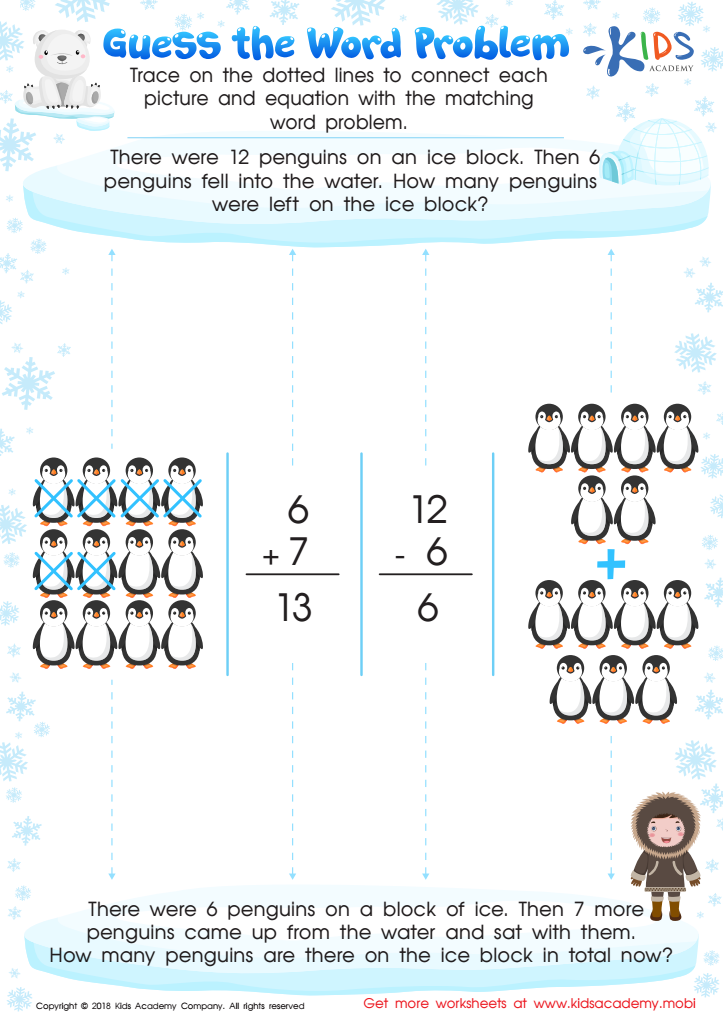
Guess the Word Problem Worksheet
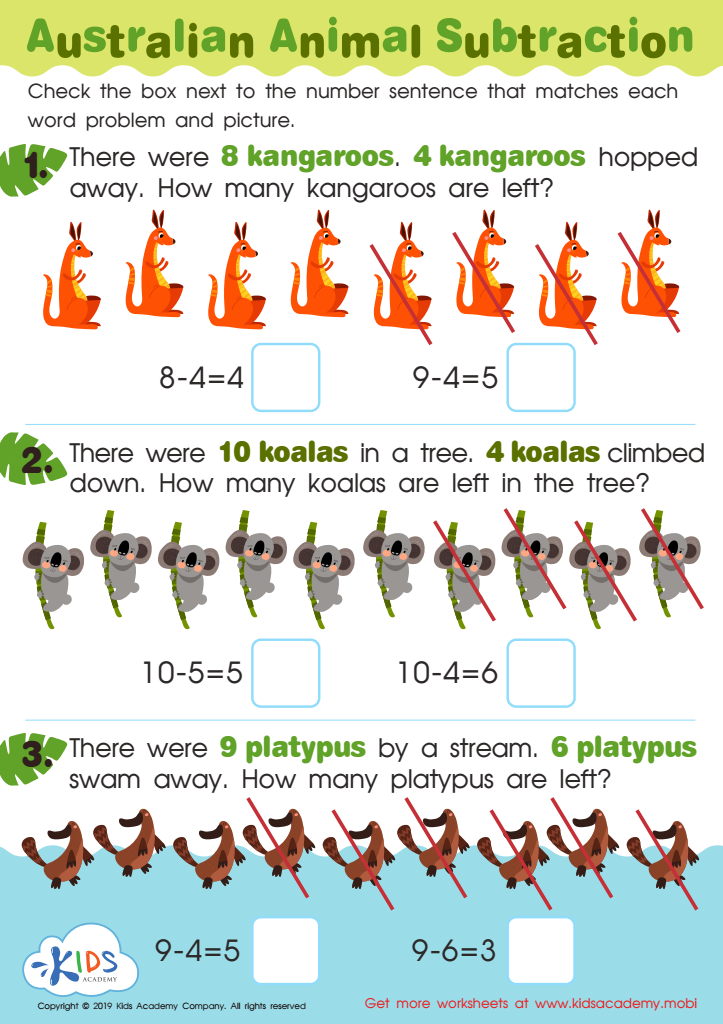
Australian Animal Subtraction Worksheet
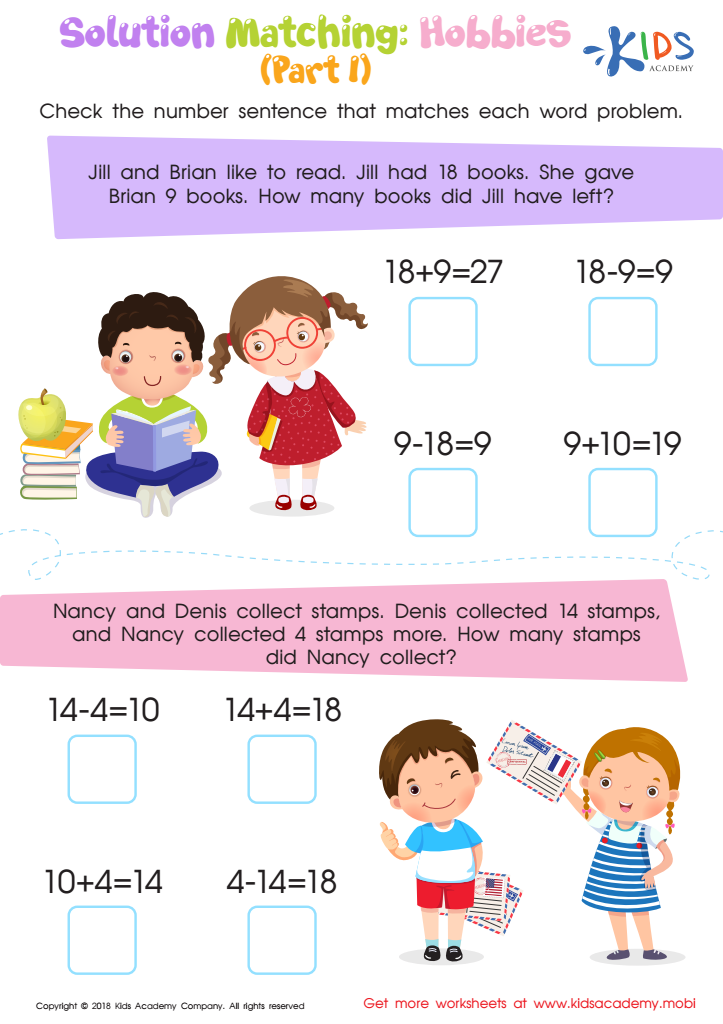
Solution Matching: Hobbies. Part 1 Worksheet








Cognitive development is crucial in early education, especially for children ages 4-5. Engaging kids with cognitive development word problems fosters critical thinking, problem-solving skills, and language abilities. At this stage, their brains are rapidly developing, and exposing them to word problems helps enhance their reasoning skills, allowing them to make connections between different concepts and apply them in real-life scenarios.
When parents or teachers introduce simple word problems suited for this age group, it encourages children to think logically about their environment. These activities promote important math concepts, for example, basic addition or understanding quantities, while also enhancing language development as children articulate their thoughts and reasoning.
Furthermore, engaging with word problems nurtures perseverance and resilience by inviting children to tackle challenges; they learn that it’s okay to struggle with understanding and that solutions often require time and effort. This not only lays the groundwork for later academic success but also fosters a love for learning. Child-based strategies such as play-based learning can make exploring these problems enjoyable and memorable. Involving children in these activities becomes an opportunity for bonding and reinforces a growth mindset, vital for their long-term educational journey.








