Character recognition Reading Worksheets for Ages 4-5
3 filtered results
-
From - To
Unlock the joy of reading with our Character Recognition Reading Worksheets designed for children aged 4-5! These engaging worksheets help young learners identify and connect with letters, sounds, and familiar characters, laying the foundation for strong reading skills. Each activity incorporates colorful visuals and interactive elements that maintain children's interest while they develop essential literacy skills. Perfect for at-home learning or classroom use, our worksheets foster independent practice and encourage recognition of letters and words in a fun and stimulating way. Dive into a world of learning that sparks creativity and builds confidence in young readers! Discover the magic of reading today!
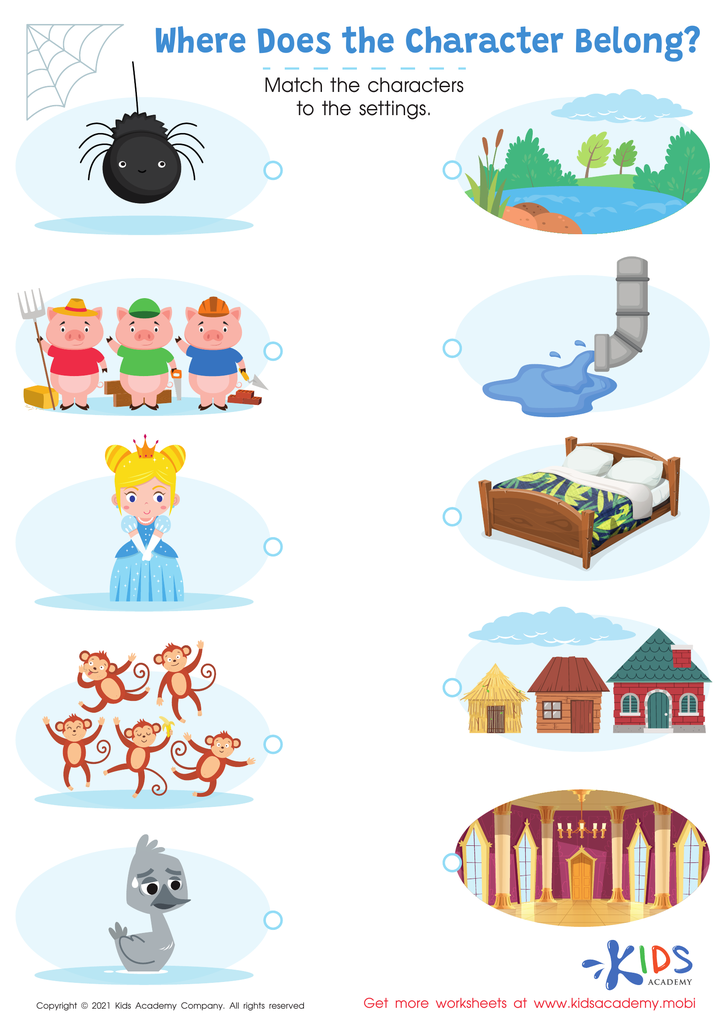
Where Does the Character Belong? Worksheet
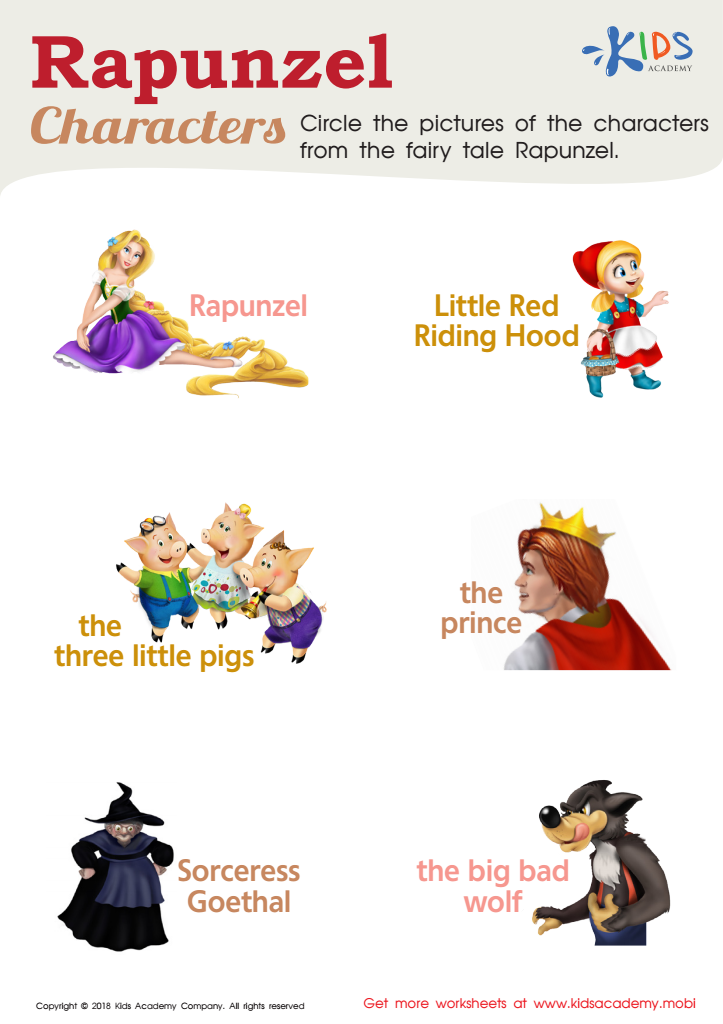
Rapunzel Characters Worksheet
 Assign to My Students
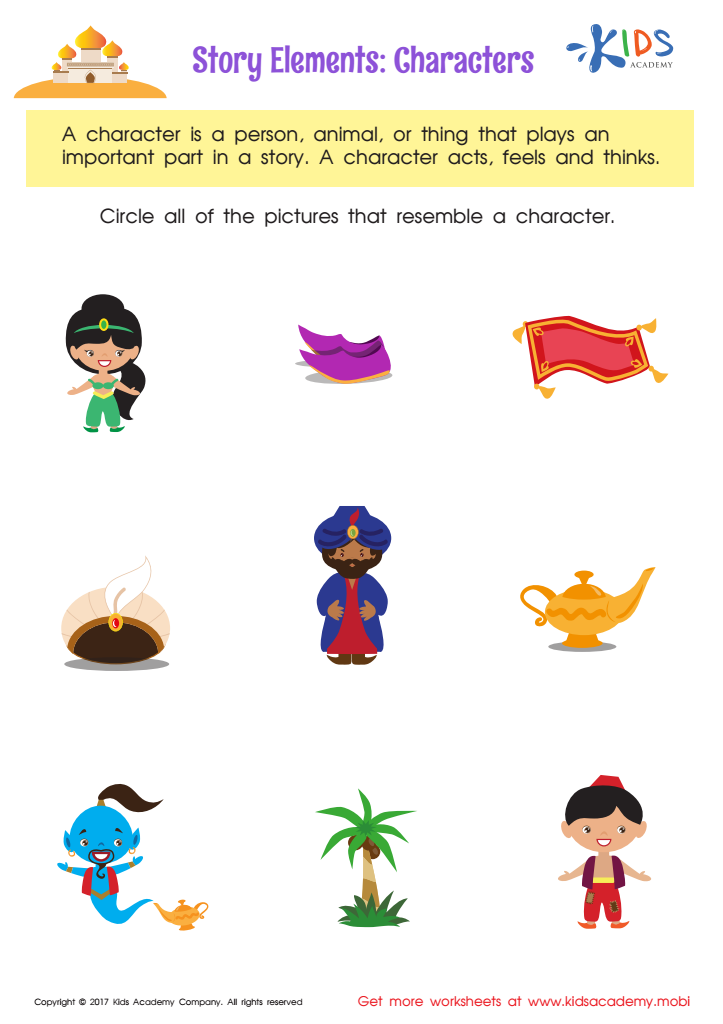
Story Elements Printable








Character recognition reading is a crucial foundational skill for children aged 4 to 5 as it sets the stage for literacy development. At this age, children are rapidly acquiring language and cognitive skills, and understanding character recognition helps them identify letters and words, leading to reading success. Early recognition aids in building confidence in their ability to read, fostering a positive attitude toward literacy.
Parents and teachers should care about character recognition because it enhances children's communication skills. Understanding the symbols of language—from letters to punctuation—allows them to express themselves more effectively and participate in written communication’s joys. Moreover, character recognition contributes to overall brain development; as children learn to recognize letters and sounds, they strengthen critical thinking and problem-solving abilities.
Furthermore, fostering an early love for reading and language can have lasting positive effects, such as improved academic performance, better social skills, and increased emotional intelligence. By investing time and resources in character recognition, parents and teachers equip children with vital tools for learning, reinforcing the importance of education in their lives. Encouraging character recognition opens doors to future literacy and increases children's chances of becoming lifelong readers and learners.








