
Coloring skills Reading Worksheets for Ages 4-5
3 filtered results
Difficulty Level
Grade
Age
-
From - To
Subject
Activity
Standards
Discover our engaging Coloring Skills Reading Worksheets, designed specifically for children ages 4-5! These fun and interactive sheets not only enhance creativity through coloring but also foster essential reading skills. By integrating vivid illustrations and alphabet activities, kids will have a blast while learning to recognize letters and develop fine motor skills. Each worksheet is tailored to provide a blend of entertainment and education, making learning enjoyable. Perfect for preschoolers and kindergarteners, our worksheets are a valuable resource for parents and educators alike. Download now and inspire a love for reading and creativity in young learners!
Favorites
With answer key
Interactive
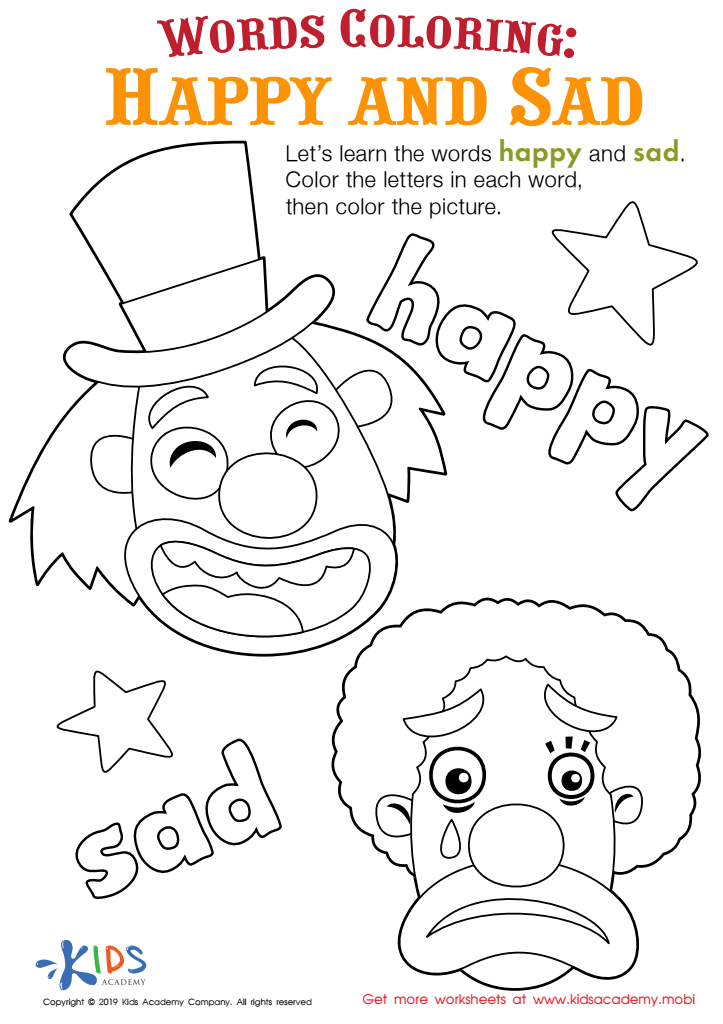
Happy and Sad Words Coloring Worksheet
Help students understand emotions by using this fun worksheet. It features smiling and sad clowns and the words 'happy' and 'sad'. Read the words with your students, then have them color the clowns and the emotion words. This PDF is an effective way to teach kids how to express how they feel.
Download (PDF)
 Assign to My Students
Assign to My Students
Happy and Sad Words Coloring Worksheet
Worksheet
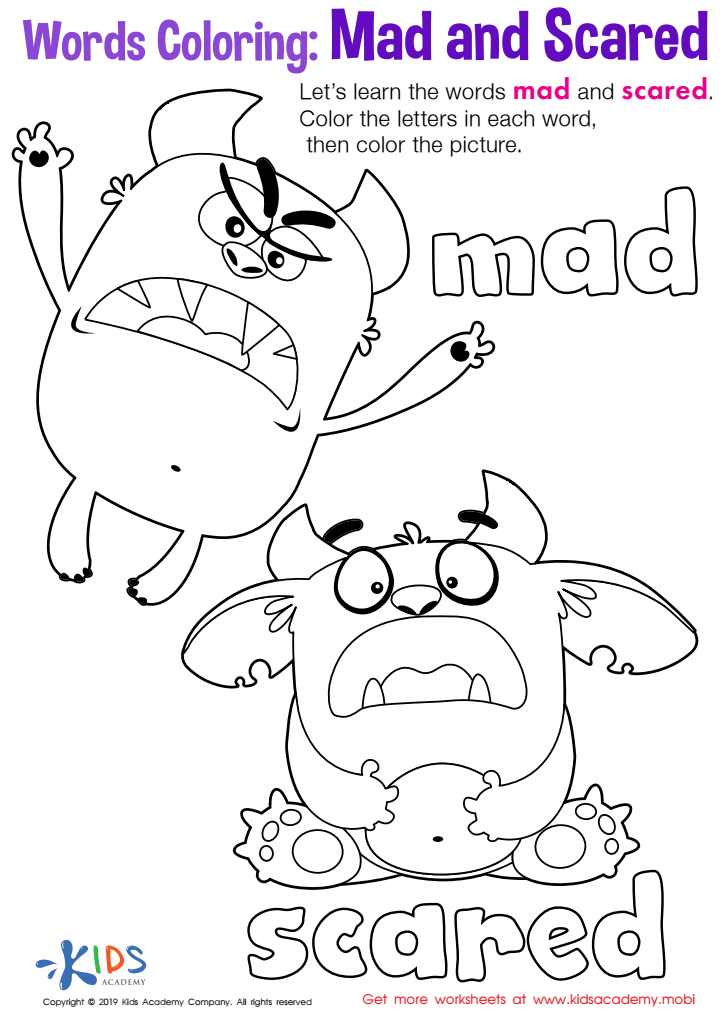
Mad and Scared Words Coloring Worksheet
This worksheet teaches "mad" and "scared" with fun monster pictures to color. Helping students learn by sight, it encourages sharing what makes them feel those strong emotions. Perfect for social studies, it expands student's vocabulary in an entertaining way.
Download (PDF)
Assign to My Students
Assign to My Students
Mad and Scared Words Coloring Worksheet
Worksheet
Join Kids Academy for Free
Who is primarily going to use this learning content?








Coloring skills play a crucial role in the early development of children aged 4-5, significantly contributing to their reading readiness. As children engage in coloring, they are not only expressing their creativity but also developing fine motor skills essential for writing. Instruction in how to color within lines encourages hand-eye coordination, which is foundational for the writing process. This early mastery of motor skills directly impacts a child's ability to hold a pencil and form letters, fostering their overall literacy.
Additionally, coloring often incorporates shapes, patterns, and stories, thus enhancing cognitive development and language skills. When children color, they frequently discuss their choices with adults or peers, promoting vocabulary expansion and storytelling abilities, both integral components of reading comprehension.
Coloring also serves as an engaging tool to introduce concepts related to reading, like following directions, recognizing letters or numbers hidden in pictures, and developing spatial awareness. All of these experiences collectively enhance a child's auditory and visual processing skills, which are critical for reading.
Parents and teachers should therefore recognize that fostering coloring skills is more than just fun; it is a vital part of a child's journey toward effective reading and writing, placing them on a positive trajectory for future academic success.








