Recognizing shapes Reading Worksheets for Ages 4-5
5 filtered results
-
From - To
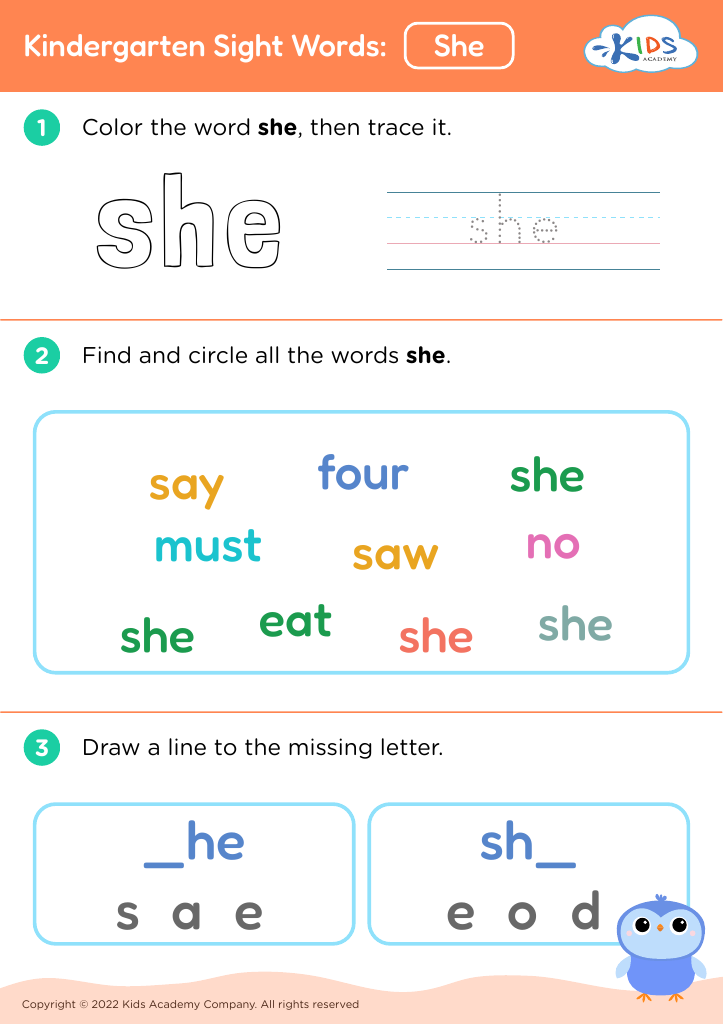
Discover our engaging Recognizing Shapes Reading Worksheets designed specifically for children aged 4-5! These worksheets boost essential literacy skills while introducing young learners to basic shapes. Featuring colorful illustrations and simple, clear instructions, each activity encourages kids to identify, match, and write shapes, all while integrating reading practice. Our resources are perfect for homeschooling, classroom activities, or supplemental learning at home. Foster a love for learning as your child builds their vocabulary and shapes recognition simultaneously! Explore our collection today and watch your little ones thrive as they develop critical cognitive and reading skills in a fun, interactive way.








Recognizing shapes is a foundational skill in early childhood development that serves as a crucial building block for learning. For parents and teachers, fostering this skill in children aged 4-5 has numerous benefits.
Firstly, shape recognition enhances visual perception, which is vital for later math and literacy skills. Understanding shapes can help children with counting, basic geometry, and spatial awareness, as these skills often appear in more complex subjects as they progress in school.
Secondly, engaging in activities that focus on shapes promotes cognitive development. Interactive approaches, such as shape sorting games or shape-related stories, stimulate critical thinking and problem-solving abilities.
Moreover, recognizing shapes can increase vocabulary development. When children learn the names and properties of different shapes, they're also expanding their language skills, which supports reading comprehension in the future.
Additionally, shape recognition is often integrated into everyday life. From identifying shapes in their environment to understanding their use in arts and crafts, children can grasp practical applications of knowledge, enhancing both engagement and enjoyment in learning.
In summary, teaching shape recognition not only equips children with essential academic skills but also nurtures their cognitive and linguistic development, making it an important focus for parents and educators alike.








