Story analysis Reading Comprehension Worksheets for Ages 4-5
4 filtered results
-
From - To
Our "Story Analysis Reading Comprehension Worksheets for Ages 4-5" at Kids Academy offer a fun and engaging way to develop young learners’ reading and cognitive skills. These thoughtfully crafted worksheets help children understand the structure and elements of stories. Through interactive exercises, kids improve their ability to identify characters, settings, and major plot points, thus enhancing their overall comprehension and analytical skills. Designed by educational experts, these worksheets support early literacy development and foster a love of reading by making learning both enjoyable and educational. Perfect for preschoolers, they pave the way for future reading success.
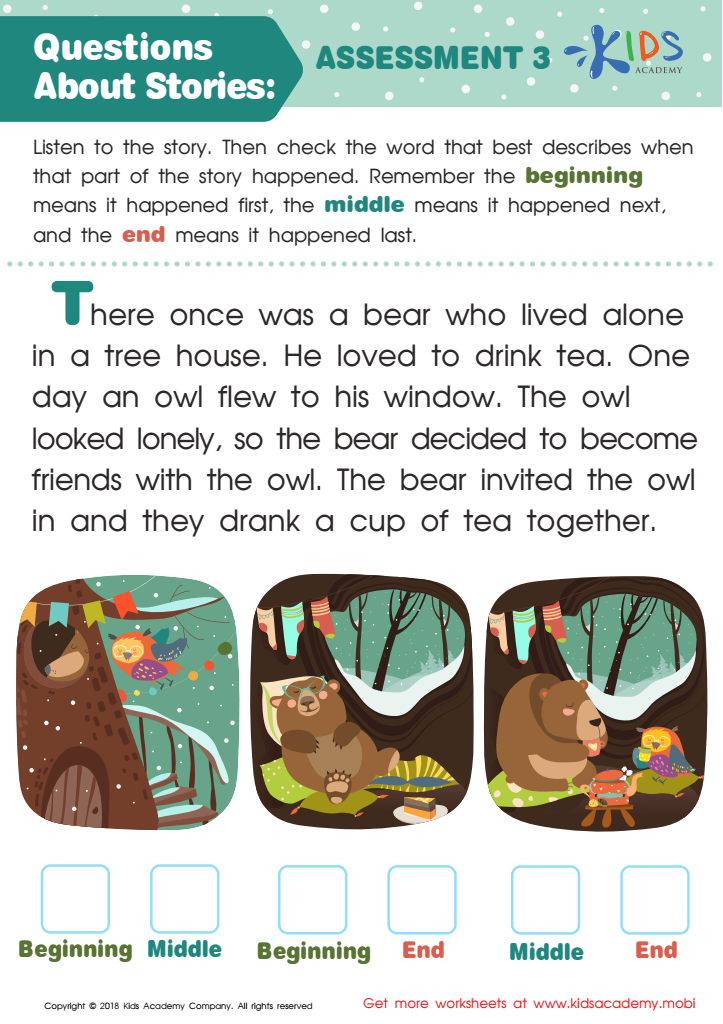
Questions About Stories: Assessment 3 Worksheet
 Assign to My Students
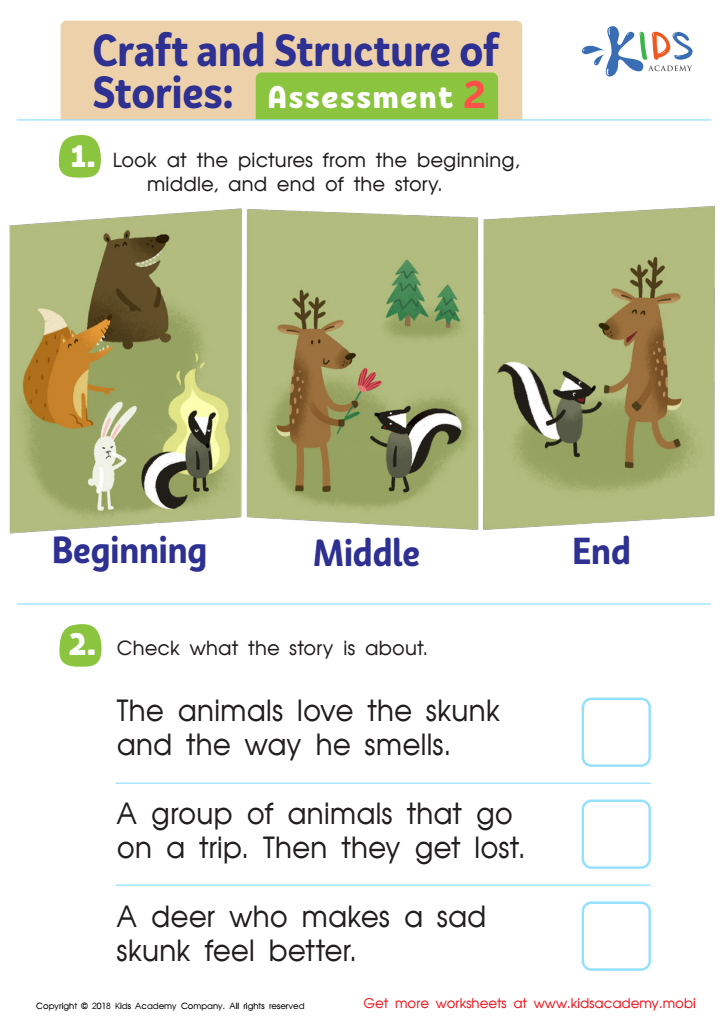
Craft and Structure of Stories: Assessment 2 Worksheet
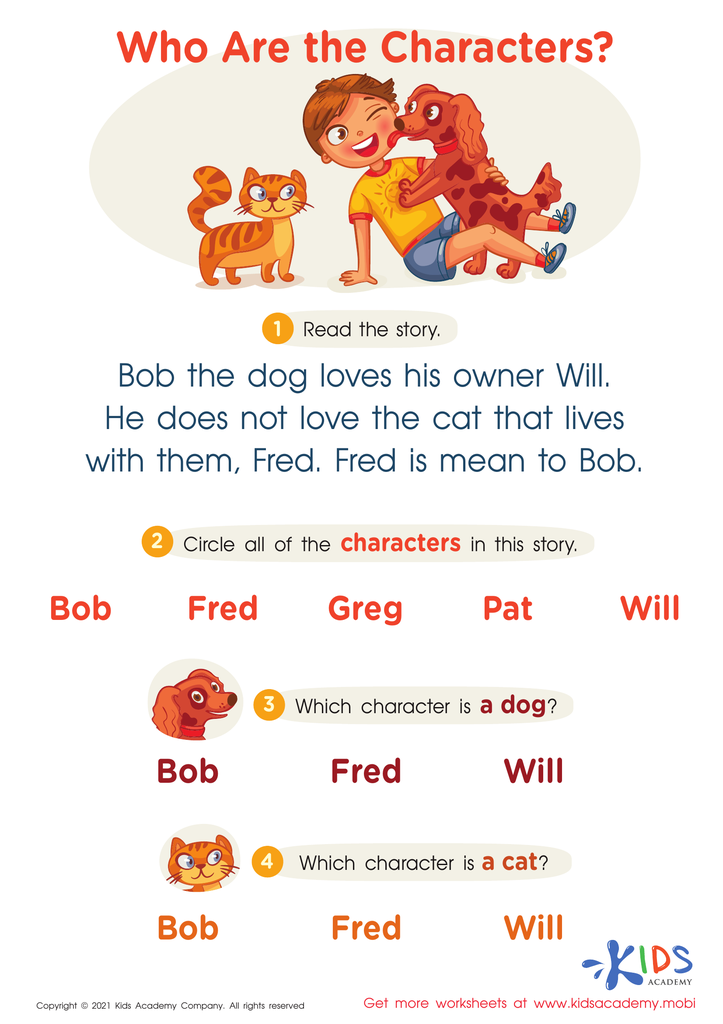
Who Are the Characters? Worksheet
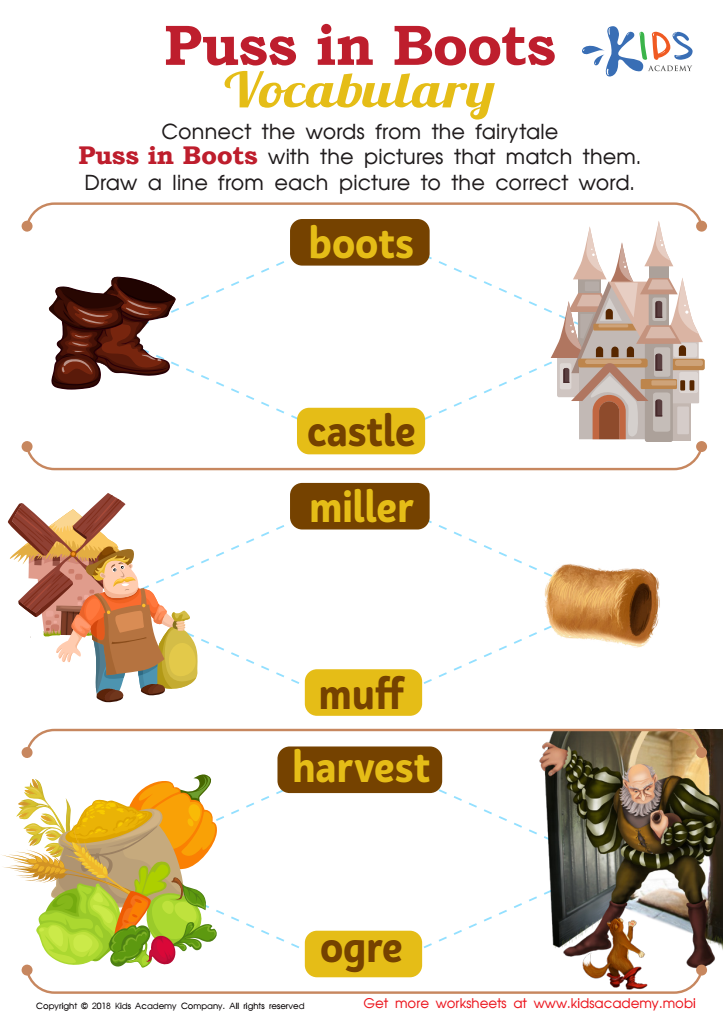
Puss in Boots Vocabulary Worksheet








Story analysis and reading comprehension for children aged 4-5 are essential building blocks for lifelong learning and literacy skills. At this formative age, children's brains are rapidly developing, and engaging with stories helps to enhance their cognitive abilities.
When parents or teachers focus on story analysis, they encourage young children to think critically about the narratives they hear. This includes understanding the main idea, recognizing characters, predicting outcomes, and grasping basic plot structures. Such activities substantially boost the child's problem-solving and logical thinking skills.
Reading comprehension also plays a crucial role in language development. By interacting with a range of vocabulary through stories, children expand their lexicons and improve grammar comprehension. This linguistic foundation is vital for effective communication and future academic success.
Moreover, story analysis fosters emotional intelligence. By discussing characters' motivations and emotions, children learn empathy and perspective-taking. Identifying with story characters helps kids navigate their feelings and social situations better.
Equally important, stories capture kids' imaginations, nurture curiosity, and instill a love for reading. These traits significantly contribute to their overall motivation and enthusiasm for school.
Investing time in story analysis and reading comprehension at ages 4-5 sets a solid groundwork for educational achievement and helps develop well-rounded individuals.








