
Vocabulary expansion Reading Comprehension Worksheets for Ages 4-5
6 filtered results
Difficulty Level
Grade
Age
-
From - To
Subject
Activity
Standards
Enhance your child's vocabulary and reading comprehension with our engaging worksheets tailored for ages 4-5! Designed to foster language development, these interactive worksheets focus on expanding vocabulary while improving understanding of text. Each activity encourages young learners to explore new words in fun contexts, promoting a love for reading and learning. With colorful illustrations and age-appropriate content, your child will enjoy discovering new concepts as they complete activities at their own pace. Ideal for both home and classroom use, these worksheets are perfect for helping little readers build essential skills needed for future academic success. Start your vocabulary adventure today!
Favorites
With answer key
Interactive
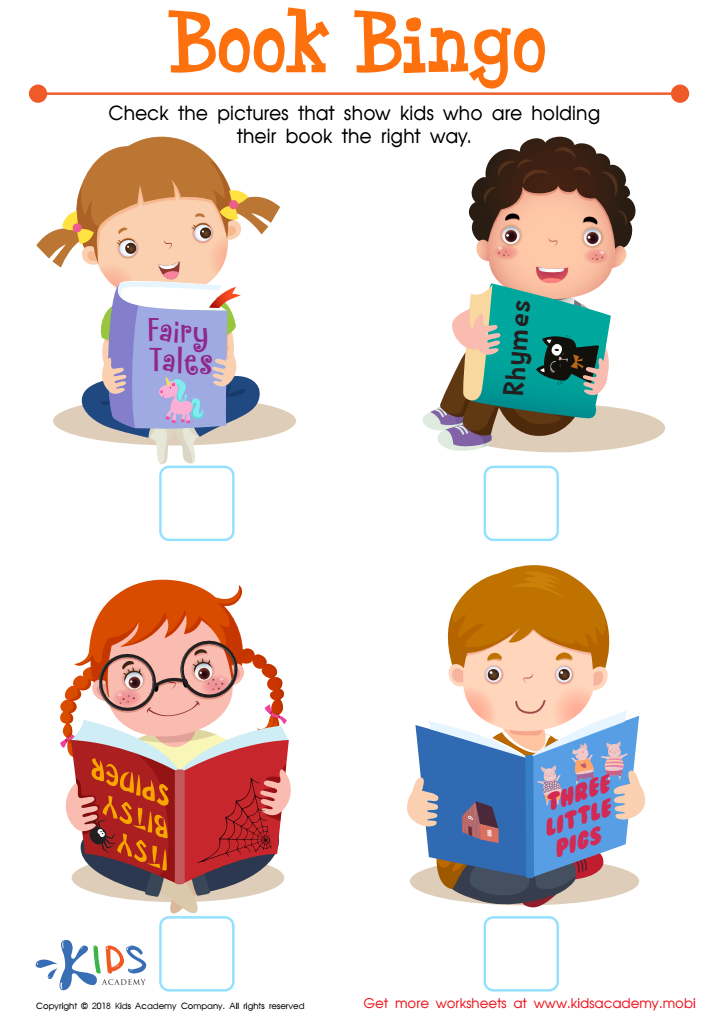
Book Bingo Worksheet
Help your kids spot which of the kids in the worksheet are reading correctly. Early instruction in reading helps ensure kids won't face problems later on, plus any impairments can be identified and corrected quickly. Can your child read? Have them check the pictures of kids holding books the right way.
 Assign to My Students
Book Bingo Worksheet
Worksheet
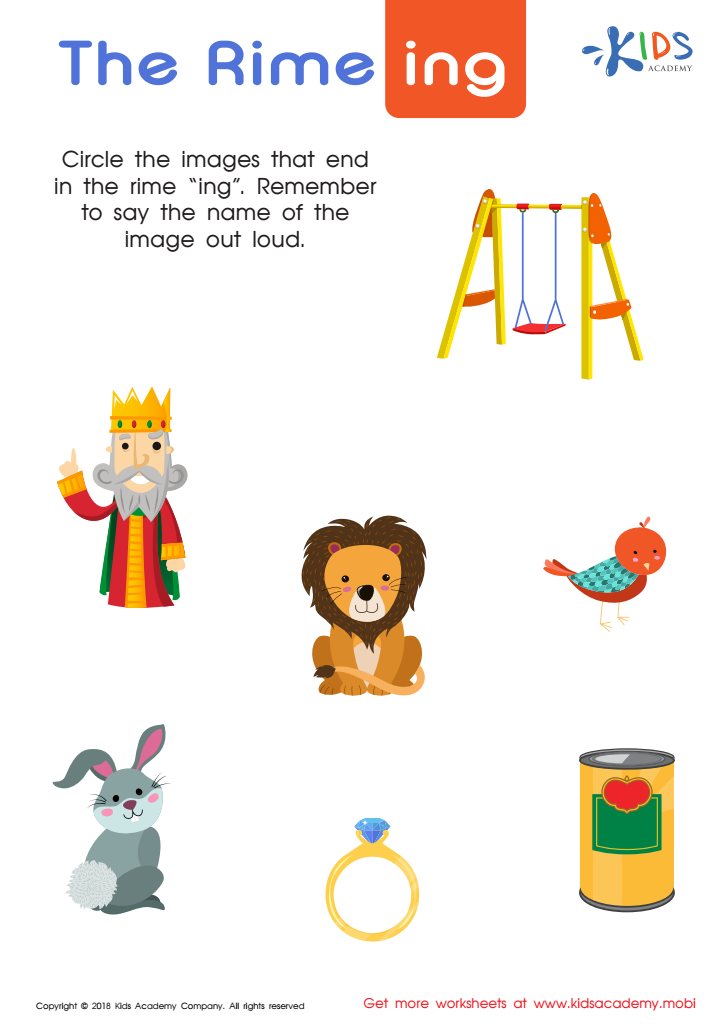
The Rime "ing" Worksheet
Teach children about word families and build their spelling and writing strategies with this colorful PDF worksheet. It features familiar pictures for children to name, encouraging them to circle those that end in "ing". This engaging activity will help develop reading skills in a fun way.
The Rime "ing" Worksheet
Worksheet
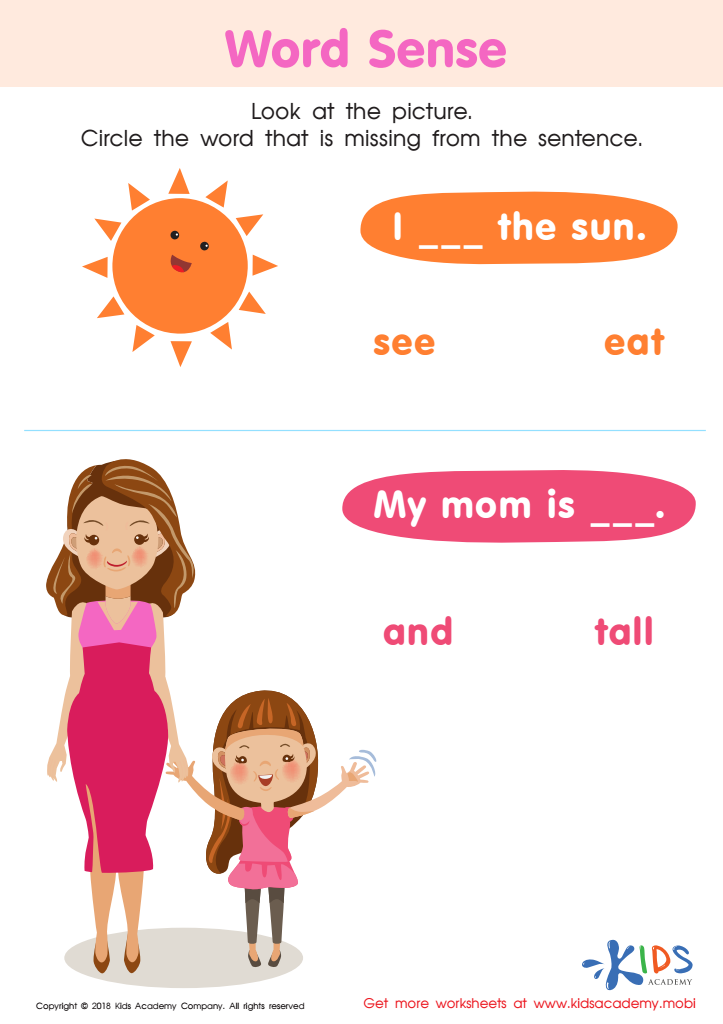
Word Sense Worksheet
Expose your child to common high-frequency words with this free and colorful worksheet. It will help them use picture clues to choose the correct word for each phrase. The more they're exposed, the stronger their fluency will become when reading. This process is an important part of the emerging reader's learning-to-read journey.
Word Sense Worksheet
Worksheet
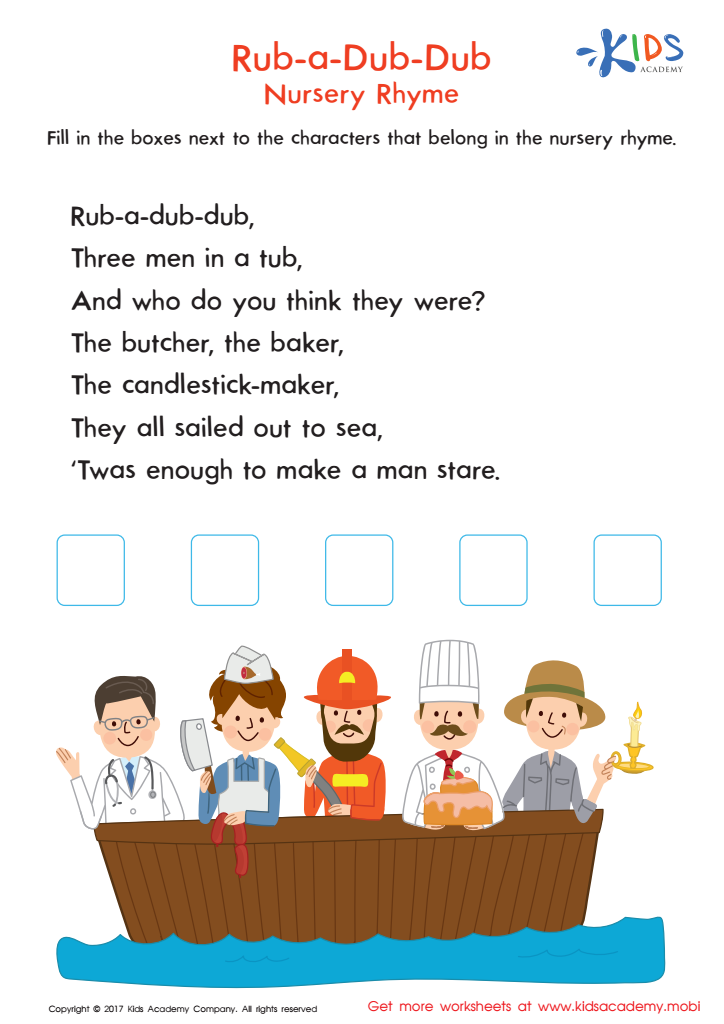
Rub a Dub Dub Printable
Delight your child and foster early reading skills with this printable nursery rhyme, Rub a Dub Dub! Let your little reader select the three men in the tub and practice important reading comprehension skills.
Rub a Dub Dub Printable
Worksheet
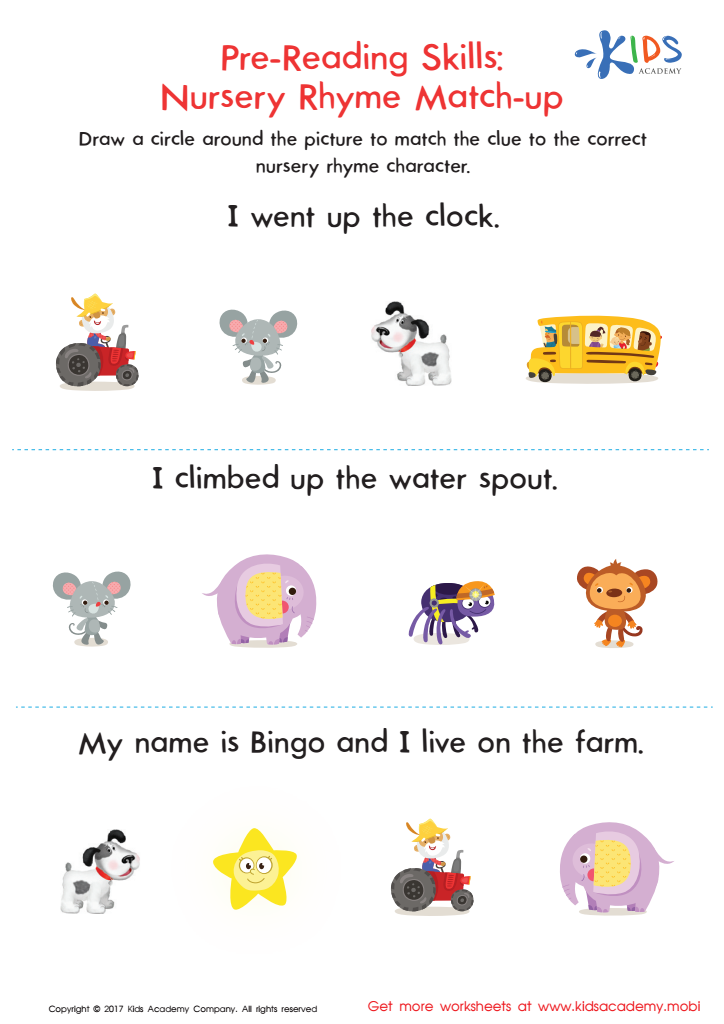
Nursery Rhyme Match–Up Worksheet
This worksheet helps kids build pre-reading skills using stories they know and love! By connecting with prior knowledge, kids can develop ideas about characters and set the stage for reading strategies.
Nursery Rhyme Match–Up Worksheet
Worksheet
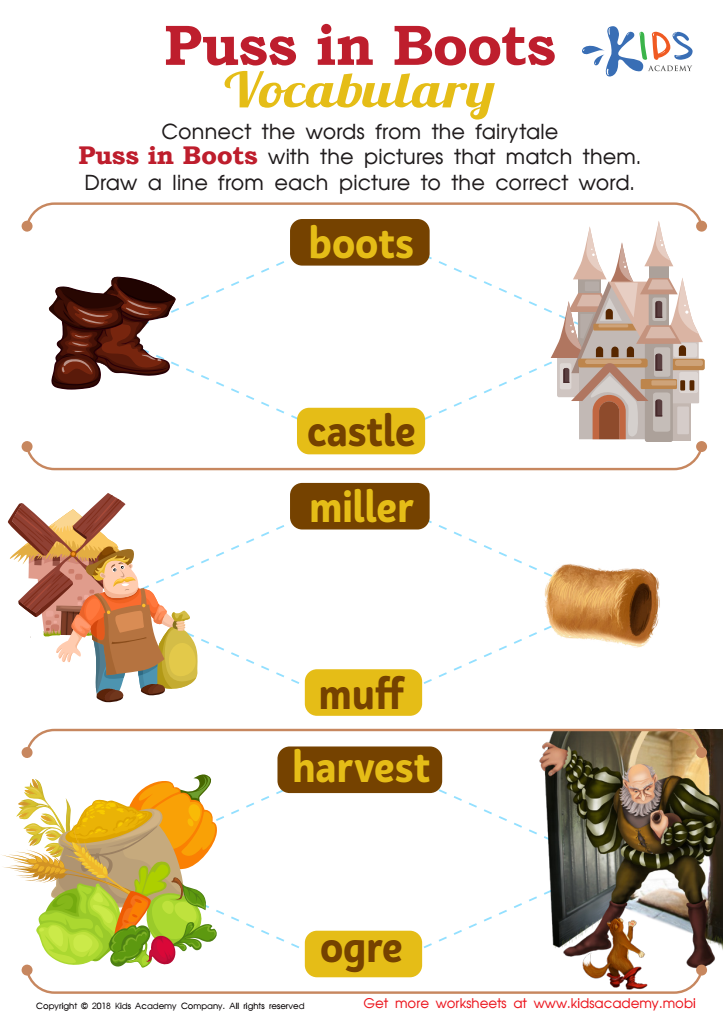
Puss in Boots Vocabulary Worksheet
Let your kids enjoy story-telling while learning at the same time. Help them learn from the fairytale, Puss in Boots, by connecting words from the worksheet with the matching pictures. Ask them to draw a line between each picture and corresponding word to build their vocabulary.
Puss in Boots Vocabulary Worksheet
Worksheet
Join Kids Academy for Free
Who is primarily going to use this learning content?








Vocabulary expansion and reading comprehension are critical for children aged 4-5, as these skills lay the foundation for a lifetime of learning. During these formative years, children's brains are rapidly developing, and they are increasingly capable of understanding language nuances. A rich vocabulary enhances their ability to express thoughts and emotions, thereby fostering communication skills and confidence.
Parents and teachers should care because building vocabulary is directly linked to reading comprehension. When children encounter new words in stories, they begin to understand context and meaning, which are essential for grasping more complex texts later. Engaging with a variety of stories not only introduces diverse words but also cultivates critical thinking skills, helping children to connect ideas, predict outcomes, and ask questions.
Furthermore, expanding vocabulary at an early age promotes academic success as children progress in school. Those who read more and understand a wider range of words tend to perform better in all domains of learning. By prioritizing vocabulary development, parents and teachers equip children with the tools they need for effective communication, academic achievement, and a lifelong love for reading. Investing time in reading and vocabulary activities today sets children on a path to future success.








