Categorization skills Science Worksheets for Ages 4-5
5 filtered results
-
From - To
Discover our engaging Categorization Skills Science Worksheets designed specifically for children aged 4-5! These worksheets promote essential early learning by helping young minds sort and classify objects based on various characteristics. Through fun activities, like grouping animals, plants, and everyday items, children will explore concepts of similarity and difference while enhancing their observational skills. Perfect for preschool and kindergarten, these worksheets support critical thinking and nurture a love for science in young learners. Encourage playful learning and prepare your little ones for future academic success with our vibrant and interactive resources. Start fostering key categorization skills today!
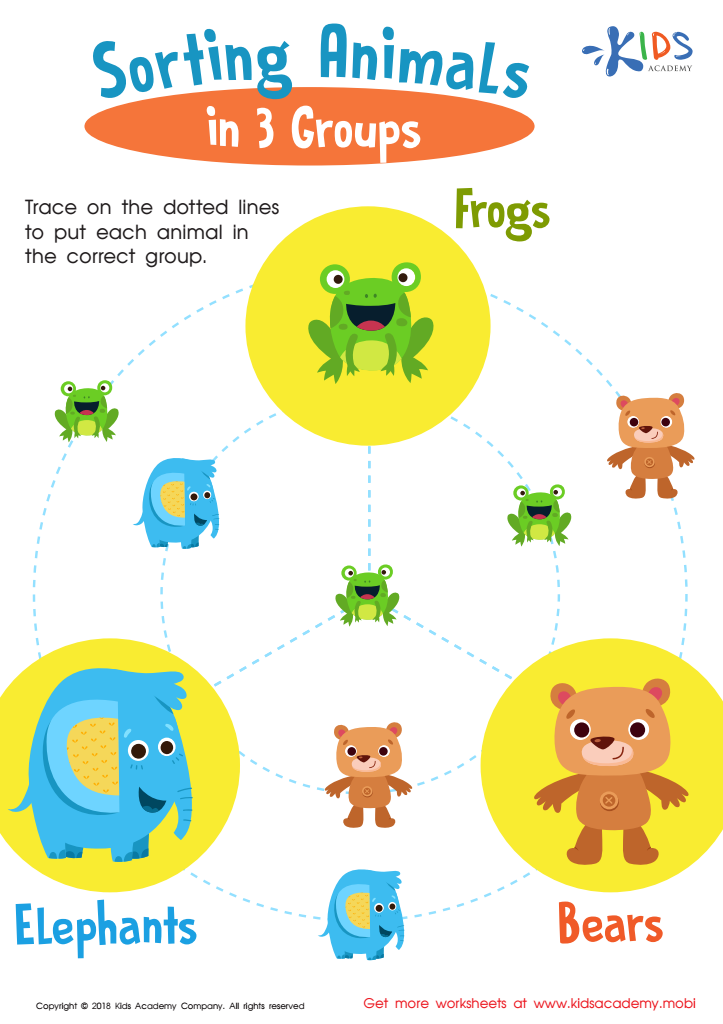
Sorting Animals in 3 Groups Worksheet
 Assign to My Students
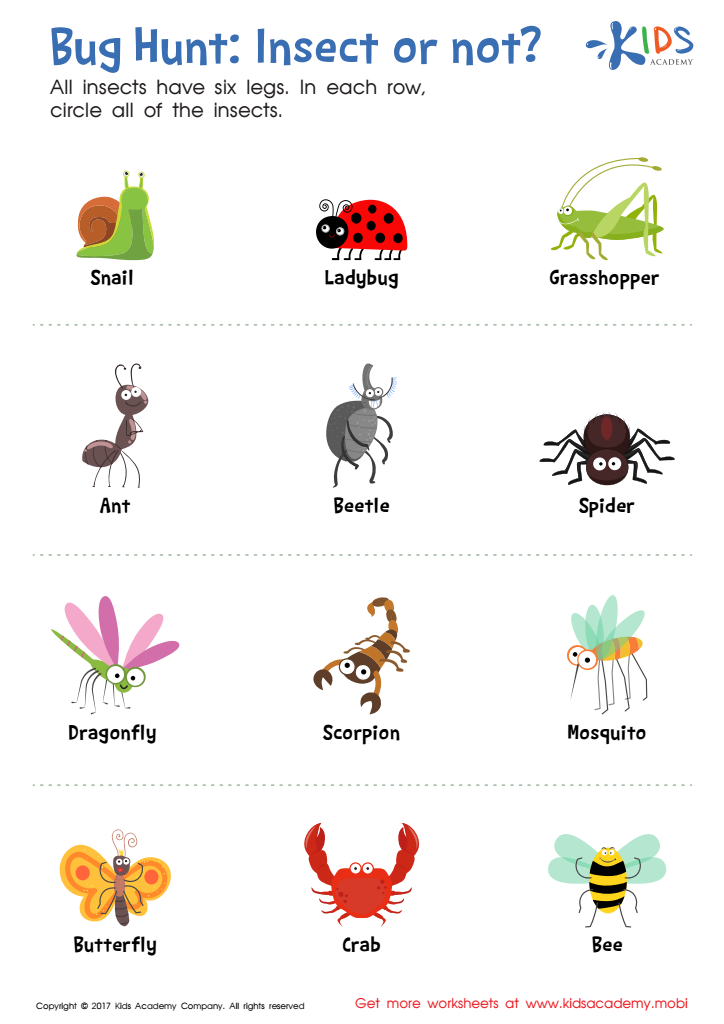
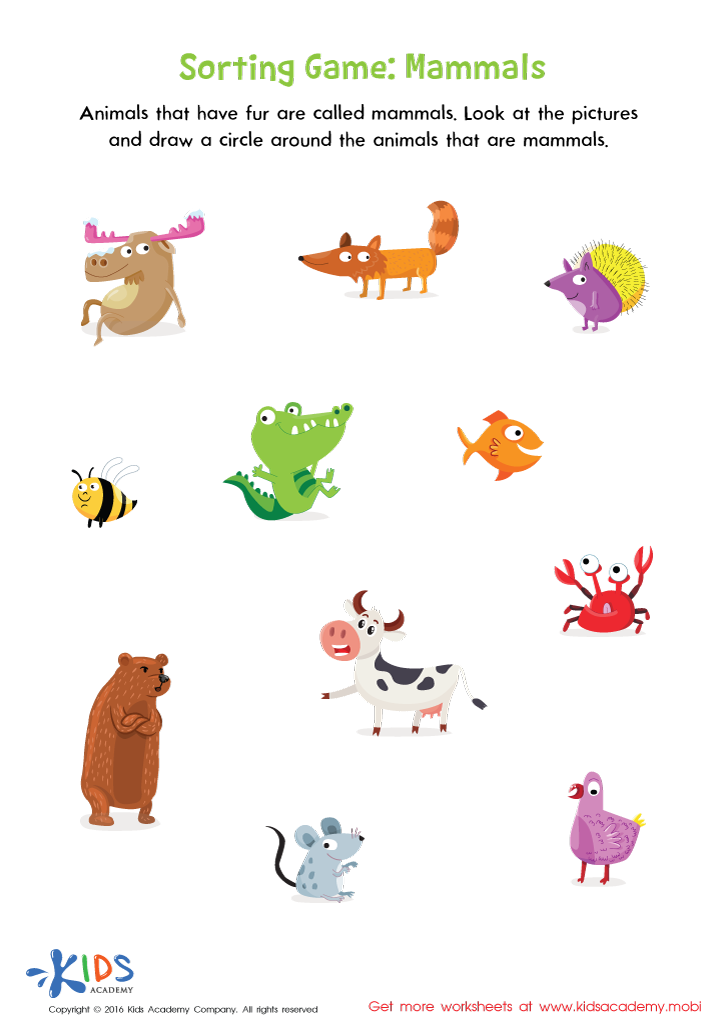
Mammals Sorting Worksheet
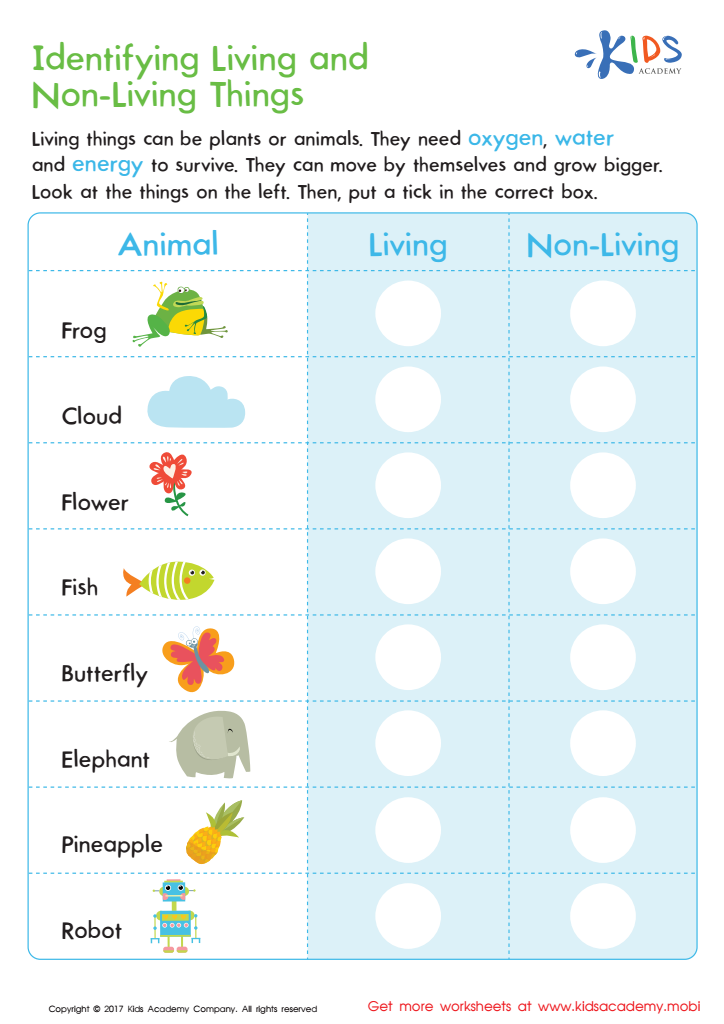
Identifying Living or Non–living Worksheet
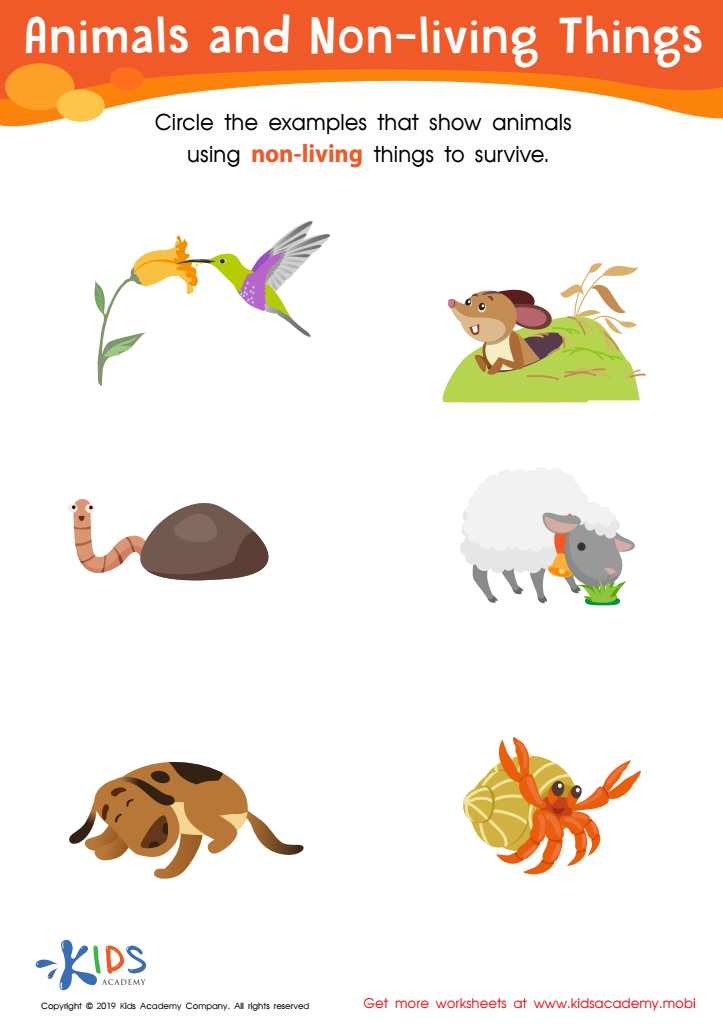
Animals and Non-Living Things Worksheet








Categorization skills are essential for young children, particularly those aged 4-5, as they form the foundation for critical thinking and problem-solving. When parents and teachers emphasize these skills in science, they help children learn to group objects, identify similarities and differences, and develop logical thinking. For instance, when children categorize animals by their habitats, they not only acquire knowledge of various species but also enhance their ability to make connections between concepts.
Additionally, mastering categorization helps with language development. Children learn to articulate their thoughts and describe their reasoning, fostering communication skills essential for future interactions. Engaging in science-related categorization activities also promotes curiosity and exploration, key components of a child’s intrinsic motivation to learn.
Furthermore, these skills support early STEM (science, technology, engineering, and mathematics) understanding, providing a basis for more complex concepts later in education. As children investigate and sort materials or phenomena, they develop observational skills that pave the way for scientific inquiry. Therefore, by advocating for categorization skills in science, parents and teachers not only enrich children's educational experiences but also equip them with vital cognitive tools necessary for lifelong learning and problem-solving in an increasingly complex world.







