
Sorting skills Science Worksheets for Ages 4-5
3 filtered results
Difficulty Level
Grade
Age
-
From - To
Subject
Activity
Standards
Enhance your child’s learning with our Sorting Skills Science Worksheets designed for ages 4-5. Our engaging and interactive worksheets help young learners explore the fundamentals of sorting through colorful visuals and hands-on activities. Kids will discover how to categorize objects by color, shape, size, and more, fostering critical thinking and observational skills. Each worksheet aligns with early childhood learning standards, making it perfect for homeschooling or classroom settings. Encourage your child's natural curiosity while developing their sorting abilities in a fun and educational way. Download, print, and watch as your little ones thrive in their scientific exploration!
Favorites
With answer key
Interactive
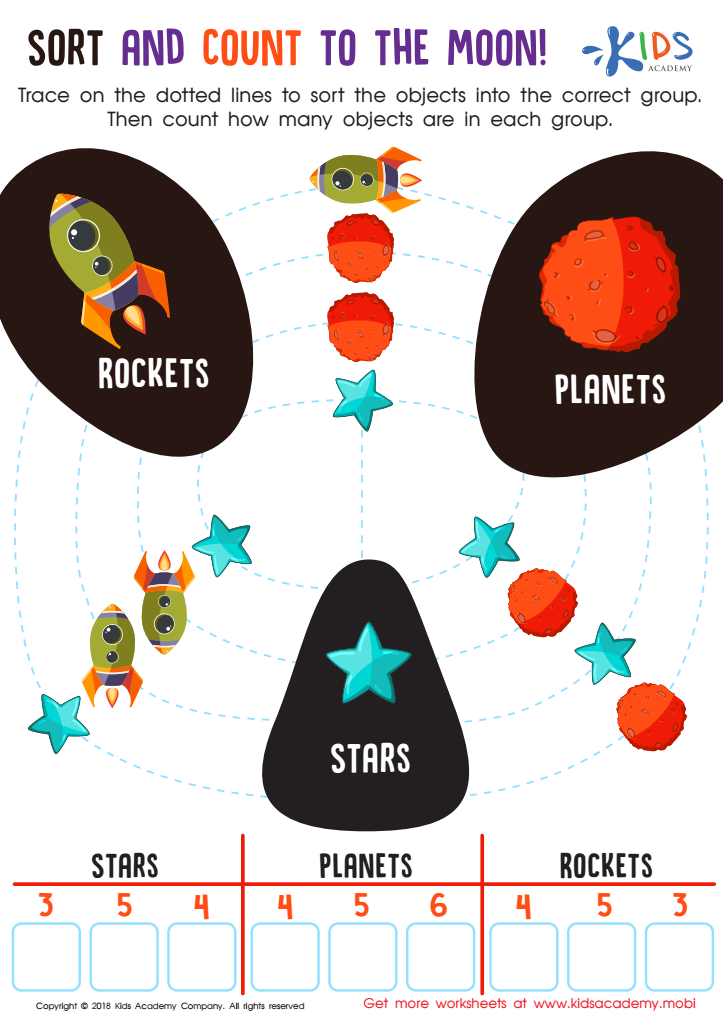
Sort and Count to the Moon Worksheet
Little space explorers will love counting, sorting and strengthening number sense with this galactic worksheet! They'll use traceable lines to sort pictures of stars, planets and rockets into categories according to properties. After sorting, they'll count each item and fill in the boxes. Bold pictures make it fun and build critical thinking skills.
 Assign to My Students
Sort and Count to the Moon Worksheet
Worksheet
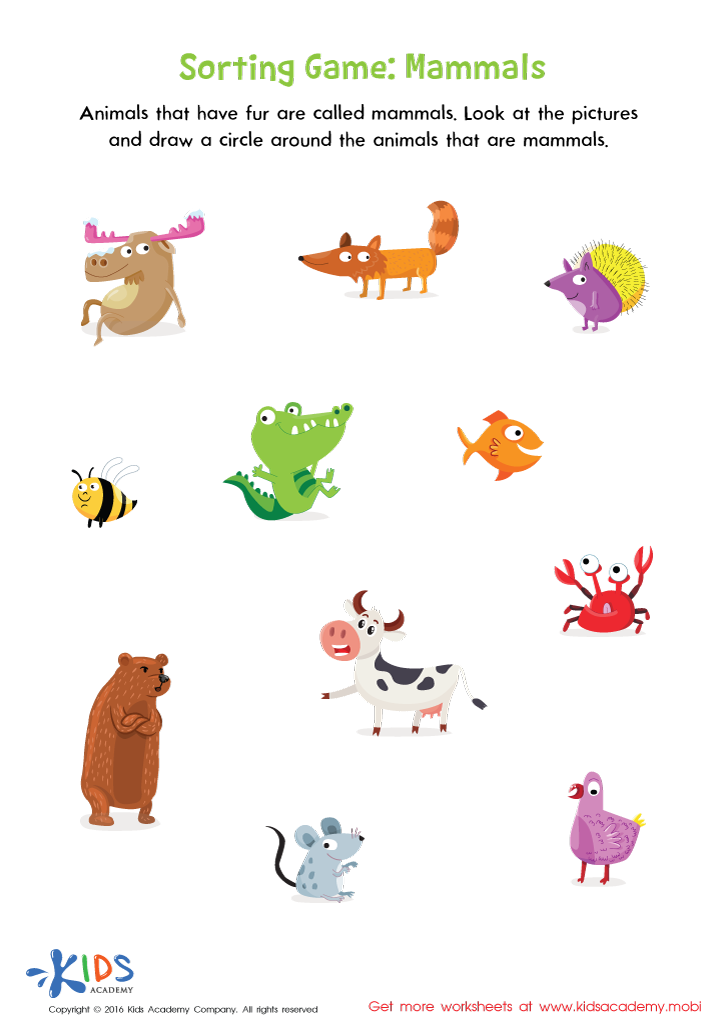
Mammals Sorting Worksheet
They'll practice sorting animals and learn their features with this fun worksheet.
Kids can test their scientific knowledge with this fun worksheet! They'll view pictures of animals, identify mammals based on their fur, and practice sorting them. This colorful worksheet is a great way for kids to learn about the differences between mammals and other animals.
Mammals Sorting Worksheet
Worksheet
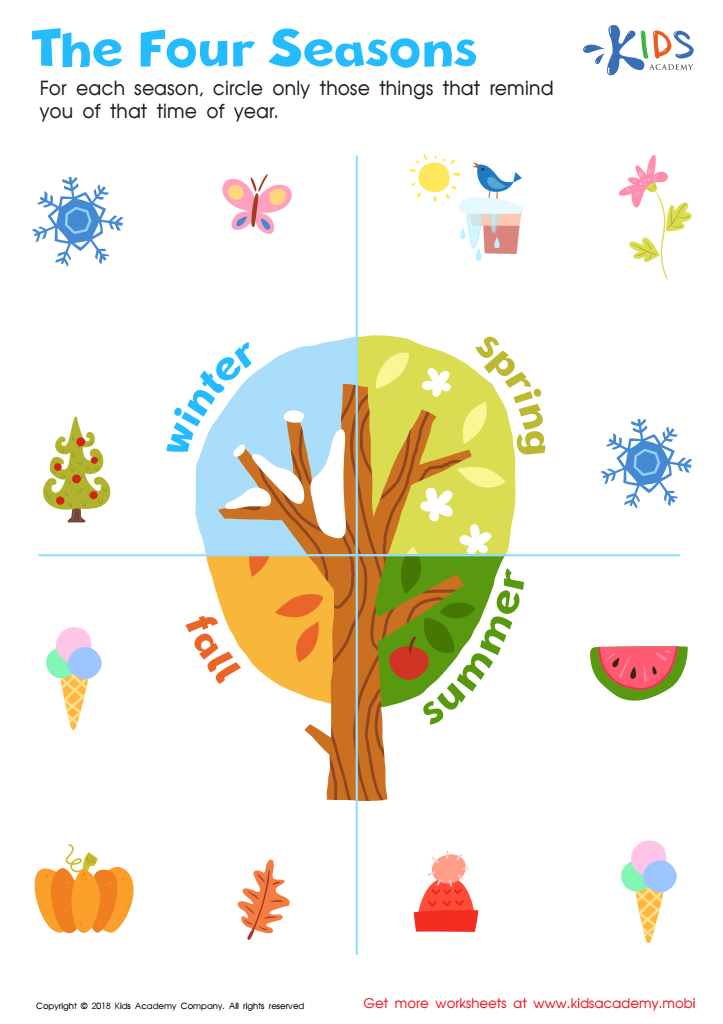
The Four Seasons Worksheet
Tell your child to circle things that remind them of each season. The tree has four squares, one for each season. Some things in each square match the season, others don't. Ask if any are out of place. Help them circle only items that remind them of that season.
The Four Seasons Worksheet
Worksheet
Join Kids Academy for Free
Who is primarily going to use this learning content?








Sorting skills are foundational for early childhood development, particularly in the science domain for children aged 4-5. These skills involve categorizing objects based on attributes such as size, color, shape, or function, which fosters critical thinking and analytical abilities. By engaging in sorting activities, young learners begin to recognize patterns and differences, elements essential for problem-solving.
For parents and teachers, emphasizing sorting skills aligns with cognitive development benchmarks tied to early science education. Through this practice, children enhance their observational abilities, learn to classify and organize information, and develop the groundwork for more complex scientific concepts later in education.
Sorting activities are also instrumental in building vocabulary as children describe their classifications and reasoning, promoting language development alongside cognitive growth. Furthermore, these skills advance mathematical concepts as young learners understand sets, quantities, and comparisons.
Ultimately, nurturing sorting skills in young children creates a nurturing environment where they are equipped not just for scientific inquiry, but for broader academic success. By integrating sorting activities into play-based learning, both parents and educators can contribute significantly to children’s developmental journey, igniting a lifelong curiosity about the world around them.







