
Understanding citizenship Community Worksheets for Ages 4-5
3 filtered results
Difficulty Level
Grade
Age
-
From - To
Subject
Activity
Standards
Introduce young learners to the basics of citizenship with our engaging "Understanding Citizenship Community Worksheets" designed for ages 4-5. These worksheets teach kids about the importance of being active and responsible community members, highlighting concepts like cooperation, empathy, and respect. Through fun activities and age-appropriate exercises, children will explore the roles they and others play in their communities, fostering a sense of belonging and social responsibility. Perfect for early learners, these worksheets support foundational social studies skills, helping children to understand their place in the world while building essential citizenship qualities. Download now to kickstart your child's journey to becoming a thoughtful citizen!
Favorites
With answer key
Interactive
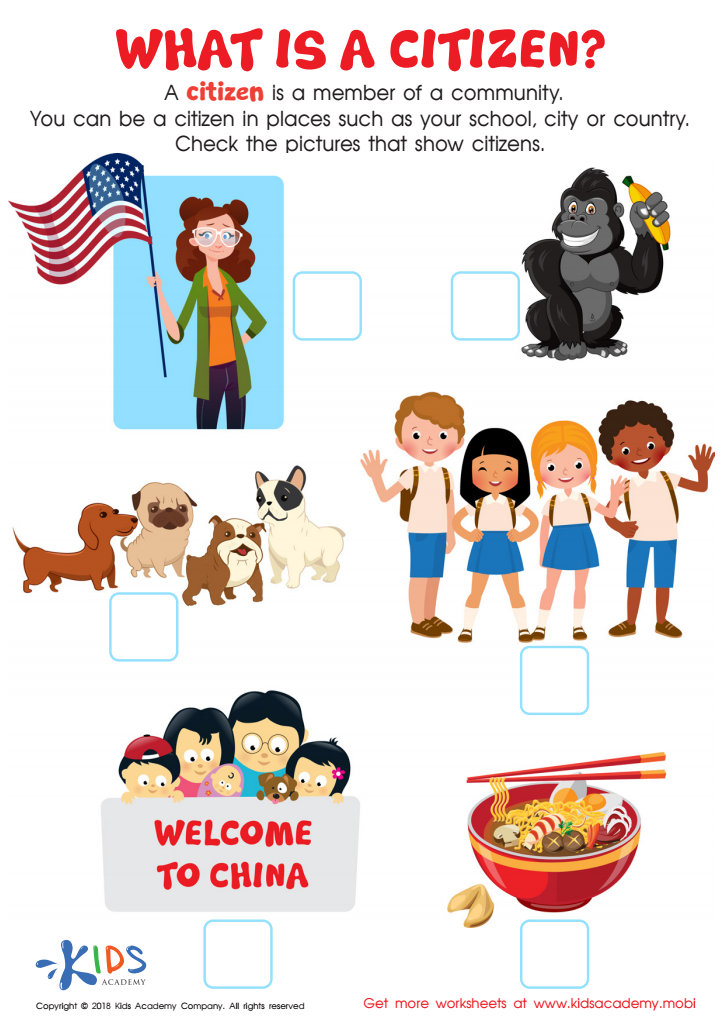
What is a Citizen? Worksheet
Do your students know who a citizen is? Use this worksheet to teach them: a citizen is a member of a community, such as your school, city or country. Look at the pictures in the pdf with your students. Ask them to identify who or what is in the pictures, and help them check which are citizens.
 Assign to My Students
What is a Citizen? Worksheet
Worksheet
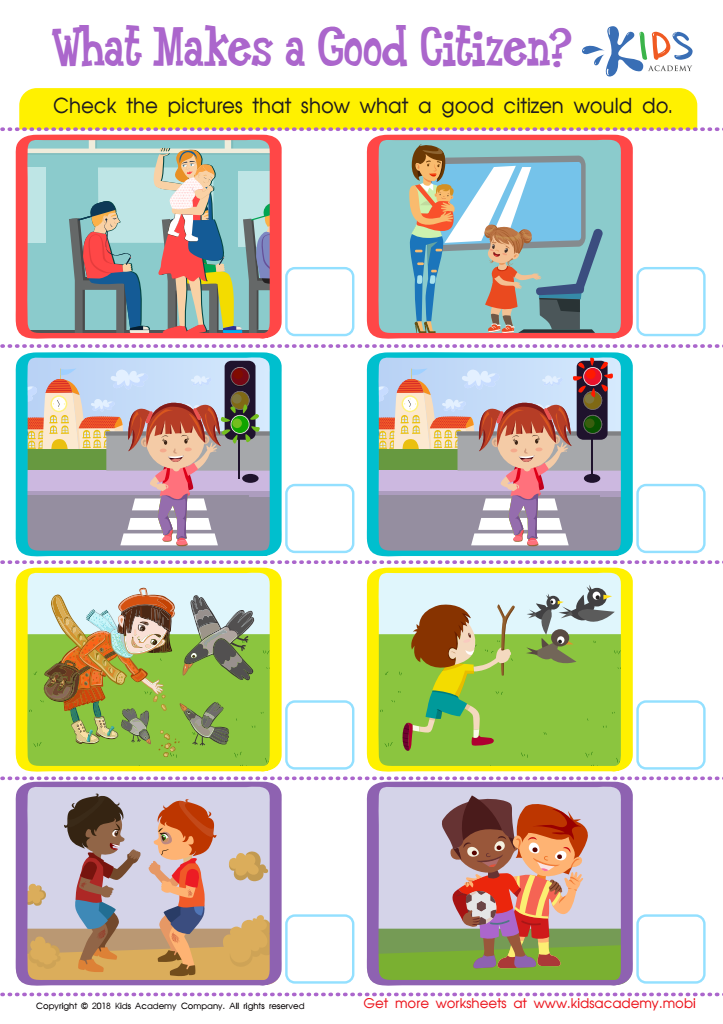
What Makes a Good Citizen? Worksheet
Ask your children to list some habits of a good citizen. Go through the worksheet and ask them if any of the pictures show good habits. Check the boxes of the actions that a good citizen would do to help your students understand what makes a good and bad citizen.
What Makes a Good Citizen? Worksheet
Worksheet
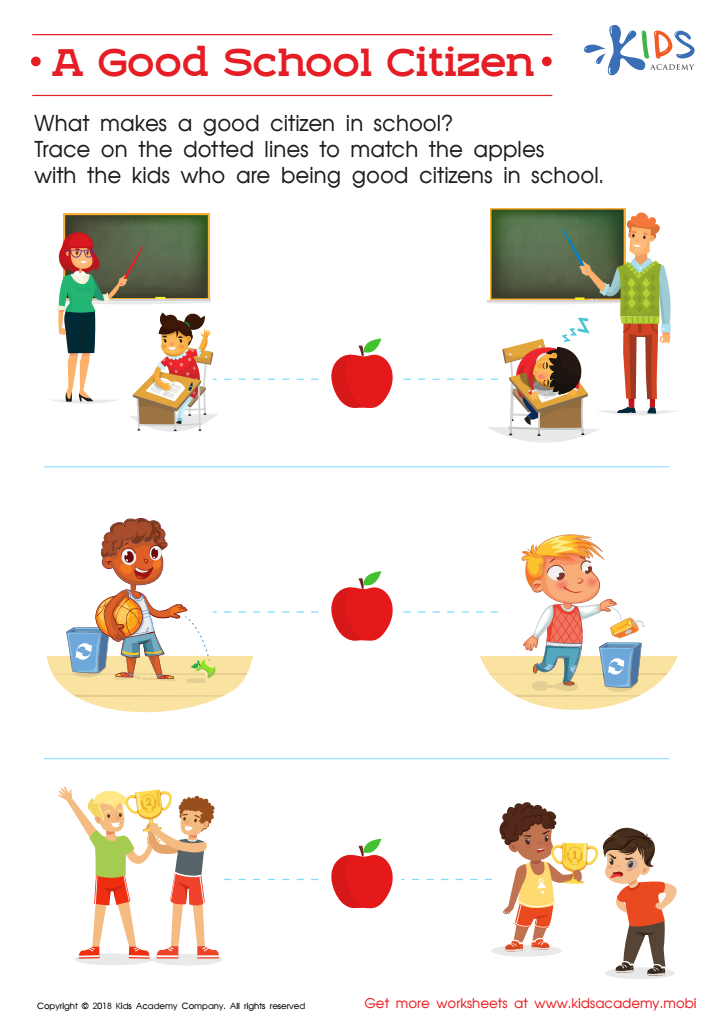
A Good School Citizen Worksheet
Ask your child to list qualities of a good citizen. Show them the pictures of good citizens in school and explain how they can display those behaviors. Help your kid trace the lines on the worksheet to match the pictures. Encouraging good citizenship in school helps children become upstanding members of their community.
A Good School Citizen Worksheet
Worksheet
Join Kids Academy for Free
Who is primarily going to use this learning content?







Understanding citizenship and community for children aged 4-5 lays a crucial foundation for their social and emotional development. At this formative age, kids are like sponges, soaking up values, behaviors, and norms that will shape their future interactions and relationships. Introducing concepts of citizenship helps children grasp the basics of responsibility, fairness, and empathy. It allows them to understand the importance of sharing, taking turns, and respecting others, which are vital skills for positive social interactions.
Knowledge of community fosters a sense of belonging and security. When children learn about the roles of various community helpers—like firefighters, doctors, and teachers—they begin to appreciate how everyone contributes to their well-being. This sense of connectedness can enhance their emotional development, making them feel valued and understood.
Moreover, early education in citizenship and community aids cognitive development by broadening their understanding of the world. It enhances critical thinking as kids learn to see things from multiple perspectives and understand different societal roles.
Instilling these values early ensures children grow up to be conscientious individuals who participate actively in their communities. Thus, both parents and teachers have a significant role in fostering these values, setting the stage for future responsible citizens who contribute positively to society.








