Capitalization rules Capitalization Worksheets for Ages 4-5
4 filtered results
-
From - To
Enhance your child's writing skills with our engaging Capitalization Worksheets designed specifically for ages 4-5. Our resources introduce essential capitalization rules in a fun and interactive way, ensuring young learners grasp these foundational concepts with ease. Through colorful activities and playful exercises, children will practice recognizing and correctly using capital letters in various contexts. Encouraging early literacy development, these worksheets foster critical thinking and creativity while making learning enjoyable. Perfect for home or classroom, our Capitalization Worksheets motivate early writers to shine. Empower your child’s writing journey today with captivating activities that build strong foundational skills!
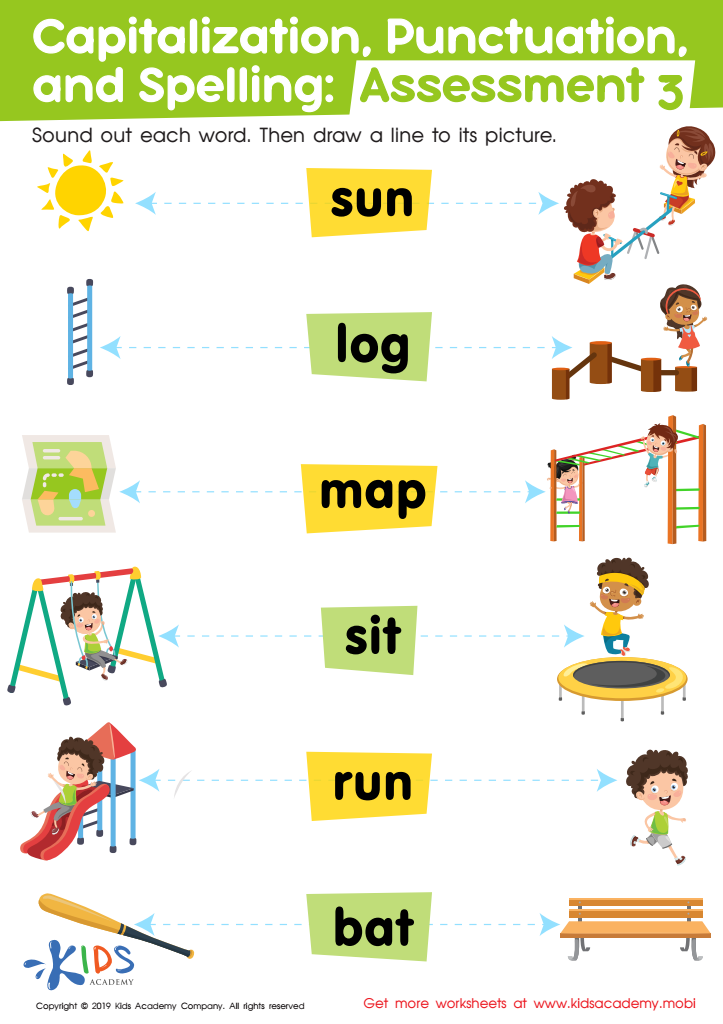
Capitalization. Punctuation. Spelling. Assessment 3 Worksheet
 Assign to My Students
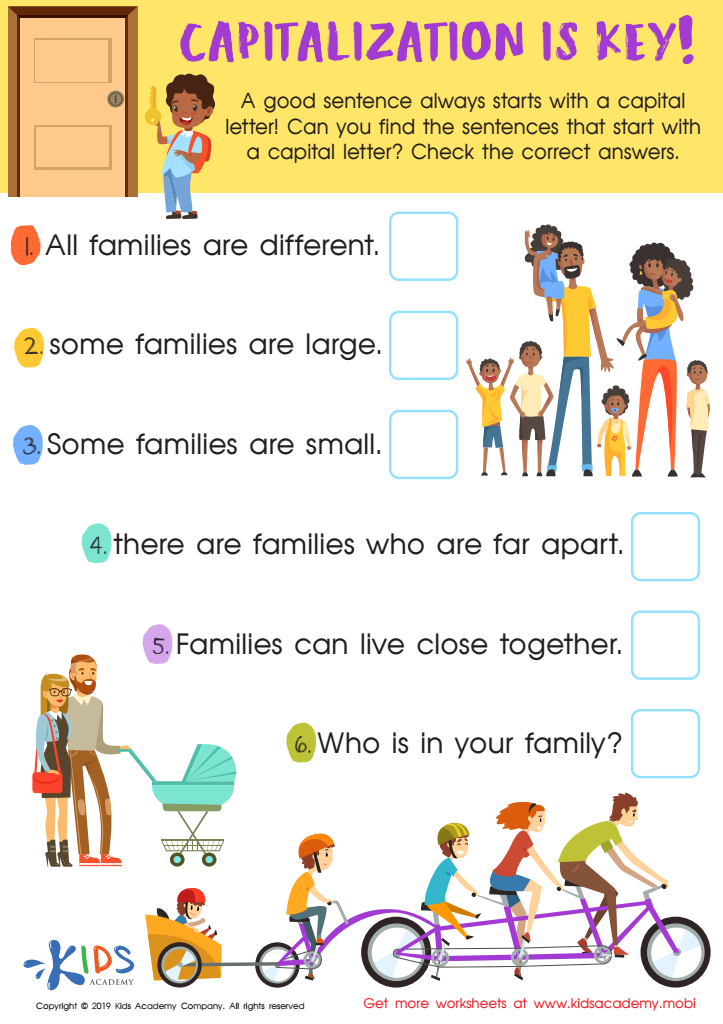
Capitalization Key Worksheet
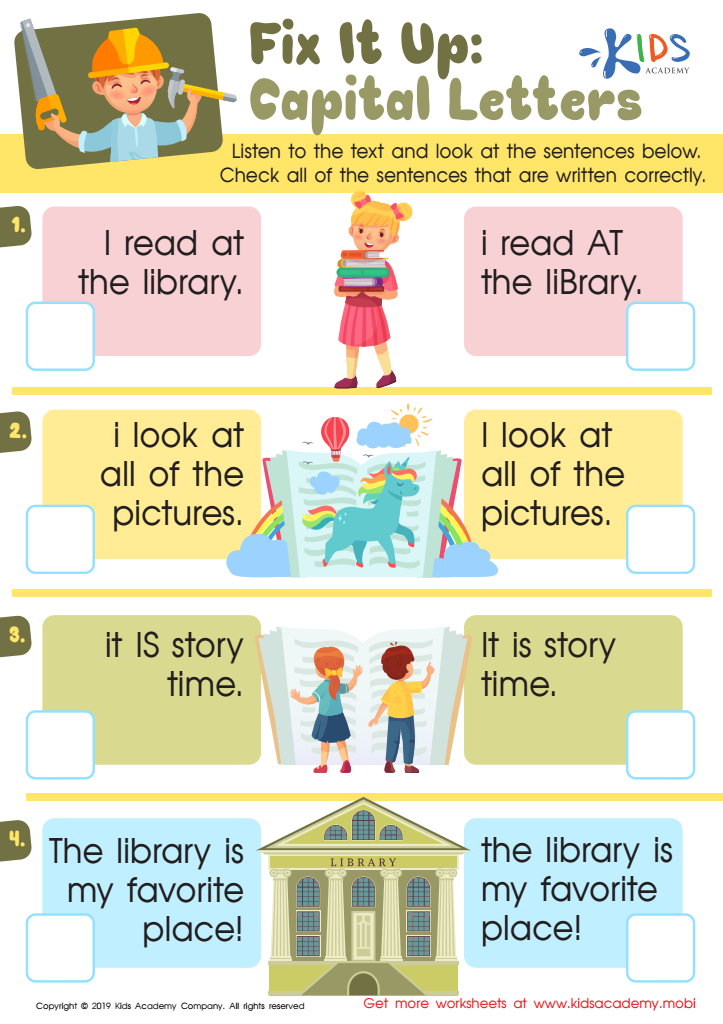
Fix Capital Letters Worksheet
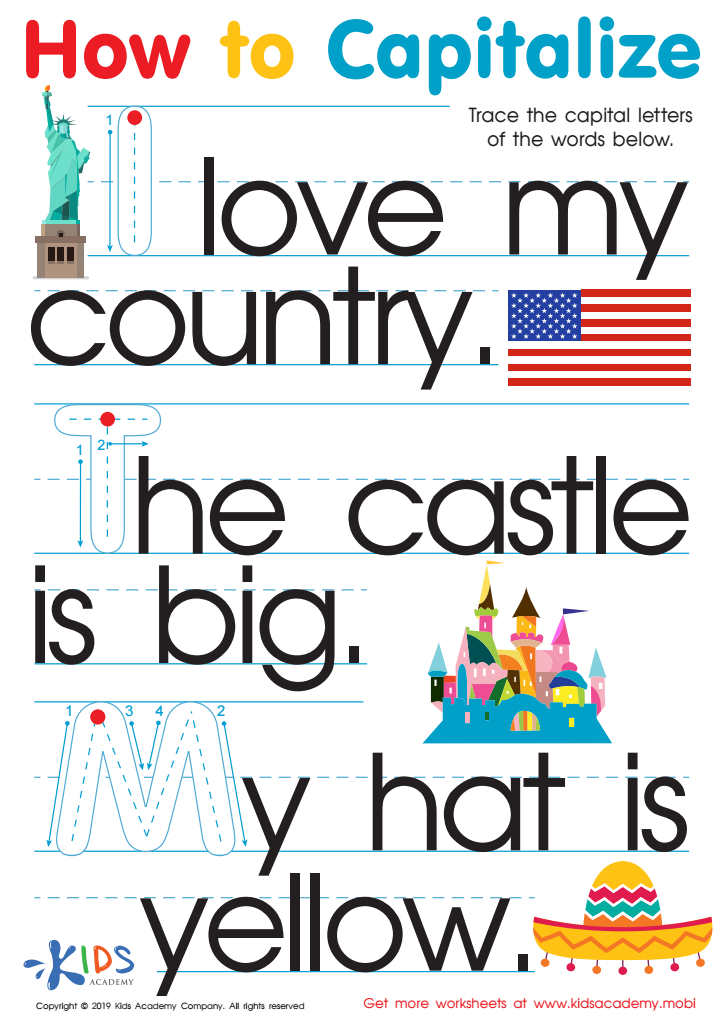
How to Capitalize Worksheet



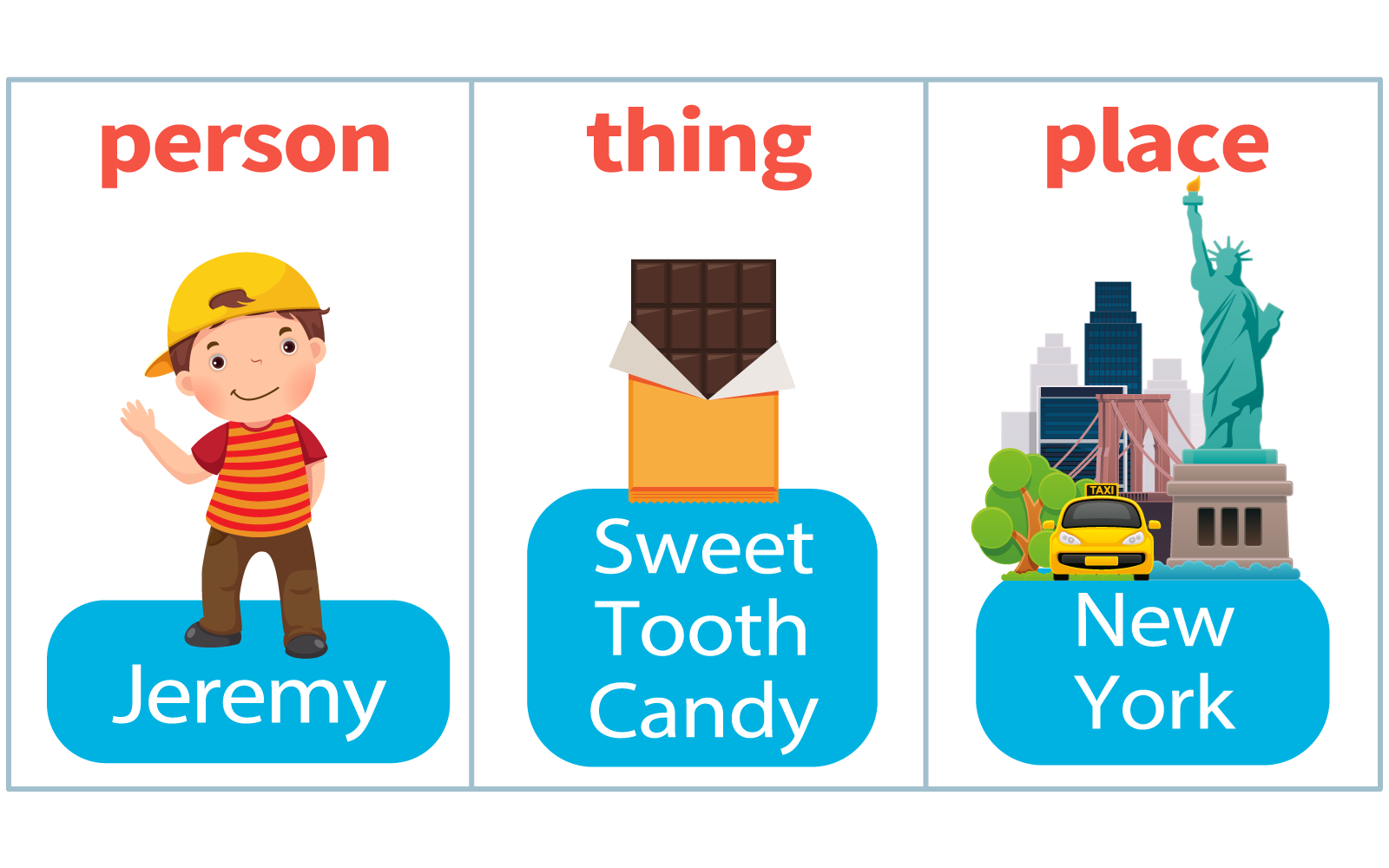
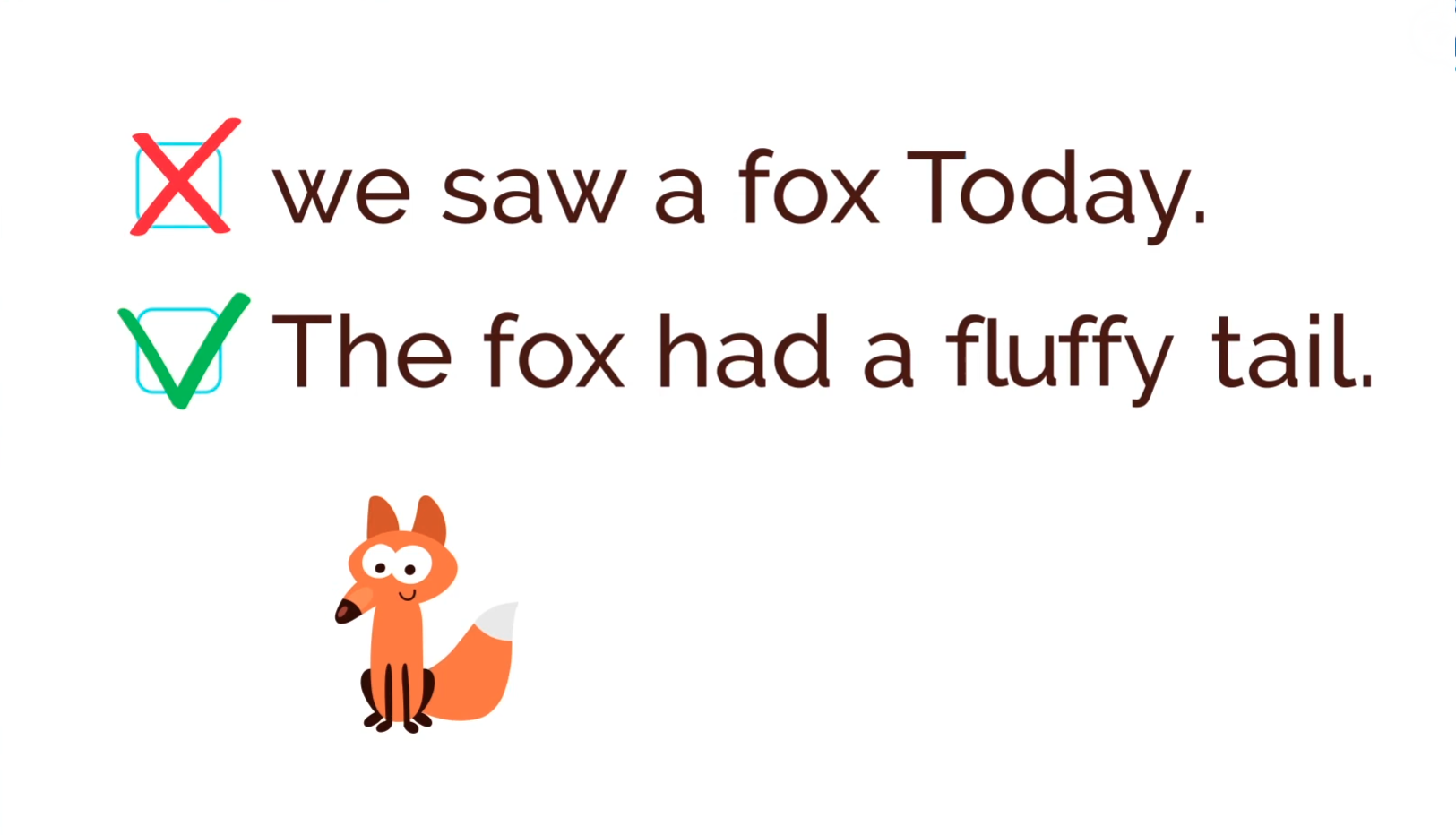


Understanding capitalization rules is crucial for children aged 4-5 as it lays the foundation for effective reading and writing skills. At this stage, children's literacy development is rapidly evolving, and grasping the concept of capitalization helps them differentiate between various types of words and their meanings. Capital letters signal the beginning of sentences, proper nouns, and titles, guiding comprehension and fostering effective communication.
When parents and teachers emphasize capitalization, they help young learners gain clarity in their writing. For example, distinguishing "Mary" from "mary" instantly communicates that the former is a person's name. This understanding bolsters children's reading fluency and encourages them to form proper sentences as they learn writing skills.
Furthermore, encouraging consistency with capitalization sets positive habits early on, paving the way for more complex grammatical concepts later in their education. Engaging children in playful lessons, like reading books with capitalized words, provides a fun context for learning. By prioritizing capitalization, both parents and teachers can cultivate enthusiastic learners who appreciate the nuances of language, making writing and reading more enjoyable and effective as they grow. Ultimately, these foundational skills contribute to children's overall literacy and academic success.








