
Noun identification Grammar Worksheets for Ages 4-5
4 filtered results
Difficulty Level
Grade
Age
-
From - To
Subject
Activity
Standards
Boost your child's grammar skills with our Noun Identification Grammar Worksheets designed for ages 4-5! These engaging and educational worksheets help young learners recognize and understand nouns through fun, illustrated activities. Perfect for preschool and kindergarten children, each worksheet focuses on identifying common nouns in various contexts, enhancing vocabulary and early reading skills. Tailored for young minds, our resources aim to make learning enjoyable while laying a strong foundation in grammar. Equip your child with the tools they need to excel in language and literacy with our expertly crafted worksheets. Start their learning journey today!
Favorites
With answer key
Interactive
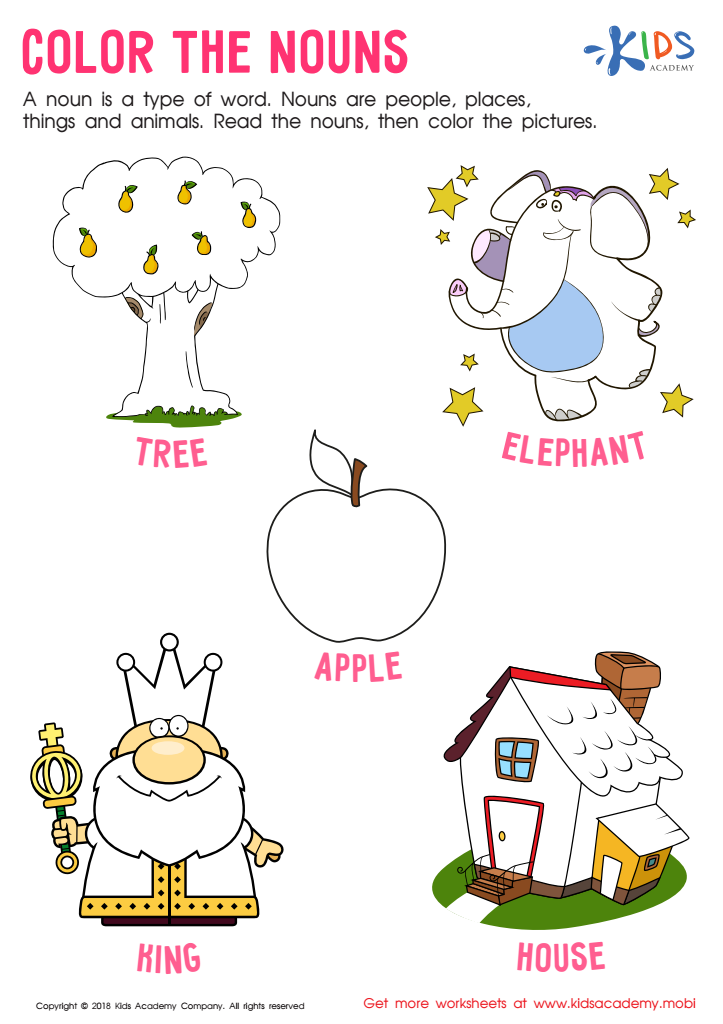
Color the Nouns Worksheet
Test your child's understanding of nouns with this downloadable worksheet. Explain that nouns are words for people, places, animals and things. With the coloring sheet, read each word and color the corresponding picture. By the end of it, your child should be able to recognize common nouns.
Download (PDF)
 Assign to My Students
Assign to My Students
Color the Nouns Worksheet
Worksheet
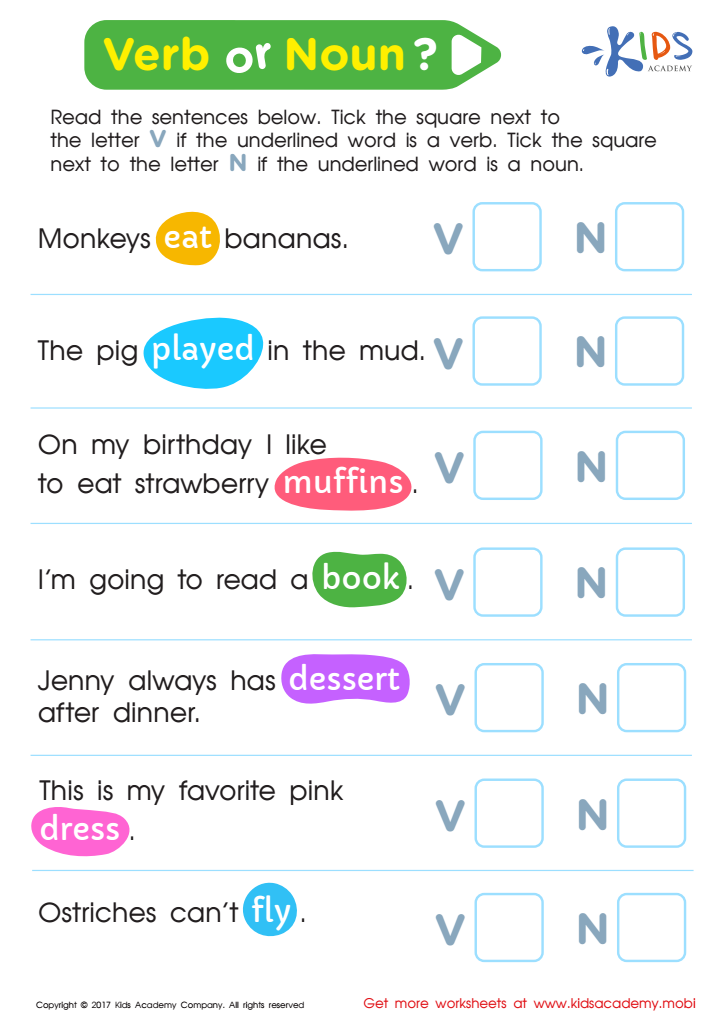
Verb or Noun Worksheet
This worksheet will help your child identify verbs and nouns quickly. With colorful highlights and simple sentences, they'll master parts of speech in no time! Get ahead of the game with this incredible worksheet.
Verb or Noun Worksheet
Worksheet
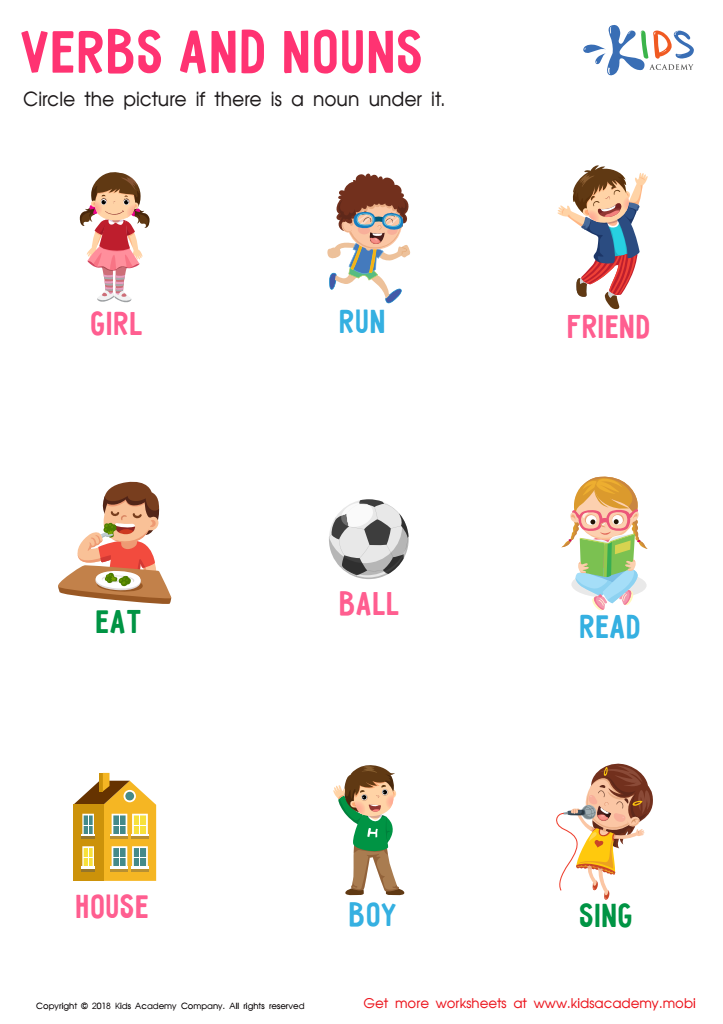
Verbs and Nouns Worksheet
Your child should have basic knowledge of verbs and nouns before starting this worksheet. Go through it with them and ask them to circle the pictures with nouns under them. This way, they'll become more familiar with parts of speech.
Verbs and Nouns Worksheet
Worksheet
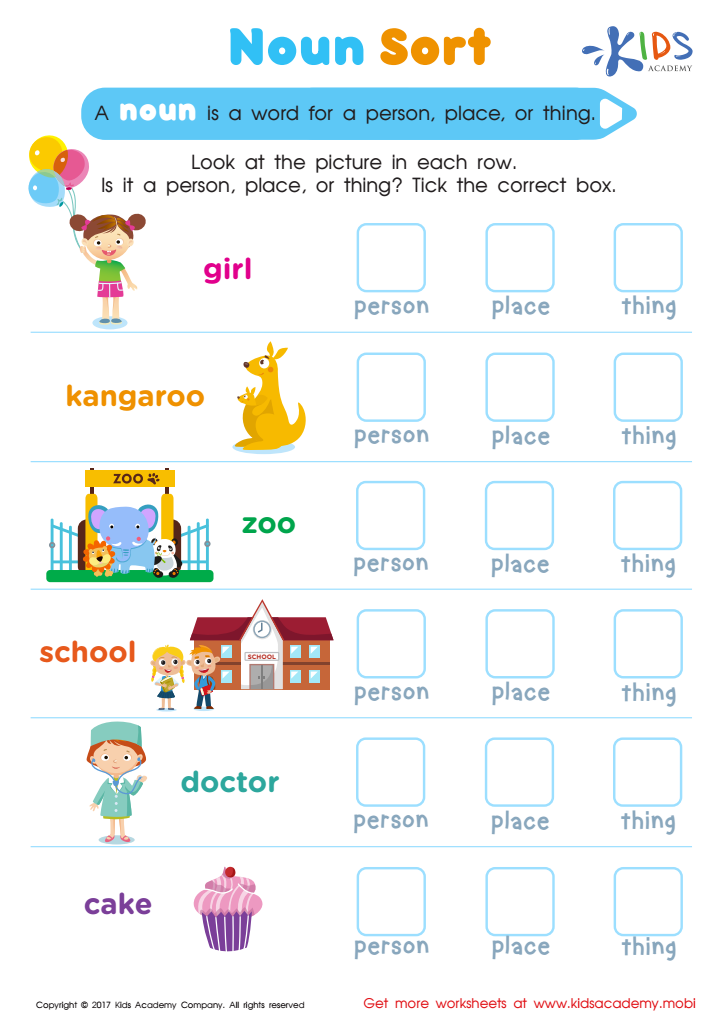
Noun Sort Printable
This printable worksheet helps kids sort nouns into person, place, or thing categories. Perfect for learning the basics of grammar!
This printable worksheet helps kids learn parts of speech by sorting nouns into person, place, or thing categories using familiar images. Perfect for mastering basic grammar!
Noun Sort Printable
Worksheet
Join Kids Academy for Free
Who is primarily going to use this learning content?




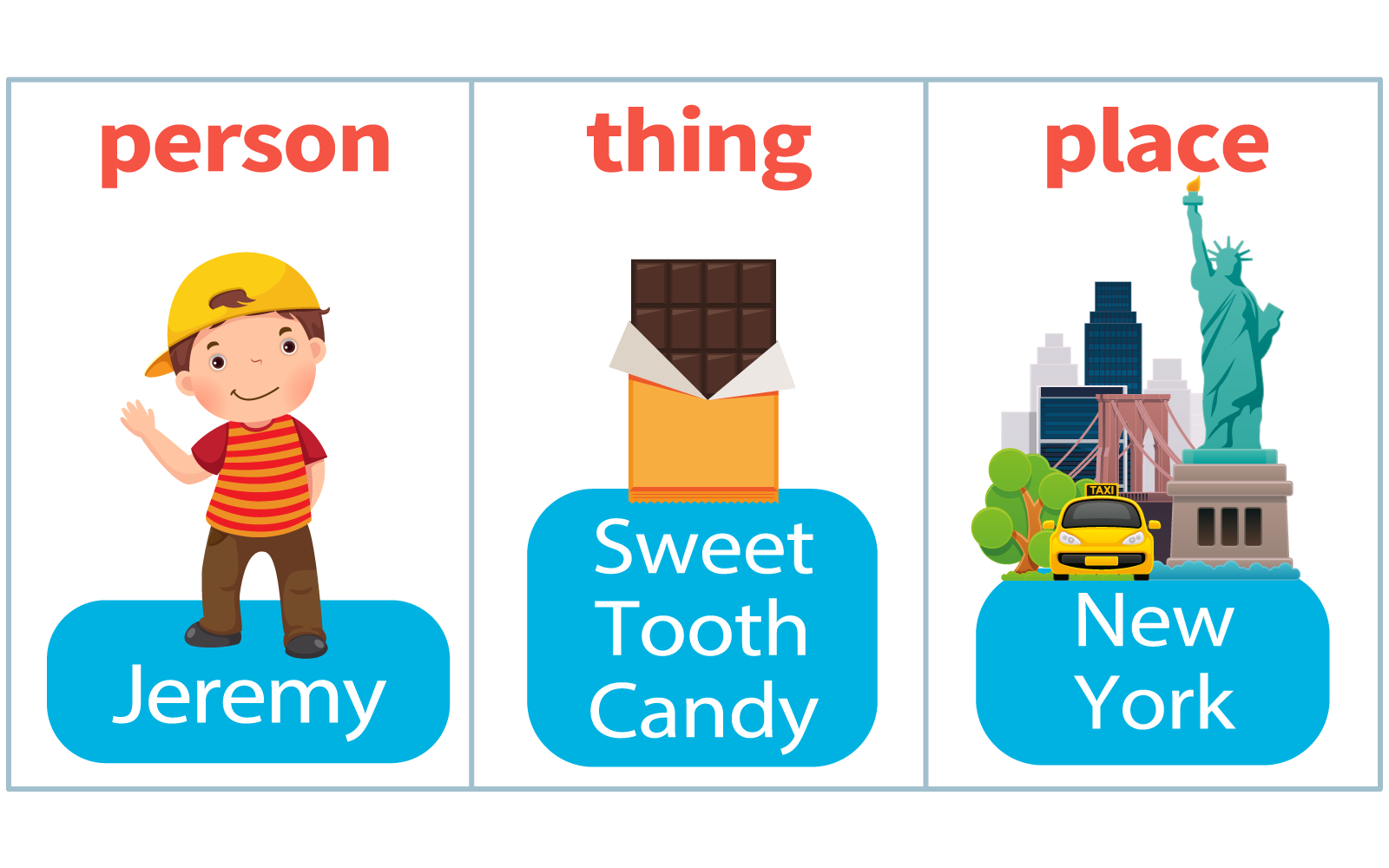


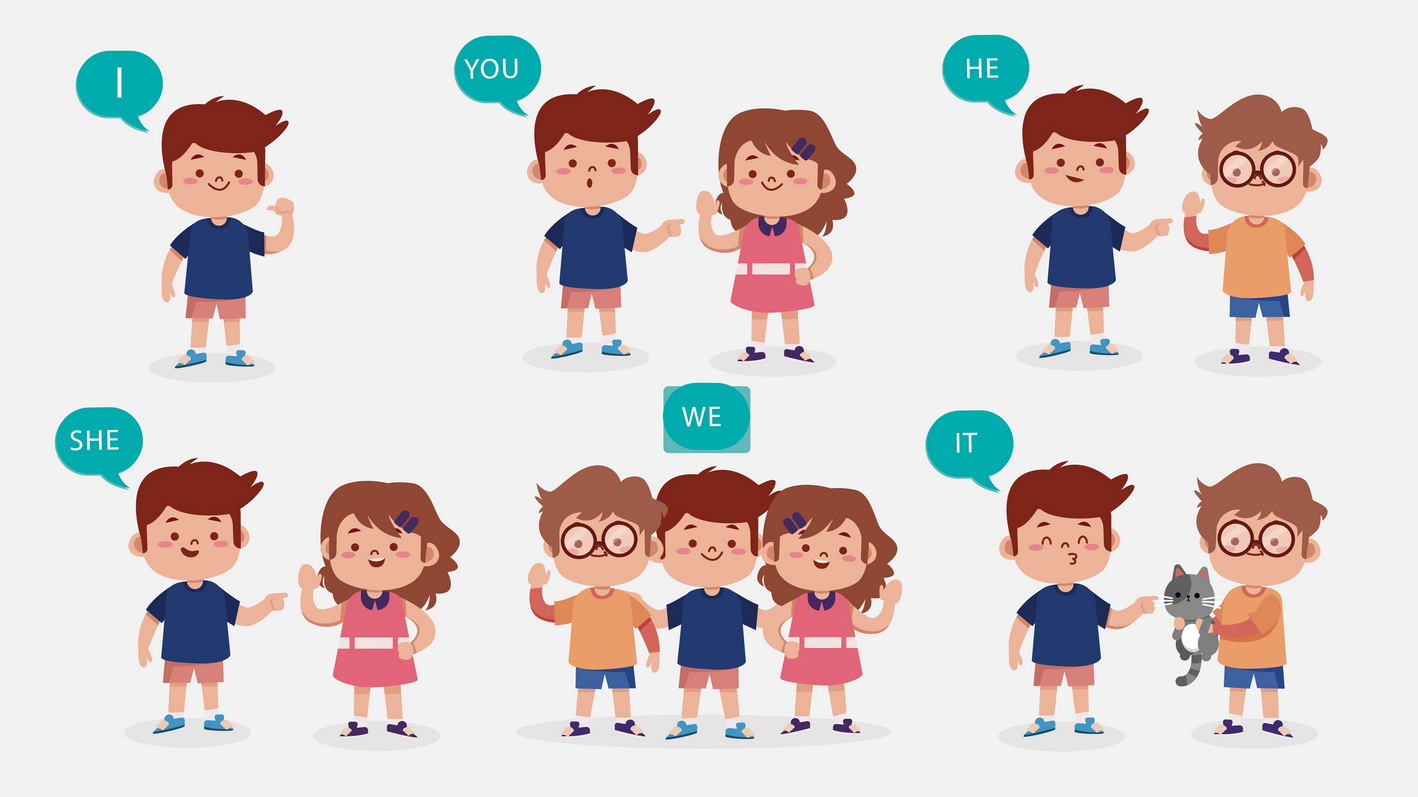
Noun identification is a critical aspect of early grammar education for children ages 4-5. At this stage, young learners are rapidly building their foundational language skills, and understanding nouns plays a fundamental role. Nouns, as the labels for people, places, things, and ideas, are building blocks of communication. When children can identify nouns, they can begin to effectively construct sentences and express themselves more clearly.
For parents and teachers, emphasizing noun identification not only enhances vocabulary but also aids in cognitive development. By learning to name objects and concepts, children improve their memory, categorization skills, and ability to make connections between words and their meanings. This process is crucial for later reading and writing success.
Moreover, proficiency in noun identification stimulates a child's curiosity and encourages observation of their environment. It fosters engagement during storytime, discussions, and everyday interactions, all of which are essential for holistic growth. Teachers can employ fun, interactive activities such as picture labeling, matching games, and storytelling to make learning nouns enjoyable.
In sum, focusing on noun identification in early education establishes a robust linguistic foundation, paving the way for more complex language development. This effort helps children become confident communicators and enthusiastic learners, ultimately supporting their overall academic and social success.








