Sentence construction Grammar Worksheets for Ages 4-5
4 filtered results
-
From - To
Enhance your child's writing skills with our engaging Sentence Construction Grammar Worksheets designed for ages 4-5! These colorful and interactive worksheets provide a fun way for young learners to understand the basics of sentence formation. Through a variety of activities, children will practice combining words, recognizing sentence structure, and using punctuation, all while boosting their vocabulary. As they explore and complete each worksheet, kids will gain confidence in their writing abilities. Perfect for parents and educators, our resources are tailored to support early literacy development and foster a love for language. Explore the world of sentence construction today!
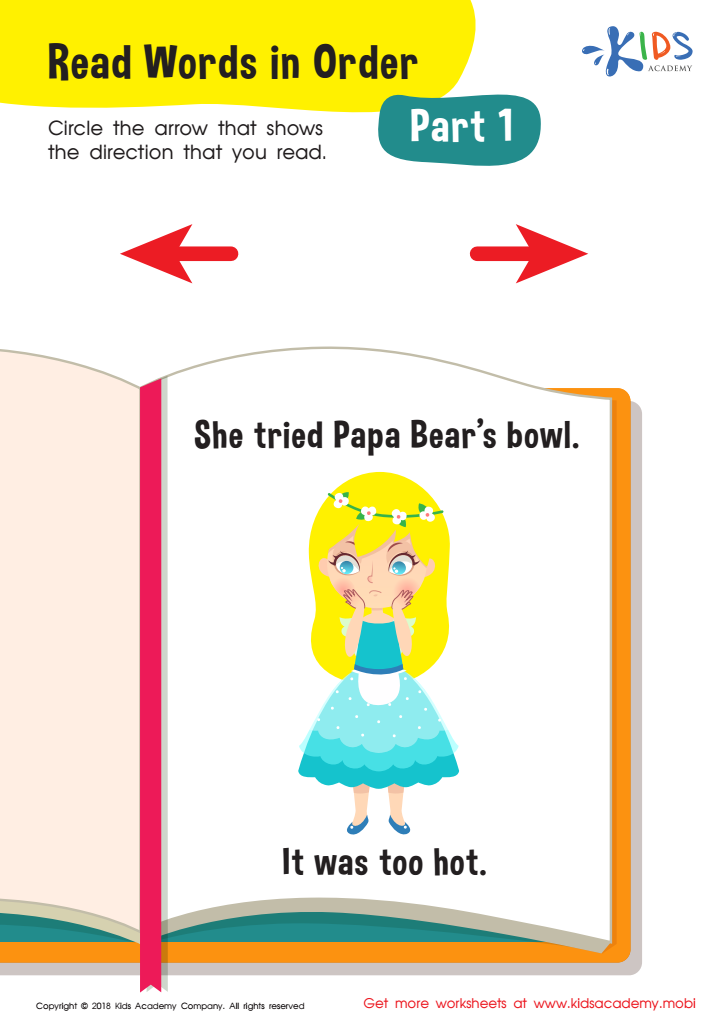
Read Words Order Part 1 Worksheet
 Assign to My Students
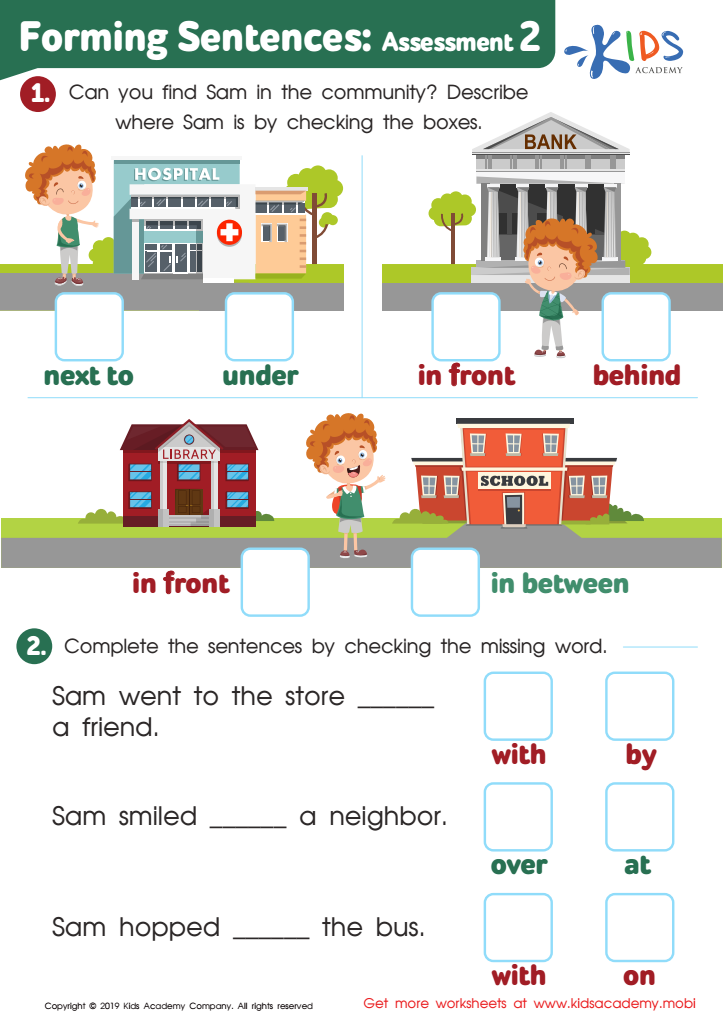
Forming Sentences: Assessment 2 Worksheet
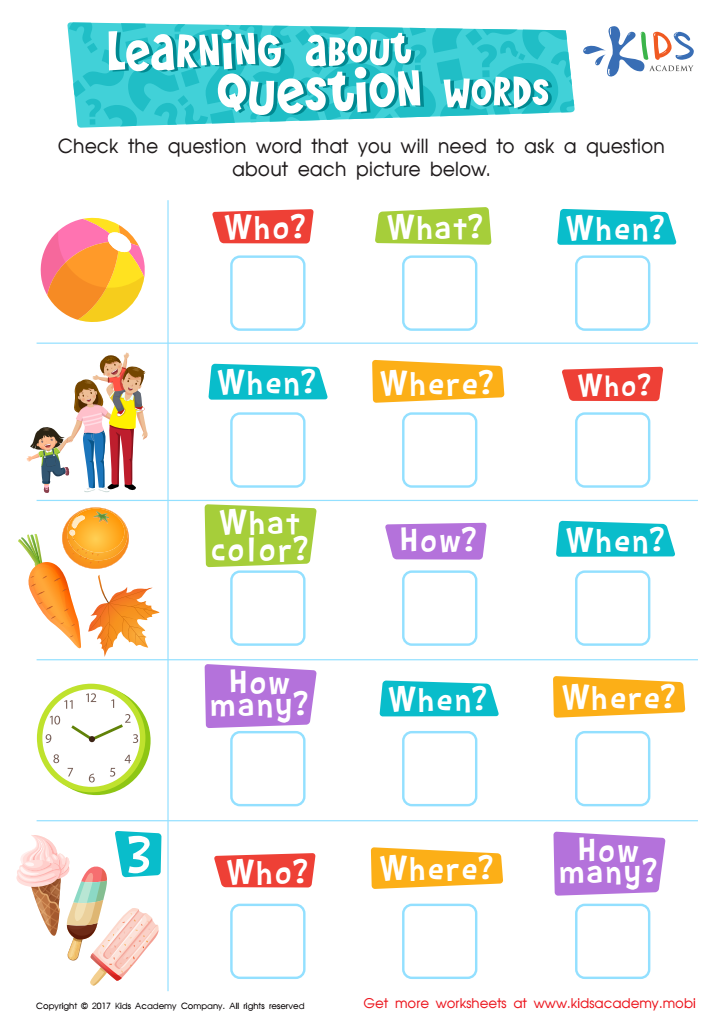
Learning about Question Words Worksheet
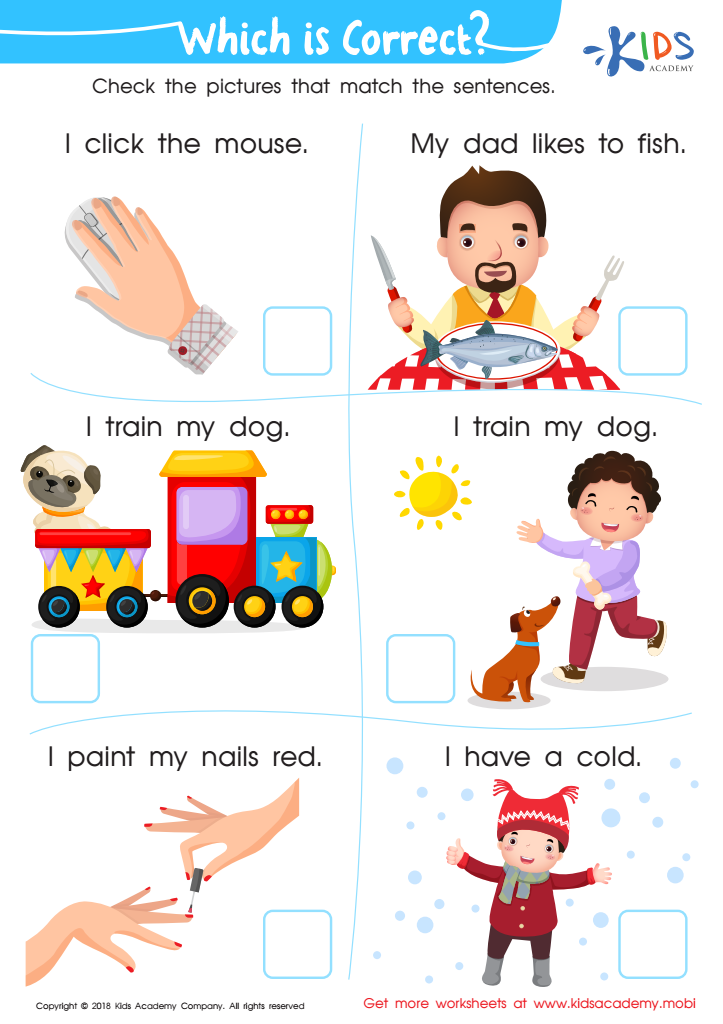
Which Is Correct? Worksheet








Parents and teachers play a crucial role in the early literacy development of children aged 4-5, and understanding sentence construction grammar is essential. At this age, children are beginning to develop their language skills and enhancing their ability to communicate effectively. Focusing on sentence construction helps children learn how to articulate their thoughts, feelings, and ideas clearly.
Learning about grammar and sentence structure provides a foundation for effective communication. Children understand where words fit in a sentence and how to express themselves logically and coherently. This is vital for their social interactions, enabling them to engage in conversations, follow instructions, and respond appropriately to questions.
Additionally, mastering sentence construction lays the groundwork for future reading and writing skills. As children learn to form sentences, they develop an awareness of how stories and information are structured. This awareness fosters their comprehension abilities and encourages a love of language.
Furthermore, a strong grasp of sentence construction can boost a child's confidence in speaking and writing. When parents and teachers support this aspect of language development, they empower children with essential skills that will benefit them throughout their education and personal lives. Overall, caring about sentence construction grammar is investing in a child’s communication success.








