Noun identification Writing Worksheets for Ages 4-5
4 filtered results
-
From - To
Introducing our Noun Identification Writing Worksheets designed specifically for children aged 4-5! These engaging and educational worksheets are crafted to help young learners identify and write nouns, laying a strong foundation for early grammar skills. Each worksheet is filled with fun and interactive activities that make learning enjoyable. By recognizing nouns in various contexts, children enhance their vocabulary, reading comprehension, and writing abilities. Ideal for both classroom and home use, our worksheets are a fantastic resource for parents and educators aiming to boost a child's language development in an exciting and approachable way.
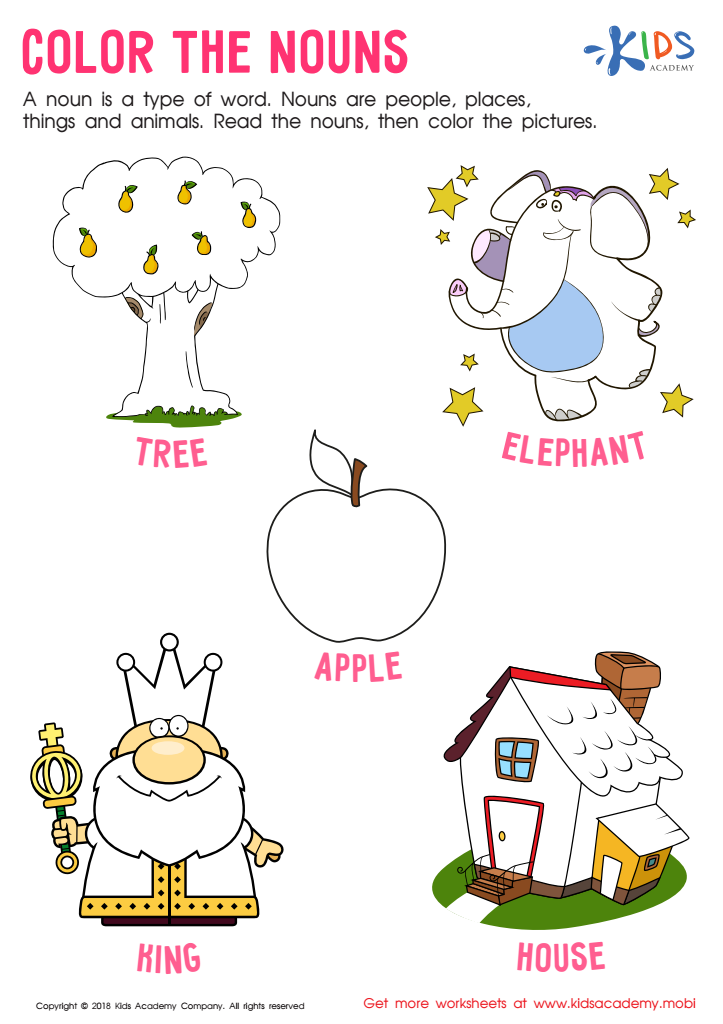
Color the Nouns Worksheet
 Assign to My Students
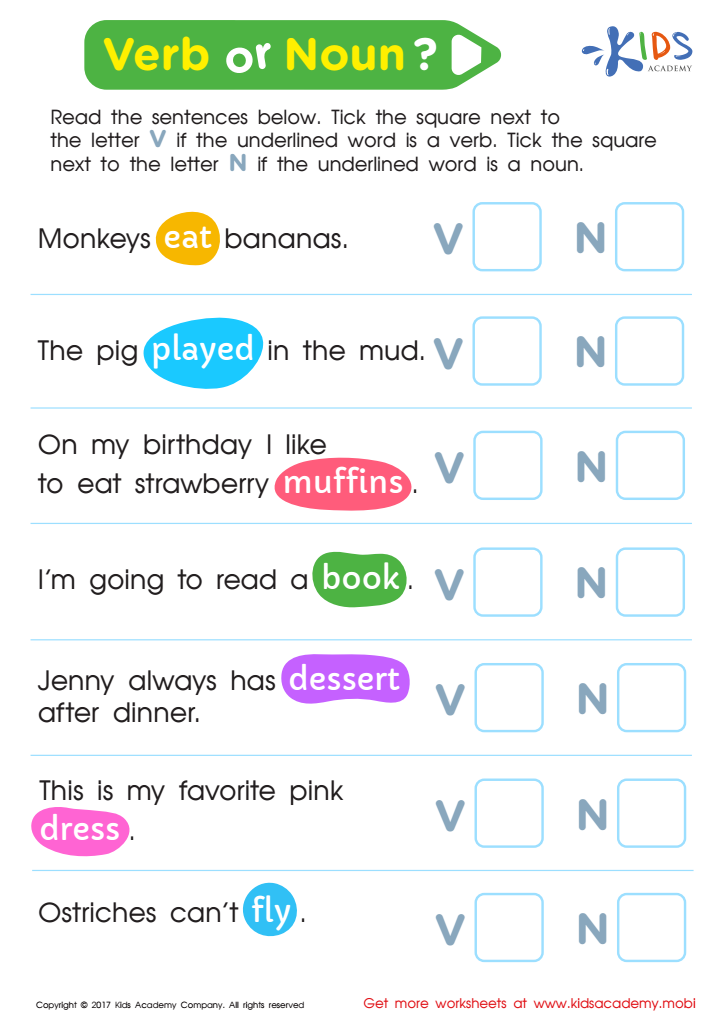
Verb or Noun Worksheet
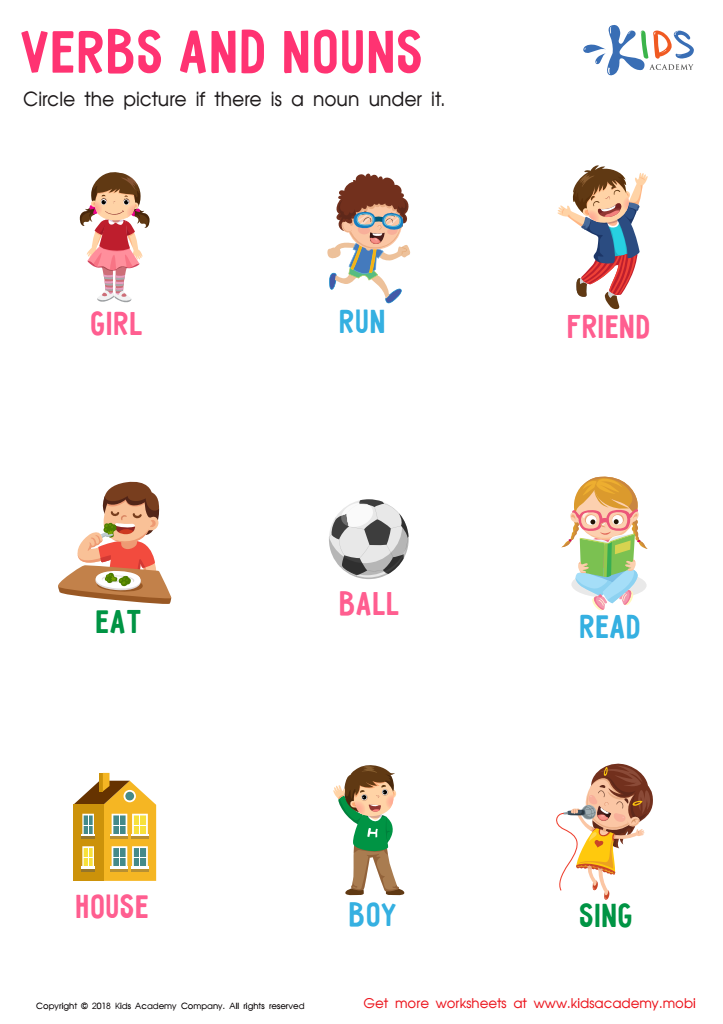
Verbs and Nouns Worksheet
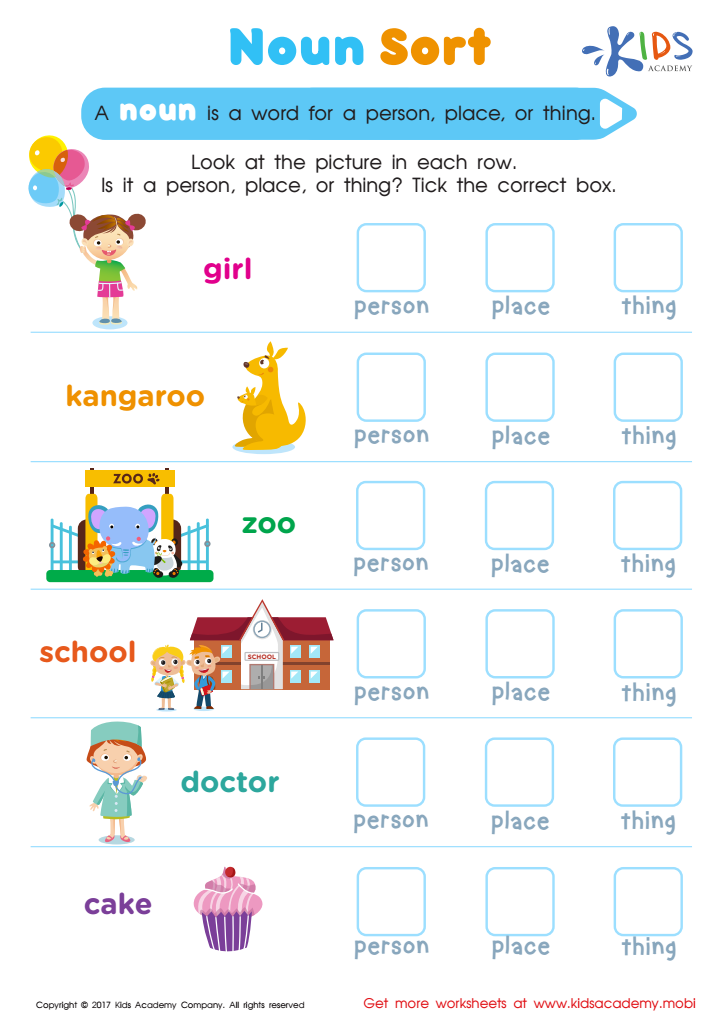
Noun Sort Printable








Teaching noun identification to children ages 4-5 is essential for several critical reasons. At this developmental stage, young learners are just beginning to build their language and literacy skills. Understanding basic nouns—which are naming words for people, places, things, or animals—forms a foundation for more complex language use.
Firstly, recognizing nouns helps improve vocabulary. As children identify and name common objects around them, like 'cat', 'ball', or 'tree', they are better able to describe their world, enhancing both their communication and comprehension abilities. This early vocabulary expansion facilitates both spoken and written language development.
Secondly, noun identification plays a significant role in sentence formation. When children know what nouns are, they can start constructing simple sentences like "The cat sits" or "I have a ball", which is crucial for developing both reading and writing skills.
Moreover, identifying nouns aids in the understanding of grammatical structures. By learning to distinguish between nouns and other parts of speech—like verbs or adjectives—children gain a clearer understanding of how language works, promoting better grammar usage as they progress in their education.
Therefore, parents and teachers should prioritize noun identification to support children’s overall language development, setting a strong foundation for future academic success.








