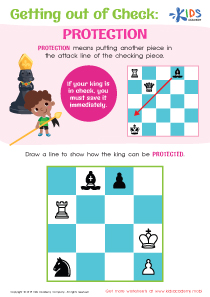
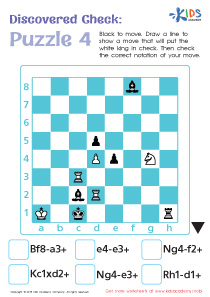
Strategic thinking development Chess Worksheets for Ages 4-6
10 filtered results
-
From - To
Unlock your child's potential with our engaging Strategic Thinking Development Chess Worksheets, designed specifically for ages 4 to 6. These worksheets provide an exciting way to introduce young learners to fundamental chess concepts while fostering critical thinking and problem-solving skills. Activities include matching games, patterns, and simple chess scenarios that inspire creativity and enhance cognitive abilities. With colorful illustrations and age-appropriate challenges, our worksheets stimulate curiosity and promote strategic reasoning in a fun environment. Whether at home or in the classroom, these resources are perfect for cultivating essential skills that benefit overall learning and development. Start your child's chess journey today!
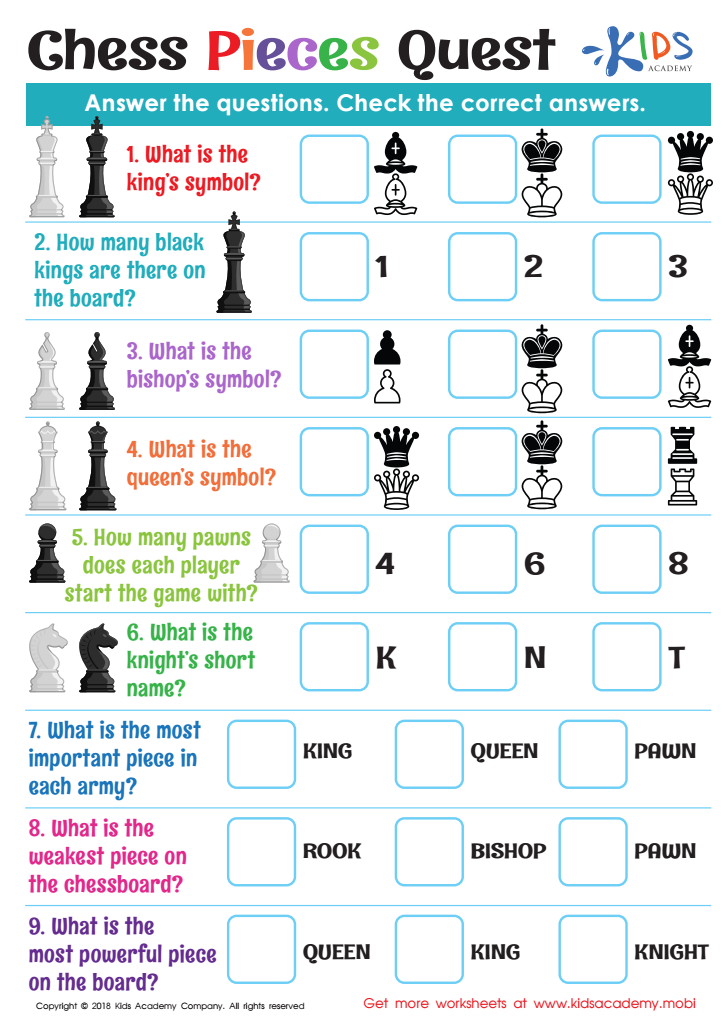
Chess Pieces Quest Worksheet
 Assign to My Students
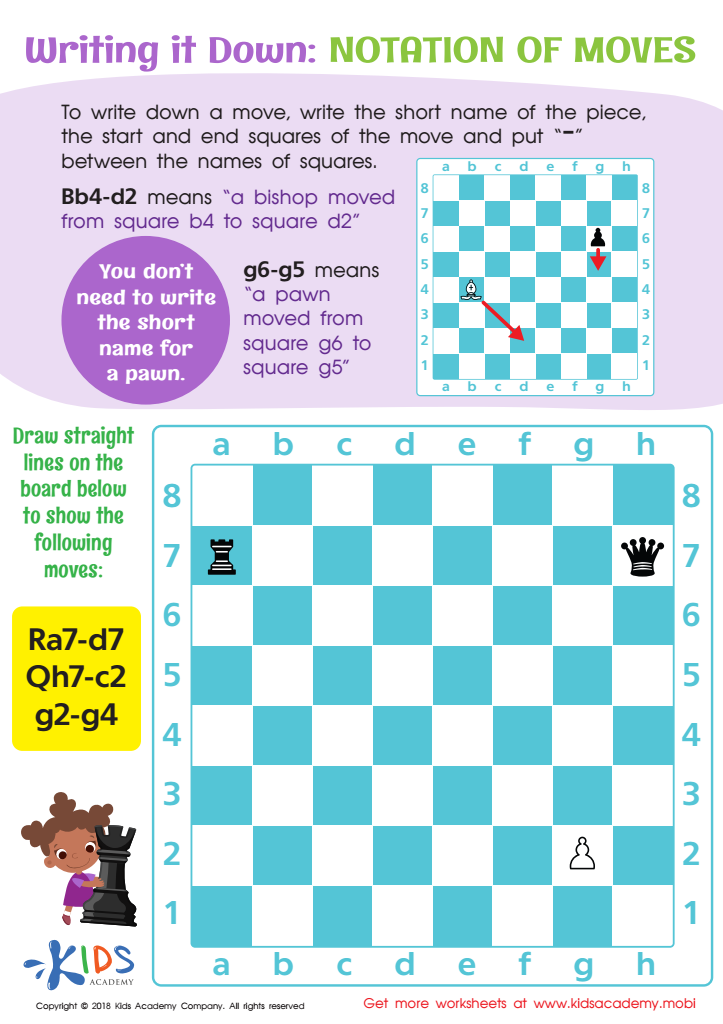
Notation of Moves Writing it Down Worksheet
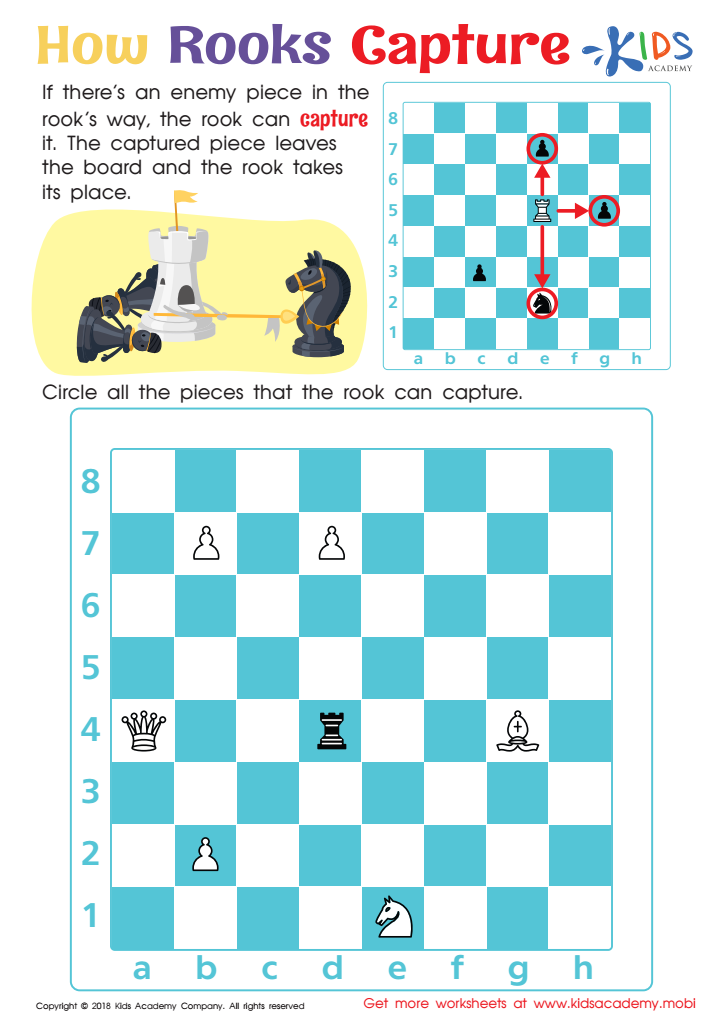
How Rooks Capture Worksheet
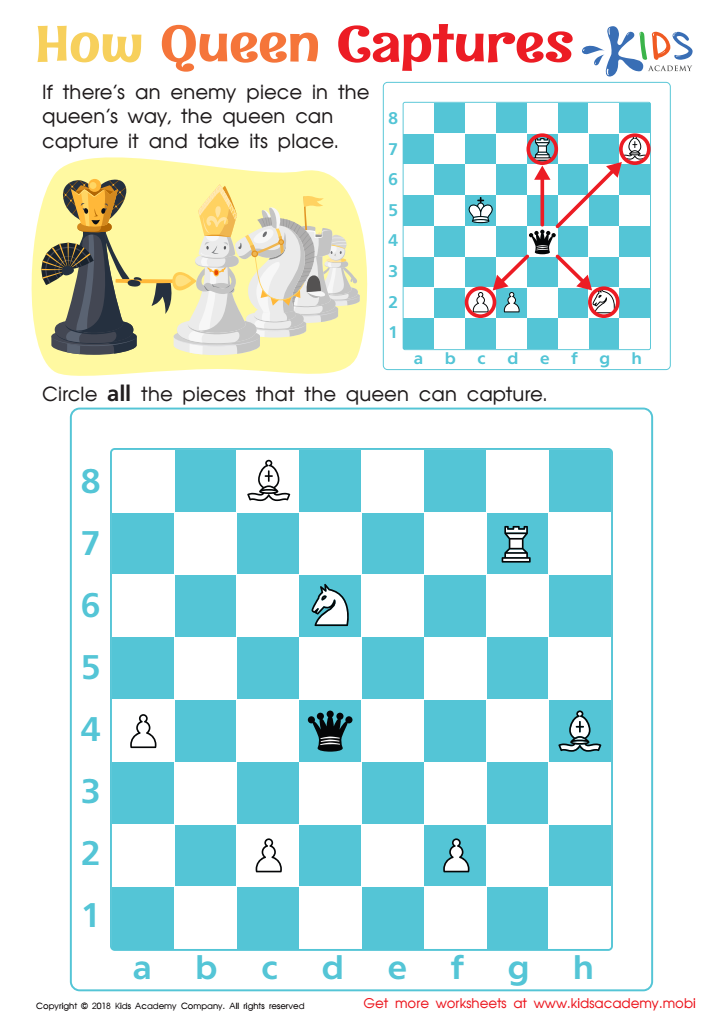
How Queen Captures Worksheet
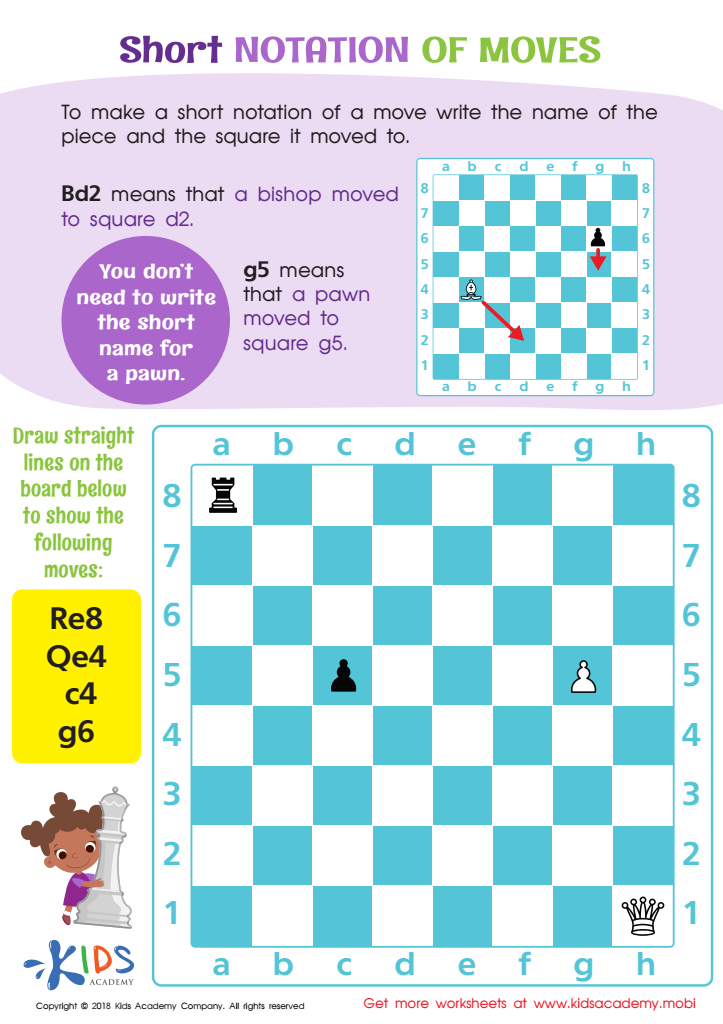
Short Notation of Moves Worksheet
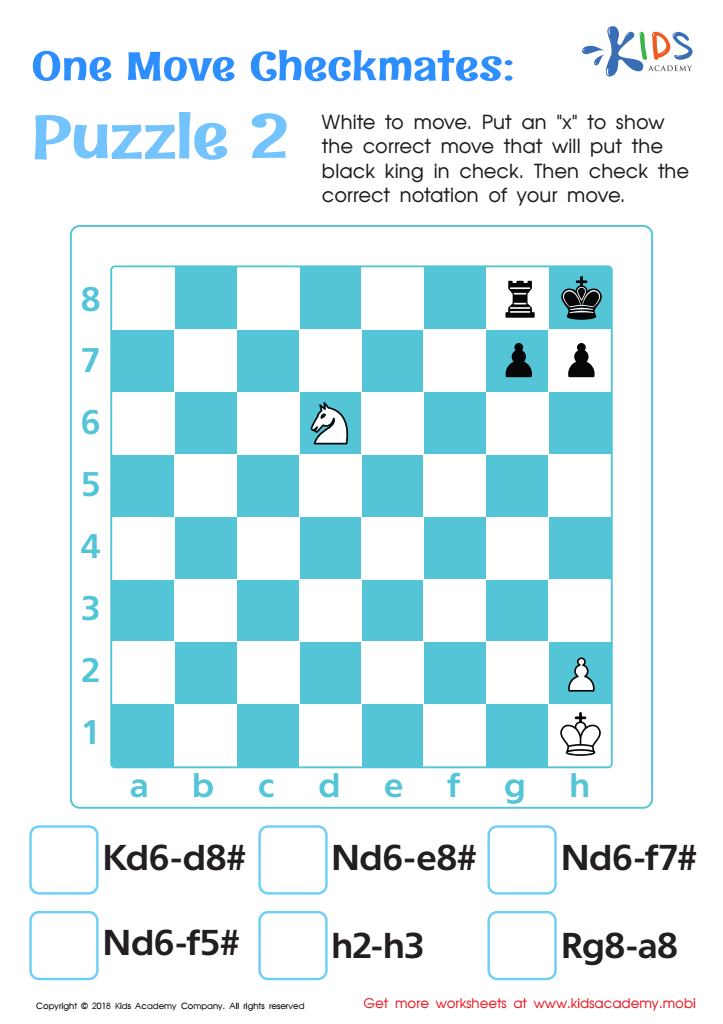
One Move Checkmates: Puzzle 2 Worksheet
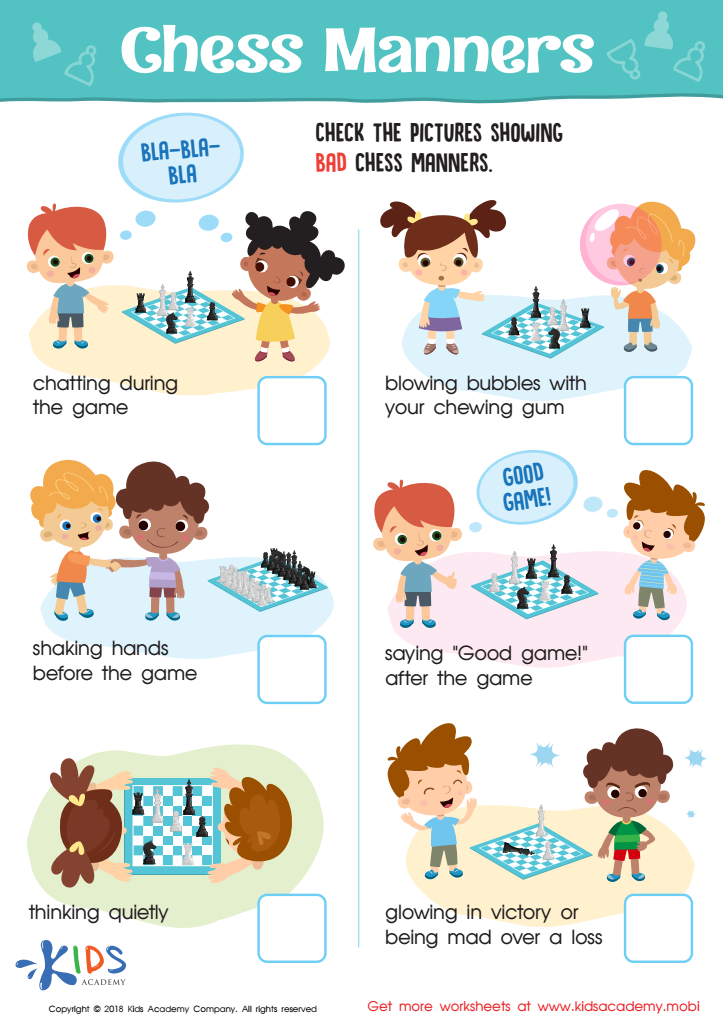
Chess Manners Worksheet
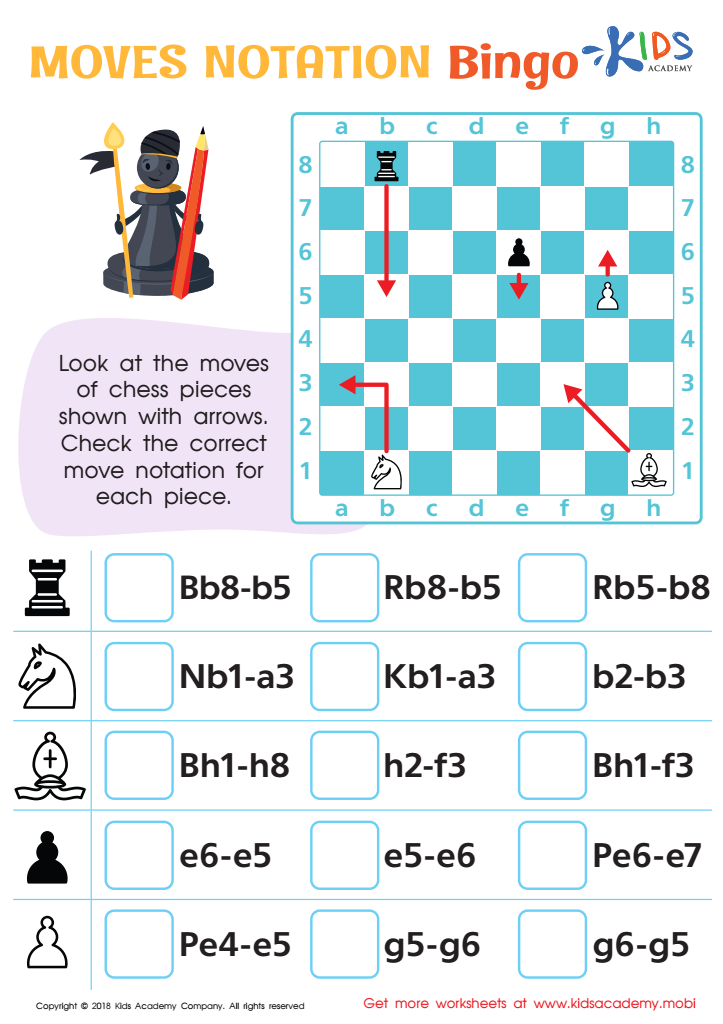
Moves Notation Bingo Worksheet
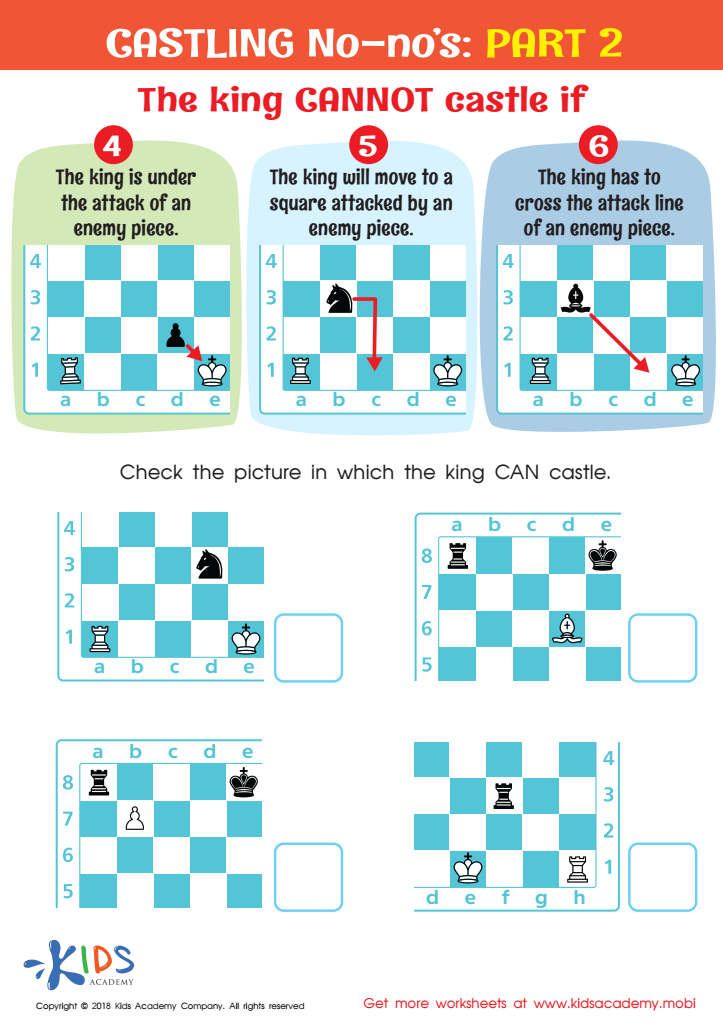
Castling No - no's: Part 2 Worksheet
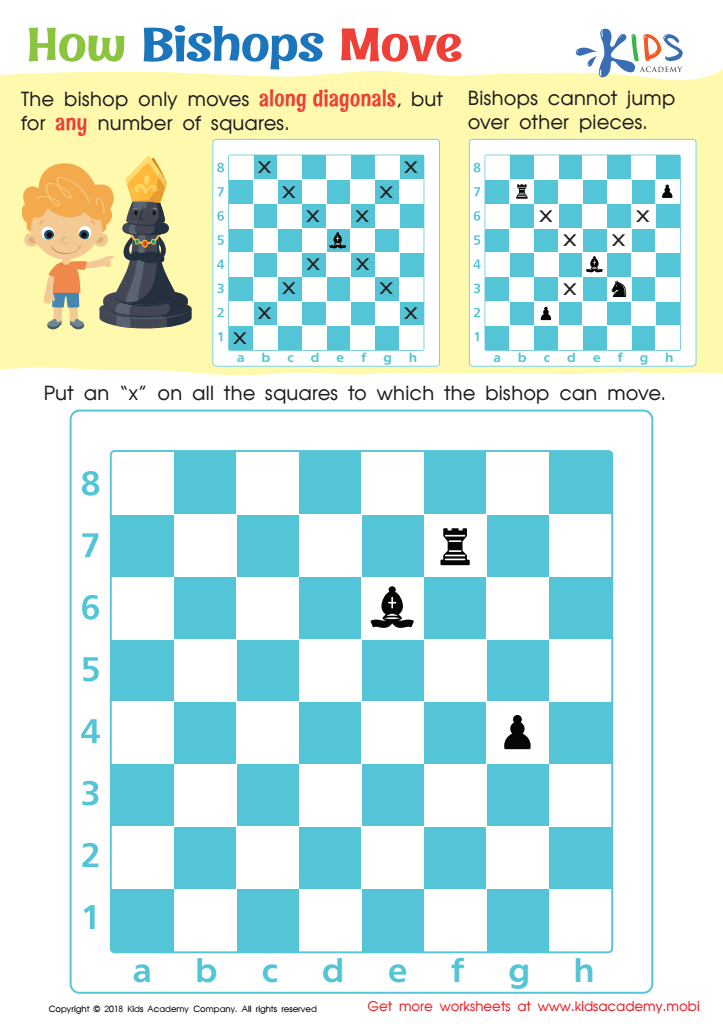
How Bishops Move Worksheet



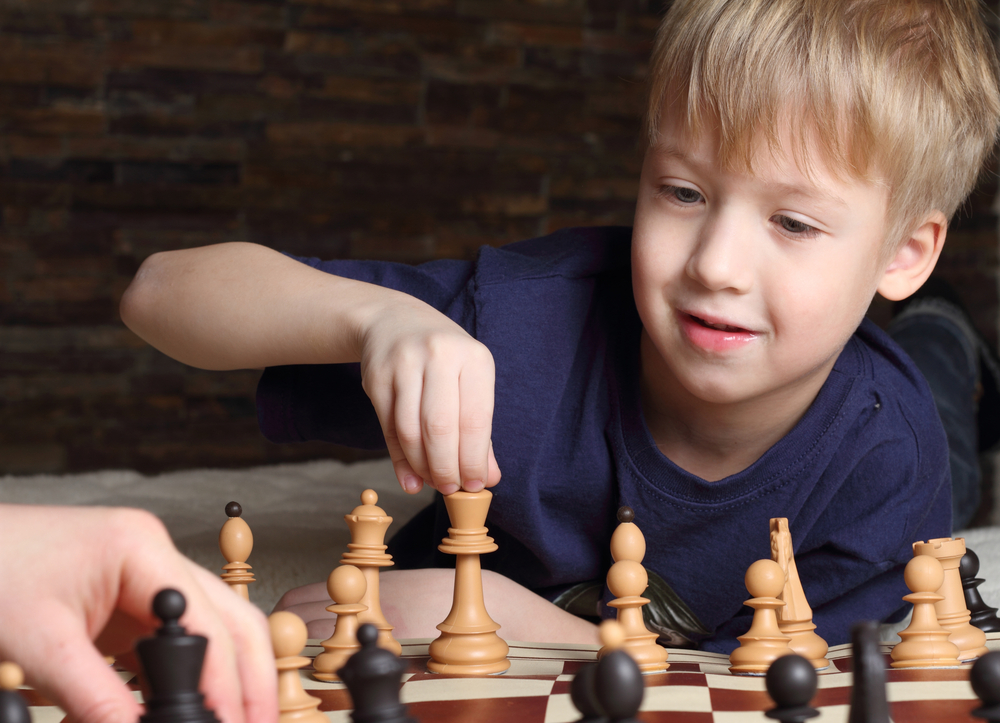

Strategic thinking development through chess is a powerful tool for young children aged 4-6. It fosters cognitive skills such as problem-solving, critical thinking, and decision-making. At this age, children's brains are rapidly developing, making it an ideal time to introduce activities that stimulate their mental abilities.
Chess encourages kids to think several moves ahead, which builds foresight and the capacity to anticipate consequences. This not only enhances their cognitive flexibility but also nurtures patience and discipline as they learn to evaluate their options before making a move. Moreover, playing chess teaches children how to strategize, empowering them to set personal goals and work toward achieving them.
Socially, chess encourages interaction and sportsmanship. Children learn to interact with peers, reinforce kindness, and develop empathy as they navigate wins and losses. For parents and teachers, incorporating chess into learning environments supports holistic development, blending academic growth with social skills.
As children engage with chess, they are laying the groundwork for lifelong critical thinking skills essential in everyday life. By supporting strategic thinking development through chess, caregivers are investing in their child's future success, not only academically but also in fostering thoughtful, reflective individuals.