Check out this FREE "Visual Learning" Trial Lesson for age 4-6!

Z

Favorites
With answer key
Interactive
  • 4-6
  • Visual Learning
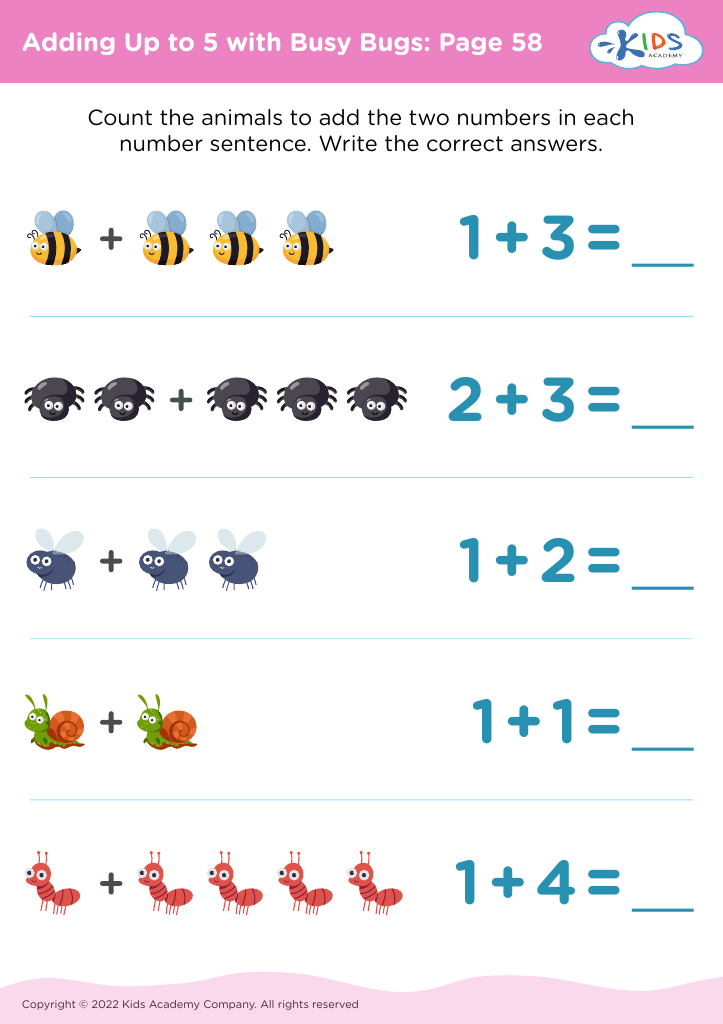
Adding Up to 5 with Busy Bugs: Page 58
Worksheet
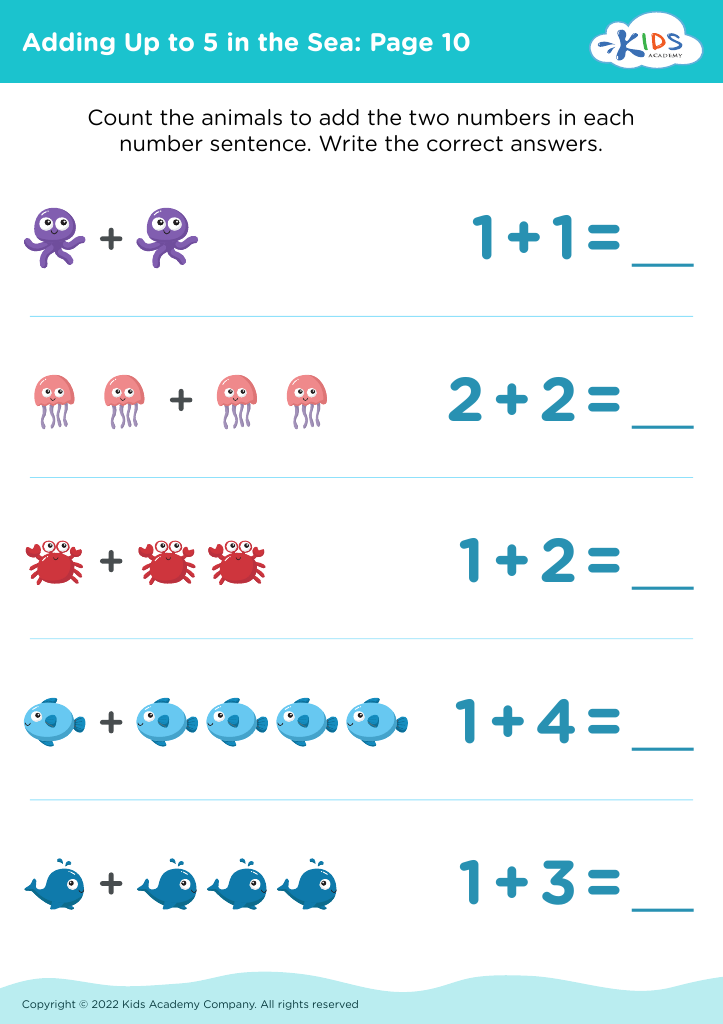
Adding Up to 5 in the Sea: Page 10
Worksheet
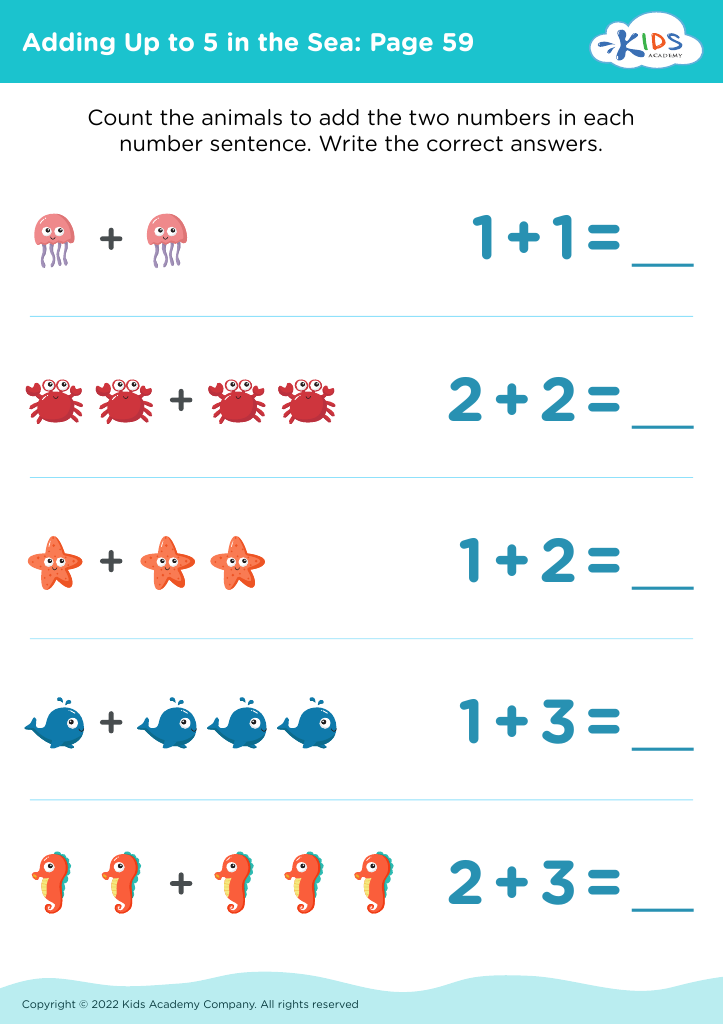
Adding Up to 5 in the Sea: Page 59
Worksheet
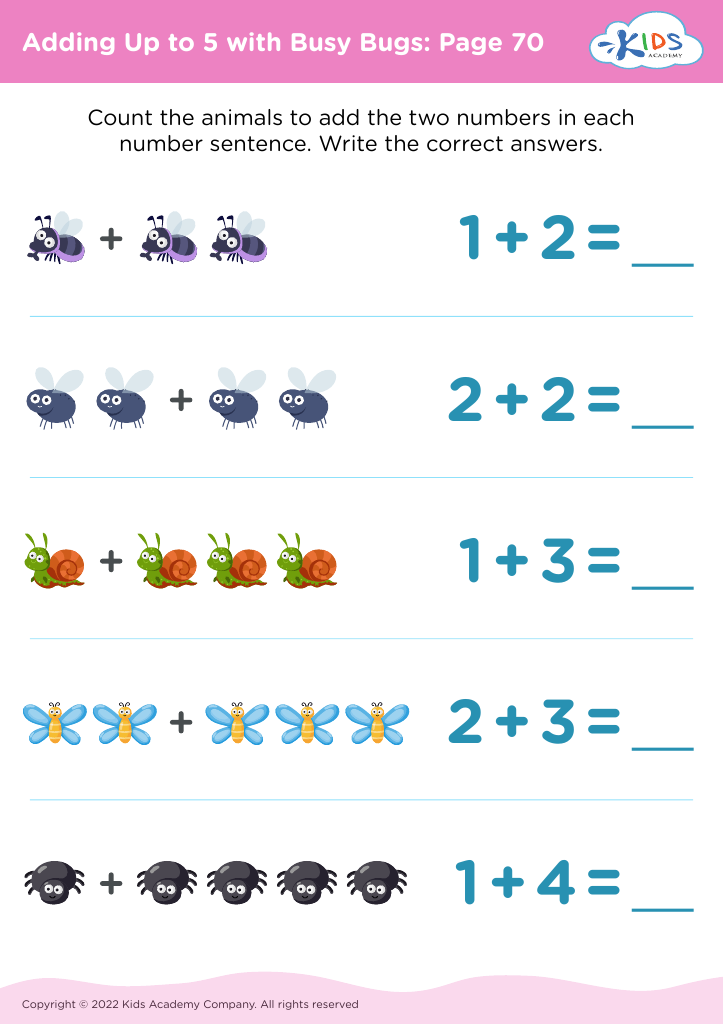
Adding Up to 5 with Busy Bugs: Page 70
Worksheet
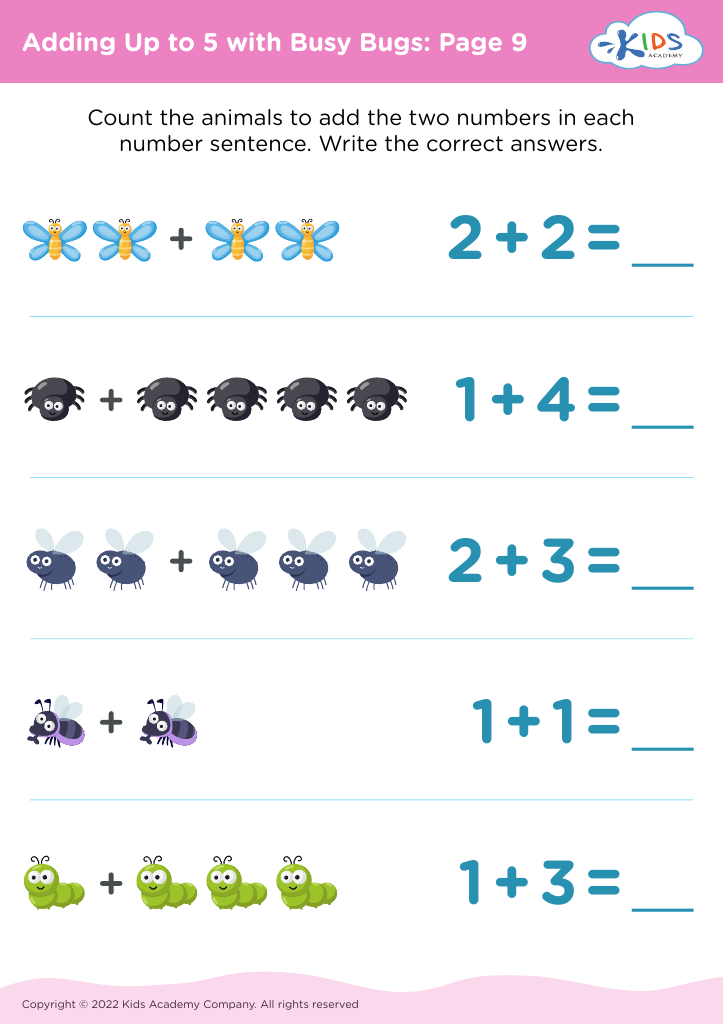
Adding Up to 5 with Busy Bugs: Page 9
Worksheet
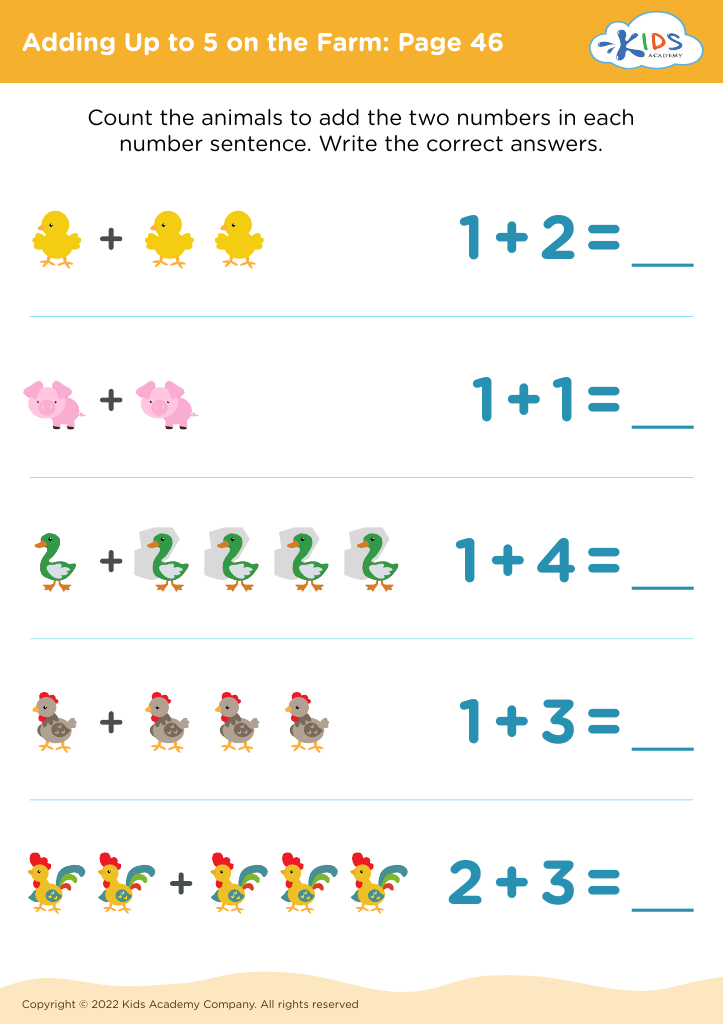
Adding Up to 5 on the Farm: Page 46
Worksheet
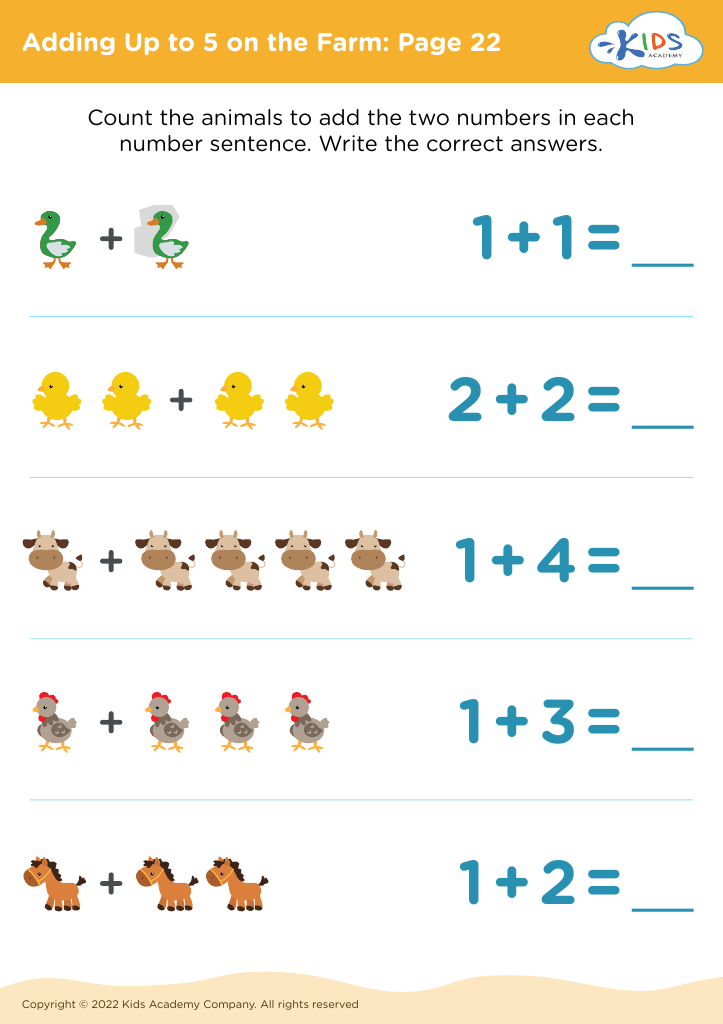
Adding Up to 5 on the Farm: Page 22
Worksheet
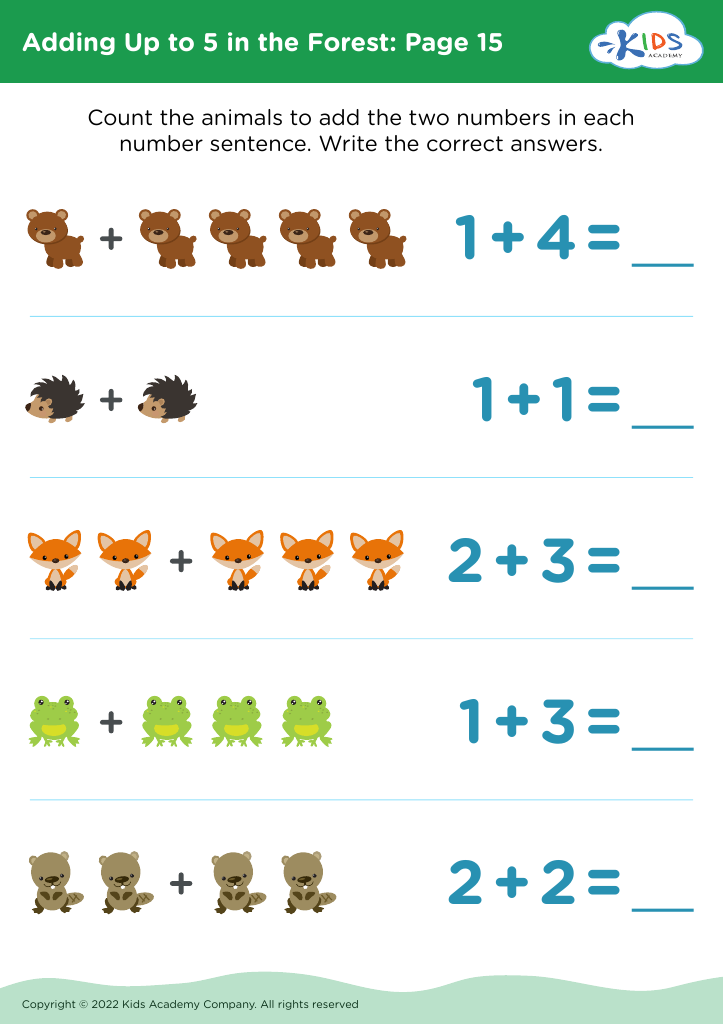
Adding Up to 5 in the Forest: Page 15
Worksheet
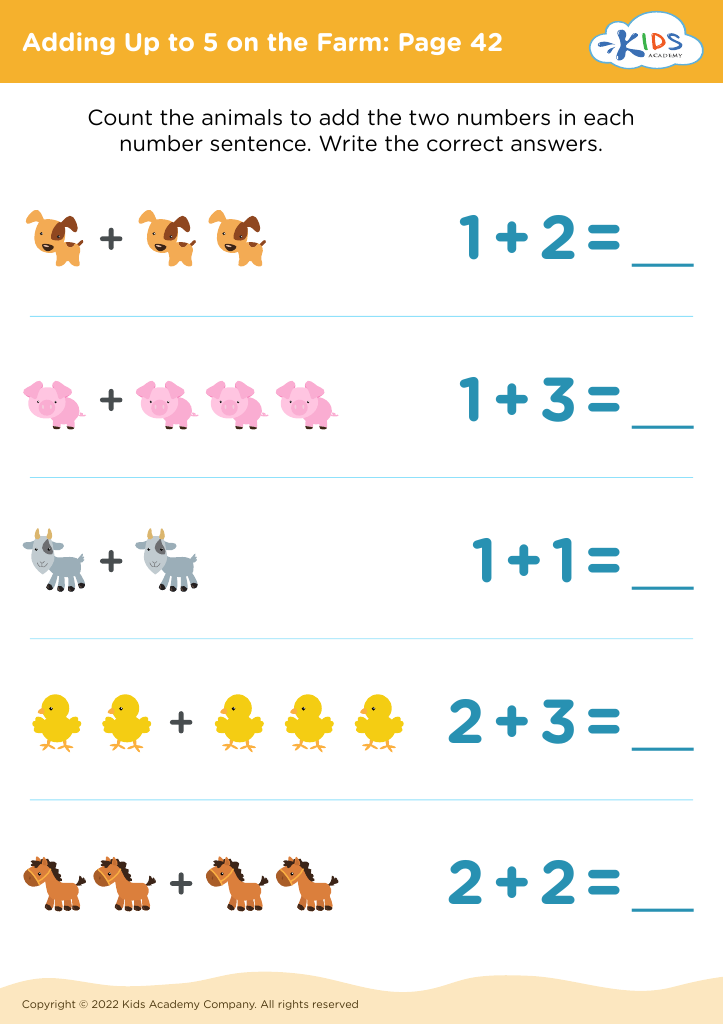
Adding Up to 5 on the Farm: Page 42
Worksheet
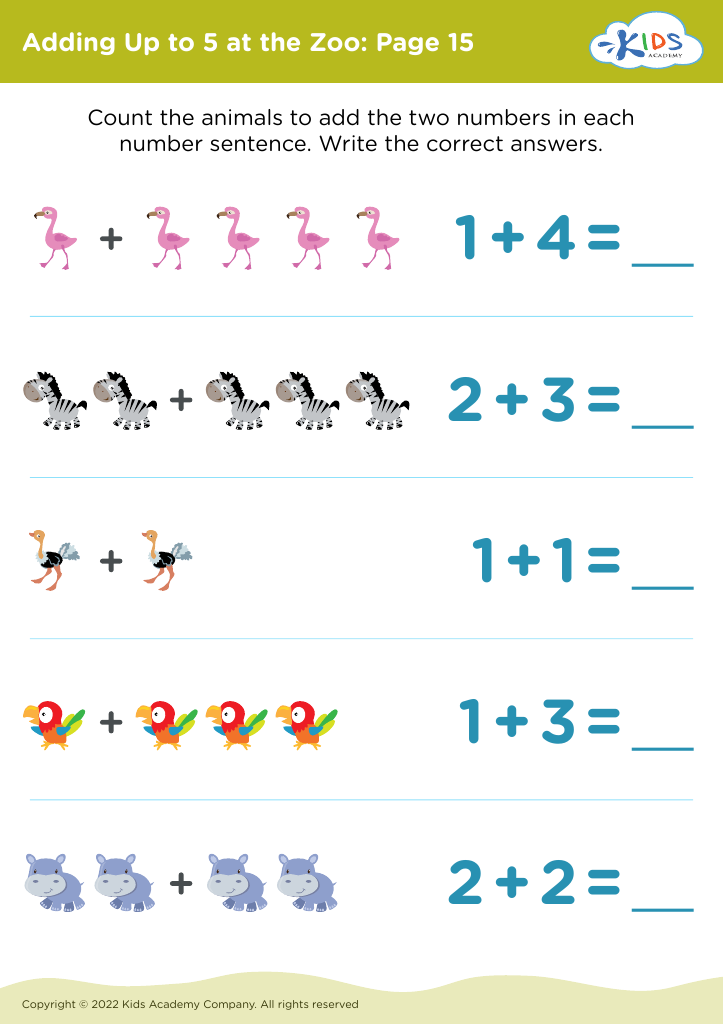
Adding Up to 5 at the Zoo: Page 15
Worksheet
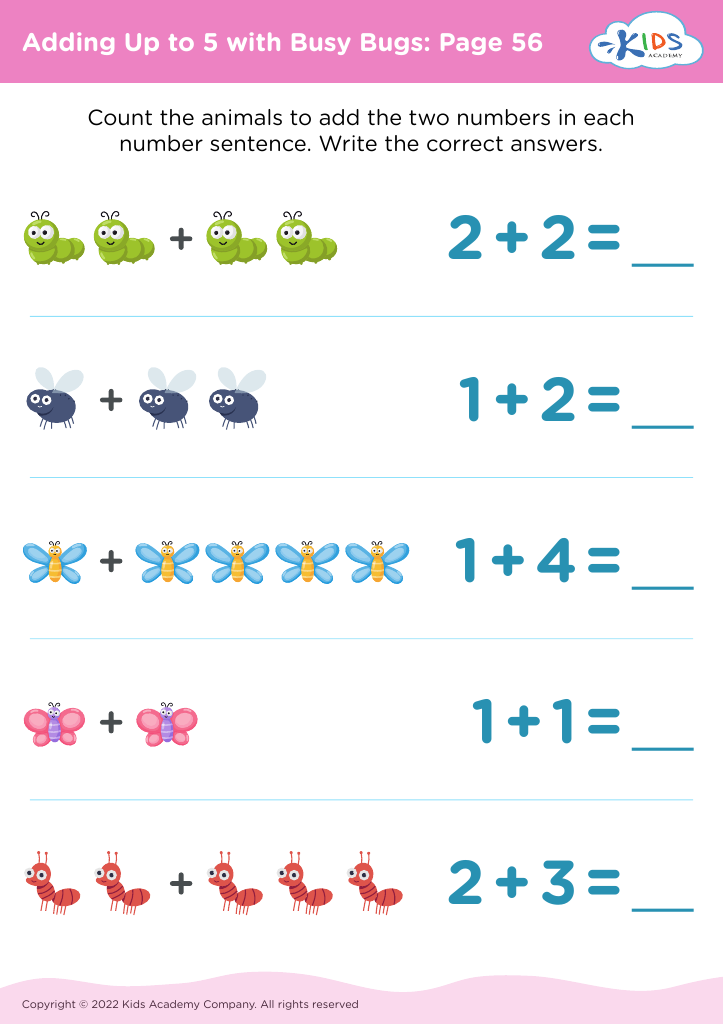
Adding Up to 5 with Busy Bugs: Page 56
Worksheet
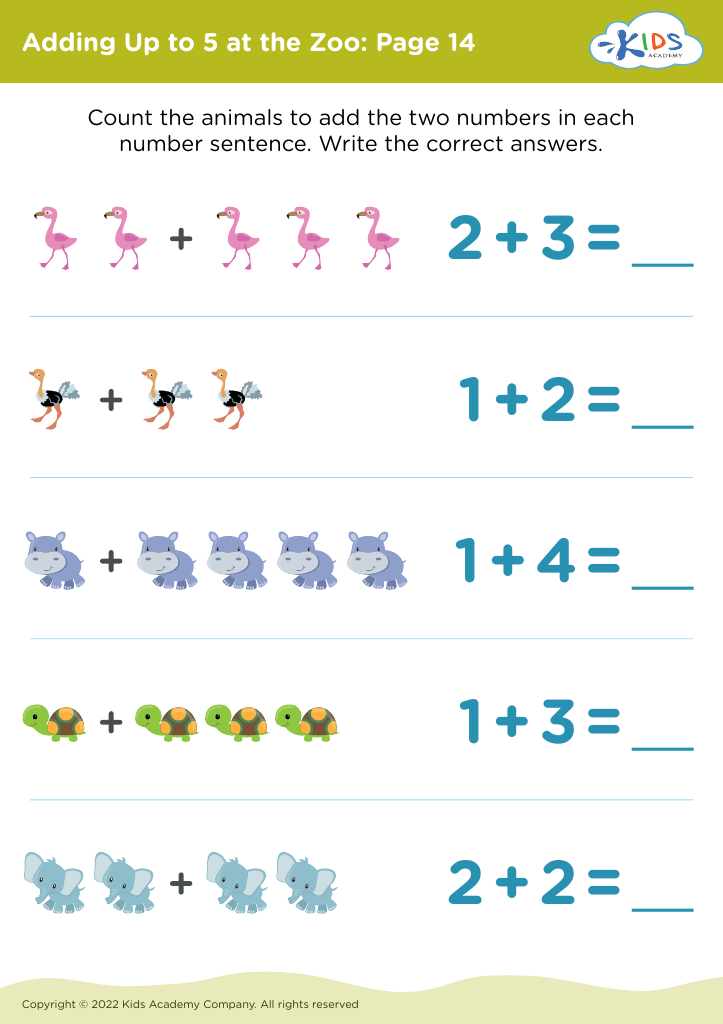
Adding Up to 5 at the Zoo: Page 14
Worksheet
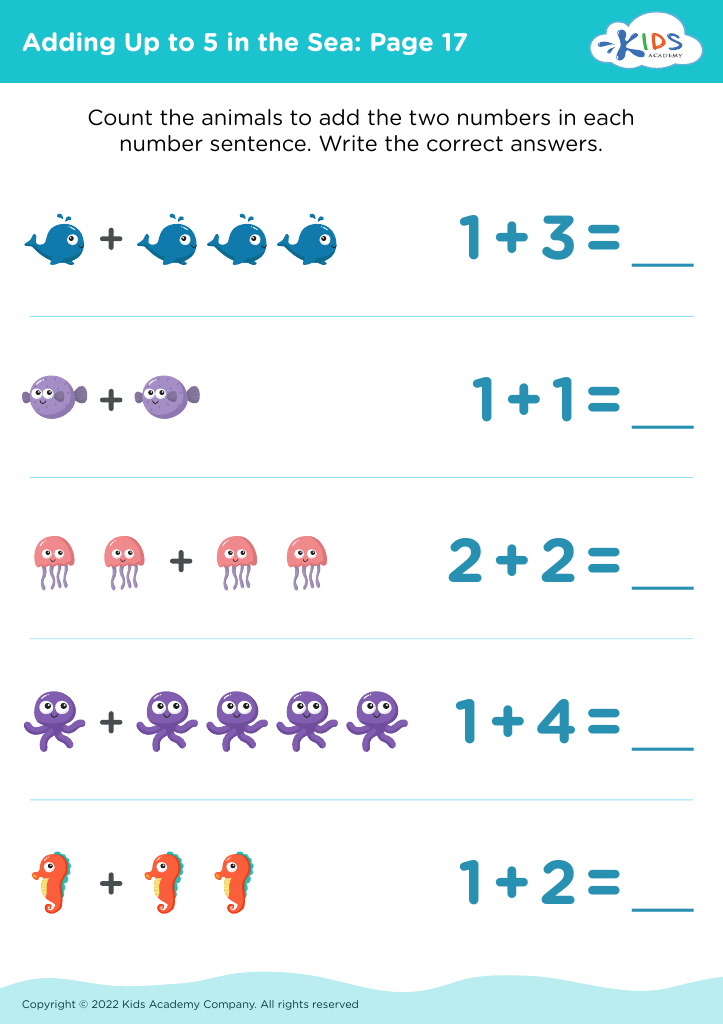
Adding Up to 5 in the Sea: Page 17
Worksheet
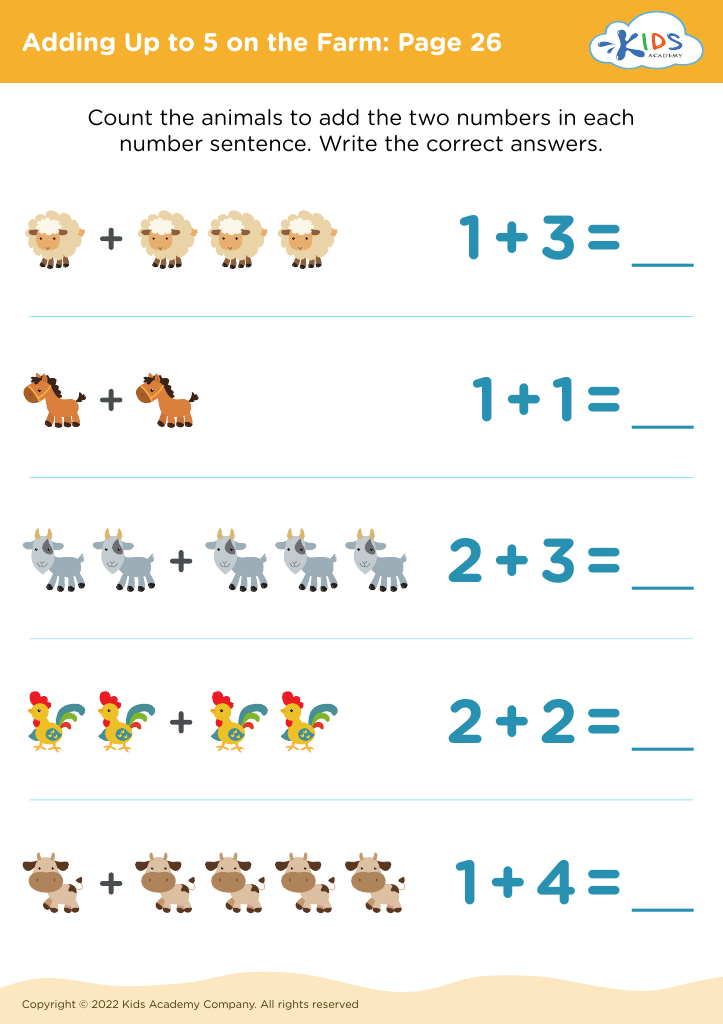
Adding Up to 5 on the Farm: Page 26
Worksheet
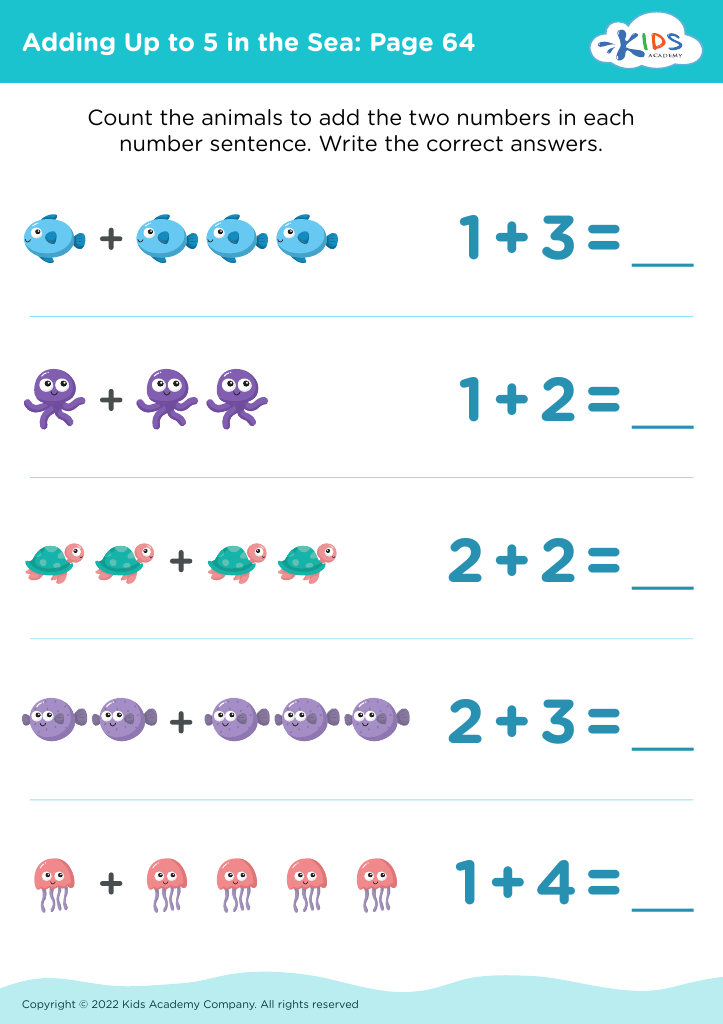
Adding Up to 5 in the Sea: Page 64
Worksheet
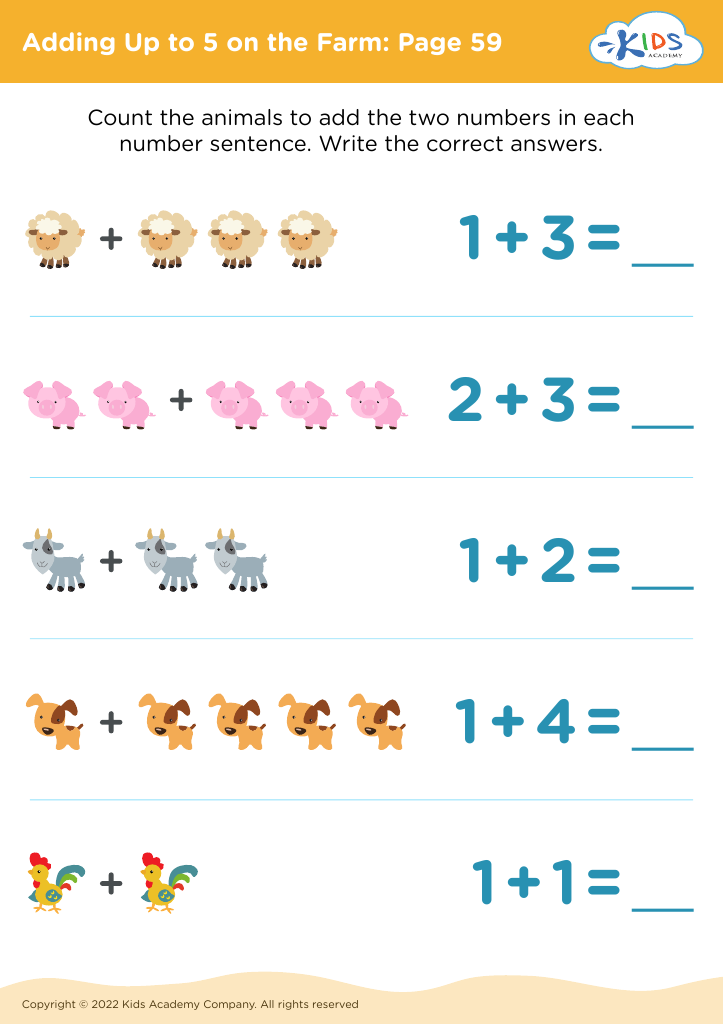
Adding Up to 5 on the Farm: Page 59
Worksheet
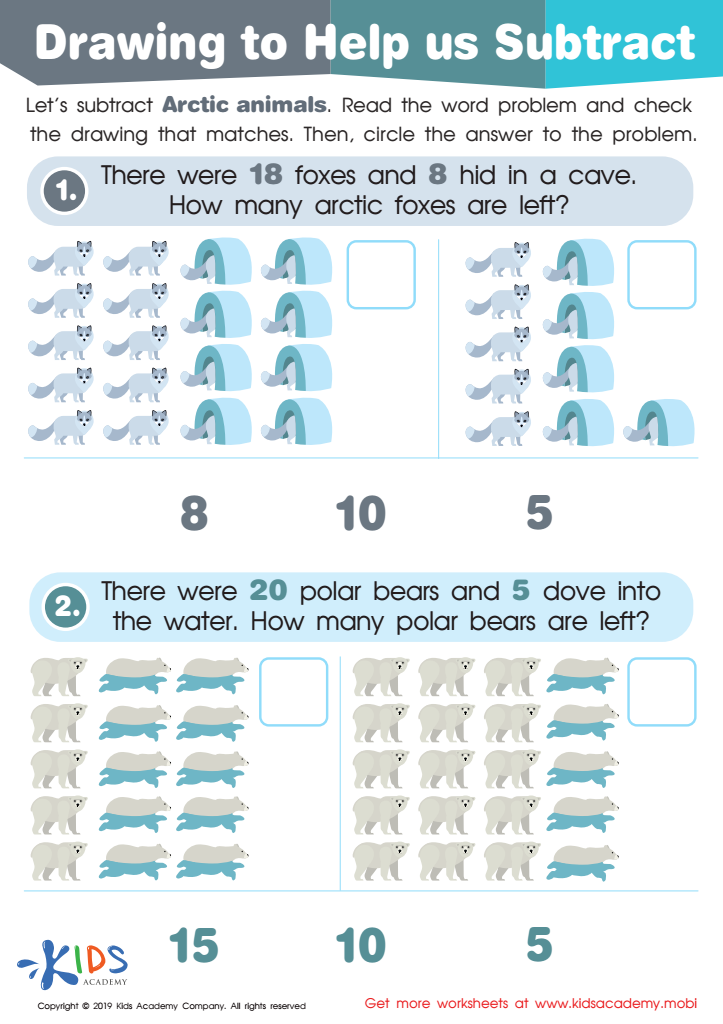
Drawing to Help Us Subtract Worksheet

Drawing to Help Us Subtract Worksheet

Math is made fun with this free worksheet featuring Arctic animal pictures to solve basic subtraction word problems. Kids read the problem and choose the correct drawing of the animals to represent the solution. They'll have a blast with their cool animal friends while learning math!
Drawing to Help Us Subtract Worksheet
Worksheet
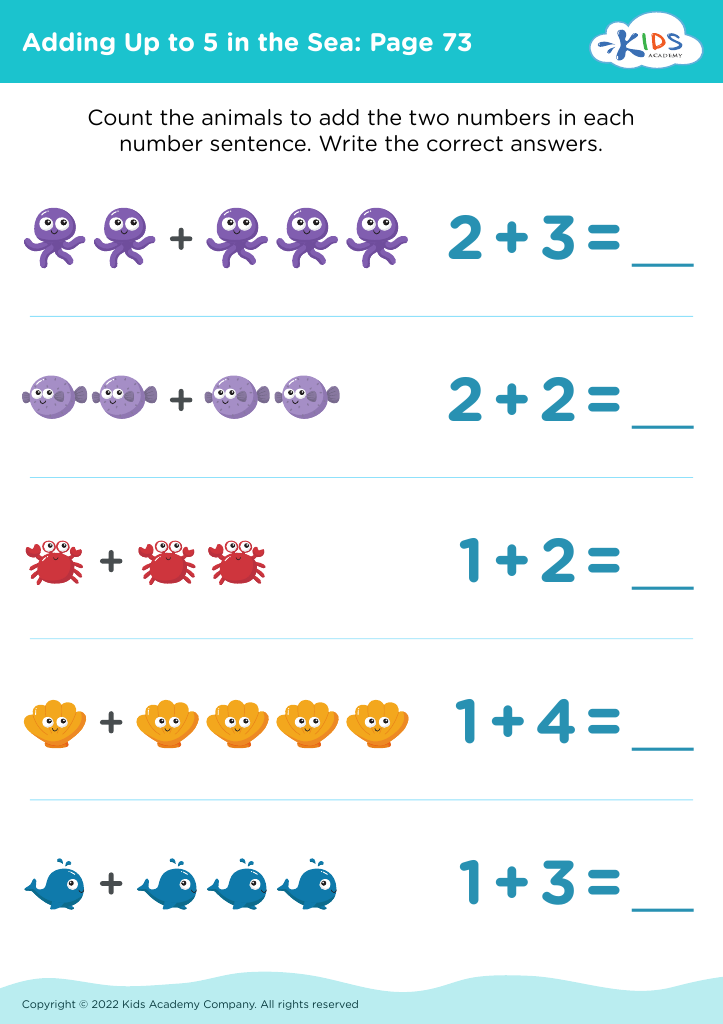
Adding Up to 5 in the Sea: Page 73
Worksheet
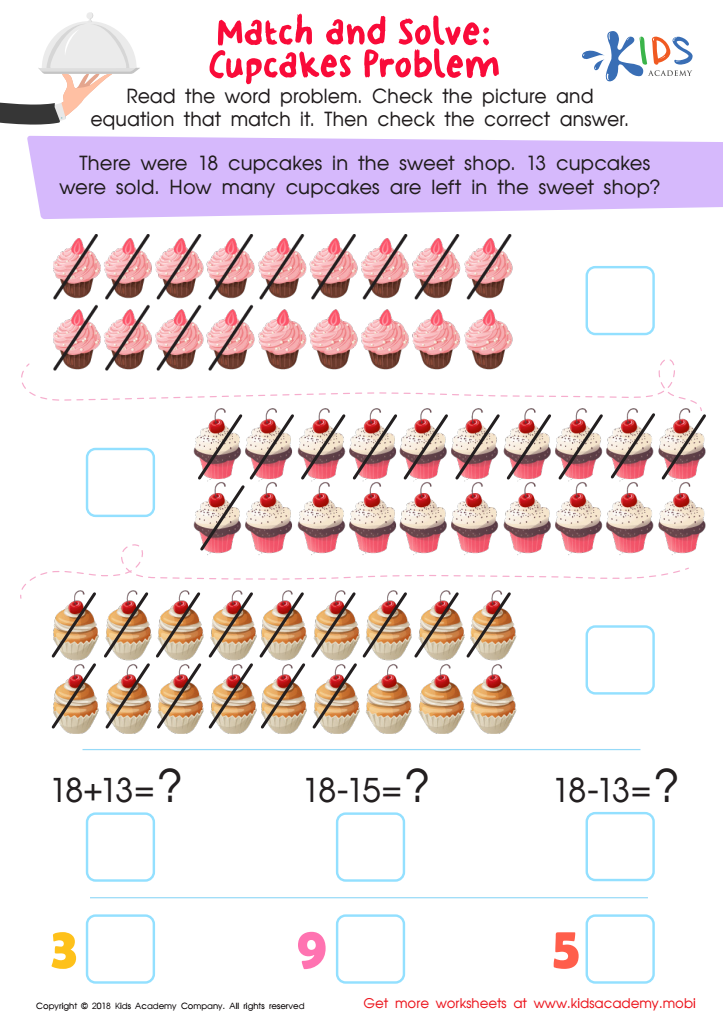
Match and Solve: Cupcakes Problem Worksheet
Match and Solve: Cupcakes Problem Worksheet
This math worksheet will excite your kid! Read the word problem and look at the cupcakes; the slashes mean some are being taken away. Select the picture that matches the text, then complete the equation to find the solution!
Match and Solve: Cupcakes Problem Worksheet
Worksheet
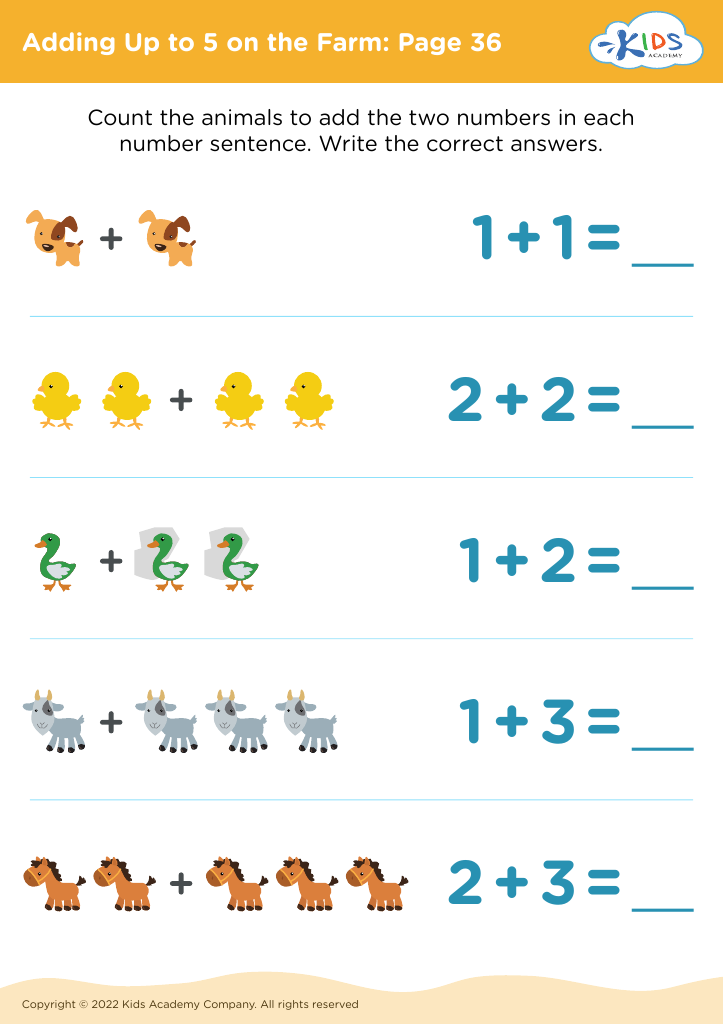
Adding Up to 5 on the Farm: Page 36
Worksheet
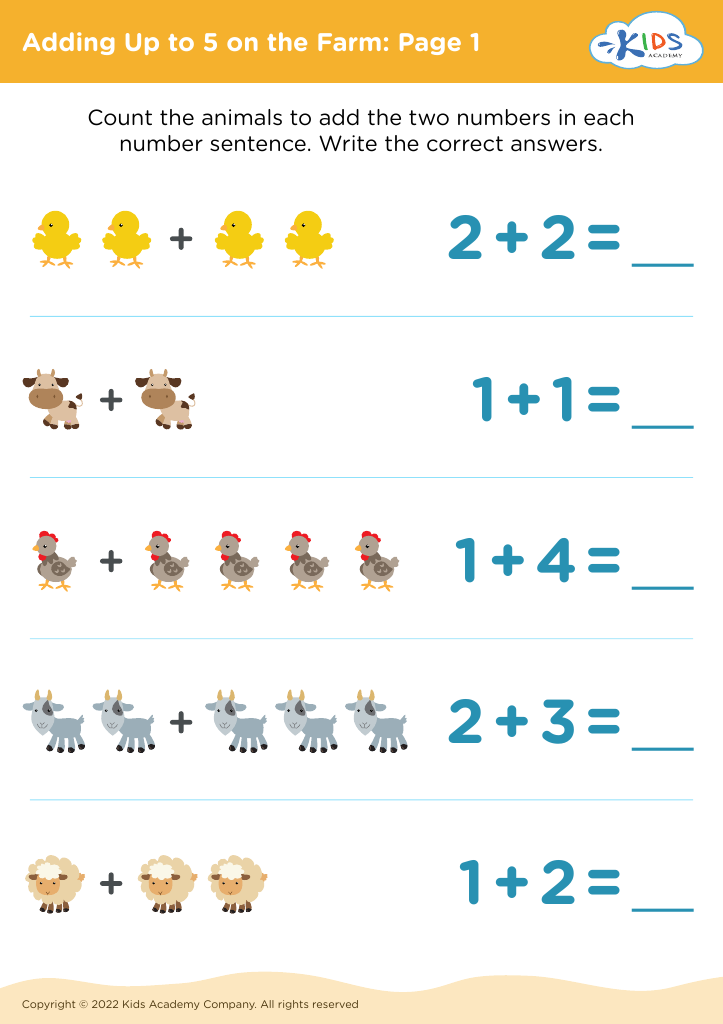
Adding Up to 5 on the Farm: Page 1
Worksheet
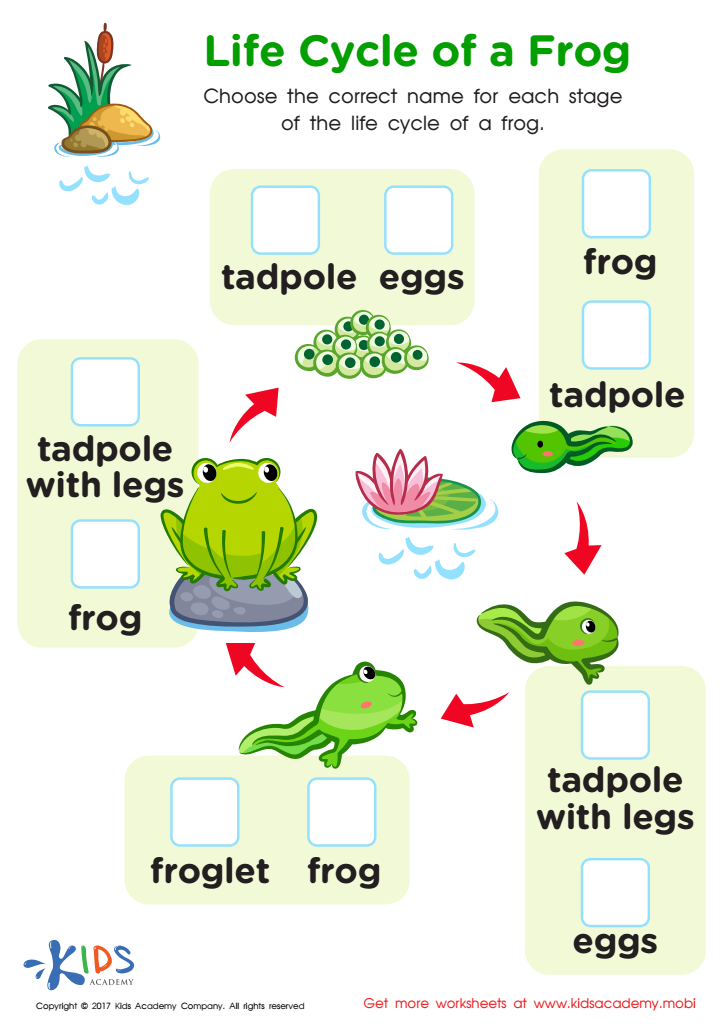
Life Cycle Frog Printable

Life Cycle Frog Printable

Kids can explore the life cycle of frog with this fun worksheet! Draw lines from one stage to the next to follow the transformation from tadpole to frog and learn about the cycle of life.
Life Cycle Frog Printable
Worksheet
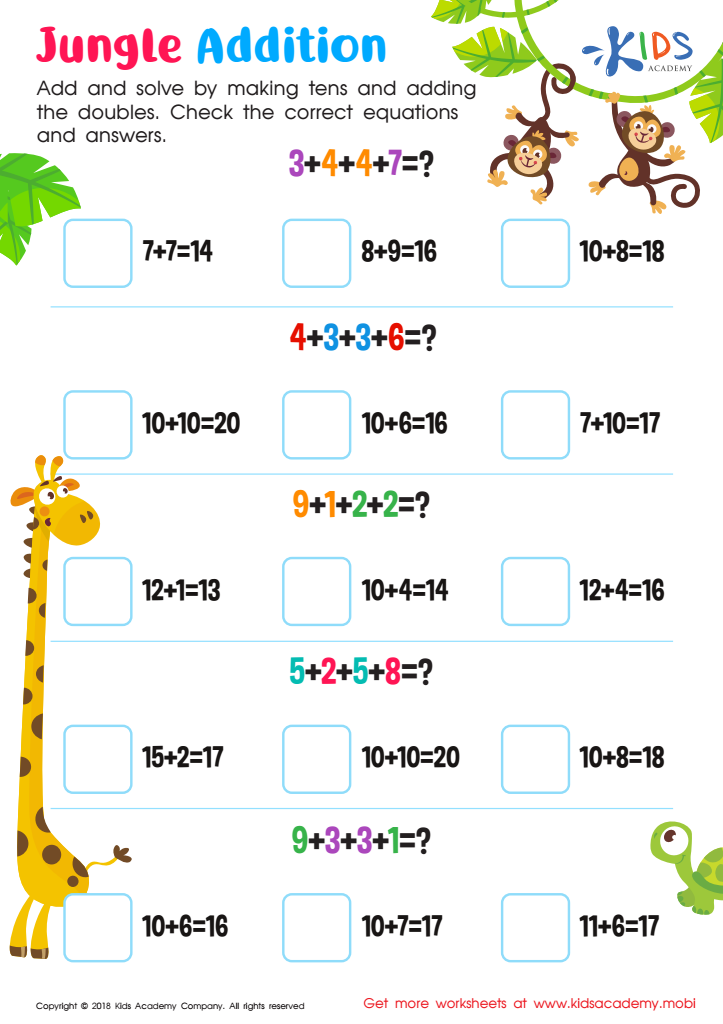
Jungle Addition Worksheet

Jungle Addition Worksheet

With this worksheet, kids can use the strategies of making tens and adding doubles to add numbers with more than three addends. They'll practice choosing the right method and become more confident in their calculations, enabling quicker, more efficient computation.
Jungle Addition Worksheet
Worksheet
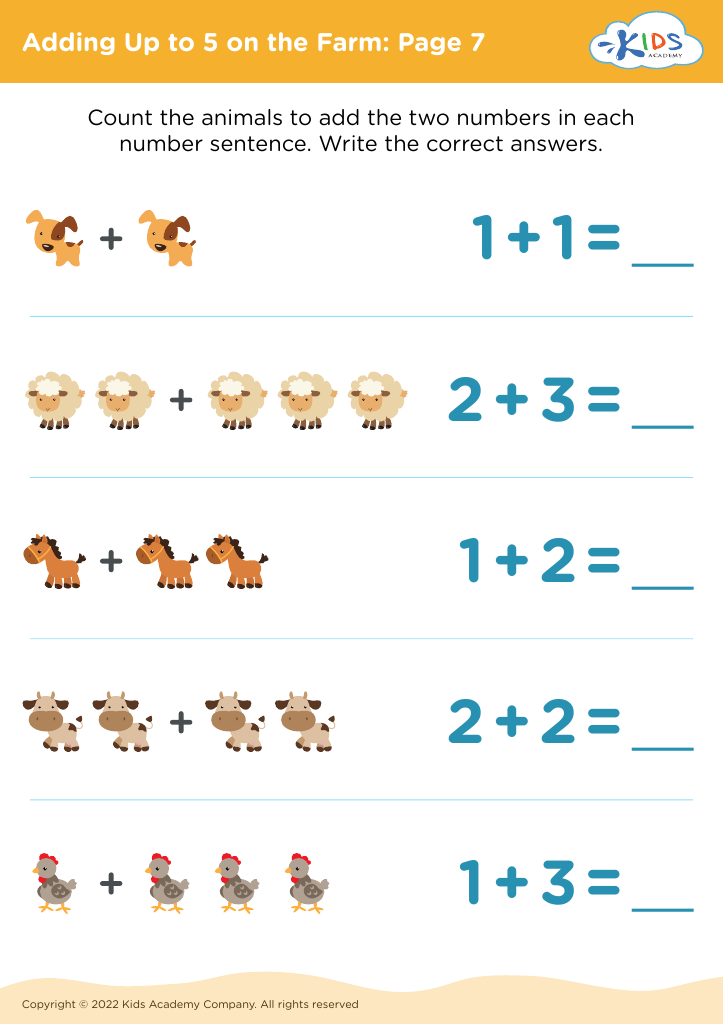
Adding Up to 5 on the Farm: Page 7
Worksheet


Visual learning is crucial for children aged 4-6 as it aligns perfectly with their developmental stages and natural learning preferences. At this age, children are highly receptive to visual stimuli; their cognitive functions are beginning to develop, and they rely significantly on images, colors, and objects to make sense of the world around them. Engagement through visual learning aids, such as pictures, diagrams, and hands-on activities, not only facilitates better comprehension but also helps retain information longer.

Parents and teachers should care about visual learning because it encourages creativity and exploration. Visual methods of teaching can make complex concepts more accessible and relatable, fostering a sense of curiosity in young learners. This approach supports diverse learning styles, including those of visual-spatial learners who thrive when ideas are presented visually.

Moreover, a focus on visual learning builds foundational skills such as critical thinking, problem-solving, and communication. By incorporating such strategies, educators and caregivers lay the groundwork for lifelong learning. Ultimately, supporting visual learning in early education environments can enhance overall cognitive development, promote confidence, and strengthen the parent-teacher collaboration crucial to a child’s success.