Adding on the Farm Worksheets for Ages 4-6 - Page 4
77 filtered results
-
From - To
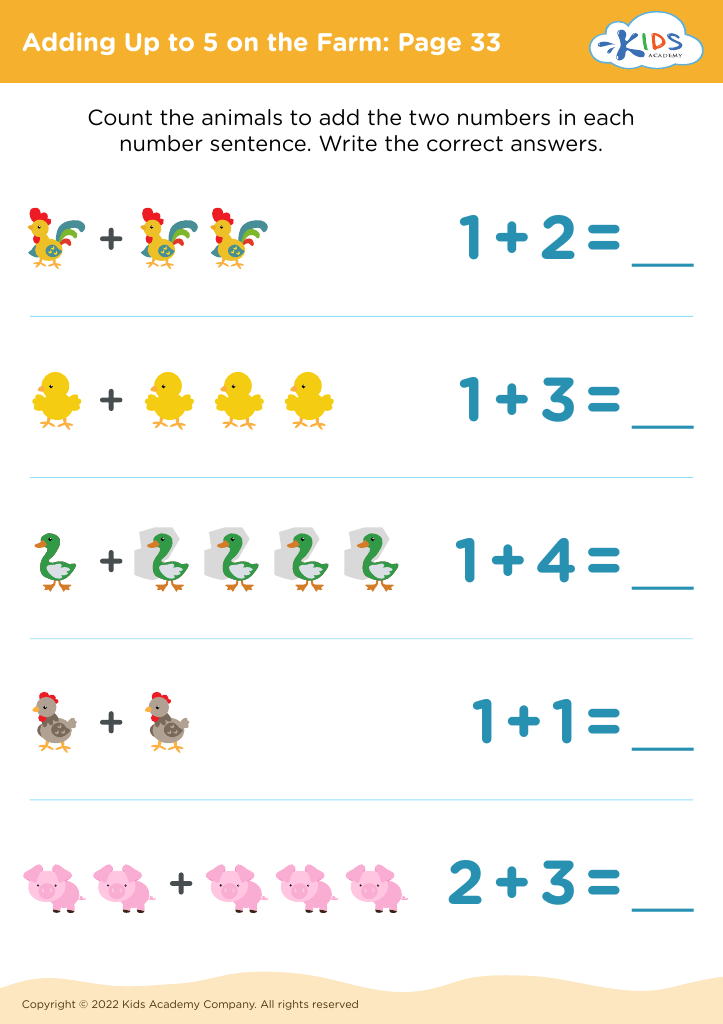
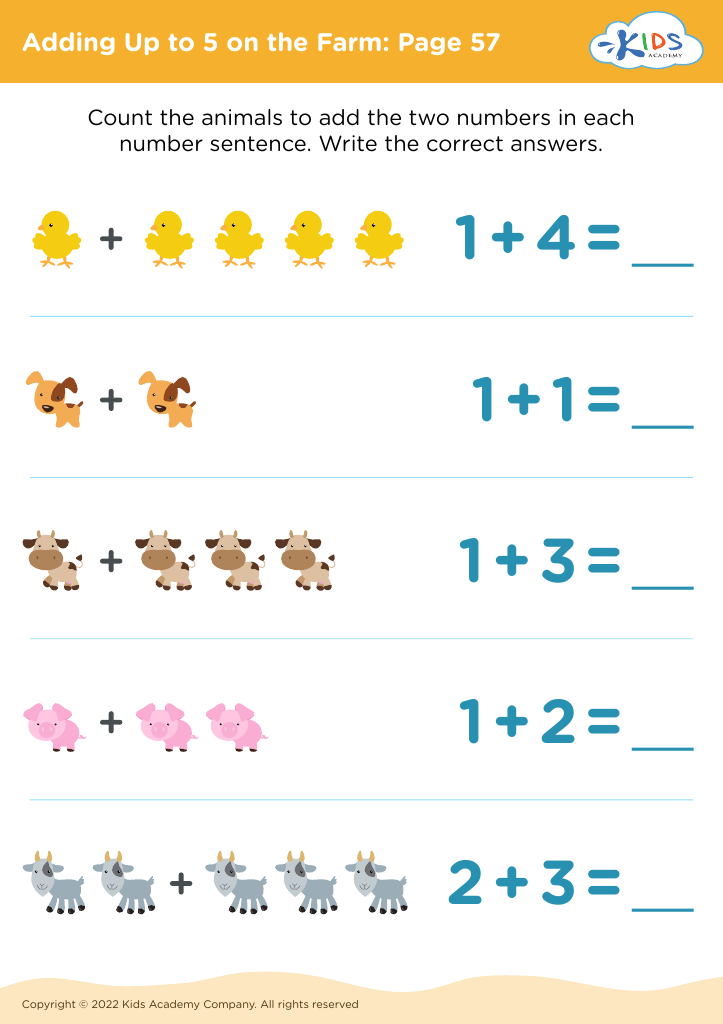
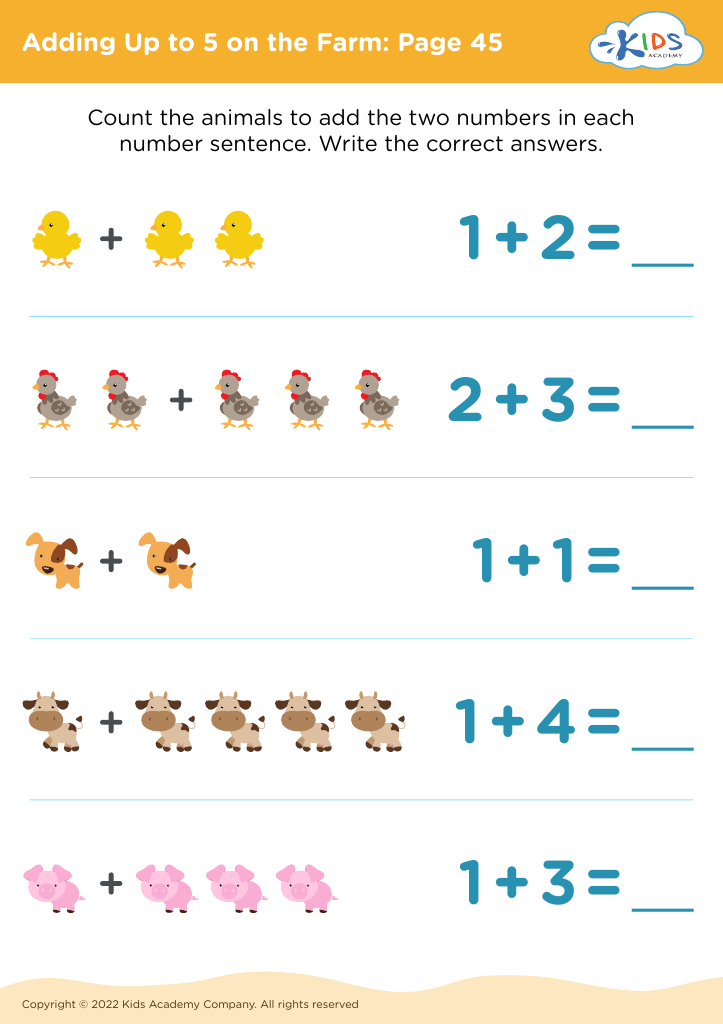
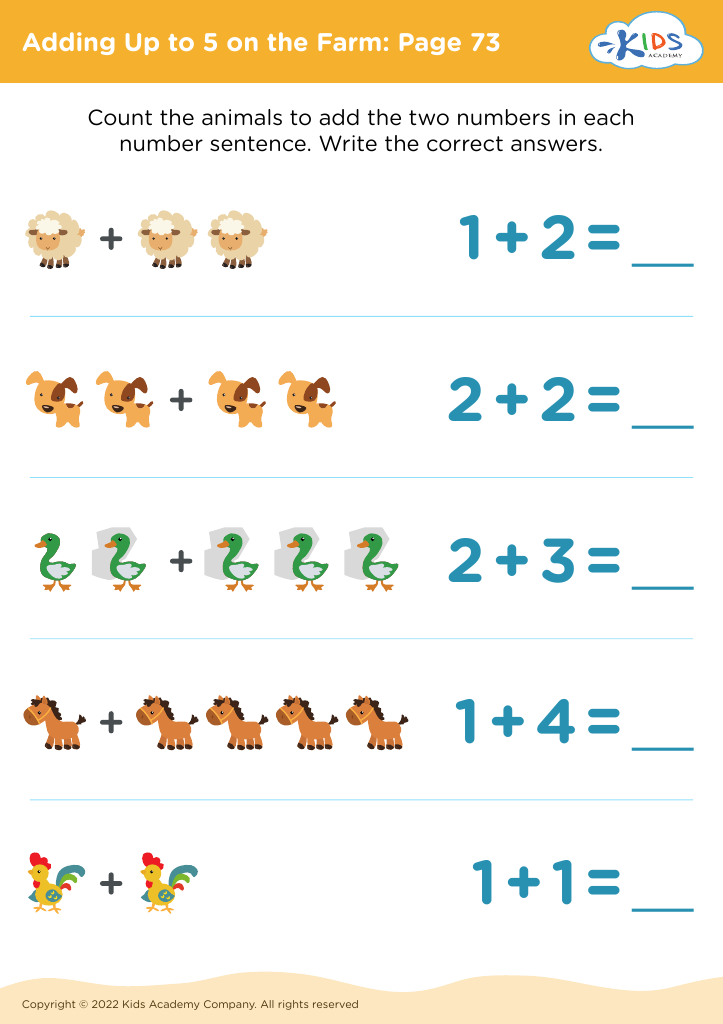
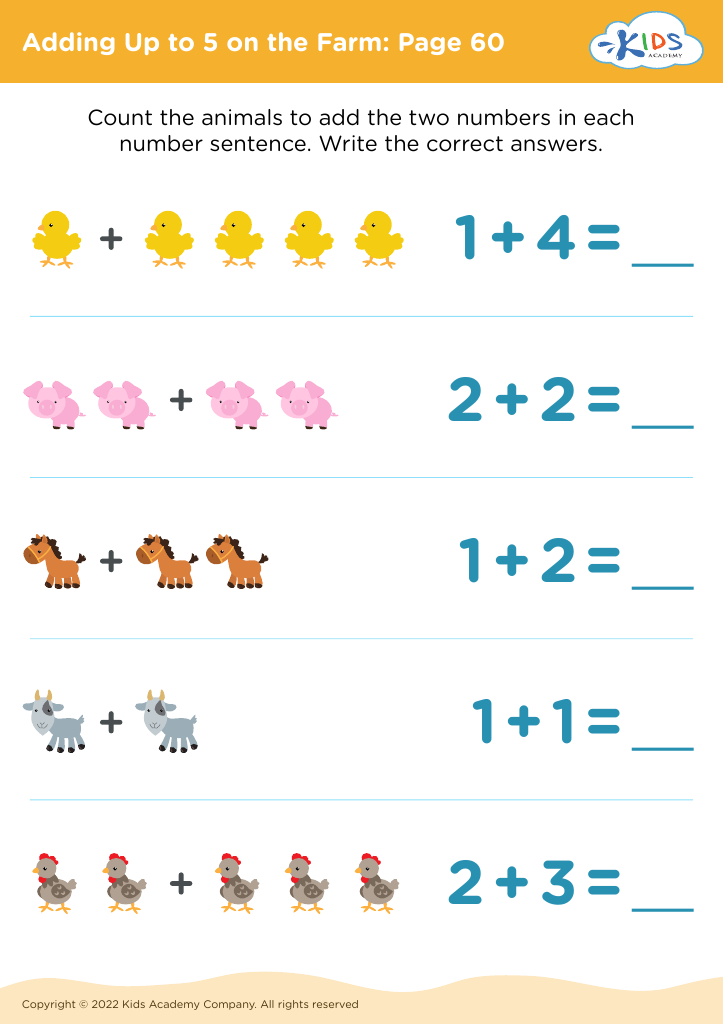



"Adding on the Farm" for ages 4-6 is an engaging and educational activity that holds significant importance for both parents and teachers. At this formative stage, children are developing foundational skills that will pave the way for future learning. Introducing addition in a farm-themed context captures their interest, making the learning process enjoyable and more effective.
Firstly, it aligns with their natural curiosity and love for animals, enriching their learning experience. By associating numbers with familiar farm animals such as cows, chickens, and pigs, children can make more meaningful connections, promoting better retention of mathematical concepts.
Secondly, early exposure to addition enhances cognitive development. It prepares children for more complex mathematical tasks, encourages logical thinking, and strengthens problem-solving skills. By making math fun and relatable, children are more likely to develop a positive attitude towards the subject, which is crucial for their ongoing academic journey.
Finally, "Adding on the Farm" supports cross-disciplinary learning. Aside from mathematics, children can learn about farm life, animal names, sounds, and habitats, contributing to a well-rounded education.
Parents and teachers caring about such activities can foster a nurturing and stimulating environment, ensuring children find joy in learning and build a solid academic foundation.