
Matching skills Geometry Worksheets for Ages 4-6
8 filtered results
Difficulty Level
Grade
Age
-
From - To
Subject
Activity
Standards
Discover our engaging Matching Skills Geometry Worksheets designed specifically for children ages 4-6! These worksheets provide a fun and interactive way for young learners to enhance their geometry skills. Through vibrant illustrations and simple exercises, children will practice identifying and matching shapes, fostering their critical thinking and visual recognition abilities. Our carefully crafted materials aid in developing foundational geometry concepts while keeping learning enjoyable. Perfect for classroom activities or at-home practice, these worksheets encourage creativity and help your child build confidence in their math skills. Explore our collection today and watch your child's love for learning grow!
Favorites
With answer key
Interactive
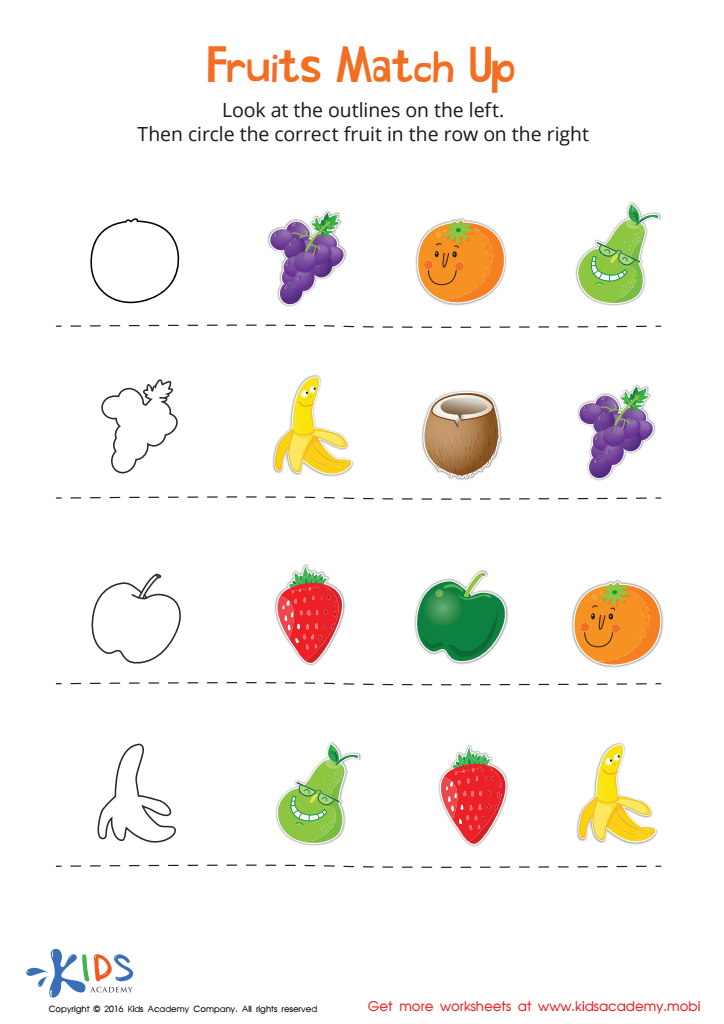
Fruits Match Up Worksheet
Motivate your child to count and sharpen their spatial reasoning skills with this vivid fruit worksheet.
 Assign to My Students
Fruits Match Up Worksheet
Worksheet











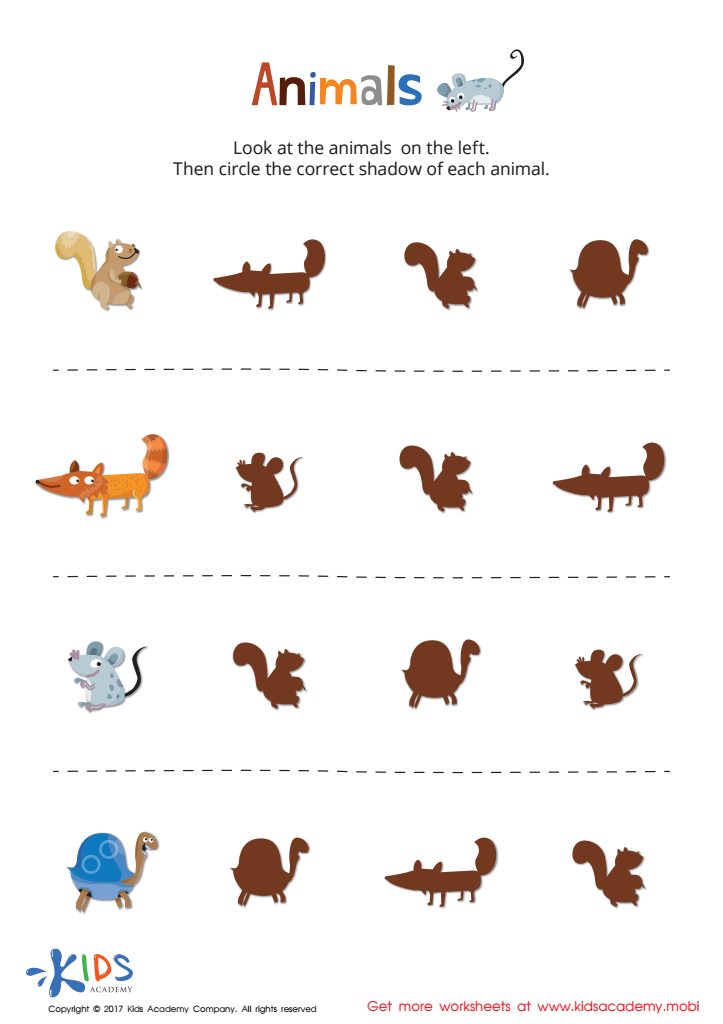
Animal Shadows Sorting Worksheet
This fun worksheet helps your child sharpen many skills. It features animals to match shapes and practice relative directions. Your child will sort animal features, practice spatial recognition, and recognize right/left. Plus, you can use it to start conversations about the animals. And try it also with fruits and veggies to boost sorting skills.
Animal Shadows Sorting Worksheet
Worksheet
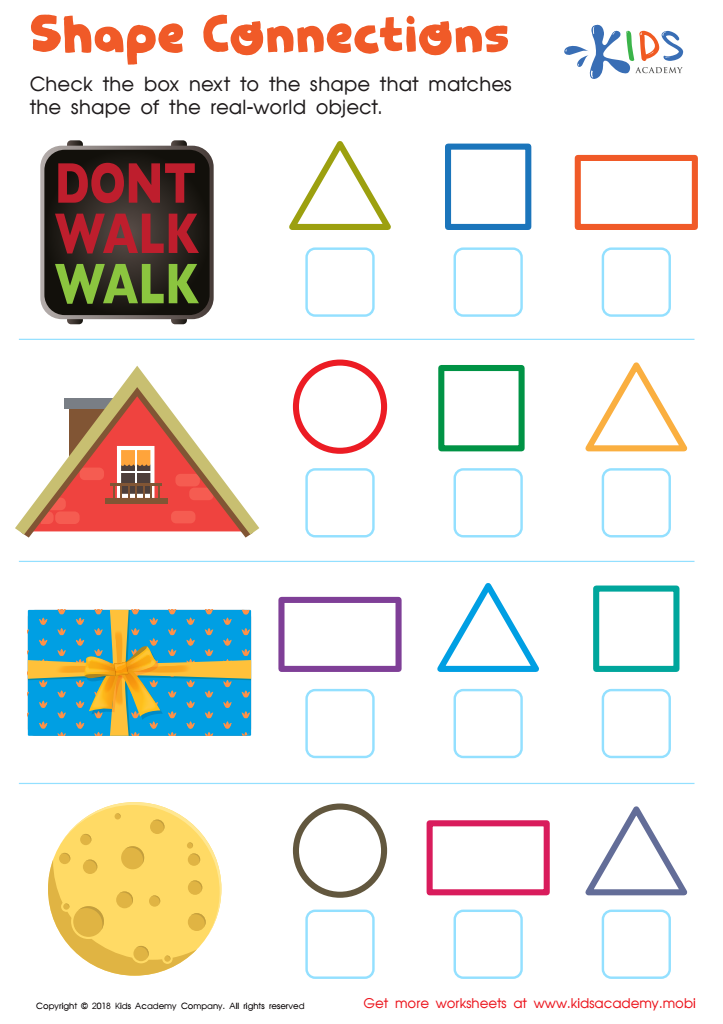
Shape Connections Worksheet
Geometric shapes are all around us and this fun worksheet brings it to life. Kids will match real-world pictures with the corresponding basic shapes, connecting how math is used in various aspects of daily life. A great way to reinforce these concepts!
Shape Connections Worksheet
Worksheet
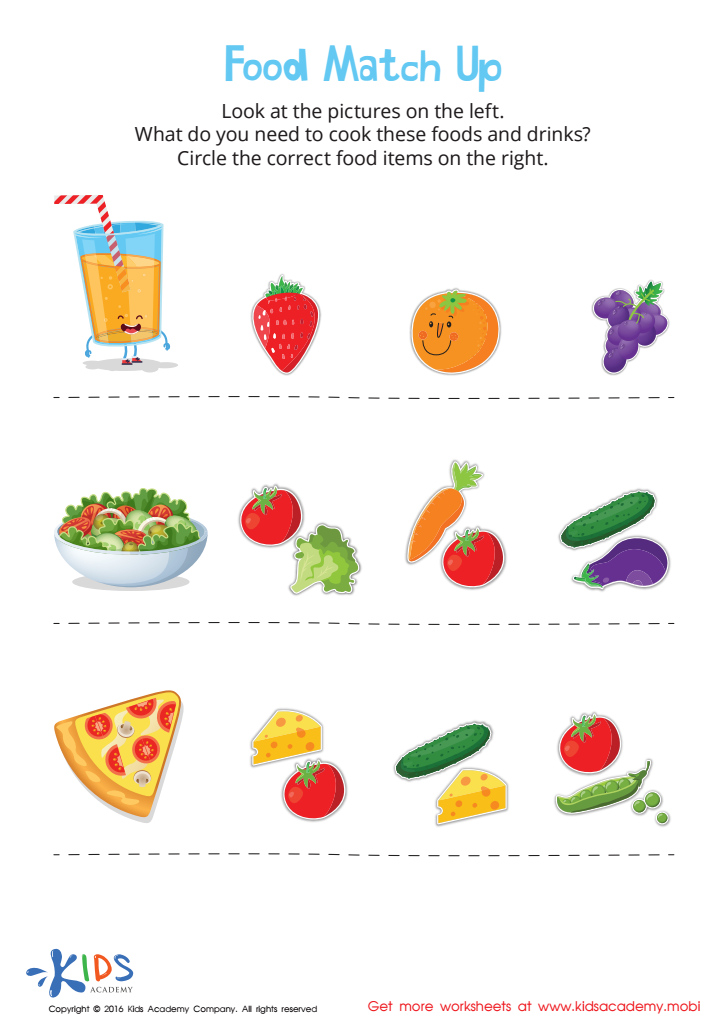
Food Match Up Worksheet
This worksheet will help your preschooler develop early math and cognitive skills. It challenges them to pay attention to details, understand how smaller parts make a whole, and increase important matching skills. Use it to give them a hands-on learning experience in the kitchen, and watch them understand how ingredients come together to make something delicious!
Food Match Up Worksheet
Worksheet
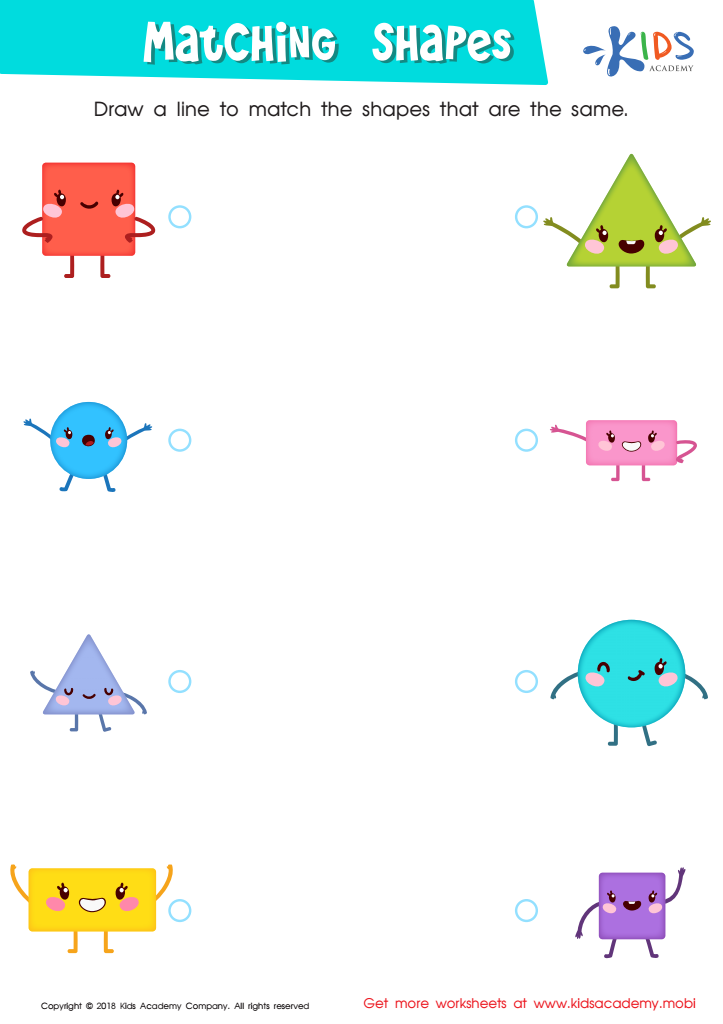
Matching Shapes Worksheet
Introduce your students to the 4 most common shapes: squares, triangles, rectangles and circles. When they progress, show them other shapes like rhombuses and parallelograms. Use this matching shapes worksheet to help them match two identical shapes. Print out the worksheet and instruct them to draw lines connecting them.
Matching Shapes Worksheet
Worksheet
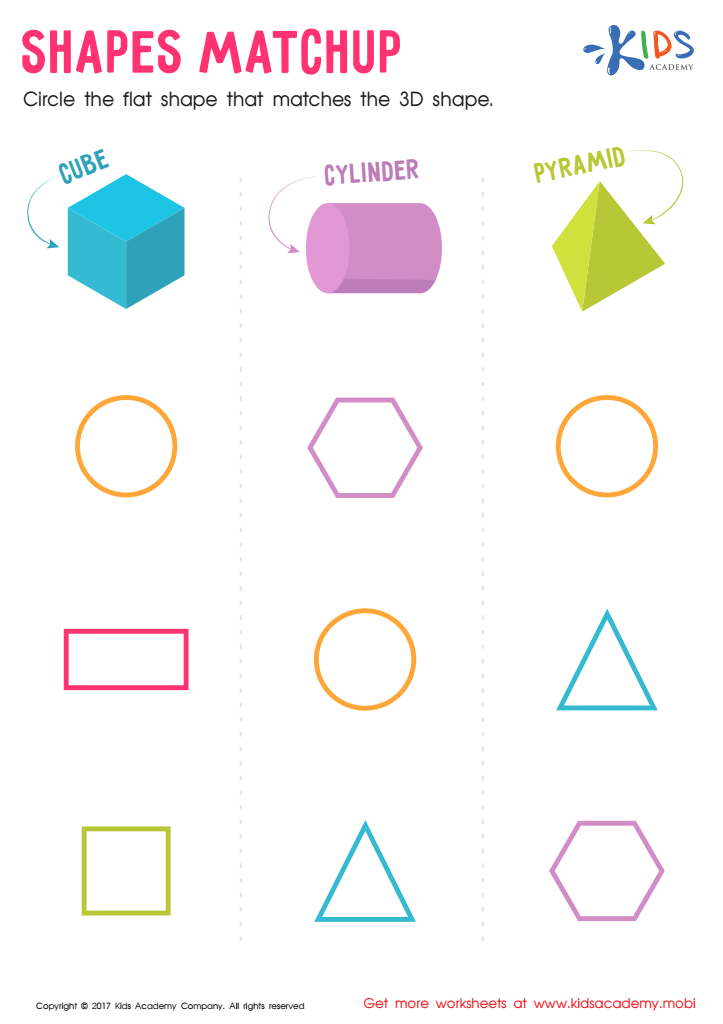
Shapes Matchup Worksheet
Explain to your kids that 3D shapes are the view from another angle, offering depth, height and width. This worksheet encourages them to match the 3D shapes to their 2D form. They can circle the flat shapes that match the 3D shapes in the printout.
Shapes Matchup Worksheet
Worksheet
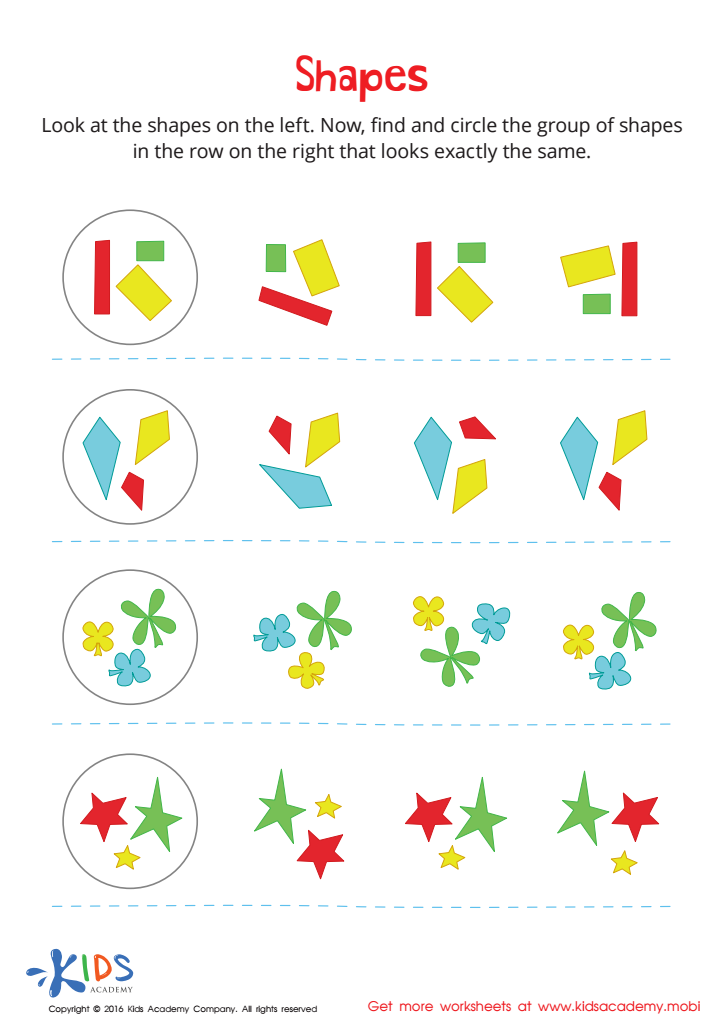
Shapes Worksheet
This fun worksheet will challenge your child to recognize tricky patterns, sort through similar ones, and create strategies to get the right answer. It'll also help them to strengthen problem-solving skills and build confidence. With more challenging tasks, your child will be ready to tackle higher level math and sequencing skills.
Shapes Worksheet
Worksheet
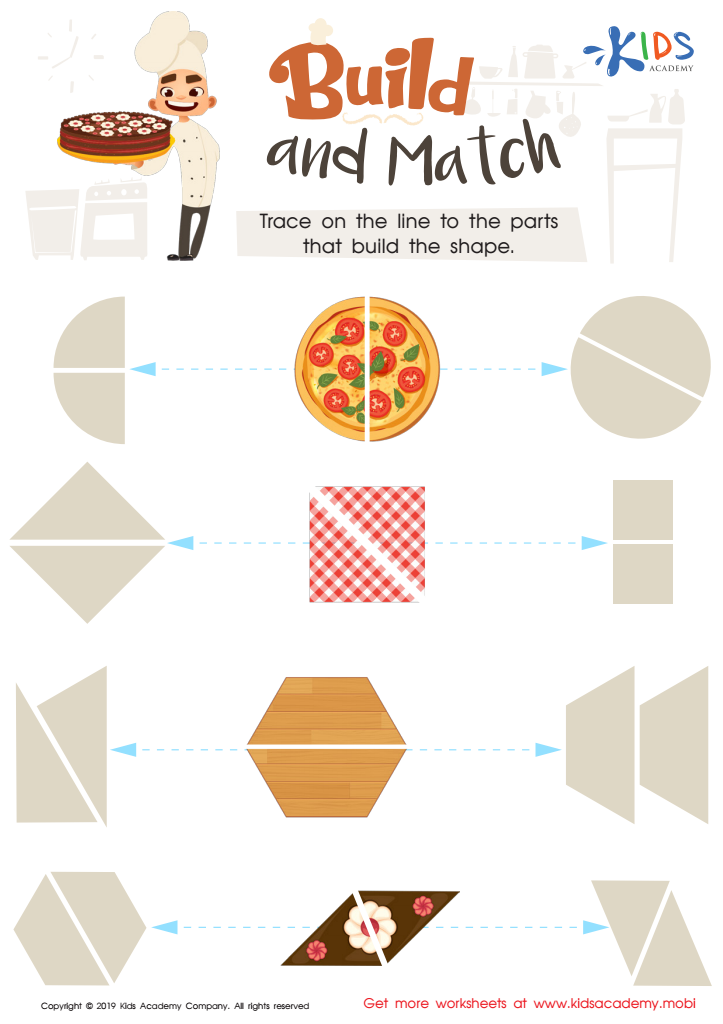
Build and Match Worksheet
This bright worksheet will get your kids excited to learn more! Use the colorful images and shapes to engage them and have them trace the parts to build the shape. This fun exercise will help them retain the lessons and make it an enjoyable experience.
Build and Match Worksheet
Worksheet
Join Kids Academy for Free
Who is primarily going to use this learning content?








Matching skills in geometry for children ages 4-6 are crucial for several reasons. At this early developmental stage, children begin to explore shapes, sizes, and spatial awareness, which forms the foundation for more complex mathematical concepts later on. Engaging with geometric shapes helps children improve their visual-motor skills, pattern recognition, and critical thinking abilities.
When parents and teachers prioritize matching skills in geometry, they encourage cognitive development and problem-solving skills. Activities like sorting, matching, and identifying shapes expose children to geometry in a fun and interactive way. These skills are not just foundational for mathematics but also enhance their pre-reading skills, as many letters and numbers have geometric properties.
Moreover, acquiring matching skills early on nurtures children's confidence and fosters a positive attitude towards learning math. It sets the stage for developing reasoning and analytical skills, which are essential for success in various subjects. In a world increasingly driven by technology, a strong grasp of basic geometric concepts can inspire creativity and innovation in future endeavors. Thus, prioritizing geometry helps cultivate a well-rounded educational experience, empowering young learners for lifelong learning.








