Animal identification Numbers Worksheets for Ages 4-6
4 filtered results
-
From - To
Our "Animal Identification Numbers Worksheets for Ages 4-6" combine math and fun! These captivating printables help young learners practice counting, number recognition, and animal identification. Each worksheet features adorable animals and exciting activities designed to keep kids engaged while enhancing their cognitive skills. Perfect for preschool and kindergarten students, these worksheets support early math concepts and foster a love for learning. Easy to download and print, they are a fantastic classroom resource or a hands-on learning tool at home. Get your child started on a joyful educational journey with our themed activities today!
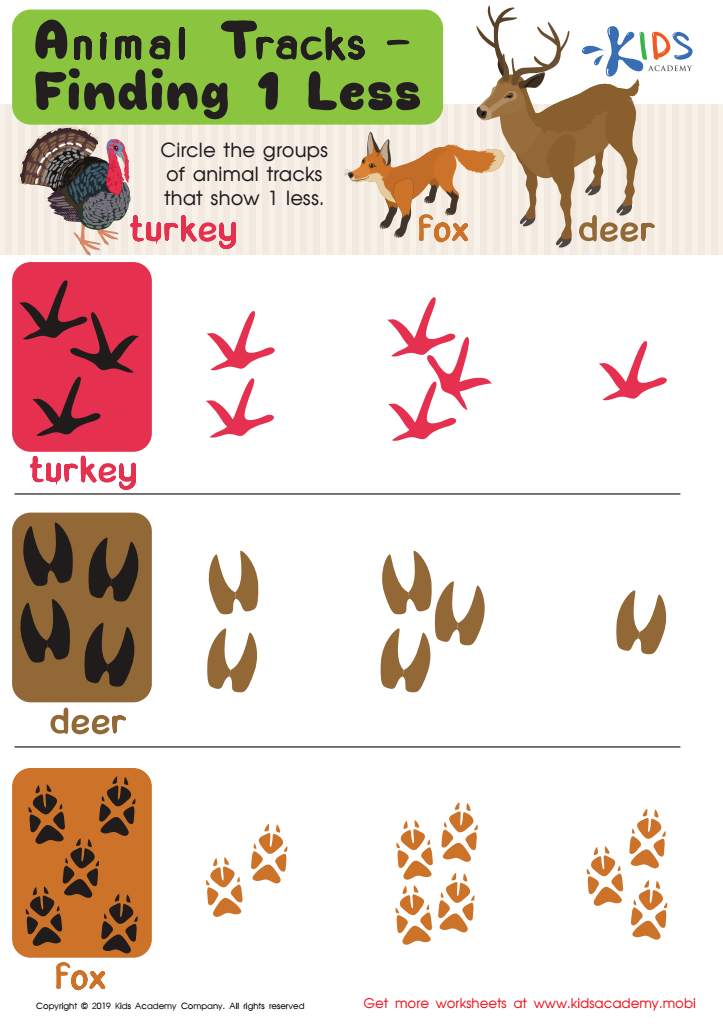
Animal Tracks: Find 1 Less Worksheet
 Assign to My Students
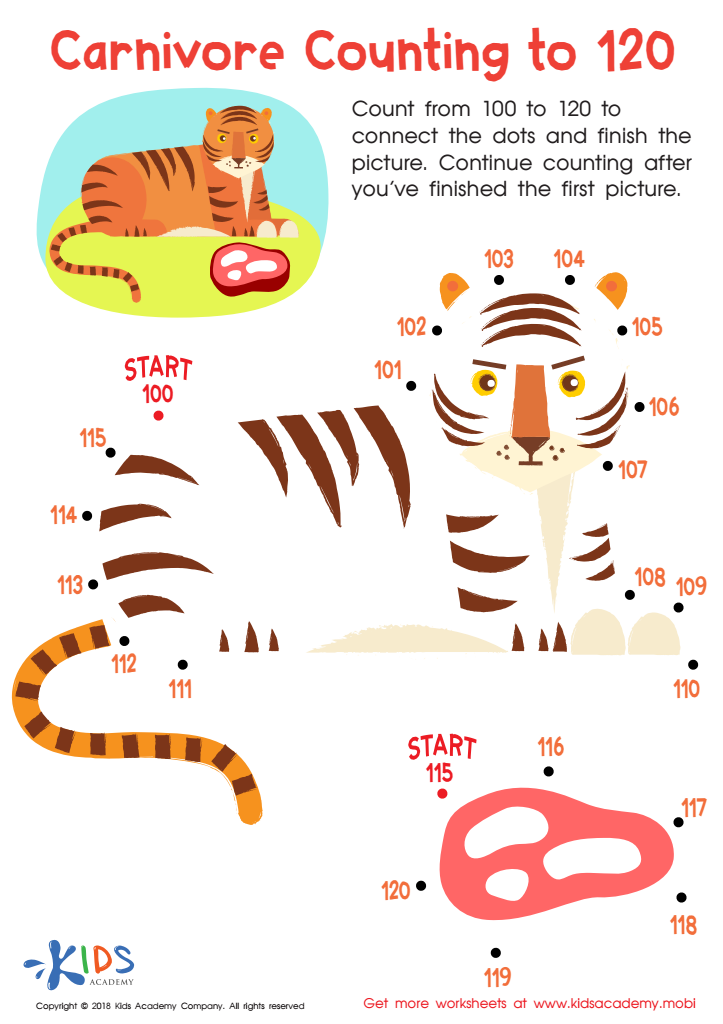
Carnivore Counting to 120 Worksheet
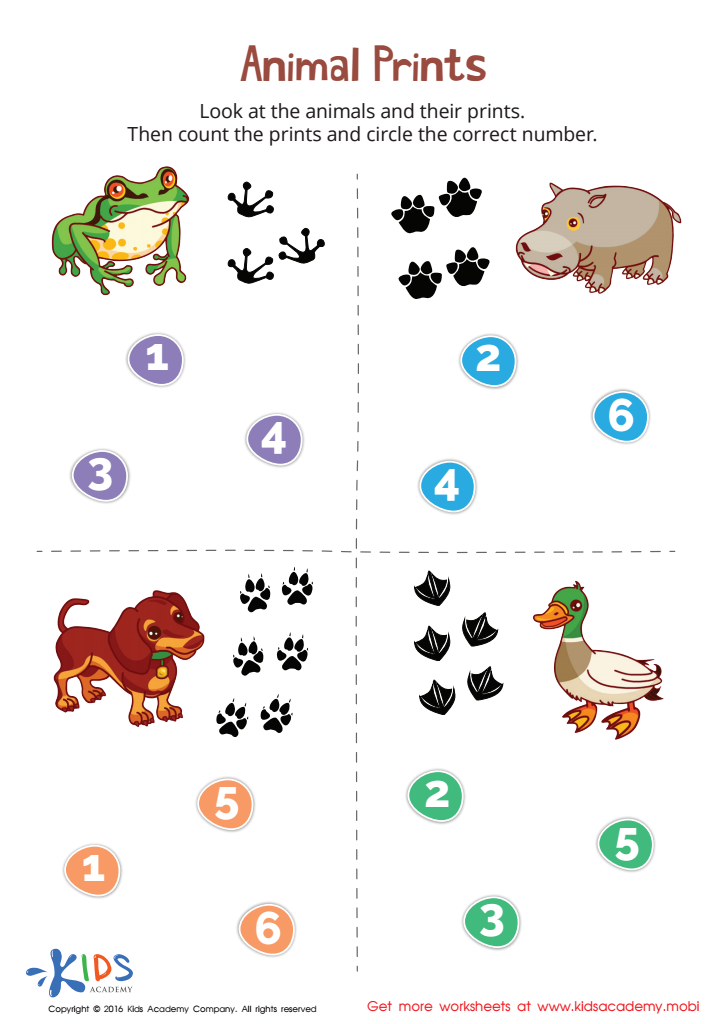
Animal Prints Match-Up Worksheet
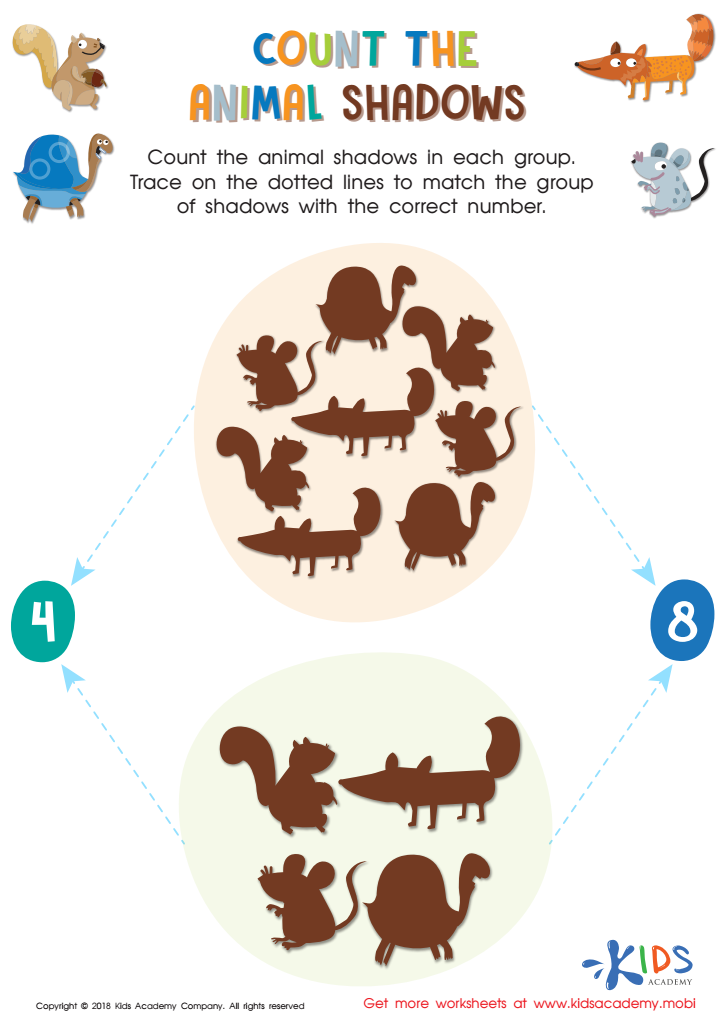
Count the Animal Shadows Worksheet








Animal identification numbers for children aged 4-6 are essential tools for early education, and parents and teachers should definitely care about integrating them into learning activities. To begin with, these numbers engage young children’s natural curiosity about animals, which helps in retaining their attention and making the learning experience enjoyable.
By teaching animal identification along with numbers, kids develop dual benefits: improved numeracy skills and enhanced recognition abilities. This multifaceted learning approach not only makes education more efficient but also more comprehensive. When children associate particular traits and numbers with specific animals, it aids in building both their cognitive and memory skills.
Moreover, distinguishing different animals and linking them with numbers helps boost children’s observation and classification skills, which are foundational elements in scientific learning. For example, recognizing the number of legs, wings, or distinct vocal sounds enables children to categorize and quantify, fostering critical thinking.
Parents and teachers can leverage these learning opportunities for interactive play, offering a platform for bonding and effective participation. Engaged learning at this age lays the groundwork for future educational success, imbuing youngsters with confidence and interest in the world around them. Therefore, incorporating animal identification numbers is a valuable strategy that aligns perfectly with early childhood developmental milestones.








