
Attention to Detail Math Worksheets for Ages 4-6
8 filtered results
Difficulty Level
Grade
Age
-
From - To
Subject
Activity
Standards
Discover the magical world of "Attention to Detail Math Worksheets for Ages 4-6" that helps young learners strengthen their mathematical skills while sharpening their concentration. These engaging, printable worksheets are expertly designed to encourage kids to focus on small details, fostering both cognitive growth and number proficiency. Perfect for kids aged 4-6, these entertaining activities range from counting and pattern recognition to simple addition and subtraction. Each worksheet focuses on improving observation skills, ensuring that learning math is not only educational but also a fun-filled adventure. Give your child the advantage of careful observation and math mastery today!
Favorites
With answer key
Interactive
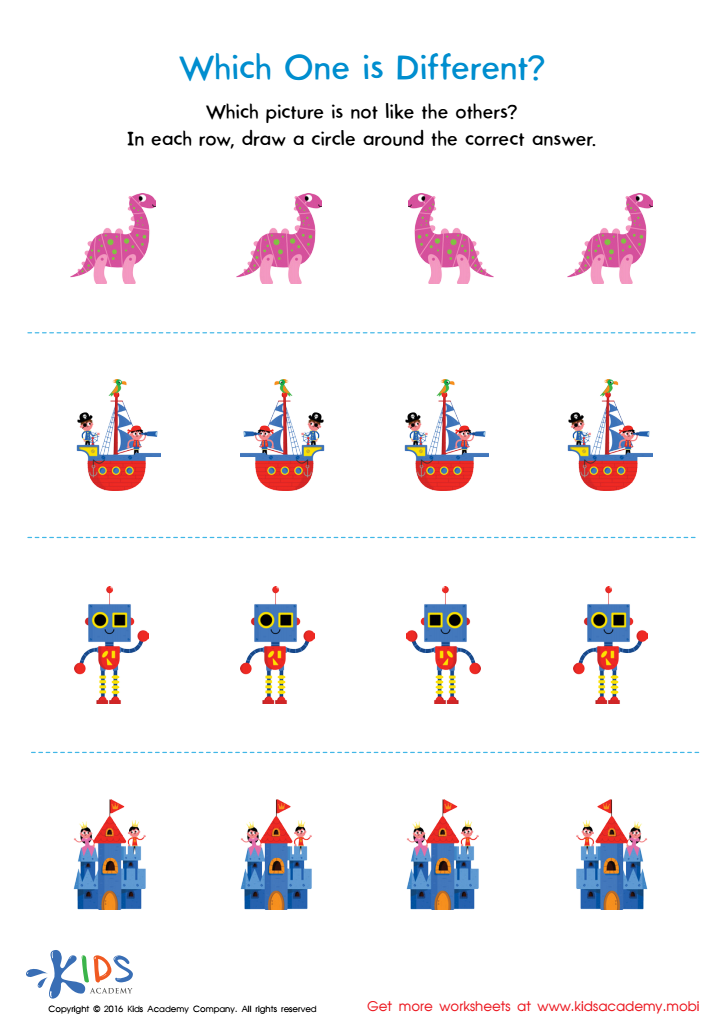
Which One Is Different Worksheet
Preschoolers can hone logical reasoning and critical analysis skills with this "Which one is Different?" worksheet. Kids must look closely and pick out unique attributes of objects and images. It's a skill that can serve them throughout their lifetime.
 Assign to My Students
Which One Is Different Worksheet
Worksheet
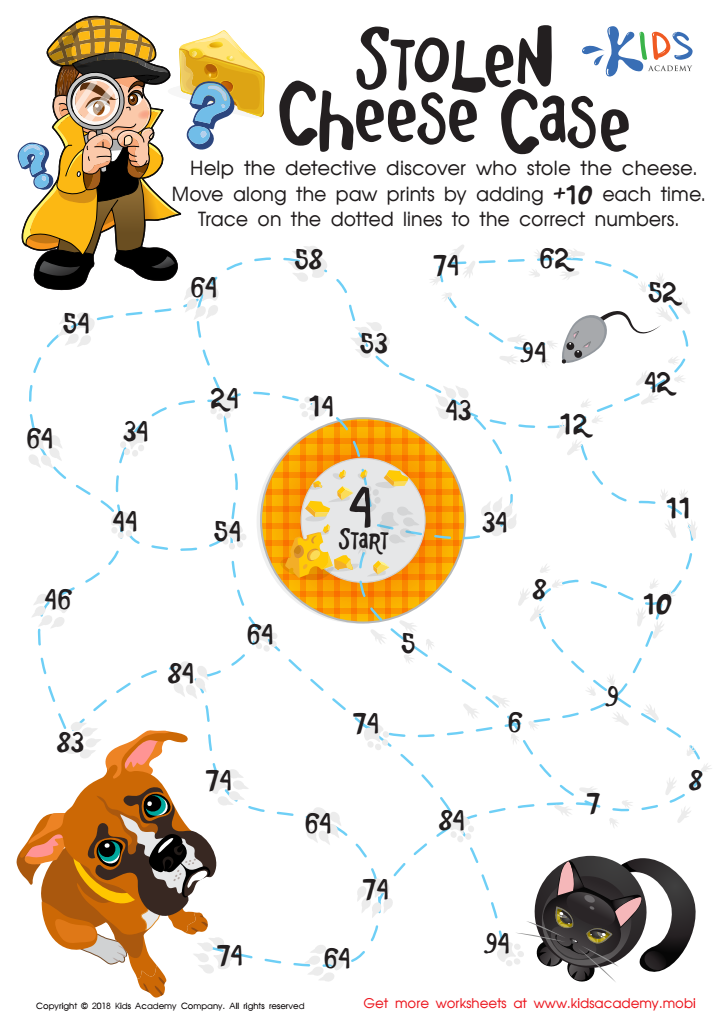
Stolen Cheese Case Maze Worksheet
Someone has stolen the cheese! Can your mathematician detective figure out who it is? Was it the dog, cat or mouse? Have them use traceable lines to skip count by 10 on this free PDF worksheet to solve the case. They'll be having fun and developing their skip-counting strategy at the same time!
Stolen Cheese Case Maze Worksheet
Worksheet
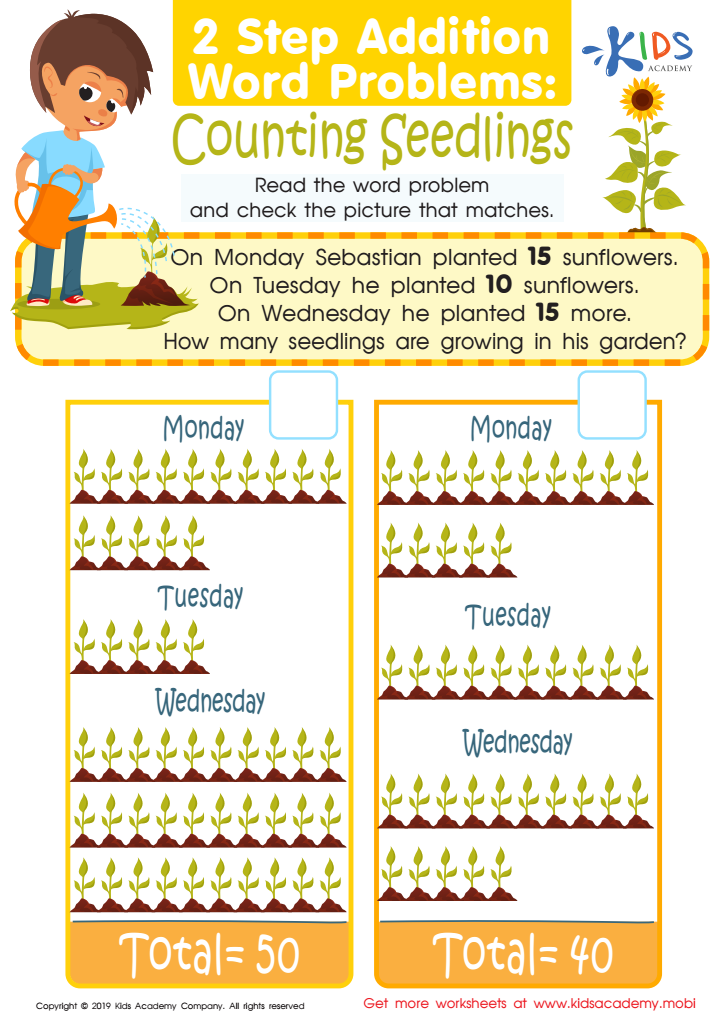
Counting Seedlings Worksheet
Understanding math word problems is key. Multiple steps can prove challenging - this free worksheet provides one-to-one picture representation to help kids solve multi-step addition word problems. Strengthen addition skills by choosing the matching picture to the answer.
Counting Seedlings Worksheet
Worksheet
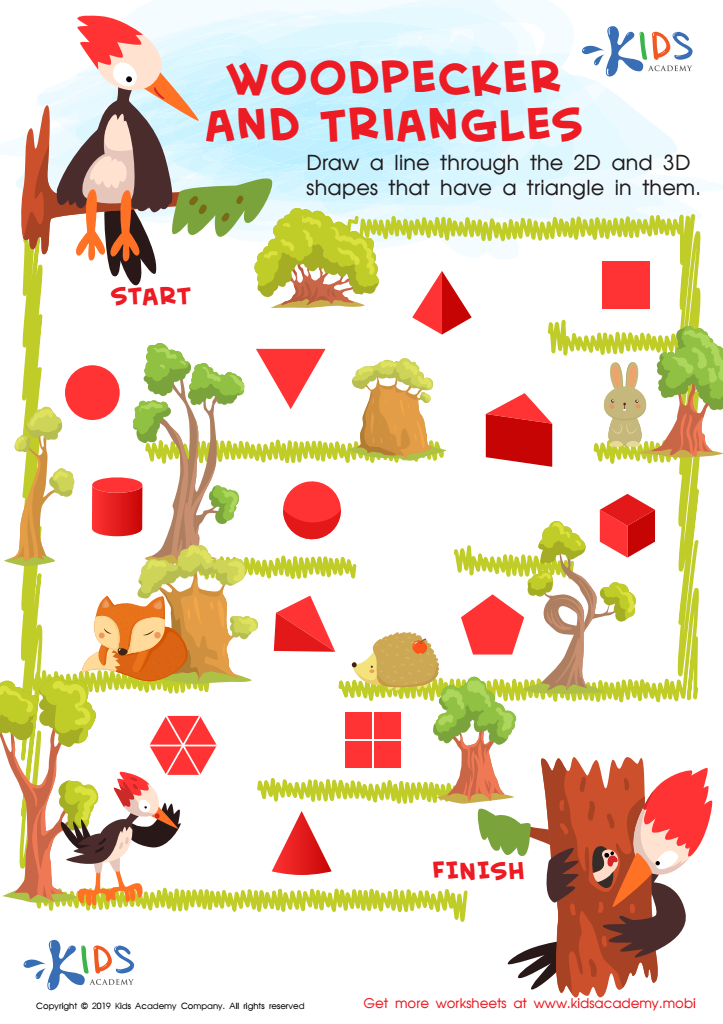
Woodpecker and Triangles Worksheet
Woodpeckers peck wood, and this printout helps kids learn about triangles. Ask your kindergartners to draw a triangle, then draw a line through the shapes that have a triangle in them to help the woodpecker get out of the maze.
Woodpecker and Triangles Worksheet
Worksheet
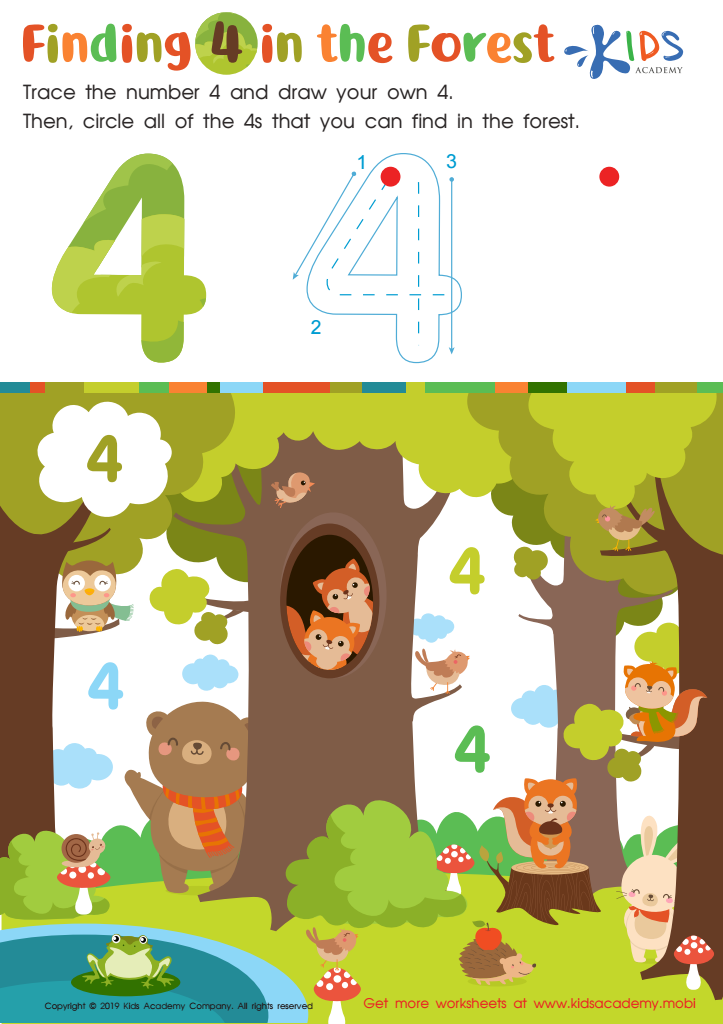
Finding 4 in the Forest Worksheet
Before starting, have your kids count as high as they can. Ask them to identify the setting and point out the 4s. Trace 4 and draw your own. Help your kids circle all the 4s they can find in the forest. How far can they count? How well did they find the hidden 4s?
Finding 4 in the Forest Worksheet
Worksheet
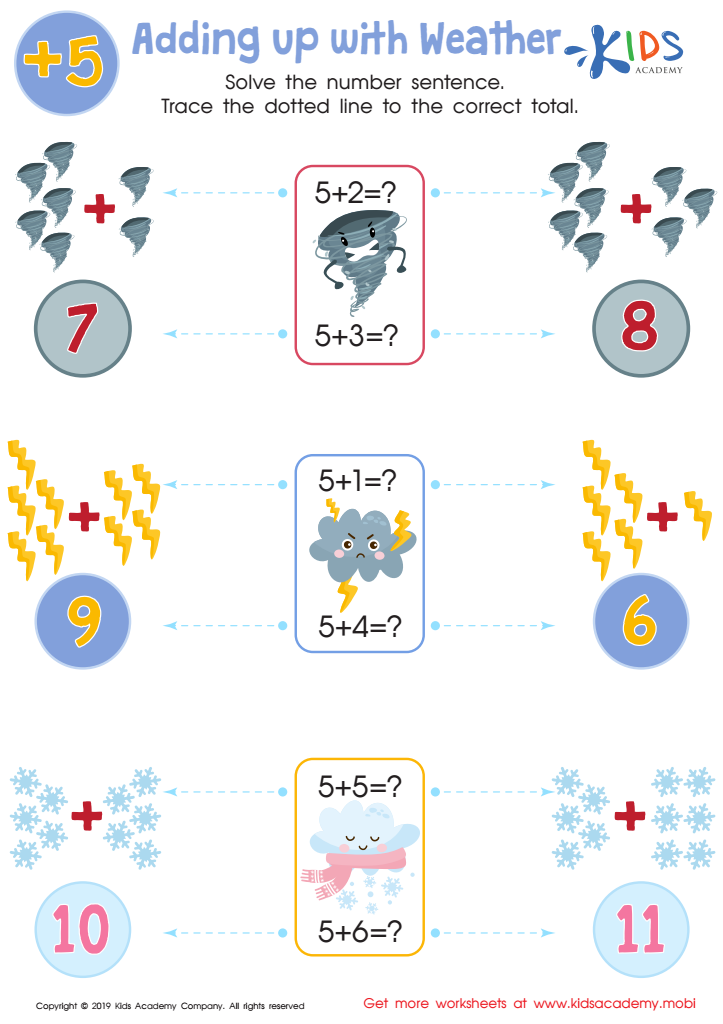
Adding up With Water Worksheet
Ask your kids to name different kinds of weather and what it's like outside now. Then, help them solve the number sentences on the worksheet by tracing the dotted line to the correct total.
Adding up With Water Worksheet
Worksheet
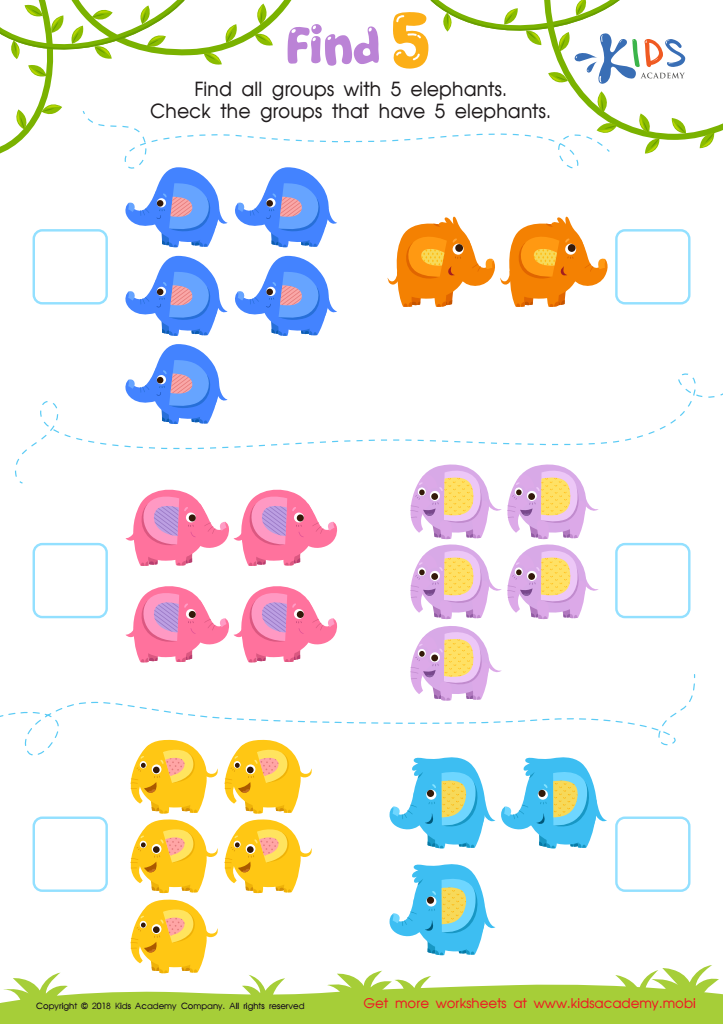
Find 5 Worksheet
Kids will love these cheery elephants that help them discover grouping and counting by fives. It's a great way to start learning addition and multiplication, while also developing fine motor skills. Download the free PDF and let the fun begin.
Find 5 Worksheet
Worksheet
Join Kids Academy for Free
Who is primarily going to use this learning content?








Attention to detail in math is crucial for young children aged 4-6 because it lays the foundation for future academic success and everyday problem-solving skills. At this formative stage, developing attention to detail helps children learn to recognize patterns, differentiate between shapes and sizes, and understand early numeracy concepts. When they consistently practice paying close attention, they are more likely to avoid common mistakes and build confidence in their abilities.
Parents and teachers play a pivotal role in nurturing these skills. By incorporating activities that require careful observation, counting, and comparison, adults can make learning engaging and enjoyable, setting the stage for a positive mathematical experience. When children develop strong attention to detail early on, they are better prepared for more complex math tasks in later years, such as arithmetic operations and logical reasoning.
Additionally, these skills transfer beyond math. Attention to detail enhances a child's overall cognitive development, including their ability to follow instructions, complete tasks efficiently, and engage in critical thinking. Fostering these abilities at a young age not only supports academic achievement but also equips children with essential life skills that benefit them in various everyday situations and future endeavors. Hence, parents and teachers should prioritize and actively cultivate attention to detail in early math learning.








