Counting proficiency Math Worksheets for Ages 4-6
13 filtered results
-
From - To
Our "Counting Proficiency Math Worksheets for Ages 4-6" are designed to build early mathematical skills in a fun and engaging way. Perfect for young learners, our worksheets cover fundamental counting techniques, number recognition, and sequencing. Through colorful illustrations and interactive activities, children develop a solid foundation in counting while enjoying the learning process. Ideal for both classroom and home use, these worksheets foster confidence and proficiency in early math, setting the stage for future academic success. Suitable for beginners, these resources will support your child's journey to becoming a confident and capable mathematician.
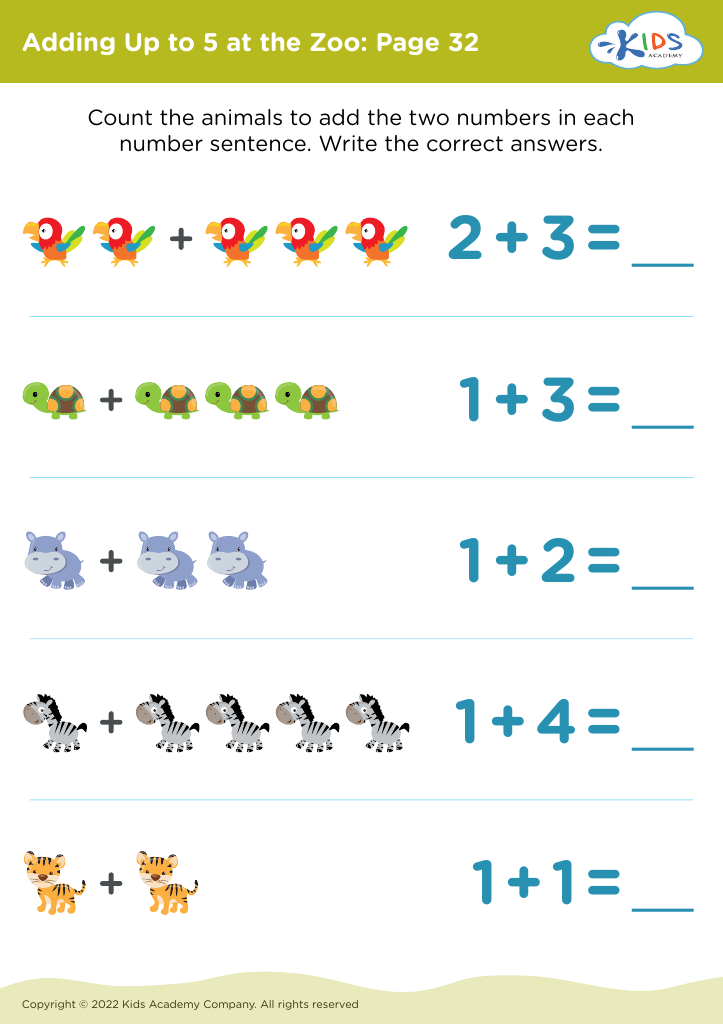
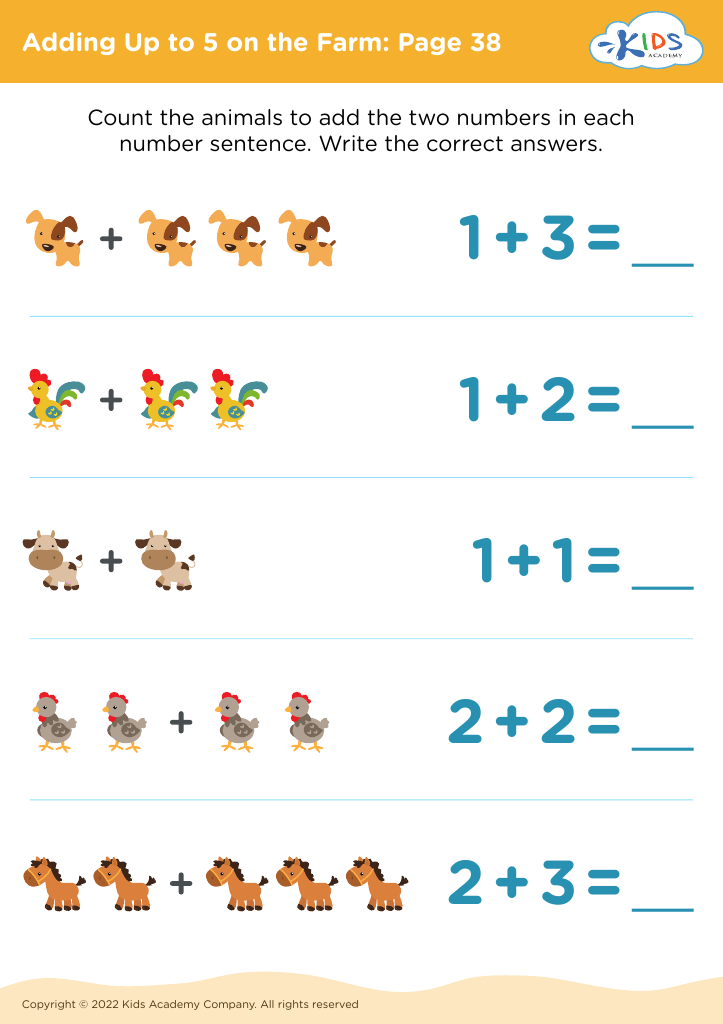
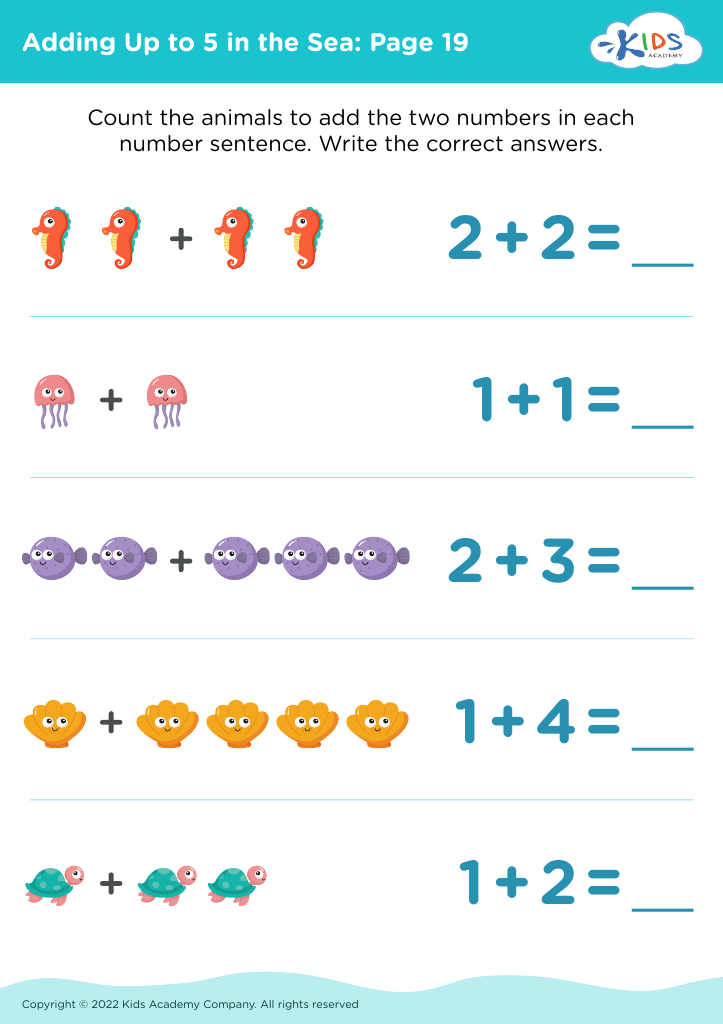
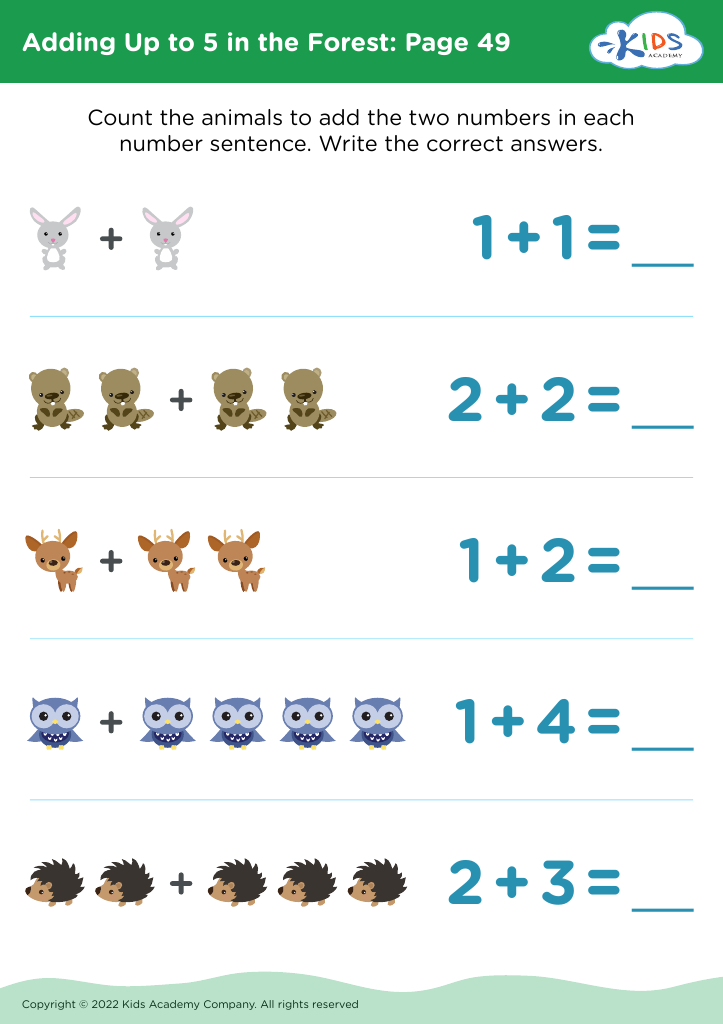
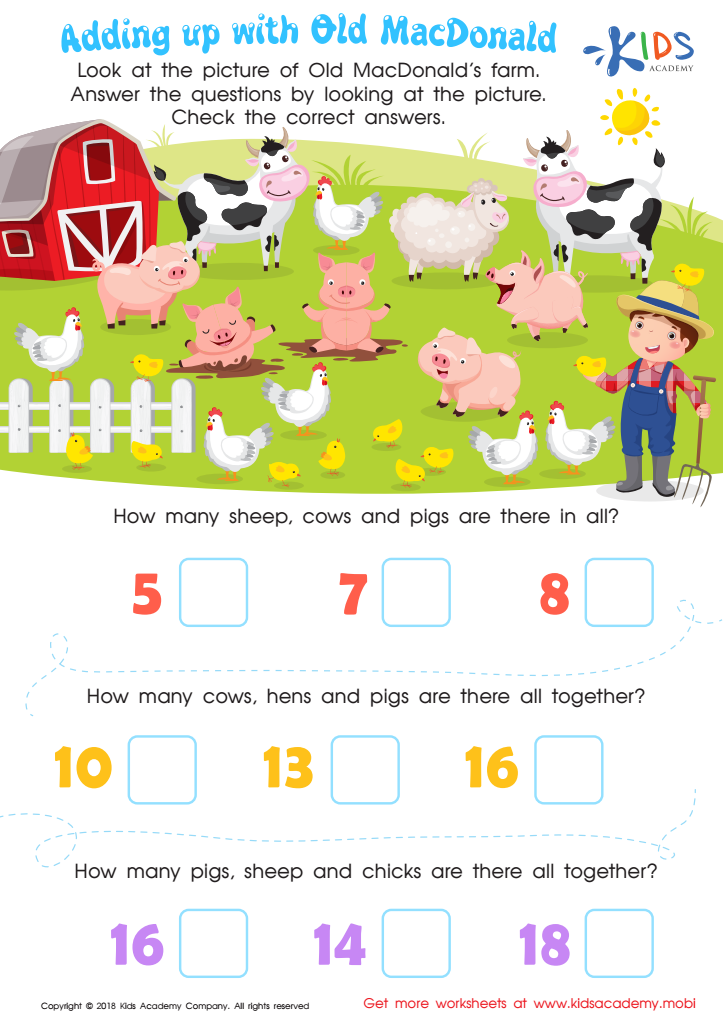
Adding Up with Old MacDonald Worksheet
 Assign to My Students
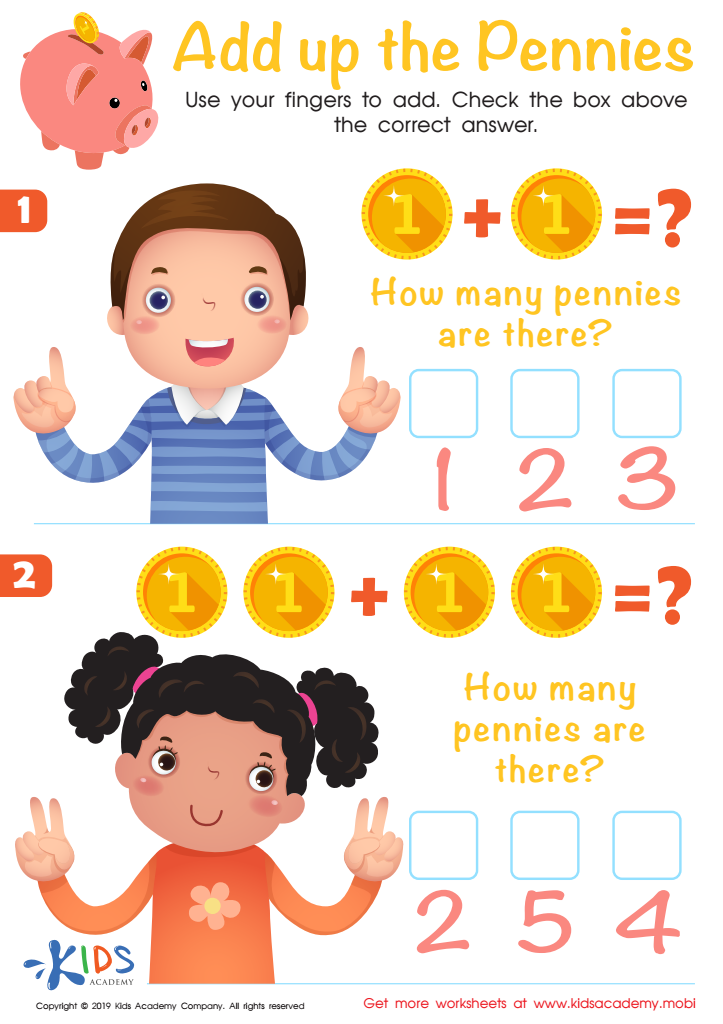
Add up the Pennies Worksheet
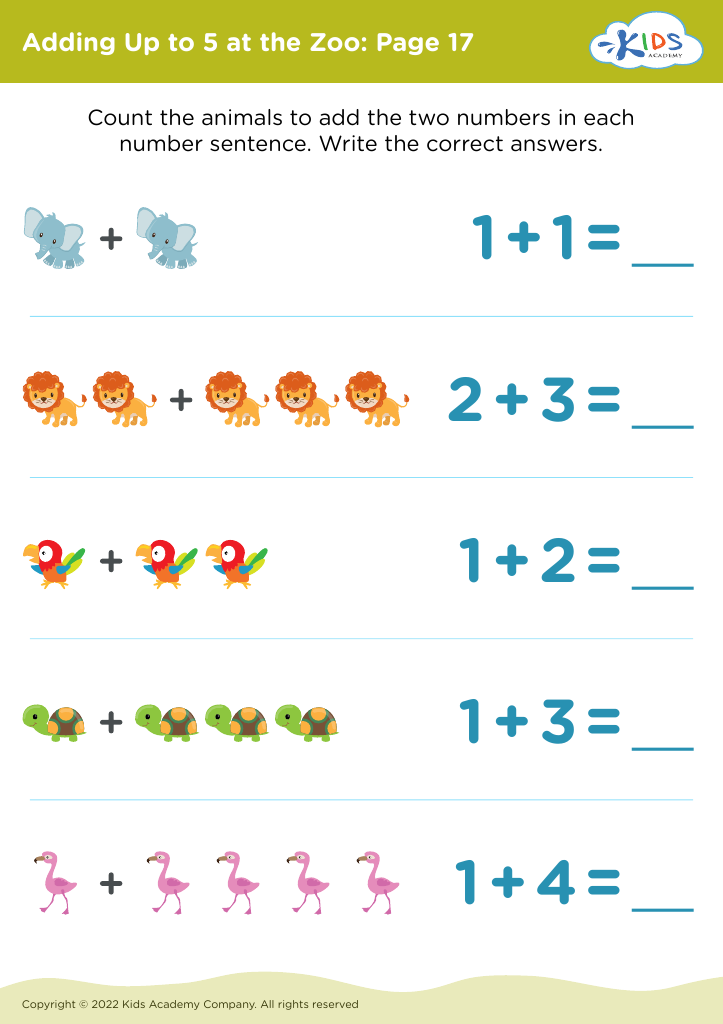
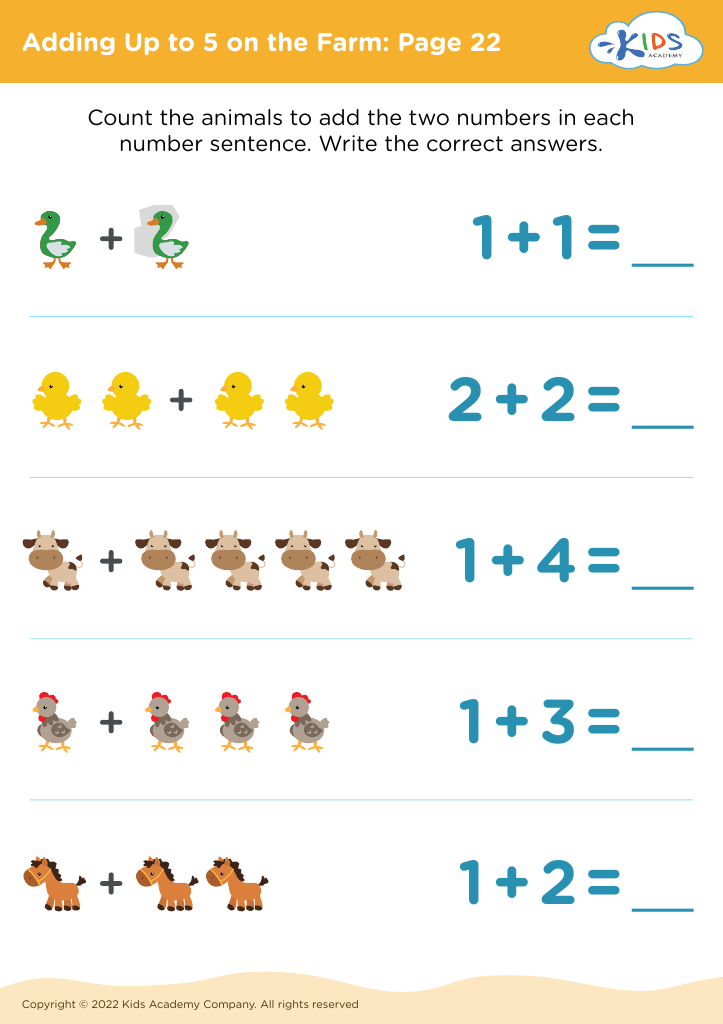
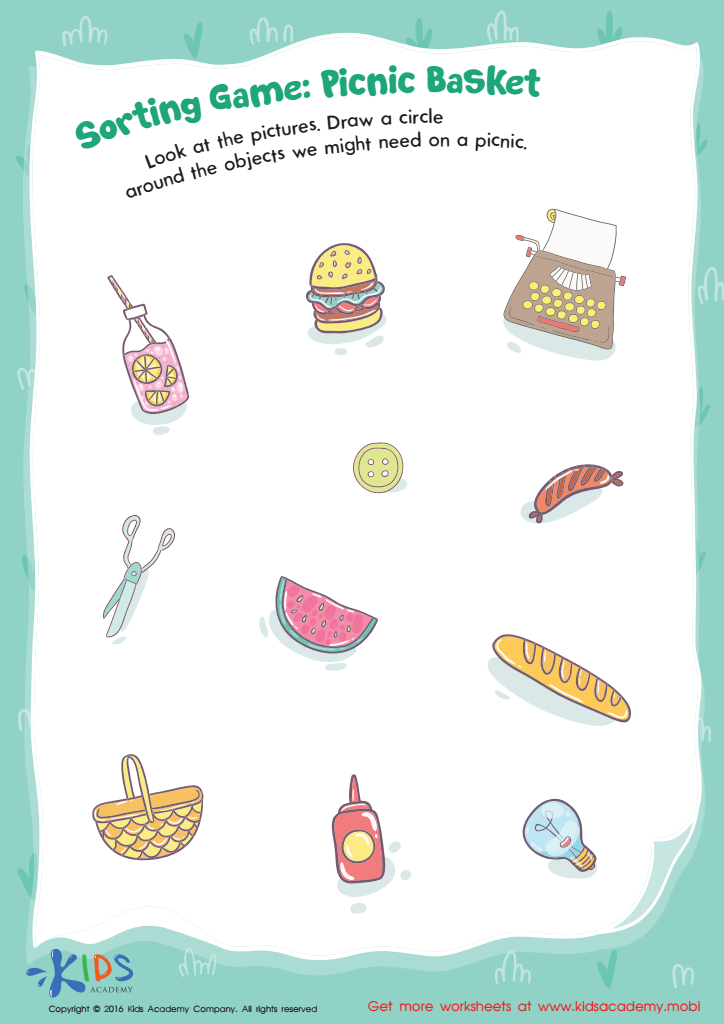
Picnic Basket Sorting Worksheet
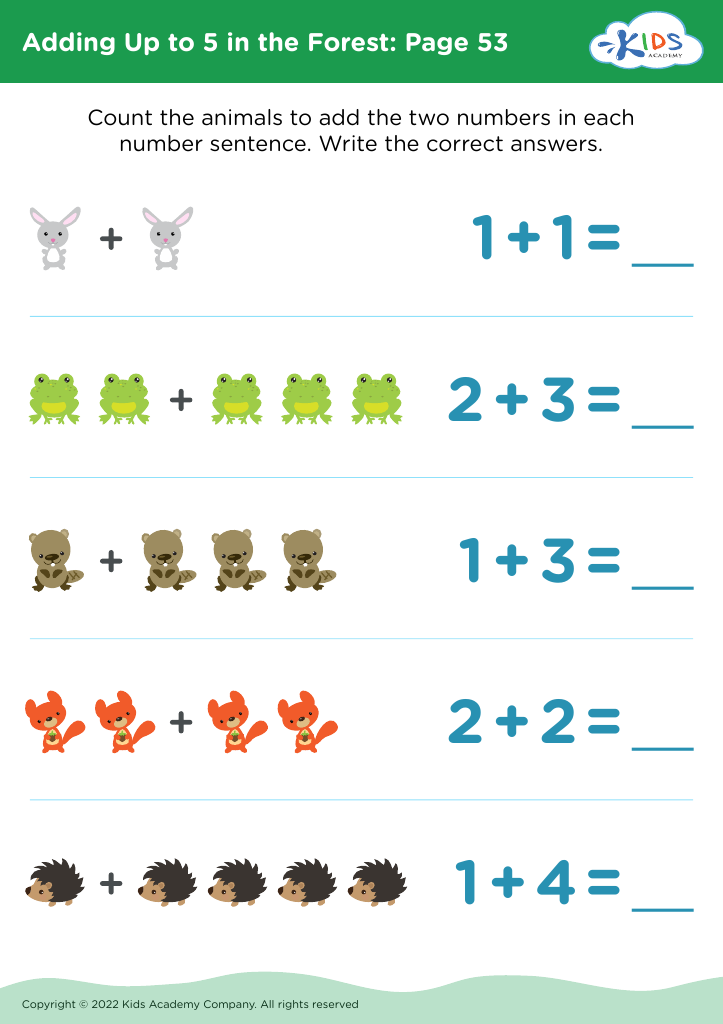
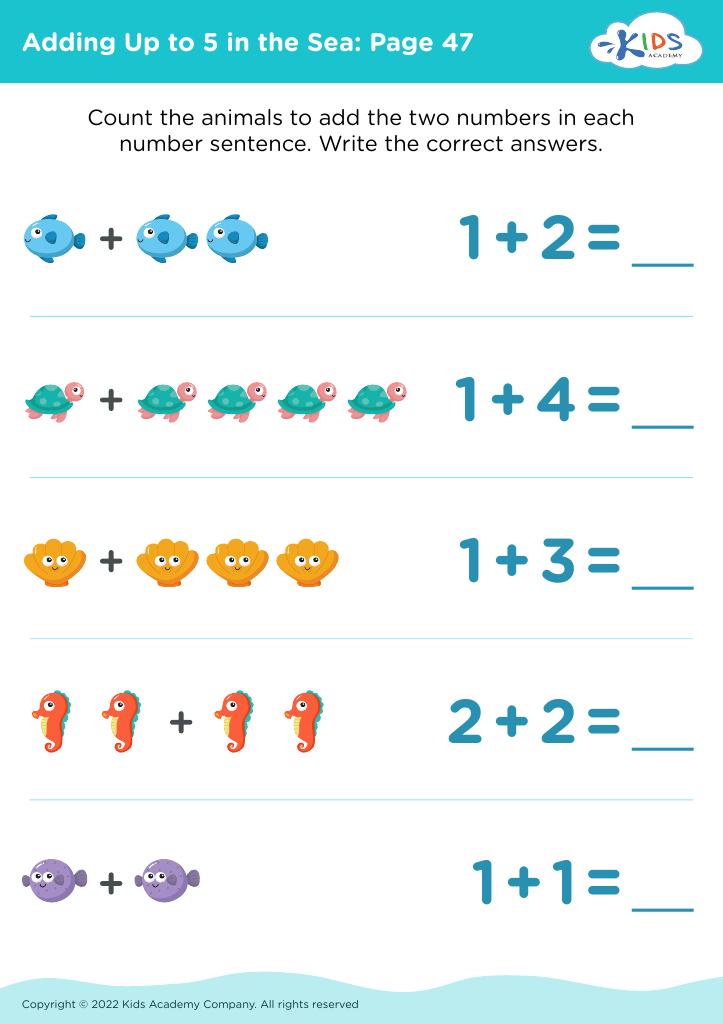
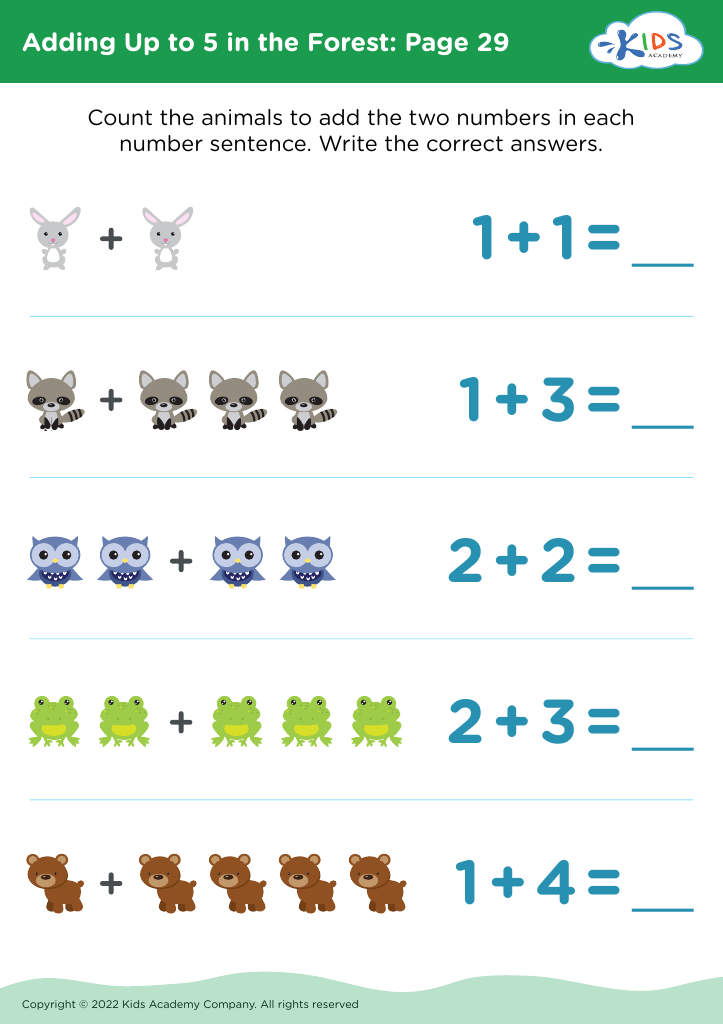
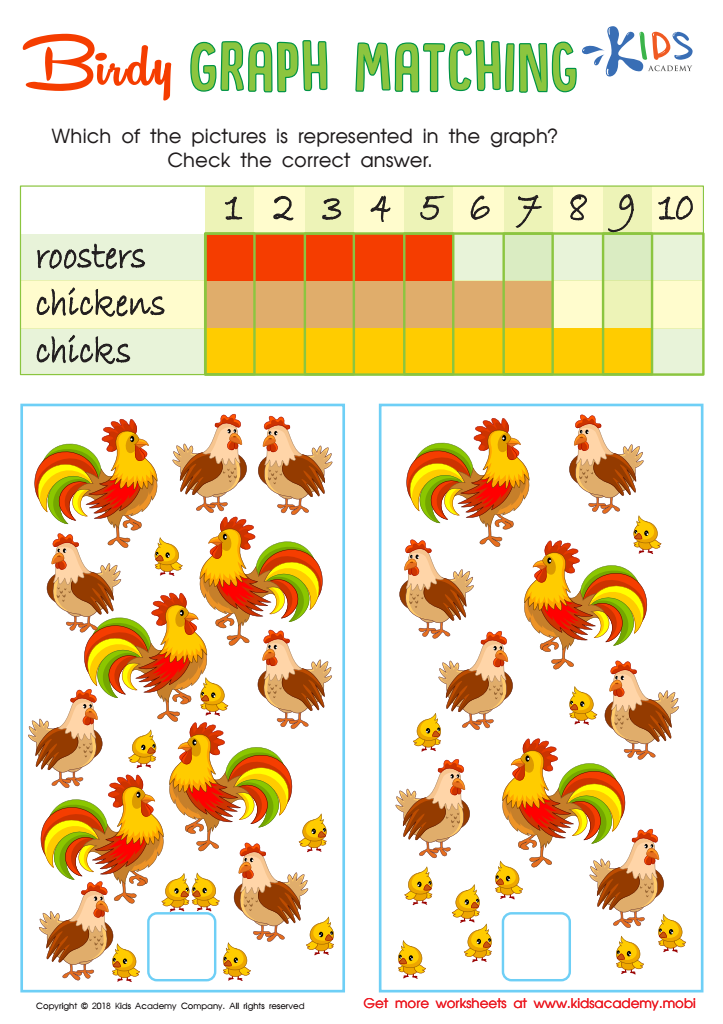
Birdy Graph Matching Worksheet








Counting proficiency in math for children aged 4-6 is crucial for several reasons. First, it lays the foundation for all future math learning. Accurate counting helps children understand number sense — the idea that numbers are symbols representing quantity and the relationships among numbers. This foundational skill is essential for learning more complex mathematical concepts such as addition, subtraction, multiplication, and division.
Second, counting promotes cognitive development. It encourages logical thinking as children start to recognize patterns and sequences. These skills are not only valuable in mathematics but also in problem solving and critical thinking, which are applicable across all areas of learning and daily life.
Moreover, early counting activities foster fine motor skills and even language development, as children engage in counting songs, rhymes, and stories. These activities help them become more comfortable with the idea of numbers and their applications.
From a social and emotional perspective, early success in counting boosts self-confidence and instills a positive attitude toward learning. Children who grasp counting effectively feel more competent and motivated to tackle more difficult tasks.
Finally, early proficiency in counting aligns with educational standards, ensuring that children are well-prepared for further academic challenges. Parents and teachers play a critical role in cultivating these skills through supportive, engaging, and interactive opportunities for children to practice counting in everyday situations.








