Number Sequencing Numbers up to 100 Worksheets for Ages 4-6
6 filtered results
-
From - To
Explore our engaging "Number Sequencing Numbers up to 100" worksheets designed for children ages 4-6. These printable resources help young learners develop essential math skills through fun and interactive activities. Students will practice ordering and sequencing numbers sequentially, enhancing their counting abilities and basic understanding of numerals up to 100. Our worksheets not only promote number recognition but also support critical thinking and problem-solving skills. Perfect for at-home learning or classroom use, these worksheets are geared toward making math enjoyable and accessible. Start your little one's numerical journey today with our skill-building exercises that inspire confidence and academic growth!
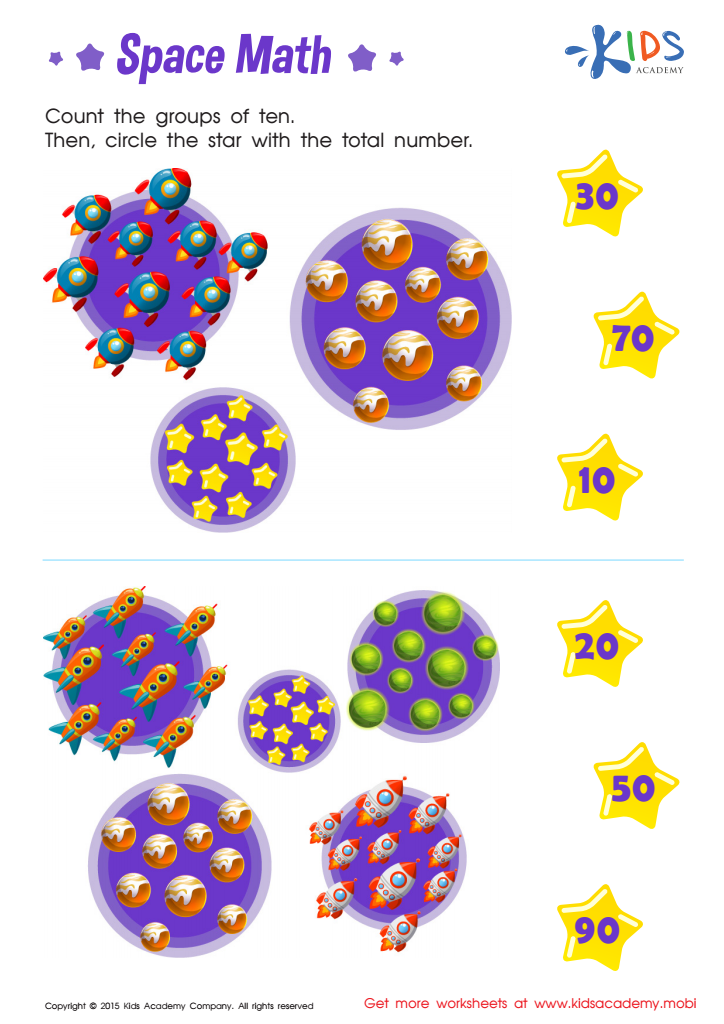
Learn dozens: Space math Worksheet
 Assign to My Students
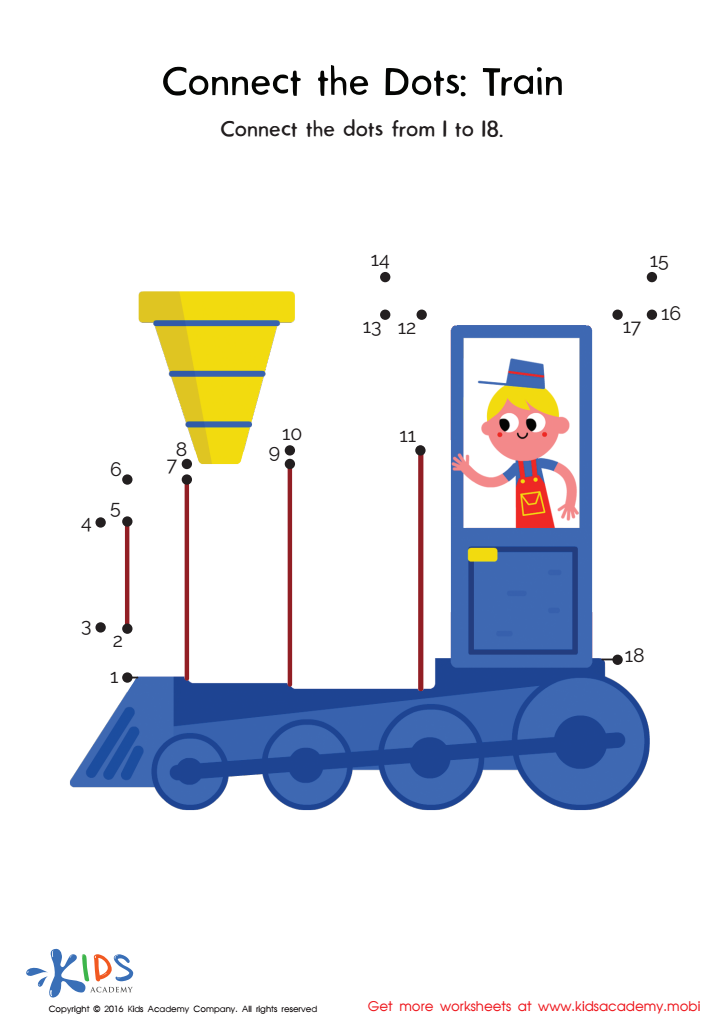
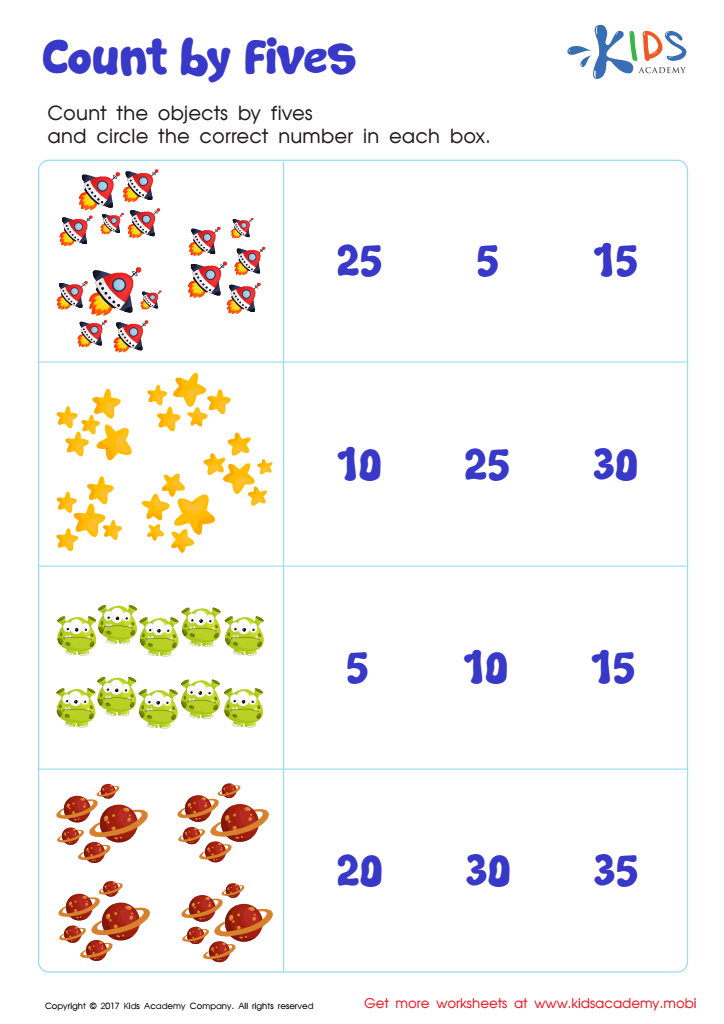
Skip Counting by 5s: Space Math Printable
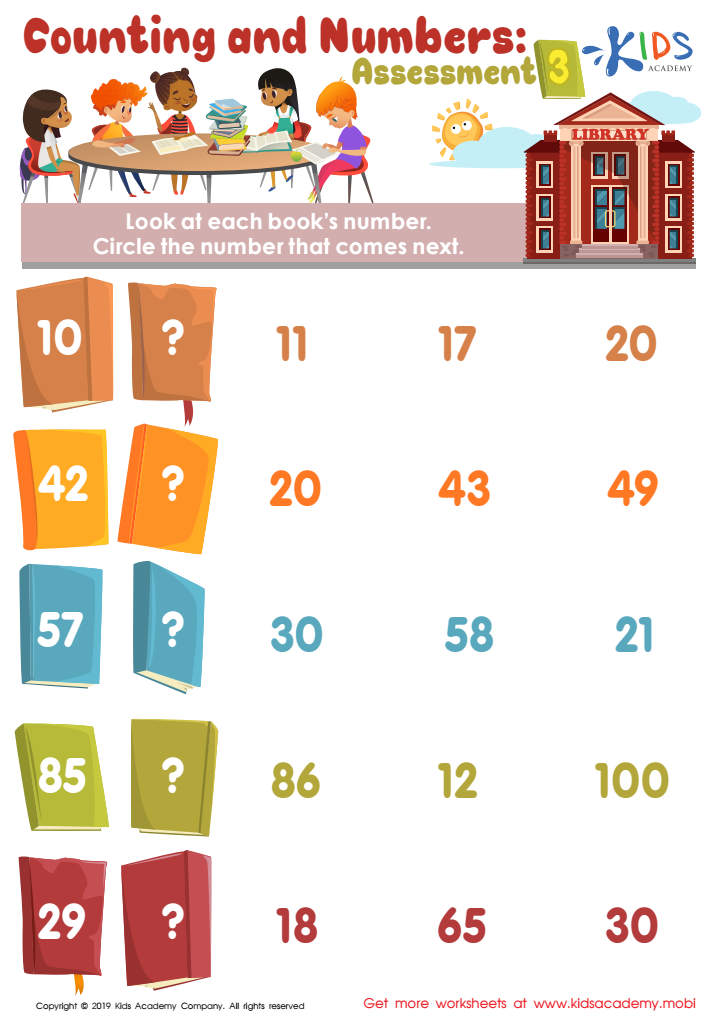
Counting and Numbers: Assessment Worksheet
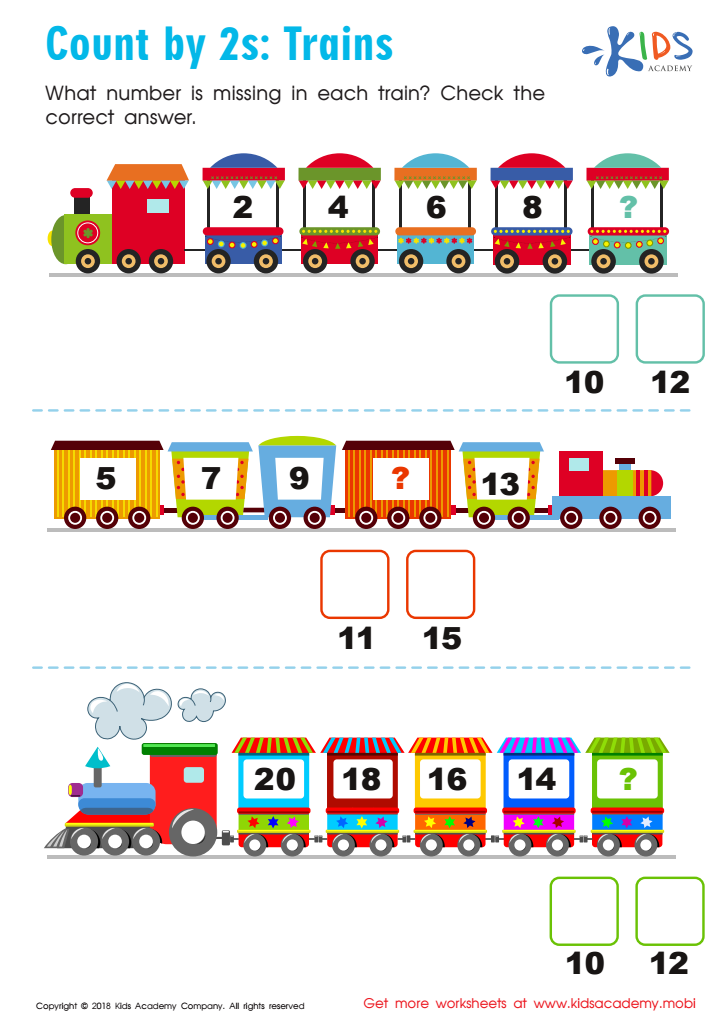
Count by 2's: Trains Worksheet
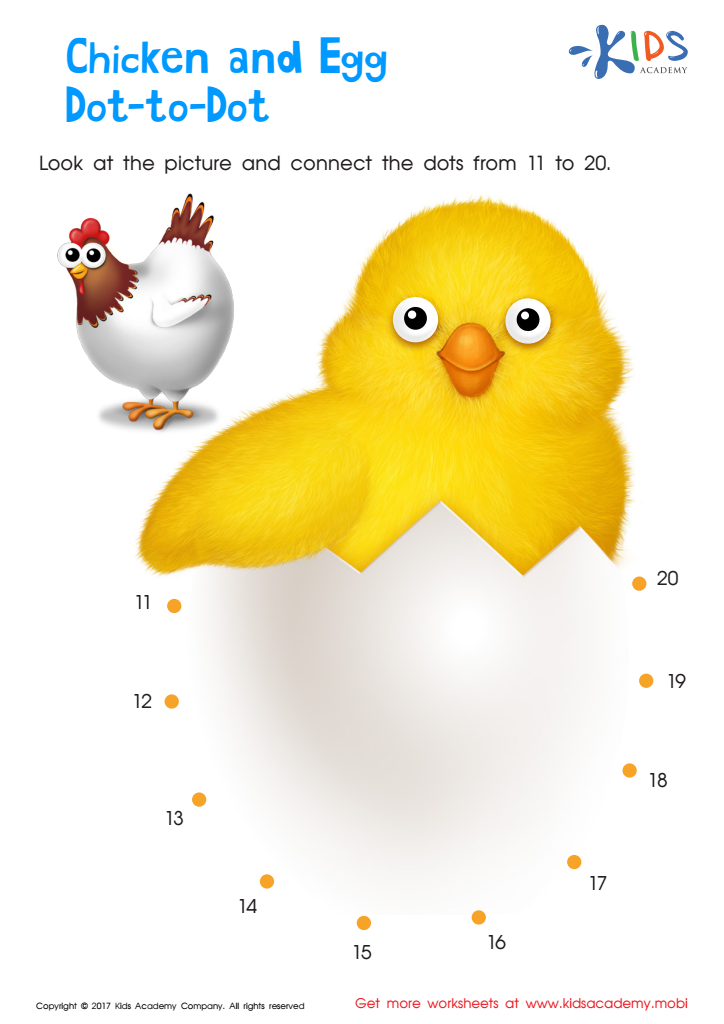
Ordering 11–20: Chicken & Egg Dot–to–dot Worksheet








Number sequencing is a foundational skill that serves as the building block for more complex mathematical concepts. For parents and teachers of children aged 4-6, focusing on sequencing numbers up to 100 is crucial for several reasons.
Firstly, understanding number sequences helps children grasp the concept of order and organization in mathematics. This ability to recognize patterns lays the groundwork for later skills such as addition, subtraction, and even basic problem-solving. Recognizing that numbers follow a logical progression enhances their confidence in dealing with numbers and sets a foundation for critical thinking.
Secondly, number sequencing fosters cognitive development. As children learn to sequence, they improve their memory and attention skills, which are vital for all areas of learning. This practice also helps refine their fine motor skills when they engage in activities like writing numbers or using manipulatives.
Lastly, knowing how to sequence numbers promotes better comprehension of more advanced concepts encountered later in school, including number lines and intervals. With a strong foundation in number sequencing, children are not just prepared for math—they are equipped with skills that will benefit their overall academic journey. Therefore, embracing this learning aspect at an early age is integral for holistic development.