Basic Addition Reading Worksheets for Ages 4-6
5 filtered results
-
From - To
Explore our engaging Basic Addition Reading Worksheets tailored for children ages 4 to 6! These high-quality resources make learning addition fun and interactive, helping young learners develop essential math skills. Each worksheet features vibrant illustrations and relatable scenarios, encouraging kids to practice addition through relatable contexts. Designed with age-appropriate language and activities, these worksheets are perfect for parents and teachers looking to enhance students’ confidence in math. Boost your child’s foundational math abilities while fostering a love for learning with our basic addition worksheets. Dive into a world of numbers and interactive fun where learning meets play!
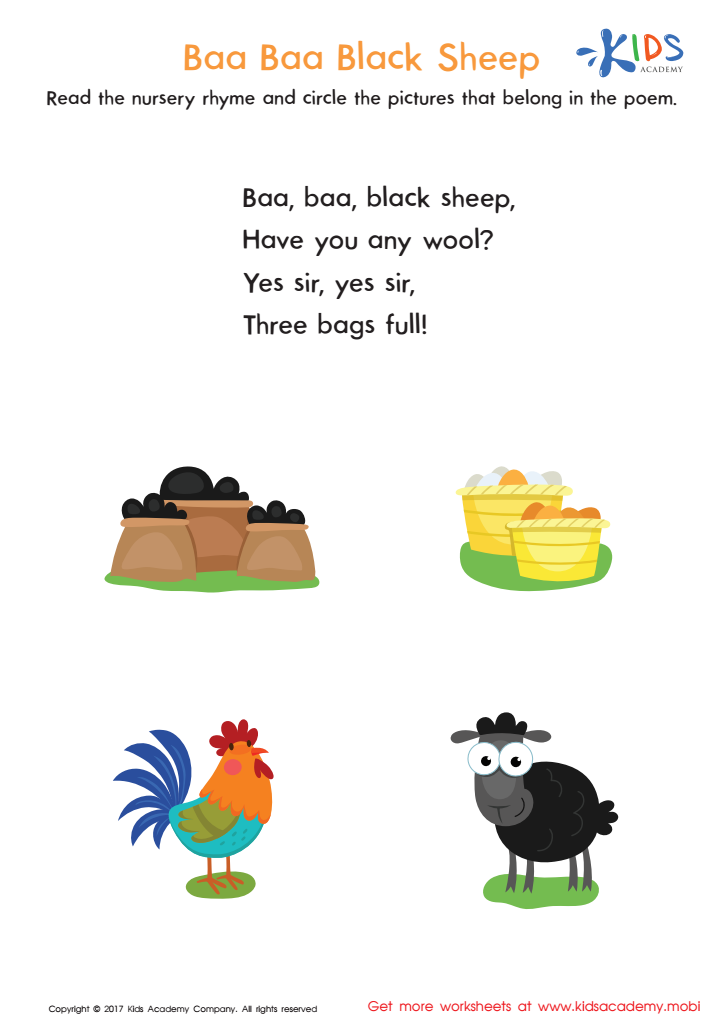
Baa Baa Black Sheep Printable
 Assign to My Students
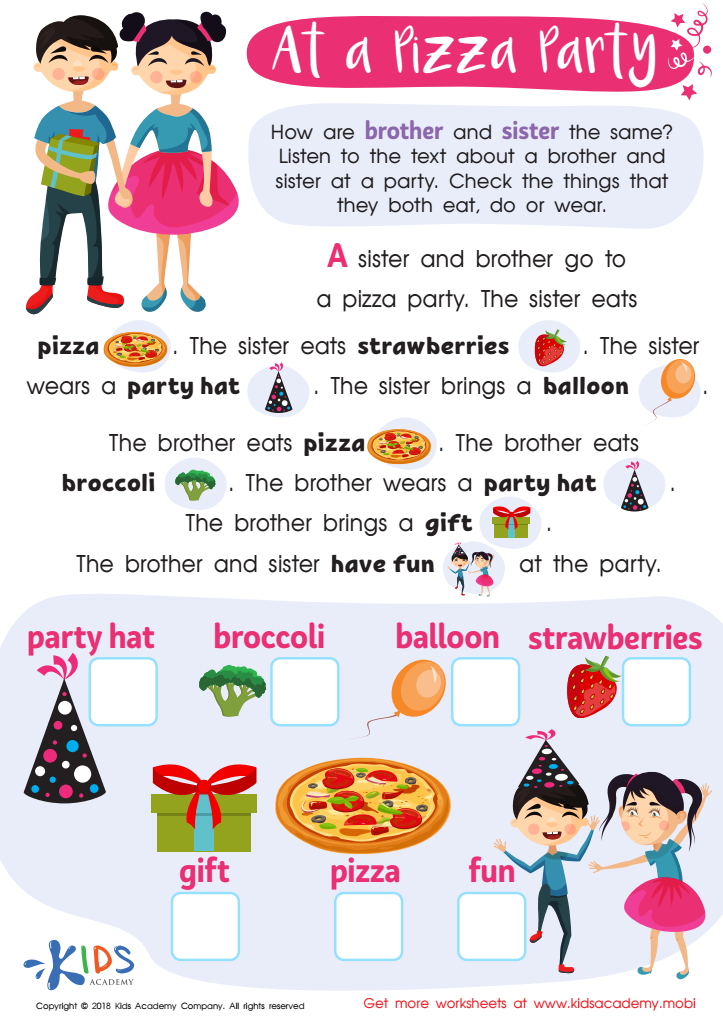
At a Pizza Party Worksheet
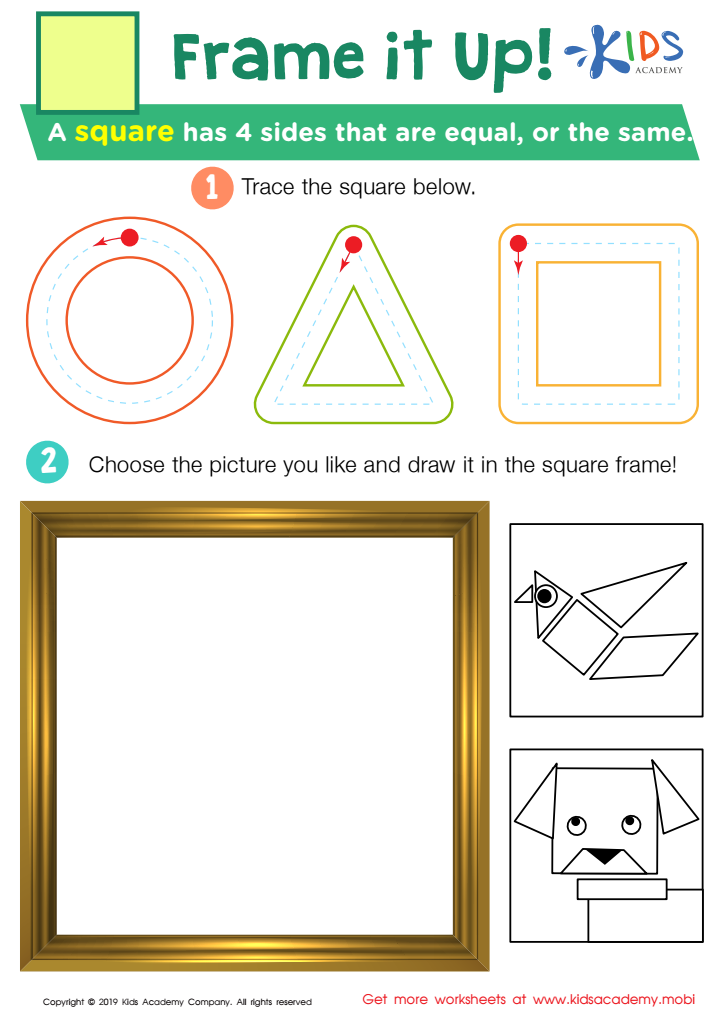
Frame it Up Worksheet
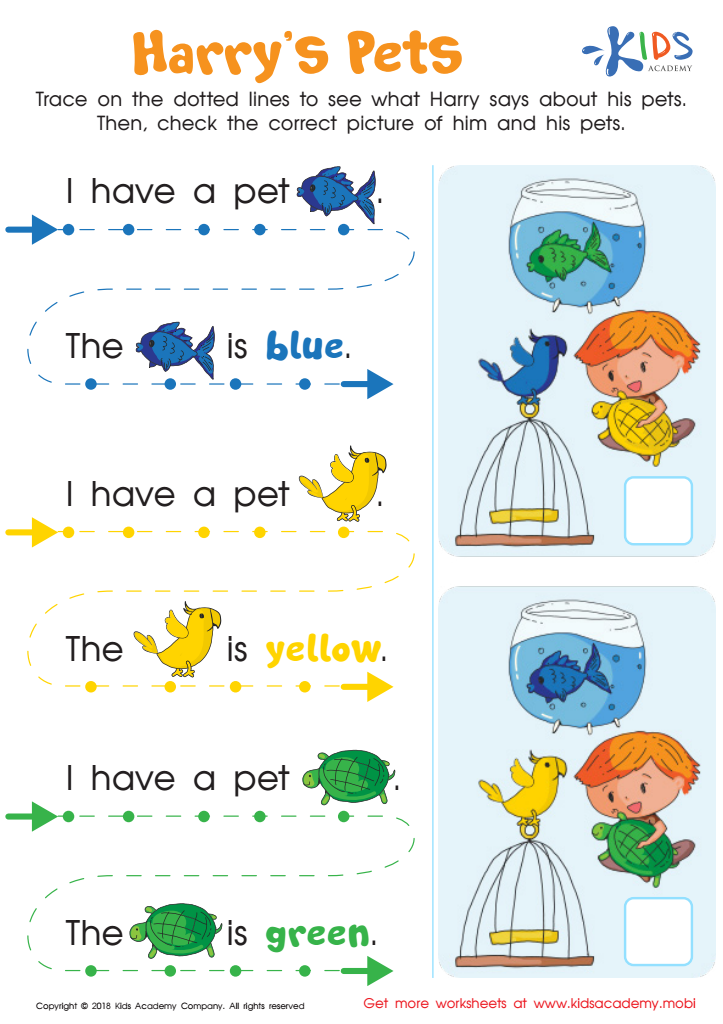
Read from Left to Right: Harry's Pets Worksheet







Parents and teachers should prioritize Basic Addition Reading for children aged 4-6 because this foundational skill is critical for future academic success and overall cognitive development. At this age, children are forming the building blocks for their understanding of math, language, and problem-solving. By integrating addition with reading activities, students not only learn how to perform basic calculations but also enhance their literacy skills through the context of stories and engaging narratives.
Moreover, early experiences in math can boost children's confidence and enjoyment in learning. Introducing concepts through interactive games, books, and song can make addition fun and relatable, allowing children to grasp the idea of quantities and numbers more effectively.
Additionally, recognizing patterns, understanding sequencing, and developing critical thinking are skills linked to basic math that underpin various subjects in later years. Many real-world scenarios require basic arithmetic, which children need to connect with as they grow. Finally, children's early academic experiences significantly affect their emotional and social development, and strong competencies in both reading and math foster a positive attitude toward learning that can carry through their educational journey. Emphasizing this integration during these formative years is essential for holistic development.








