Pattern recognition Reading Worksheets for Ages 4-6
4 filtered results
-
From - To
Boost early literacy skills with our Pattern Recognition Reading Worksheets for ages 4-6! Designed to captivate young learners, these engaging activities focus on identifying and understanding patterns, an essential precursor to reading and math success. Each worksheet encourages cognitive development, improving memory, concentration, and problem-solving abilities. Perfect for at-home practice or classroom reinforcement, our colorful and fun resources make learning exciting. Support your child’s educational journey and watch them thrive as they master crucial early reading skills with these expertly crafted worksheets. Accelerate their progress while making learning enjoyable with Kids Academy!
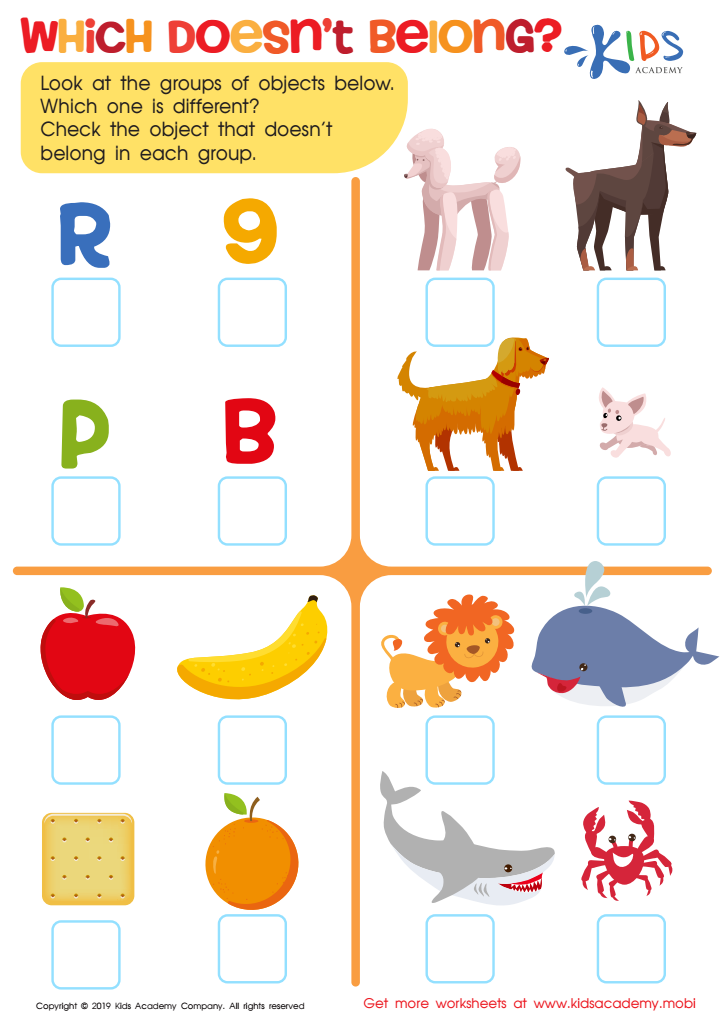
Which Doesn't Belong? Worksheet
 Assign to My Students
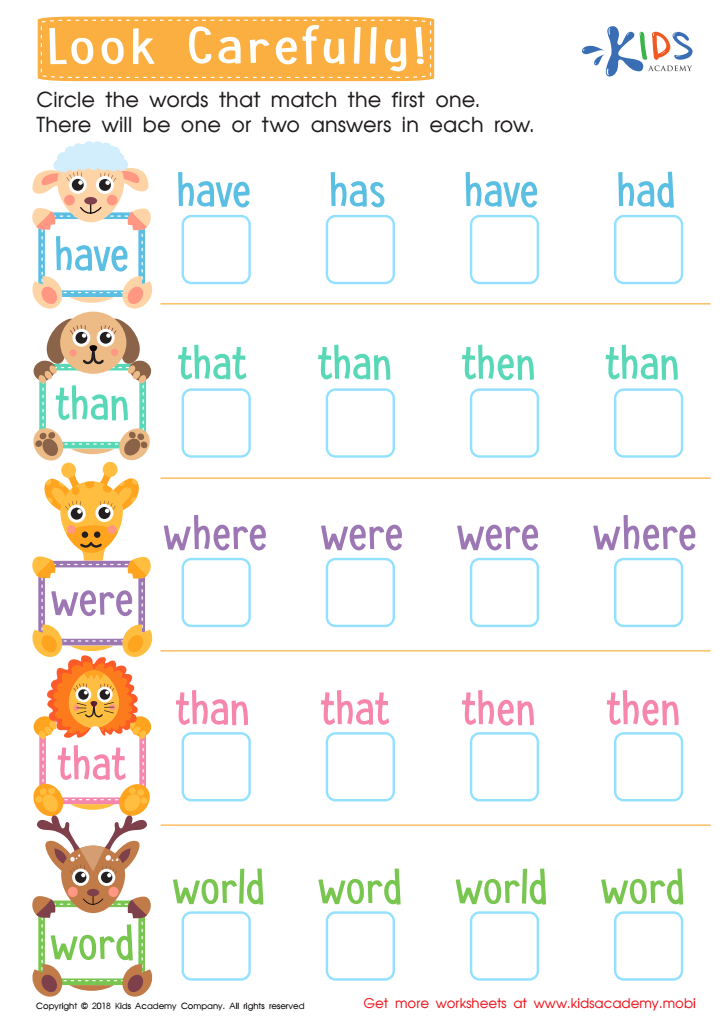
Look Carefully Worksheet
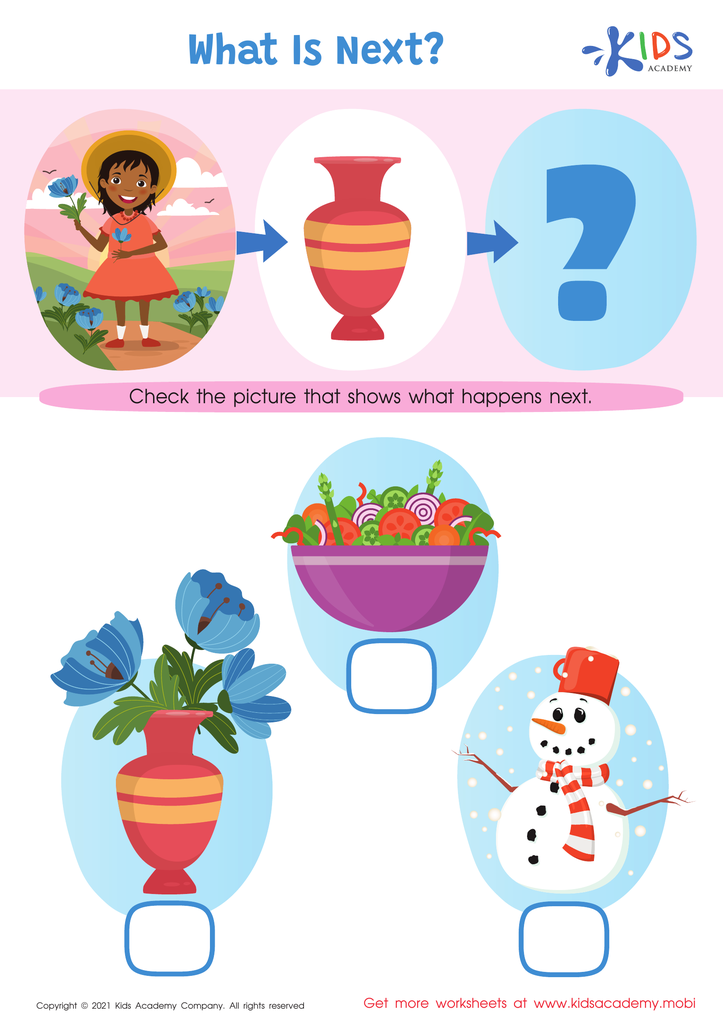
What is Next? Worksheet
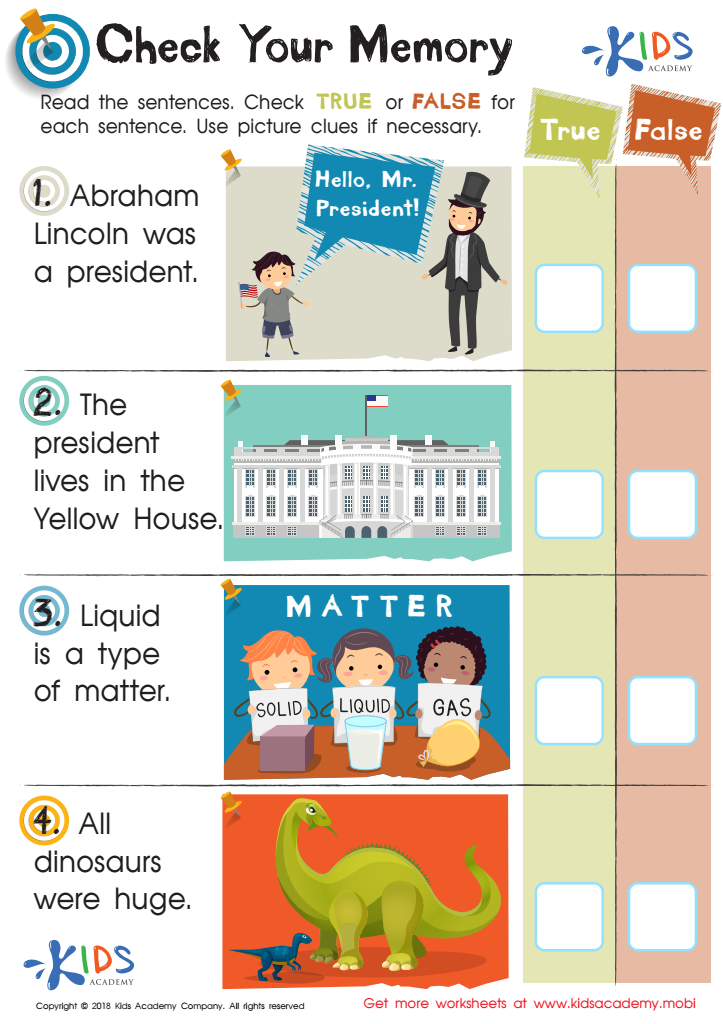
Check Memory Worksheet







Pattern recognition is a crucial component of early childhood development, especially for children aged 4-6. Parents and teachers should care about fostering this skill because it forms the foundation of reading and overall cognitive growth. At its core, pattern recognition involves identifying similarities, differences, and repeating sequences within data—be it letters, words, or numbers.
For children in this age group, grasping patterns nurtures their ability to decode words, paving the way for fluent reading. For instance, recognizing common word endings such as "-ing" or "cat," "hat," and "bat" helps children predict and understand new words they encounter. This early exposure accelerates vocabulary acquisition and strengthens comprehension skills, ensuring the child is not just mechanically reading but also grasping the narrative or information.
In addition, pattern recognition extends beyond literacy. It enhances mathematical skills by helping children identify numerical patterns and sequences, fundamental principles for addition, subtraction, and even complex operations later on.
Moreover, engaging in pattern recognition activities aids in developing critical thinking, attention to detail, and problem-solving skills. By investing in pattern recognition activities—like matching games, repetitive songs, or patterned storybooks—parents and teachers can provide a multi-faceted educational experience that builds a strong foundation for future academic success.








